Apartment Dog Poop Pickup Las Vegas: Community Guide
Apartment dog poop pickup Las Vegas managers can plan shared areas, relief zones, resident expectations, and reliable recurring service.

Apartment dog poop pickup in Las Vegas works best as a planned community service. It should not be a last-minute response to resident complaints. A clear route can cover shared lawns, dog-relief zones, walkways, landscaped edges, and other places where residents regularly walk their pets.
For property managers, recurring pickup creates a cleaner resident experience. It also gives maintenance teams a defined service boundary and dependable schedule.
Residents still pick up after their dogs immediately. The property team coordinates consistent care for shared grounds, relief zones, and recurring hotspots.
Call A1 Pet Maintenance at (702) 521-2624 Today.
Las Vegas communities face a special operating challenge. Heat can make odors noticeable quickly, while pet-friendly amenities see repeated daily traffic.
The solution combines convenient resident expectations, visible waste stations, documented service areas, and a recurring pickup plan sized to the property.
A1 Pet Maintenance has served Southern Nevada since 1998 and reports servicing more than 400 properties weekly. That experience gives apartment managers a practical partner for this ongoing work.
How Does Apartment Dog Poop Pickup Las Vegas Work for Communities?
Apartment dog poop pickup in Las Vegas is a recurring grounds-maintenance service for removing pet waste from shared community areas.
A professional route can include a property walk, dog-relief zones, courtyard lawns, sidewalks, landscaped borders, and other agreed areas.
The manager and provider define the service map, access process, visit frequency, reporting expectations, and any add-on needs before service begins. That definition matters because apartment communities rarely have one single pet area.
Dogs travel from units to relief zones along predictable paths. Residents may use open lawns, turf, shaded courtyards, and perimeter landscaping.
A route that covers only the most visible dog run can leave recurring hotspots elsewhere. A site-specific plan makes responsibility clear and gives the provider a repeatable way to inspect the property.
How are routes and access planned?
Route planning gives the technician a clear map of the agreed service areas. It can account for multiple buildings, gated sections, parking-lot paths, landscaped corridors, and areas that may need special access instructions.
Managers should identify gates, lockboxes, construction zones, restricted areas, and any hours when a technician should avoid particular resident activities.
Access details are part of the proposal conversation. So are recurring visit preferences, high-use areas, pet-station locations, and upcoming events.
What happens during recurring visits?
During a scheduled visit, the service process may include inspecting the agreed areas, collecting waste, bagging it, and hauling it away for city sanitation disposal.
Regular service can be weekly, bi-weekly, or arranged on a custom schedule.
One-time cleanups may also be considered when a community needs a reset before establishing recurring maintenance. A1's commercial pet waste removal contract guide can help frame a property-specific proposal.
Which Areas Should an Apartment Community Include in Its Pickup Route?
A strong apartment pickup route follows resident and pet movement, not just the property map. Start with every designated dog-relief area, then add the routes residents use to reach those spaces.
Include shared areas where waste is most visible or likely to be tracked into pedestrian traffic.
The final service map should be specific enough that a manager, maintenance employee, and outside provider would identify the same areas.
- Designated dog-relief zones and dog runs.
- Artificial turf pet areas and transition strips.
- Courtyard lawns and shared green spaces.
- Sidewalk edges, corners, and landscaping borders.
- Paths between buildings, parking areas, and relief zones.
- Pet stations, bag dispensers, and waste containers when included in scope.
- High-traffic areas near leasing offices, community rooms, and amenities.
- Known complaint locations or recurring waste hotspots.
Managers should also identify excluded spaces. Private patios, resident-only yards, construction zones, locked areas, and surfaces requiring another cleaning method should be labeled clearly.
This boundary keeps the proposal easy to review. It also helps the technician follow the same route on each visit.
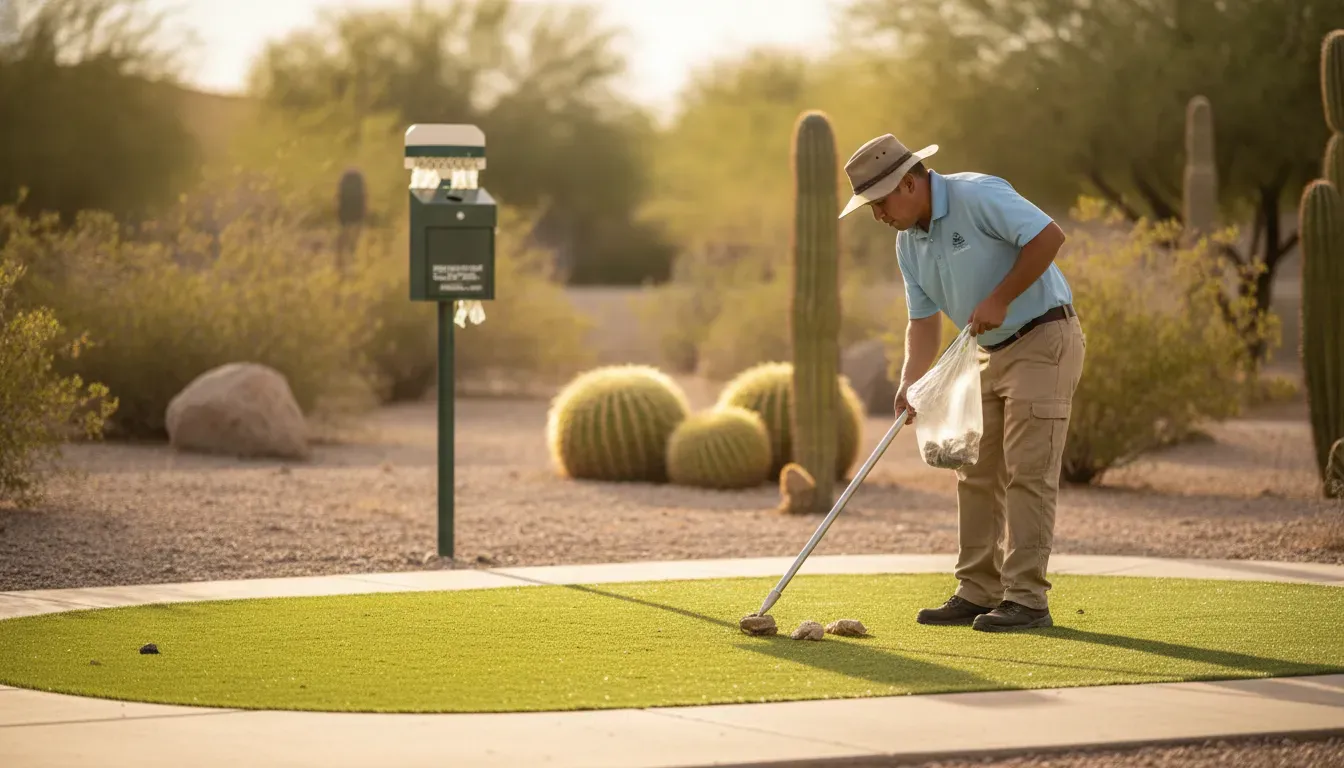
Why Does Las Vegas Heat Make Recurring Pickup More Important?
Las Vegas heat increases the operational cost of waiting for a problem to become visible. Waste left in a shared area can dry out, break apart, create odor, and be tracked across turf or walkways.
The longer a hotspot remains, the harder it is for residents and maintenance teams to distinguish a normal route issue from a larger maintenance concern. Recurring pickup creates a reliable second layer of care.
Residents still need clear rules and convenient bags. The service provider removes waste that residents miss and addresses common areas that are not assigned to an individual household.
A recurring route also helps the property team monitor conditions. If one pet area sees heavier use, bags run out faster, or residents report the same path edge, the manager has useful planning information.
Managers can use those observations during regular vendor reviews. Note changes in occupancy, new pet amenities, landscaping projects, gate access, or resident traffic.
Small scope updates are easier to discuss when the original route and service expectations are written down.
What Should Residents Know About Apartment Pet Waste Expectations?
Resident communication works best when it is short, visible, and connected to the property's layout.
A policy hidden in a lease packet is less useful than a clear reminder near a dog-relief zone, waste station, or community email.
Residents should know where they can take pets, where bags are available. How waste should be placed in a container, and how to report a station or route problem.
- Residents must pick up after their dogs in shared areas.
- Dog-relief zones are for pet use, but they are not exempt from cleanup expectations.
- Waste bags should be tied and placed in the correct container.
- Residents should report empty dispensers, full bins, damaged stations, or repeated hotspots.
- Service visits support cleanliness but do not remove a resident's responsibility to pick up immediately.
Managers should not present recurring service as permission to leave waste behind. The strongest message is shared responsibility. Residents pick up during each visit, while the maintenance plan provides consistent follow-through for common grounds.
How Often Should Apartment Dog Poop Pickup Happen?
The right schedule depends on property size, dog population, traffic patterns, relief-zone count, surface type, and tolerance for visible waste or odor.
A small community with one lightly used relief area may need a different route than a large apartment property with multiple dog runs, artificial turf, and several buildings.
Managers should review complaint timing, hotspot location, station capacity, and traffic when choosing a cadence.
Community conditionPlanning focusManagement questionOne relief areaDefine the zone and nearby pathsIs this area used every day?Multiple dog runsMap each zone and connecting routeWhich areas receive the most traffic?Artificial turfSeparate pickup from turf cleaningIs surface treatment also needed?Frequent complaintsCompare hotspots with route scopeIs the issue access, coverage, or frequency?Full stationsInclude dispenser and bin checksWho confirms supply capacity?
Regular waste removal can be weekly, bi-weekly, or custom. A one-time cleanup may be appropriate when waste has accumulated before recurring work begins.
A proposal should explain the recommended cadence instead of promising one schedule for every community.
What Does a Recurring Apartment Pickup Service Include?
Every proposal should state exactly what the provider will do during a scheduled visit. A typical recurring route may include inspecting assigned areas, collecting visible pet waste, bagging waste for removal, checking agreed hotspots, and documenting access conditions.
Additional station, turf, deodorizing, or event services should be listed separately. A1's established process includes customer-provided property access, an area inspection, waste collection, bagging, and removal for city sanitation collection.
For an apartment community, the process is adapted to the approved route and property rules. Managers should provide gate instructions, access codes, restricted-area details, and a point of contact before service begins.
Recurring pickup is different from a one-time cleanup. A reset may be appropriate when waste has accumulated before a maintenance plan starts. If artificial turf has odor or organic buildup, a manager may also need a separate turf-cleaning discussion.
How Can Managers Compare Apartment Dog Waste Pickup Providers?
Compare providers on operational fit, not just a verbal promise to scoop. A good vendor can explain coverage, frequency, access procedures, and how a manager can request changes when occupancy or pet traffic changes.
- Experience: Ask whether the provider has served apartments, HOAs, condominiums, or shared properties.
- Route scope: Confirm that the proposal names relief zones, walkways, lawns, edges, and exclusions.
- Service cadence: Ask how the schedule matches traffic, waste volume, and complaint patterns.
- Access: Confirm that gate, pet, staff, and restricted-area procedures can be followed.
- Communication: Identify the contact for missed access, damaged stations, or scope changes.
- Proposal clarity: Confirm that recurring work and optional services are separated.
A1 Pet Maintenance brings more than 26 years of Southern Nevada operating experience. Service for 400+ properties weekly, and commercial work that includes apartment, condominium, HOA, community, and government properties.
The company builds commercial service around the property rather than forcing every community into the same route. Managers can use the A1 commercial property service page before requesting a proposal.
What Should an Apartment Manager Prepare Before Requesting a Proposal?
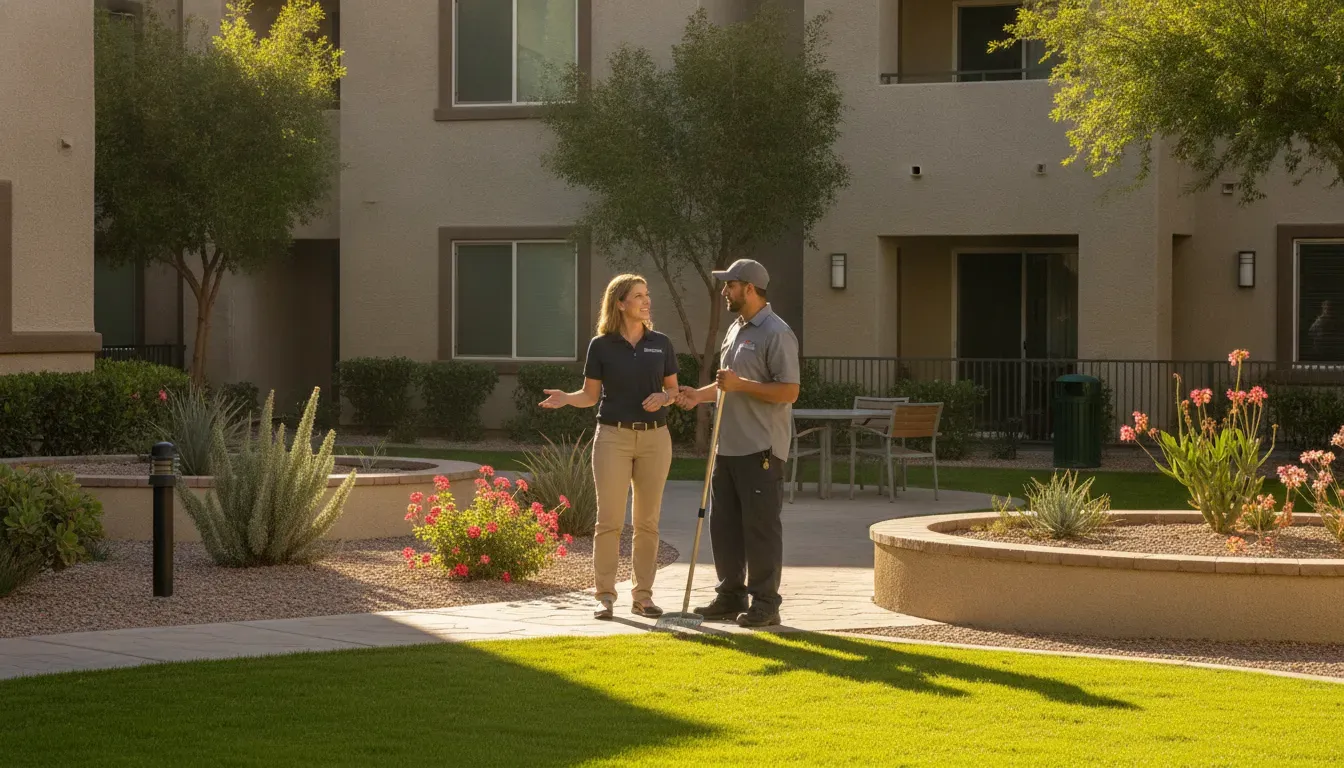
Good site information helps a provider recommend a practical route. Before requesting a proposal, gather the community address, approximate number of buildings, dog-relief zones, shared lawn and turf areas, access instructions, waste-station locations, and known problem areas.
Describe the desired result. A manager may need routine pickup for common areas, focused service for dog runs, station maintenance, a one-time reset, or coordination with landscaping service.
If the property has special hours, locked gates, security requirements, or resident events, include those details early. The provider can help identify route boundaries and service variables.
- Confirm the service address and community access process.
- Map dog-relief zones, paths, lawns, turf, and known hotspots.
- Share the preferred cadence and any station or event needs.
- Name the property contact who can approve scope changes.
These details help the provider prepare a proposal that ownership can review without guessing about the grounds or the community's routine.
How Does A1 Pet Maintenance Support Las Vegas Apartment Communities?
A1 Pet Maintenance helps property managers turn an unpleasant recurring task into a defined maintenance process. The team can review shared areas, discuss dog-relief zones and resident traffic, recommend recurring pickup, and outline optional services separately.
A1 has operated in Southern Nevada since 1998 and works with commercial properties, HOAs, condominiums, communities, and government entities. The value for an apartment manager is having an experienced service partner that understands access, route consistency, and communication.
For related operations guidance, see A1's multifamily pet waste management plan. It covers stations, inspections, odor control, resident communication, and vendor selection.
Call A1 Pet Maintenance at (702) 521-2624 Today.
Frequently Asked Questions
What is apartment dog poop pickup?
Apartment dog poop pickup is recurring removal of pet waste from shared areas such as dog-relief zones, lawns, walkways, courtyards, landscaping edges, and other agreed locations. The provider and manager define the route, access process, frequency, and any station services in advance.
Does apartment dog poop pickup replace resident cleanup?
No. Residents should pick up after their dogs immediately and use waste stations correctly. Recurring professional pickup supports the maintenance plan by addressing common-area waste, missed waste, hotspots, and areas not assigned to an individual resident.
How often should a Las Vegas apartment community schedule pickup?
The best frequency depends on property size, dog traffic, relief zones, surface type, waste volume, and complaint patterns. A provider can recommend a cadence that matches the community's actual use.
Can a provider service artificial turf dog areas?
Yes, a proposal can identify artificial turf areas for recurring waste pickup. Scooping and deep turf cleaning are separate needs, so managers should mention odor, debris, urine buildup, or surface concerns when requesting service.
How can a Las Vegas apartment manager request service?
A manager can call A1 Pet Maintenance at (702) 521-2624 and describe the property's location, shared pet areas, access requirements, and desired schedule. A1 can discuss the community's needs and prepare a proposal.