Dog Poop Cleanup After Vacation Las Vegas
Dog poop cleanup after vacation Las Vegas: learn when to choose a one-time reset, prepare for service, and prevent another buildup.

Coming home to several days of dog waste can make a relaxing return feel like an immediate yard project. Start by judging the size of the buildup. Check whether waste is spread across the yard or concentrated in a few areas. Then decide whether you need a single reset or an easier routine going forward.
For dog poop cleanup after vacation Las Vegas, a one-time cleanup is usually the practical first step when waste has accumulated during travel. A1's one-time service addresses collected waste. It does not automatically enroll you in recurring visits. The published cost range is $50 to $150, depending on yard size and the amount of waste.
Call (702) 521-2624 Today to discuss the cleanup your yard needs, or review A1's one-time cleanup service before choosing the next step.
Once the immediate backlog is clear, the right choice depends on your yard, travel schedule, and how consistently you want waste handled. A practical assessment can help you choose without paying for more service than you need.
How Should Las Vegas Homeowners Handle Dog Poop Cleanup After Vacation?
Start with a calm assessment rather than rushing into the yard. A short trip may leave a manageable amount of waste, while a longer absence can create a cleanup that is easier and more practical to hand off. Keep everyone out of the area until you know the scope, including children and pets.
1. Assess the backlog before choosing an approach
Walk the perimeter from a safe distance and note where waste has accumulated. Check grass, artificial turf, side yards, shaded corners, and areas behind outdoor furniture or gates. Look for the total size of the affected area, not just the most visible piles. This helps you decide whether you can complete the work safely and thoroughly or whether you need a one-time service for accumulated waste.
The CDC advises picking up dog poop even in your own yard, especially in places where children may play. It also says dog waste can carry germs that make people and animals sick. That guidance is a reason to address the backlog promptly, but it does not replace a professional medical opinion or justify making specific health claims about your yard.
2. Protect people, pets, and the surrounding area
Keep pets and children indoors or away from the cleanup zone. If you handle a small amount yourself, use bags, avoid direct contact, and wash your hands with soap and water afterward, even if you used a bag. The CDC recommends handwashing after contact with dog poop.
Bag waste for disposal in the trash, and avoid pushing it toward a drain or leaving it where runoff can carry it away. The EPA explains that stormwater can carry pet waste into streams, lakes, and rivers. Do not use outdoor chemicals or disinfectants unless you know they are appropriate for the surface and follow the product directions.
3. Decide whether to do it yourself or request service
A small, accessible amount may be reasonable to collect if you have the time, supplies, and a clear disposal plan. Request help when the backlog is extensive, spread across multiple areas, difficult to access, or simply more than you can comfortably manage after traveling.
- Estimate the yard size and the amount of accumulated waste.
- Confirm that pets, children, gates, and access points can be managed safely.
- Choose a small DIY cleanup or request a one-time professional visit.
- After the reset, decide whether weekly, twice-weekly, or another scheduled option would prevent another buildup.
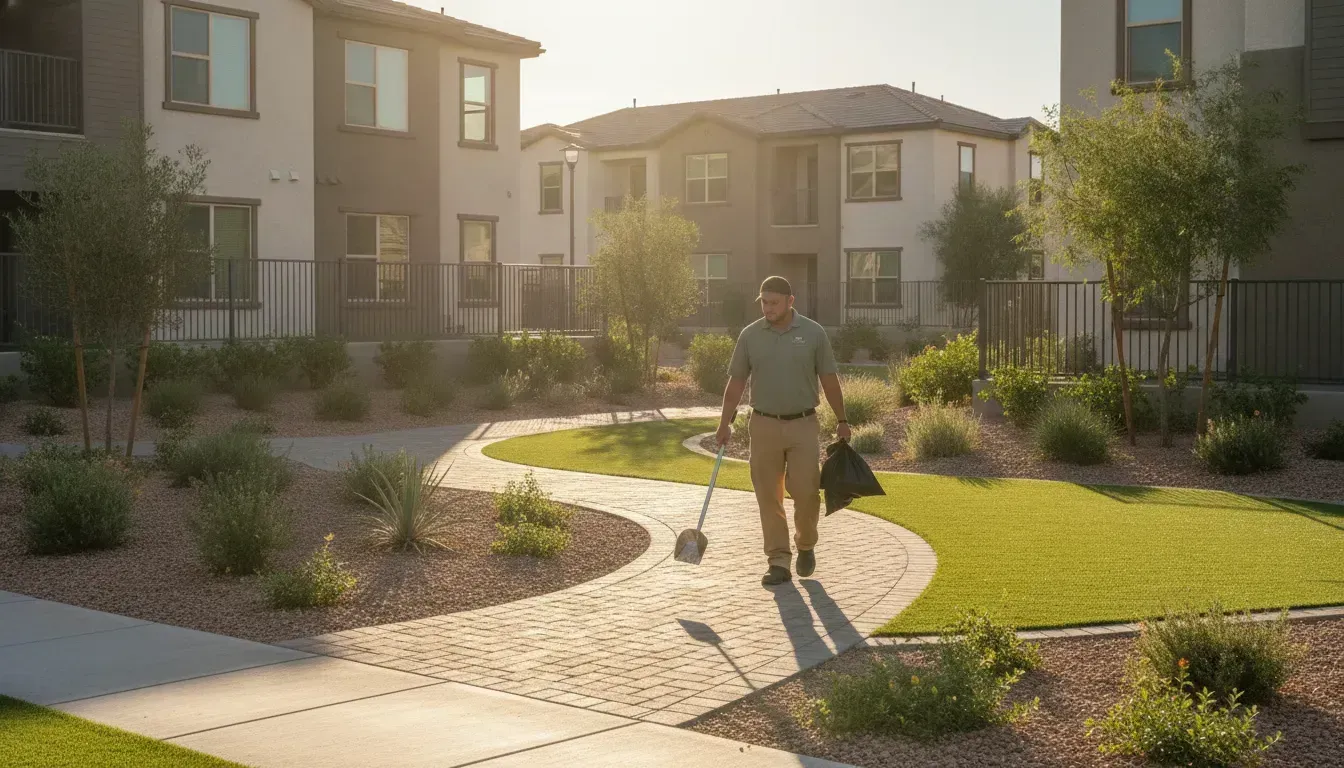
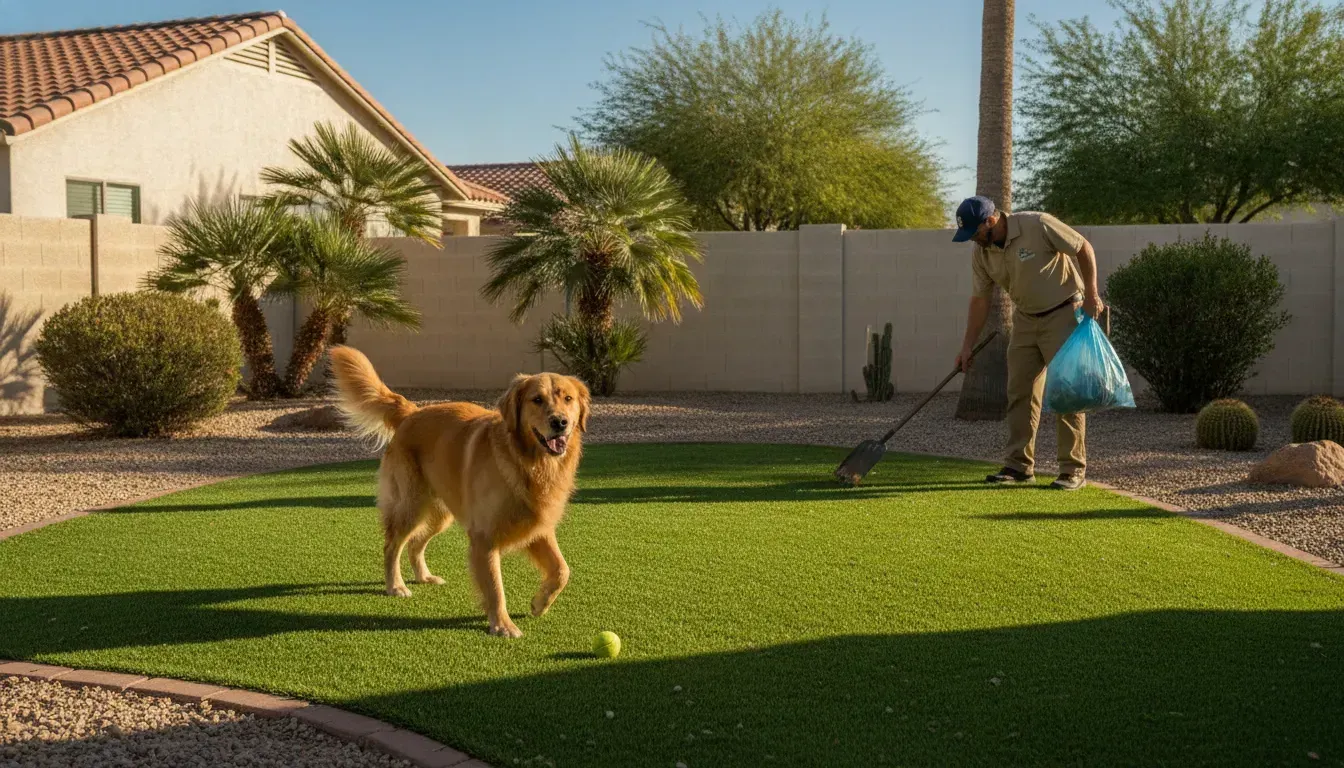
A1's one-time cleanup service includes inspecting the yard, collecting and bagging waste, and hauling it away for disposal through city sanitation. One-time service remains a standalone choice, so requesting a post-vacation cleanup does not automatically enroll you in recurring service.
What Should You Check Before You Start Cleaning the Yard?
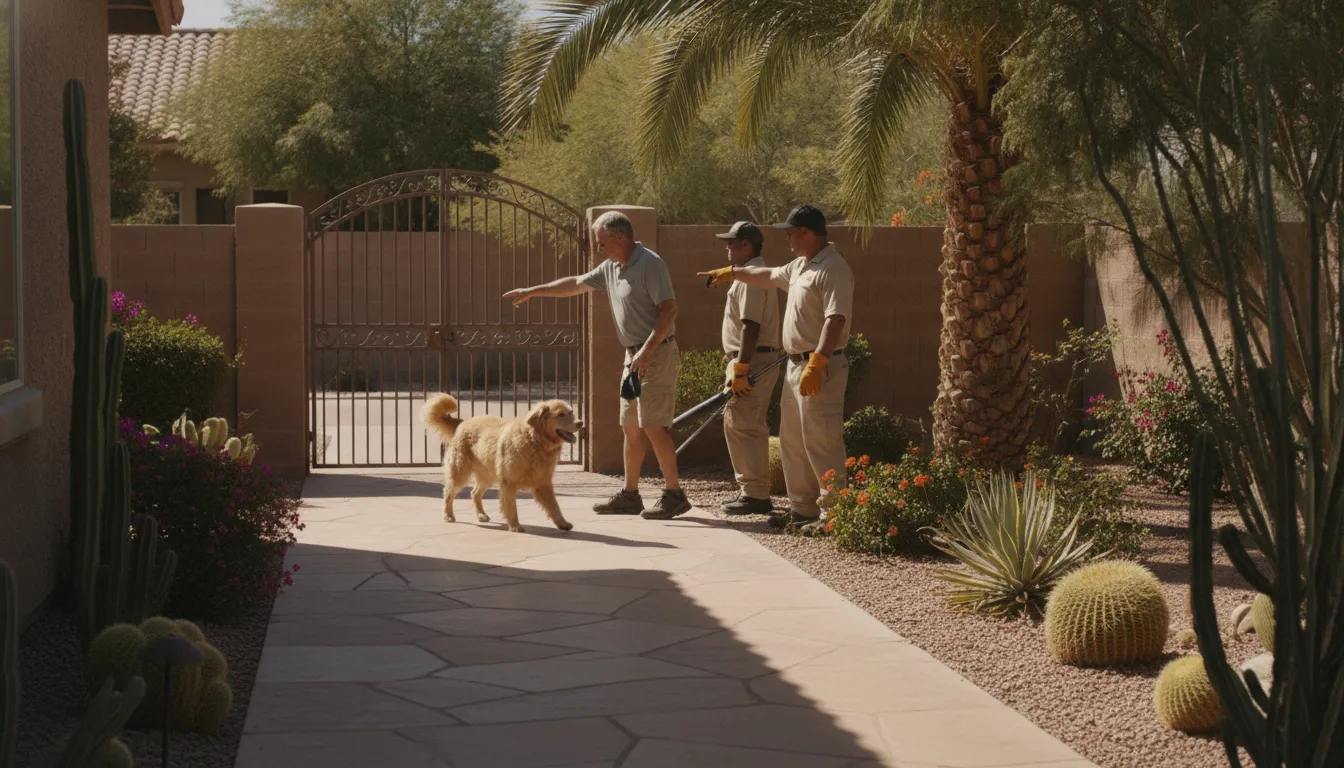 Before you begin dog poop cleanup after vacation in Las Vegas, take a few minutes to understand the yard's condition. A quick inspection helps you avoid missed piles, prepare for different surfaces, and decide whether the work is a reasonable DIY reset or a larger cleanup project.
Survey the whole yard, not just the open grass
Walk the perimeter and look closely at grass, gravel, artificial turf, concrete, side yards, and the areas behind outdoor furniture or near storage spaces. Waste can be easy to miss along fence lines, under bushes, beside irrigation equipment, and at the edges where one surface meets another. Note the approximate yard size and whether the accumulation appears light, scattered, or concentrated in several areas.
Pay special attention to play areas. The CDC advises picking up dog poop even in your own yard, especially where children may play. And recommends washing hands with soap and water after contact, even when a bag was used. CDC guidance on dogs and hygiene provides additional safety information.
Confirm access and keep people and pets separated
Check that the gate opens, identify any locked sections, and clear a safe path to the areas that need attention. Keep dogs and children out of the work area until the cleanup is finished. If a gate does not latch properly, or if another pet may enter while you are working, plan how the area will remain closed. These details matter whether you are handling the reset yourself or arranging professional help.
Plan collection, disposal, and the cleanup boundary
Have enough bags and a disposal plan before collecting anything. The CDC recommends picking up pet waste daily and bagging it for disposal in the trash. The EPA also notes that stormwater can carry pet waste from the ground into streams. Lakes, and rivers, so do not leave collected waste where runoff can move it. If you hire A1, its stated process includes inspecting the yard, collecting and bagging the waste, and hauling it away for disposal through city sanitation. Learn more about A1's one-time cleanup service.
- Estimate the yard size and amount of accumulated waste.
- List every surface and hidden edge that needs inspection.
- Confirm gate access, latches, and a safe route through the yard.
- Separate dogs and children from the cleanup area.
- Decide how bagged waste will be contained and disposed of.
If the accumulation covers much of the yard, the surface is difficult to inspect. Or the task is more than you can safely and practically manage, a one-time professional reset may be the better choice. Give the provider an honest description of the yard so the scope can be discussed before work begins.
When Is a One-Time Cleanup Better Than Recurring Service?
Coming home to a yard that has built up waste does not automatically mean you need an ongoing service plan. The right choice depends on whether you are solving a single backlog, managing a regular schedule, or trying to do both. A one-time cleanup can reset the yard after travel, while recurring visits can help prevent the same problem during busy weeks or future trips.
Choose a one-time reset for a single backlog
A one-time visit is usually the clearest fit when the main issue is accumulated waste from a vacation or another period when the yard was missed. A1 lists one-time cleanups for accumulated waste, with a published range of $50-$150 depending on yard size and the amount of waste present. That range is a starting point, not a guaranteed quote for every property. You can review A1's one-time cleanup service for the current service details.
Compare the three practical choices
Choosing a cleanup option after a vacationOptionBest fitWhat to expectOne-time resetA single vacation backlog or missed stretchThe yard is inspected, waste is collected and bagged, and the waste is hauled away. The visit does not automatically enroll you in recurring service.Recurring weekly or twice-weekly serviceA household that wants regular upkeepScheduled visits follow consistent service days or an agreed custom schedule, reducing the need to monitor the yard yourself.One-time reset plus recurring serviceA large backlog followed by a prevention planThe initial visit addresses the existing accumulation, then weekly or twice-weekly visits help maintain the yard going forward.
Use the hybrid choice when travel is part of the pattern
If vacations, work demands, or an active household regularly interrupt yard maintenance, combining a reset with scheduled visits may be more convenient. Recurring service is available weekly or twice weekly, and custom scheduling may help match your routine. For a broader look at residential scooping service options, consider how often waste accumulates and whether you want a predictable maintenance day. You can start with the one-time cleanup and decide separately whether ongoing service makes sense.
How Can You Prepare for a Professional Cleanup After Travel?
Make access and pet safety clear
Before the scheduled visit, make sure the cleanup team can reach the yard. Unlock the gate or explain how to obtain access, and point out any latch, side entrance, or access restriction that could affect the visit. You do not necessarily need to be home, but the provider does need a clear, agreed-upon way to enter and leave the property. Secure dogs indoors or in another area so they cannot interfere with the cleanup or slip through an open gate.
Identify the areas that need attention
Walk the property, if possible, and note where waste accumulated while you were away. Mention side yards, areas behind furniture, gravel, natural grass, concrete, and artificial turf. Also identify spots where debris, landscaping, or limited lighting may make piles harder to see. Sharing these details helps the team understand the yard before collection begins. A1's stated process includes inspecting the yard, collecting and bagging waste, and hauling it away for disposal through city sanitation.
Confirm the service boundary before work begins
A post-travel cleanup can be a single reset, or it can be the starting point for a conversation about future visits. Ask what the service includes, which areas are covered, how accumulated waste is handled, and whether any turf cleaning or odor treatment would be a separate service. A1 lists one-time cleanups for accumulated waste, while its regular residential options include weekly or twice-weekly visits. A one-time visit does not automatically enroll you in recurring service, so state clearly which option you want.
- Provide access instructions: Share gate details, entry notes, and any areas the team should not enter.
- Secure your pets: Keep dogs safely inside or separated from the work area until the gate is closed.
- Describe the yard: Identify surfaces, hidden sections, problem areas, and the approximate length of time the yard was unattended.
- Discuss the scope: Ask whether the visit covers collection and haul-away only, or whether artificial turf cleaning and deodorizing should be considered separately.
- Choose the next step: Confirm whether you want a one-time cleanup or want to discuss an ongoing schedule serving your Las Vegas or Henderson property.
These details make it easier to request a service that matches your actual need. For established local support focused on convenience, sanitation, and flexible service, review A1's one-time cleanup service and ask about the appropriate scope for your yard.
What If the Yard Still Smells After Dog Waste Is Removed?
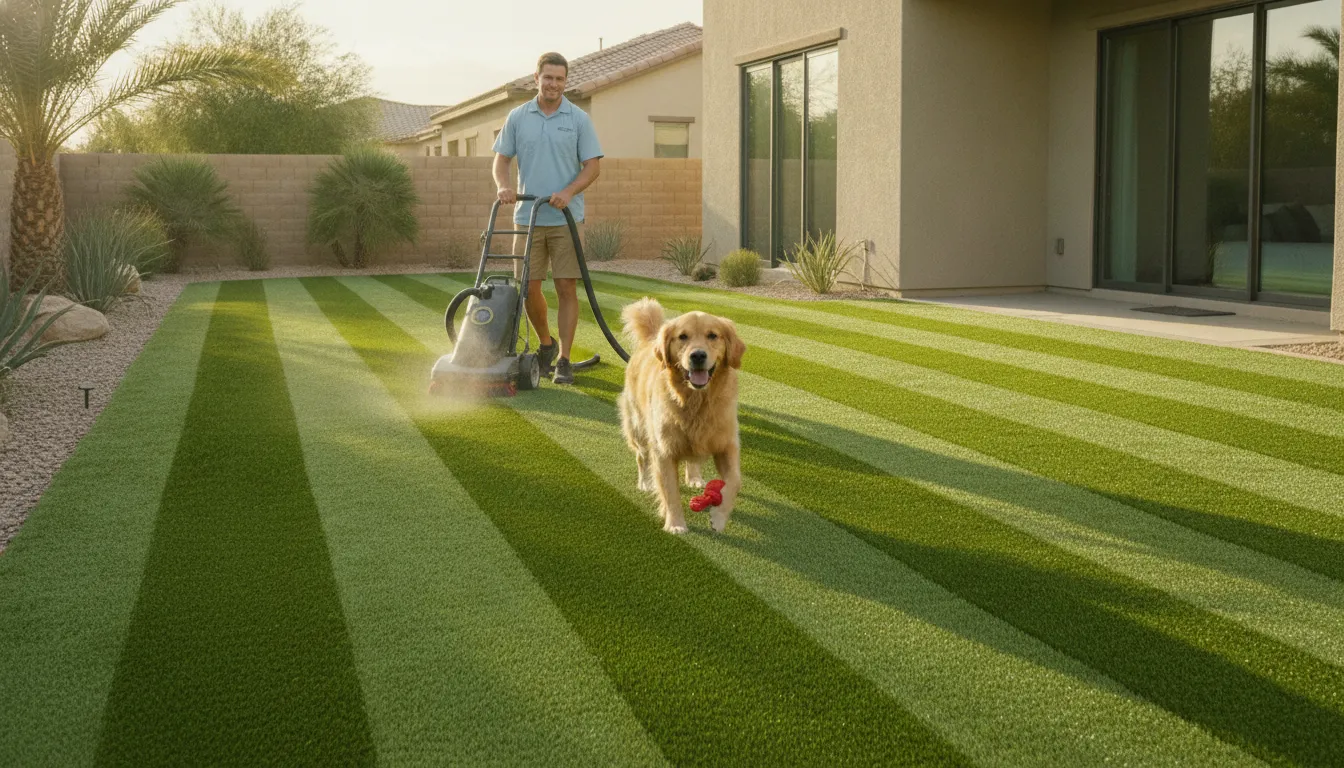 Removing visible piles is an important reset, but it does not always remove every source of odor. Waste can leave residue on hard surfaces, soil, or synthetic grass, especially when it has remained in place during a trip. A clean-looking yard may still need attention if the smell returns after heat or moisture reaches the affected area.
When does waste removal solve the problem?
A one-time cleanup is designed to address accumulated waste. The yard is inspected, waste is collected and bagged, and the material is hauled away for disposal. That can make a major difference after travel, but solid waste removal and surface deodorizing are separate needs. If the odor is coming from residue or organic buildup rather than a remaining pile, collecting more waste alone may not fully resolve it.
When does artificial turf need extra cleaning?
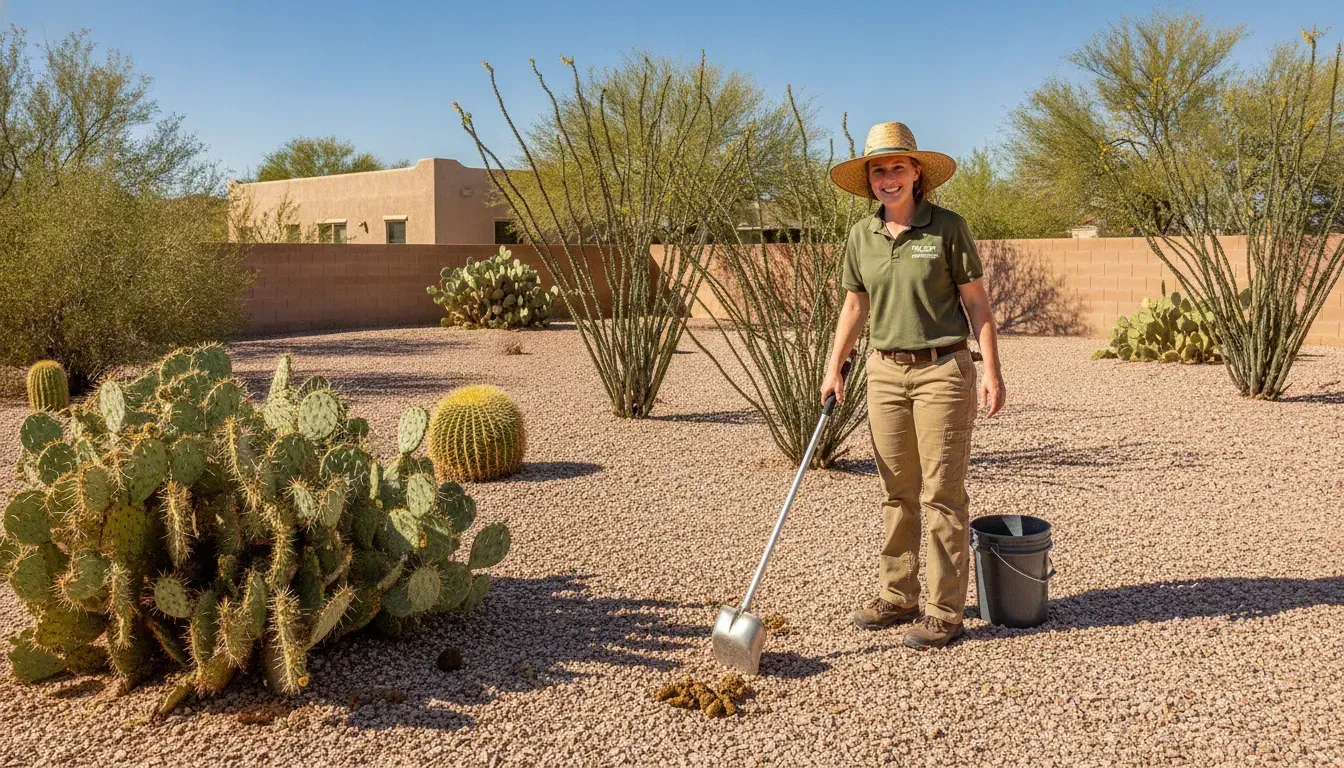
Artificial turf can hold odor and organic material below the surface or around the blades. If synthetic grass still smells after the visible waste has been removed, A1's separate artificial turf cleaning and odor treatment may be the more relevant service. The turf-cleaning process includes waste removal, debris clearing, enzyme-based deodorizing, rinsing, and agitation. It is intended for turf-specific buildup and persistent odor concerns, not as an automatic part of every standard yard cleanup.
When you call, explain the surface involved and whether the smell is localized or spread across the yard. That helps separate a simple post-vacation cleanup from a turf-cleaning need without assuming that every odor has the same source.
How can you prevent the smell from returning?
After the reset, use a routine that matches how often the yard is used. The CDC advises keeping a pet's living area clean and picking up pet waste daily for disposal in the trash. A simple routine includes:
- Check the yard each day for new waste, including less visible corners.
- Note any recurring odor or damp area before it becomes widespread.
- Arrange scheduled visits if travel or a busy routine makes daily pickup difficult.
A1 offers regular service weekly or twice weekly, along with custom scheduling options. A recurring plan can provide consistent visits after the initial reset, while a one-time cleanup remains a separate choice. For a Las Vegas yard that needs a post-vacation reset or a clearer odor-treatment recommendation:
Frequently Asked Questions
What should I do if I return from vacation to a yard full of dog waste?
Start by checking the entire yard, including areas behind gates, along fences, and around outdoor items. If the buildup is more than you want to handle, request a one-time cleanup to reset the space. The service includes inspecting, collecting, bagging, and hauling away the waste.
Should I choose a one-time cleanup or recurring service?
Choose a one-time visit when you need to address a vacation-related backlog but do not expect ongoing help. Recurring service may be a better fit if travel, work, or mobility makes regular scooping difficult. Weekly and twice-weekly options are available, and a one-time cleanup does not automatically enroll you in recurring service.
Does someone need to be home during the cleanup?
Ask about access when scheduling. The key preparation is to provide clear instructions for the gate, keep pets safely indoors, and identify any areas that need special attention. Confirm the access plan and service scope before the visit so the cleanup can proceed smoothly.
What affects the cost of a one-time dog waste cleanup?
Cost depends mainly on the yard size and the amount of accumulated waste. A1 publishes a one-time cleanup range of $50-$150, so confirm the current scope and estimate for your property before scheduling: view one-time cleanup details.
What if my artificial turf still smells after the waste is removed?
Solid waste removal and artificial turf odor treatment are separate needs. If odor or organic buildup remains, ask whether the turf needs deeper cleaning or deodorizing, which can include debris clearing, rinsing, and agitation. Regular pickup can also help prevent another buildup between cleanings.
Returning from a trip can leave your yard needing more than the usual weekly pickup. A1 Pet Maintenance can help you decide whether a one-time cleanup is the right reset or whether recurring visits would make maintenance easier going forward. Service options can be discussed around your yard size, accumulated waste, access details, and preferred schedule. If you have artificial turf or lingering odor after waste removal, mention that when you call so the conversation covers the right type of care.
Before reaching out, note the number of dogs, how long the yard was unattended, and whether a gate code or other access instructions apply. Then talk through the cleanup your property needs.