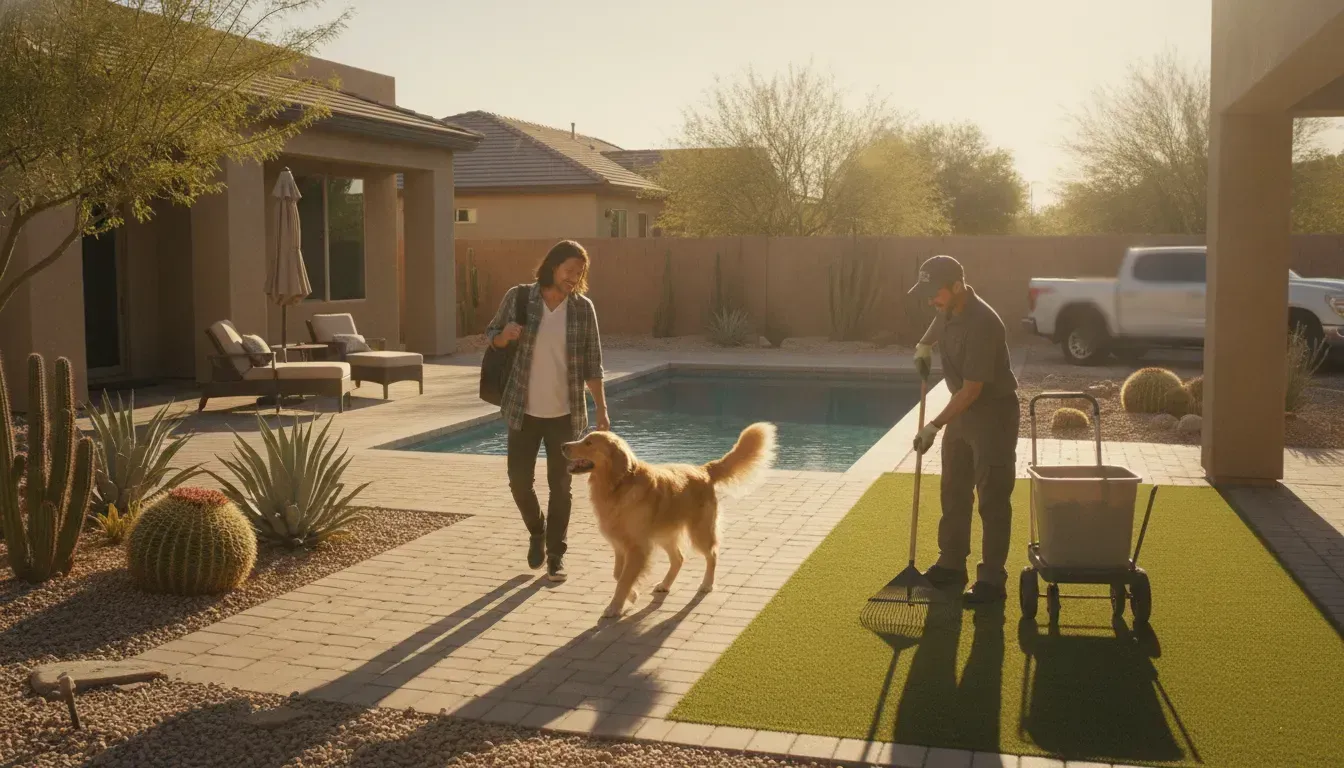
Artificial Turf Maintenance Las Vegas: Pet Owner Guide
This is a subtitle for your new post

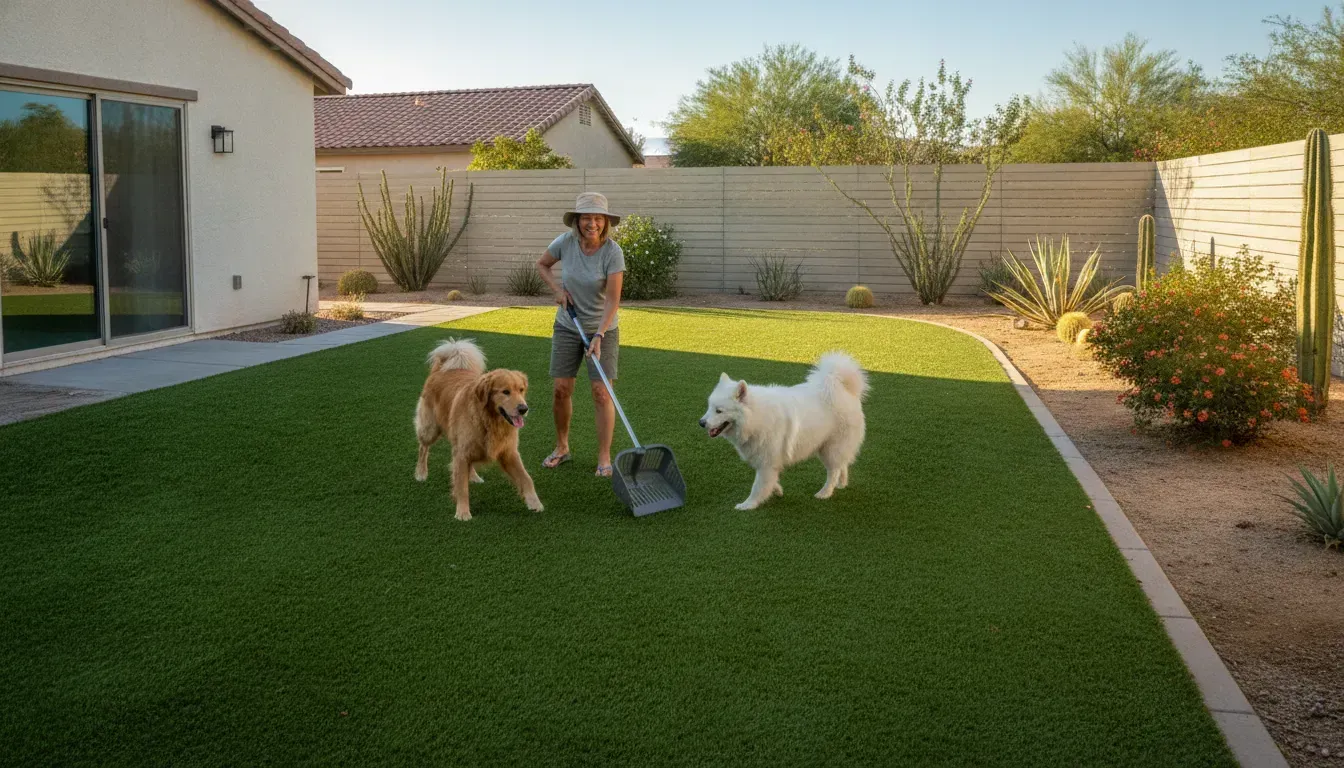
Artificial turf maintenance las vegas is easiest when it follows a simple year-round routine: remove solid waste promptly. Rinse high-use pet areas, clear desert dust and debris, and address urine odor before it becomes established. Las Vegas heat and limited rainfall make regular care especially important for homeowners who want a comfortable, usable pet yard.
Artificial grass reduces mowing and watering, but it is not maintenance-free. Pet traffic, blowing dust, and dry weather can leave residue in the turf fibers and infill. The right routine protects the appearance of the lawn while helping you notice drainage, odor, or wear issues early.
How Does Artificial Turf Maintenance Las Vegas Help Pet Owners?
In Las Vegas, consistent artificial turf maintenance helps pet owners manage the combination of intense heat, limited rain, windblown dust, and repeated use. Pickups, rinsing, debris removal, grooming, and occasional deeper sanitation each handle a different part of the problem. Together, they make a pet area easier to use and inspect.
Why does the desert climate change the routine?
Natural rainfall does little to flush a Southern Nevada yard, so loose dust and organic residue can remain on the surface or settle into the infill. Heat can also make an existing urine smell more noticeable. That does not mean every yard needs the same service schedule. It does mean waiting for rain or a visible odor is a poor maintenance plan.
Start by identifying the places pets use most. These may include a narrow side yard, a gate route, a favorite corner, or a small relief zone. Concentrated use means those areas need more frequent observation than decorative turf that pets rarely visit.
Use a quick inspection to look for waste, leaves, compacted debris, flattened blades, standing water, or a smell that returns after rinsing. The inspection is useful because it connects the maintenance step to the condition you are trying to improve. It also helps you avoid applying extra products when the underlying issue may be drainage or infill.
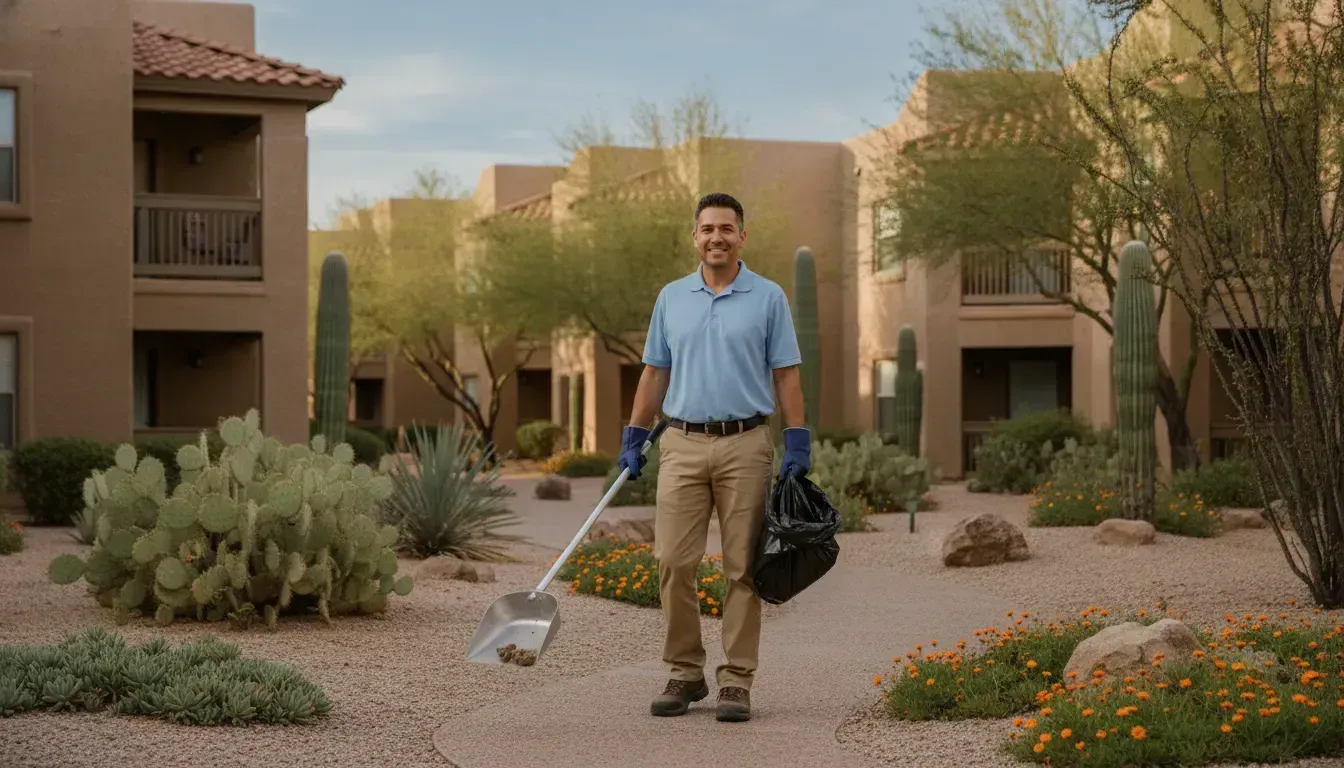
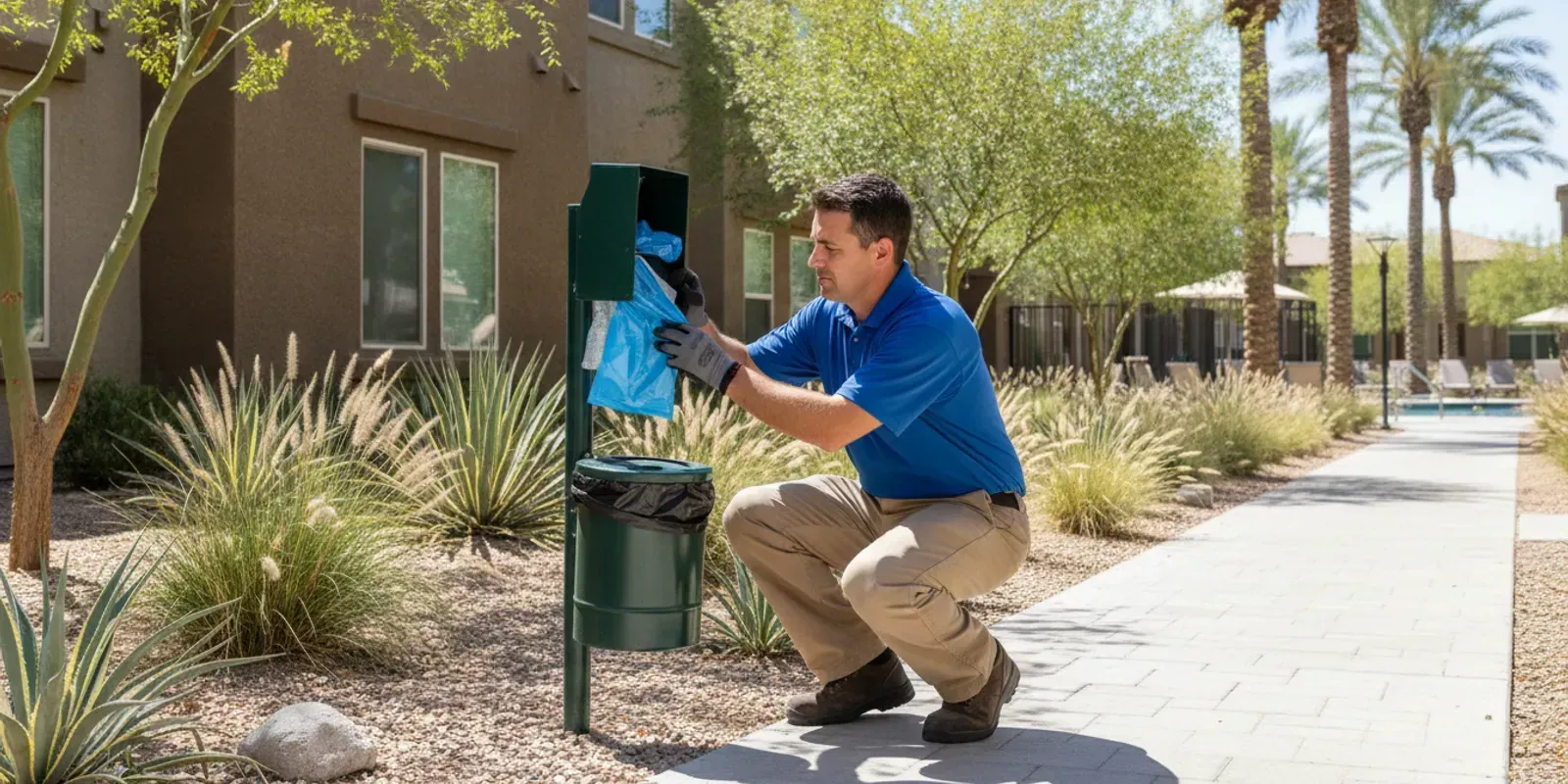
For a broader overview of service options, review A1's artificial grass cleaning and maintenance service. It explains how pet waste removal, debris clearing, enzyme-based deodorizing, deep rinsing, and agitation can fit together for artificial grass in Las Vegas and Henderson.
What Should You Do Each Week for Artificial Turf Maintenance Las Vegas?
A weekly artificial turf maintenance Las Vegas routine should begin with solid-waste pickup and finish with an inspection after rinsing. Remove visible waste, clear leaves and dust, rinse urine-prone sections, and check whether odor, residue, or slow drainage remains. Increase attention in small, high-traffic pet areas.
- Walk the entire turf area. Do not inspect only the spot that is easiest to see from the patio. Check edges, corners, behind gates, and the path pets take to their preferred relief area.
- Remove solid waste promptly. Bag and remove all visible waste, including small pieces caught between the blades. Prompt pickup limits residue and keeps later rinsing focused on the turf rather than on avoidable buildup.
- Clear surface debris. Use a soft broom, turf-appropriate rake, or a low-setting blower as appropriate for the installed system. Avoid aggressive pulling that can disturb blades or infill.
- Rinse high-use sections. Use clean water on areas where pets urinate or spend the most time. Cover the section methodically instead of repeatedly rinsing only one obvious patch.
- Inspect after the rinse. Look for persistent odor, residue, flattened fibers, standing water, or a section that stays damp. A recurring smell is a reason to investigate, not simply add more fragrance.
- Record patterns. Note which areas need repeated attention and whether odor returns quickly. Traffic patterns, drainage, and the number of pets can help determine whether your routine needs to change.
Homeowners should follow the turf manufacturer's care instructions and the label directions for any cleaning product. Do not mix cleaners. Avoid assuming that a stronger concentration is safer or more effective. If a product calls for a dwell time, dilution, rinsing step, or restricted pet access, follow that instruction before allowing animals back onto the area.
Weekly care is the baseline, not a promise that every turf problem can be solved with a hose. If the yard remains fresh after rinsing and has normal drainage, the routine may be enough for day-to-day upkeep. If odor returns rapidly, several dogs use a compact area, or buildup appears below the blades, consider a deeper assessment.
How Should Las Vegas Homeowners Adjust Turf Care by Season?
Seasonal turf care in Las Vegas should keep the core routine consistent while changing how often you inspect, rinse, and clear debris. Spring winds can deposit dust, summer heat can amplify odor, monsoon storms can move mud and organic material, and winter shade can slow drying. Seasonal adjustments should respond to conditions, not a rigid calendar.
What should you do during spring winds?
After windy periods, inspect the full yard and remove leaves, dust, and small debris before they settle into the infill. Pay special attention to corners and narrow passages. Follow surface cleanup with a careful rinse of high-use pet areas. If the turf is newly installed or has a specific infill system, use the maintenance method recommended by the installer.
How can you manage summer heat?
Summer is the time to check urine-prone spots before odor becomes obvious throughout the yard. Keep solid-waste pickup prompt, rinse regularly, and monitor areas that receive direct sun or repeated pet traffic. Do not use heat as a reason to layer multiple chemicals. If odor persists despite correct routine care, deeper sanitation may be more appropriate than additional surface product.
What changes after a monsoon storm?
When it is safe to enter the yard, remove branches, leaves, mud, and other material carried by the storm. Check low spots and drainage paths for standing water or compacted sediment. Do not treat a drainage problem as an odor problem. If water remains where it normally drains, document the location and have the turf system evaluated.
What should you monitor in fall and winter?
Continue pickup and rinsing even when cooler weather makes odors less noticeable. Shaded areas can dry slowly, while wind can continue to deposit dust. Keep the blades upright with a turf-appropriate grooming method, and inspect around gates, walls, and furniture where debris can collect.
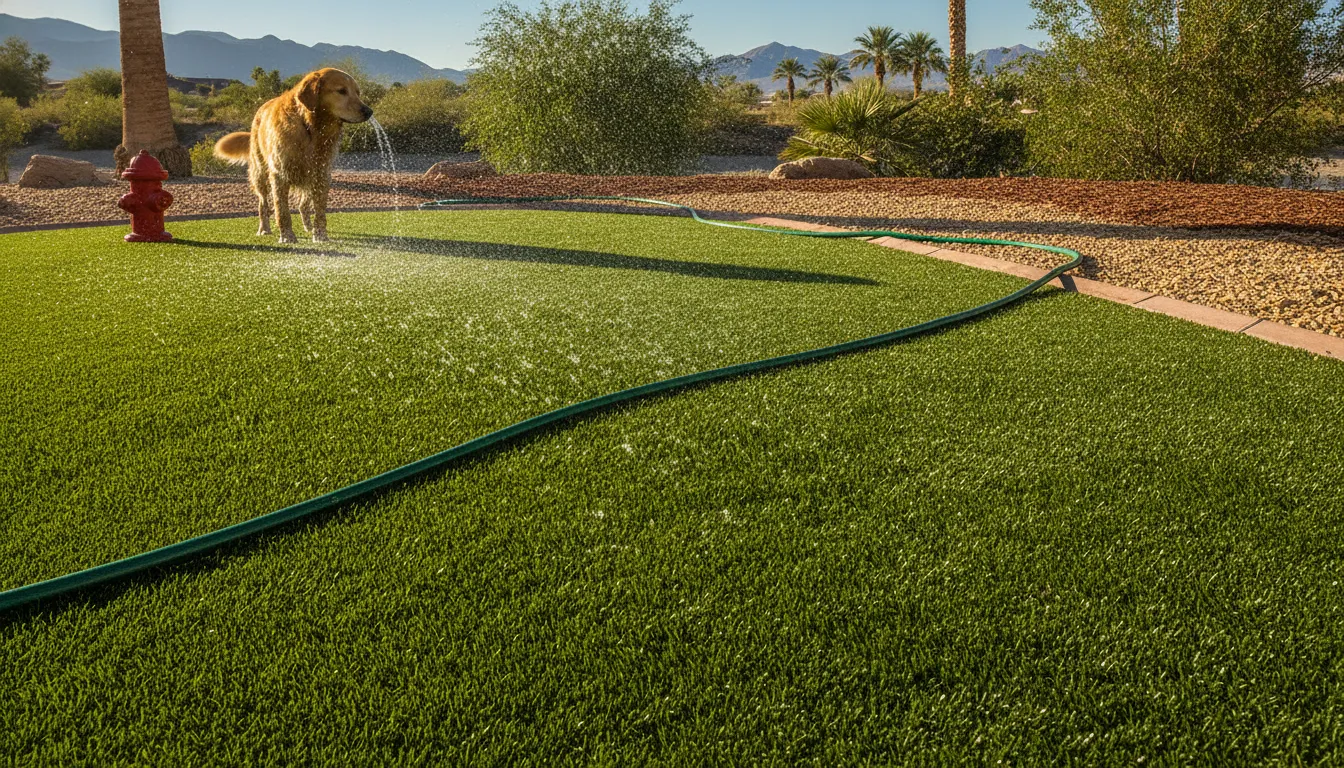 For more information about a service-level approach, see A1's guide to
cleaning artificial turf for dogs. The most useful seasonal plan is the one that reflects the property's actual pet traffic and weather exposure.
For more information about a service-level approach, see A1's guide to
cleaning artificial turf for dogs. The most useful seasonal plan is the one that reflects the property's actual pet traffic and weather exposure.
How Can You Prevent Dog Urine Odor in Artificial Grass?
Preventing dog urine odor starts with prompt waste removal, regular rinsing of urine-prone areas, and a product labeled for artificial turf when additional treatment is needed. Infill, drainage, pet traffic, shade, and heat all affect how long residue remains noticeable. Start with observation, then choose the least complicated step that addresses the condition.
Which daily habits make the biggest difference?
Pick up solid waste as soon as practical and do not let repeated urine deposits go unobserved. Rinse favorite relief spots on a routine that matches their use. Clear leaves and organic debris because residue trapped under surface material can complicate odor control. These habits are simple, but they prevent a small concentrated area from becoming the only part of the yard people notice.
If you use an enzyme-based cleaner, select one whose label identifies it as suitable for artificial turf and follow the label exactly. Respect dilution, application, dwell-time, rinsing, and re-entry directions. More product is not automatically more effective. Keep pets away for any period stated on the label.
What does a returning odor tell you?
A smell that returns soon after rinsing may indicate concentrated use, residue in the infill, slow drainage, compacted material, or a shaded area that dries slowly. Walk the area after watering and observe how it drains. If one section stays damp or odor is confined to a particular route, record that pattern before seeking service.
Avoid mixing disinfectants, fragrances, household chemicals, or multiple cleaners. Layering products can leave residue and make it harder to determine what caused the reaction. If prompt pickup, thorough rinsing, and correctly applied product do not improve the problem, a professional can assess the turf and recommend a targeted sanitation approach.
A1's artificial turf service includes complete pet-waste removal, debris clearing, enzyme-based deodorizing treatment, deep rinse and agitation, and optional recommendations about infill refresh when needed. Learn more about how often artificial turf should be cleaned for dogs, then adjust the starting point for your own yard.
When Is DIY Care Enough, and When Is Professional Sanitation Better?
DIY care is often appropriate when pet traffic is light or moderate, waste is removed promptly, the turf drains normally, and the area smells fresh after rinsing. Professional sanitation becomes more useful when odor returns, multiple dogs share a compact relief area. Dust and organic matter have accumulated, or the homeowner cannot maintain the yard consistently.
Choosing a practical turf-care levelSituationHome maintenanceProfessional helpLight use and no persistent odorPick up waste, rinse high-use areas, remove debris, and inspect regularly.Optional help when time or equipment is limited.Recurring odor after rinsingCheck concentrated use, drainage, shade, and product directions before adding anything else.Consider deeper sanitation and an assessment of turf, infill, and odor sources.Several pets or a small relief zoneIncrease pickup and rinsing frequency and monitor the most-used spots.Recurring service may provide more consistent attention to high-traffic areas.Debris, flattened blades, or infill concernsUse only turf-appropriate grooming tools and follow installation guidance.Ask about debris clearing, agitation, and recommendations for infill attention.
What can a professional visit address?
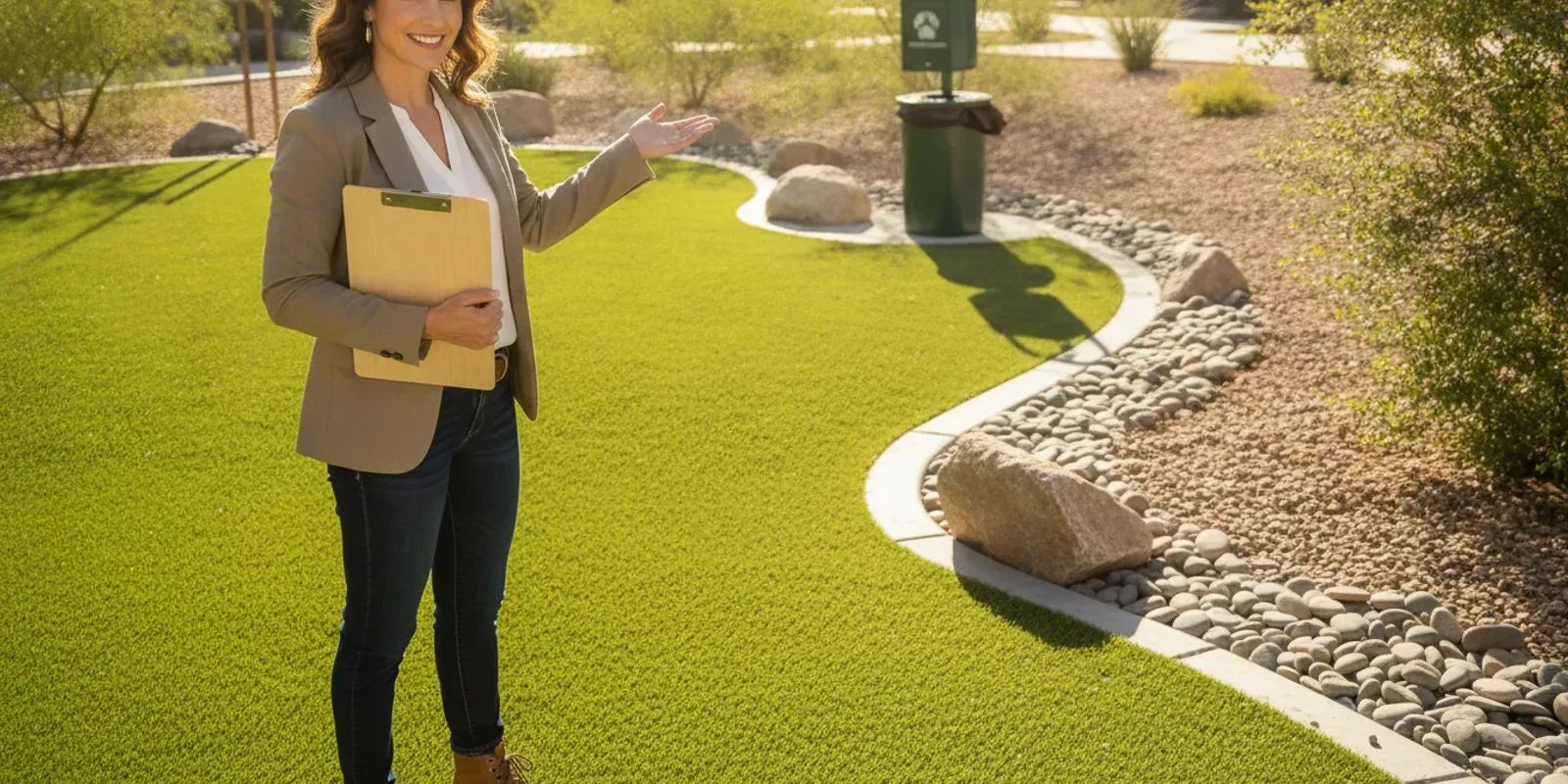
A professional visit can begin with an inspection of the surface and the places pets use most. The technician can identify visible waste, organic debris, odor concerns, and conditions that may affect drainage. The work can then be matched to the turf's condition instead of applying the same treatment to every yard.
A1 describes its process as including pet-waste removal, debris clearing, enzyme-based deodorizing, deep rinsing, and agitation to restore turf fibers. The service may also include recommendations about refreshing infill when the condition warrants further attention. Results depend on the turf system, drainage, pet traffic, and buildup, so no single visit should be treated as a universal guarantee.
Professional help also has a practical value. A homeowner may know that the yard smells wrong but not have the time to locate the concentrated area or work through the cleanup. A planned service can make the next maintenance decision clearer. For cost context, read A1's guide to artificial turf cleaning cost in Las Vegas. Pricing is not listed as a fixed amount on A1's service page, so a quote should reflect the property.
What Does Professional Artificial Turf Maintenance Include?
Professional artificial turf maintenance can include inspection, complete pet-waste removal, debris clearing, deodorizing treatment, deep rinsing, agitation, and guidance about infill. The exact work depends on the surface, pet traffic, drainage, and buildup. A quality service should explain what it observed and what the homeowner should monitor afterward.
How does the process begin?
The first step is understanding the property. A technician should look at high-use relief areas, edges, corners, visible debris, odor patterns, and drainage behavior. This helps separate a surface-cleaning need from a possible infill or drainage concern. It also gives the homeowner a useful handoff instead of a generic maintenance recommendation.
Why are debris removal and agitation useful?
Leaves, dirt, and organic material can collect among the blades. Removing that material helps expose the surface for rinsing and treatment. Agitation can help lift fibers and distribute cleaning attention through the turf system, but the method should remain appropriate for the installation. Aggressive tools can damage blades or disturb infill.
How should odor treatment be explained?
Enzyme-based deodorizing is intended to address urine-related odor at its source rather than simply cover the smell with fragrance. Product directions and the turf manufacturer's requirements still matter. A responsible explanation describes the treatment and its purpose without promising that every odor or contaminant disappears in one visit.
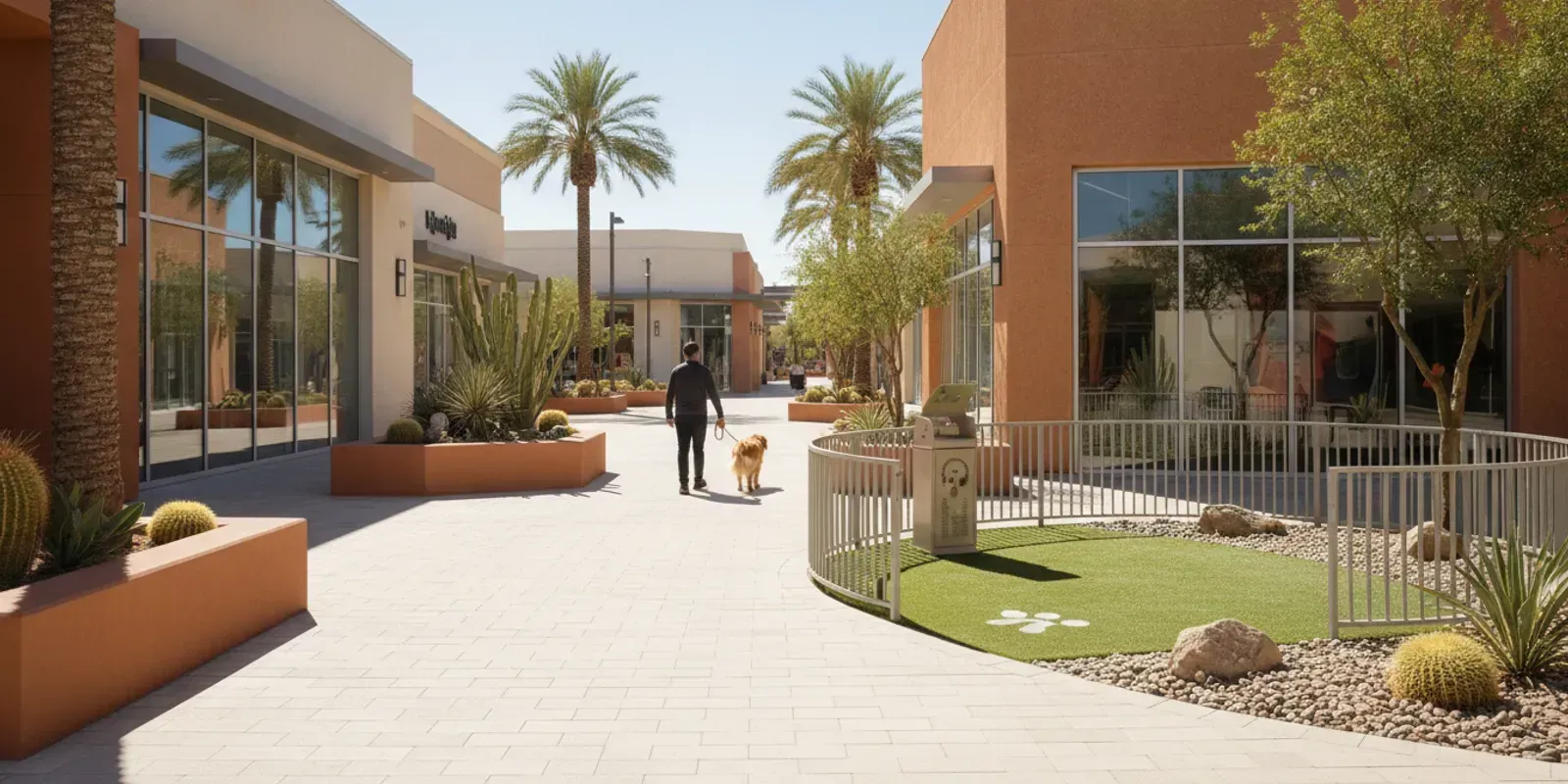
A1 Pet Maintenance has operated since 1998 and serves more than 400 properties weekly, according to its company information. Its artificial grass cleaning service covers Las Vegas, Henderson, and surrounding Clark County communities. The company describes the service as appropriate for homeowners, pet-friendly commercial landscapes, apartment properties, boarding facilities, and other high-traffic pet areas.
If recurring waste removal would make the rest of the routine easier, review A1's one-time cleanup options or its regular pet-waste service information. A clean turf plan usually combines the right service level with daily habits between visits.
How Can You Build a Manageable Turf-Care Schedule?
A manageable schedule assigns small tasks to the frequency they need. Pick up waste whenever you see it, rinse high-use areas weekly or as conditions require. Clear windblown debris after storms, and review odor and drainage patterns before deciding whether deeper sanitation is needed. The schedule should be realistic enough to continue.
What belongs on a simple schedule?
- As needed: Remove solid waste and obvious debris. Check the pet relief area when odor changes or a storm moves material across the yard.
- Weekly baseline: Rinse urine-prone areas, inspect drainage, and groom the turf with an appropriate tool if blades appear flattened.
- After windy or rainy weather: Clear leaves, dirt, branches, and mud. Inspect drains and low spots after the area is safe to enter.
- Seasonally: Review the areas that receive the most sun, shade, and pet traffic. Adjust attention based on what you observe.
- When routine care stops working: Pause product experimentation and seek an assessment of odor, infill, drainage, and surface condition.
Do not let a detailed checklist become a substitute for judgment. A two-dog yard with open drainage may need a different rhythm than a compact side yard used by several dogs. The purpose of a schedule is to catch changes early and keep the maintenance burden predictable.
For a related reference, see A1's Las Vegas artificial grass cleaning service. It can help you compare routine homeowner care with a one-time or recurring sanitation visit.
Frequently Asked Questions
How often should I clean artificial turf in Las Vegas?
Remove solid waste promptly and rinse high-use pet areas regularly. A deeper cleaning schedule depends on pet count, traffic, odor, drainage, and buildup. A yard that stays fresh after routine care may need less professional attention than a compact area used by multiple dogs.
Does artificial grass smell like dog urine in the heat?
It can. Heat can make an existing urine odor more noticeable, especially when residue remains in the turf or infill. Prompt pickup, regular rinsing, and a correctly used artificial-turf cleaner can help. If odor returns quickly, check drainage and consider deeper sanitation.
Can I rinse artificial turf myself?
Yes, many homeowners can rinse common high-use areas themselves. Remove waste and debris first, use clean water, and observe whether the area drains normally. Follow the installation and product instructions, and do not mix cleaning chemicals.
When should I hire a turf-cleaning service?
Consider professional help when odor persists after careful rinsing, several pets share the area. Debris has collected below the surface, drainage appears abnormal, or regular maintenance is difficult to keep up with. A service can assess the turf and match sanitation to the condition.
Does A1 Pet Maintenance serve Las Vegas and Henderson?
Yes. A1's artificial grass cleaning information identifies Las Vegas, Henderson, and surrounding Clark County communities as service areas. The company offers pet-waste removal, debris clearing, enzyme-based deodorizing, deep rinsing, agitation, and infill recommendations when needed.
Need Help With Artificial Turf Maintenance Las Vegas?
A consistent routine can keep a Las Vegas pet yard easier to inspect and more comfortable to use. If persistent odor, heavy pet traffic, debris, or limited time makes DIY care difficult, A1 Pet Maintenance can discuss a one-time or recurring sanitation approach for your property.