Pet Turf Sanitation: A Step-by-Step Guide
This is a subtitle for your new post

Your artificial turf is the perfect playground for your kids and pets, but what you can't see could be a problem. While it may look clean, pet waste leaves behind invisible threats like E. coli, Salmonella, and other harmful bacteria. Unlike a natural lawn where soil helps break down waste, these pathogens can linger on synthetic fibers for a long time. Simply picking up solids and rinsing with water isn't enough to create a truly hygienic space. Proper pet turf sanitation is essential for protecting your family's health. This guide will walk you through the necessary steps to disinfect your yard effectively, ensuring it's a safe place for everyone to enjoy.
Key Takeaways
- Treat Turf Like a Surface, Not Soil: Unlike a natural lawn that breaks down waste, artificial turf is a non-porous surface where bacteria and odor-causing urine crystals build up. A consistent cleaning routine is necessary to keep your yard hygienic and safe.
- Stick to a Simple Routine and Safe Products: A schedule of daily scooping, weekly rinsing, and monthly deep cleaning prevents major issues. Always use pet-safe enzymatic cleaners that eliminate odors at their source, and avoid harsh chemicals like bleach that can damage your turf.
- Know When to Call for Backup: If a stubborn urine smell persists despite your best efforts, it's a clear sign that the problem is deeper than DIY methods can reach. A professional service has the right equipment to deep clean, sanitize, and restore your turf.
What Is Pet Turf and Why Is It So Popular?
If you live in a dry climate like Southern Nevada or Tucson, you know the struggle of keeping a natural lawn green. Add a dog to the mix, and you can say goodbye to that perfect patch of grass. That's why so many pet owners have turned to artificial pet turf. It promises a lush, green yard year-round without the constant watering, mowing, or patching of urine spots. It seems like the perfect, low-maintenance solution for a beautiful, pet-friendly backyard.
While pet turf solves many common lawn problems, it introduces a new challenge: sanitation. Unlike soil, which can break down and absorb pet waste over time, artificial turf is a non-porous surface. Urine and feces sit on top, creating a breeding ground for bacteria and odors if not managed correctly. The "low-maintenance" dream can quickly turn into a smelly, unhygienic nightmare. But don't worry, keeping your turf clean and safe for your family and pets is completely manageable with the right routine and knowledge. This guide will walk you through everything you need to know.
How Pet Turf Differs From Regular Artificial Grass
Not all artificial grass is built for pets. While standard turf might look the part, pet-specific systems are designed to handle the daily demands of our furry friends. The biggest difference is drainage. Pet turf features a highly permeable backing that allows liquids, especially urine, to flow through quickly instead of pooling on the surface. The infill, which is the material sprinkled between the grass blades, is also different. Many pet turf systems use antimicrobial infills that help prevent the growth of bacteria and reduce odors from the start. Finally, the grass fibers themselves are often more durable to withstand rough play and digging.
The Benefits for You and Your Pets
When properly maintained, the advantages of pet turf are hard to ignore. The most celebrated benefit is the end of muddy paws tracked through your house after a rainstorm or morning dew. Your yard stays consistently green and beautiful, with no yellow or brown spots from dog urine. Pet turf can also reduce the presence of pests like fleas and ticks that thrive in natural grass and soil. For your pets, it provides a comfortable and consistent surface to play on, free from poky weeds, pesticides, or fertilizers that can irritate their skin. It's a clean, reliable space for everyone in the family to enjoy.
Why Sanitation Matters From Day One
The moment your pet starts using the turf, sanitation becomes your top priority. When urine sits on the surface, it breaks down and releases ammonia gas, which is the source of that strong, unmistakable odor. Feces left behind can harbor harmful bacteria and parasites like E. coli and Giardia, posing a health risk to both pets and people. Simply rinsing with a hose isn't enough to eliminate these invisible threats. Establishing a consistent cleaning routine from day one is essential. For a truly sanitary space, regular deep cleans are a must, which is why many homeowners rely on professional artificial grass cleaning and maintenance to keep their investment fresh and safe.
What's Hiding in Your Pet Turf?
Artificial turf is a fantastic, low-maintenance solution for pet owners, but "low-maintenance" doesn't mean "no-maintenance." While your synthetic lawn might always look green and tidy, the fibers can trap a host of unseen problems that go beyond just visible pet mess. Understanding what's really going on beneath the surface is the first step to keeping your turf safe, clean, and fresh for your entire family, furry members included. From lingering bacteria to stubborn odors and allergens, what you can't see can definitely affect your yard's health and your peace of mind. Let's look at what could be hiding in your pet turf.
Bacteria and Parasites From Pet Waste
This is probably the least pleasant part, but it's the most important. Your dog's waste is more than just an eyesore; it's a little package of contaminants. According to research cited by the U.S. Environmental Protection Agency, a single gram of dog poop can contain around 23 million bacteria. These aren't harmless microbes, either. We're talking about pathogens like Salmonella, E. coli, and Giardia, along with parasites like roundworms. Unlike on a natural lawn where soil and microbes help waste break down, these harmful organisms can survive on synthetic turf for a long time, creating a health risk for pets and people who use the yard. Simply picking up the solid waste isn't enough to eliminate the microscopic threat left behind.
Odor-Causing Compounds in Urine
If you've ever caught a whiff of ammonia on a hot day, you know that lingering urine smell. This isn't just in your head. When your pet urinates on the turf, the uric acid crystals get trapped in the turf fibers and infill. Over time, bacteria begin to break down the urine, releasing ammonia gas as a byproduct. This is what causes that strong, undeniable odor. Because turf doesn't absorb and process liquid the way soil does, these urine crystals accumulate, making the smell worse over time. A simple rinse with the hose might wash away the liquid, but it often leaves the odor-causing crystals behind, which is why you need a more targeted approach for artificial grass cleaning.
Dirt, Debris, and Allergens
Pet waste isn't the only thing your turf collects. The dense fibers are excellent at trapping dust, pollen, leaves, and other airborne debris. For families with allergies, this can turn your lawn into a reservoir of irritants that get kicked up every time someone walks or plays on it. This buildup of organic matter can also create a damp environment that encourages the growth of mold and mildew, especially in shaded or poorly drained areas. Regular cleaning helps remove these allergens and debris, keeping your turf from becoming a shaggy, dusty carpet. It also keeps the fibers looking and feeling their best, so your lawn stays inviting.
How Poor Drainage Makes Contamination Worse
Proper drainage is the unsung hero of a clean and sanitary pet turf system. Your artificial grass should be installed over a base that allows liquids to flow through and away from the surface. When drainage is poor or the system becomes clogged, urine and bacteria-filled water can't escape. Instead, it pools just beneath the surface or within the infill layer. This creates a stagnant, smelly swamp that becomes a concentrated breeding ground for all the bacteria and odor-causing compounds we've talked about. No amount of surface cleaning will fix a problem that lies underneath, which is why ensuring your turf has proper drainage from the start is so critical for long-term sanitation.
Your Pet Turf Cleaning Schedule: Daily, Weekly, and Monthly
Keeping your pet turf clean and fresh doesn't have to be a major project. The key is consistency. By breaking down the work into simple daily, weekly, and monthly tasks, you can prevent odor and bacteria from building up, ensuring your yard is always a pleasant and safe space for your family and pets. Let's walk through a simple schedule you can follow.
Daily Habits That Make a Big Difference
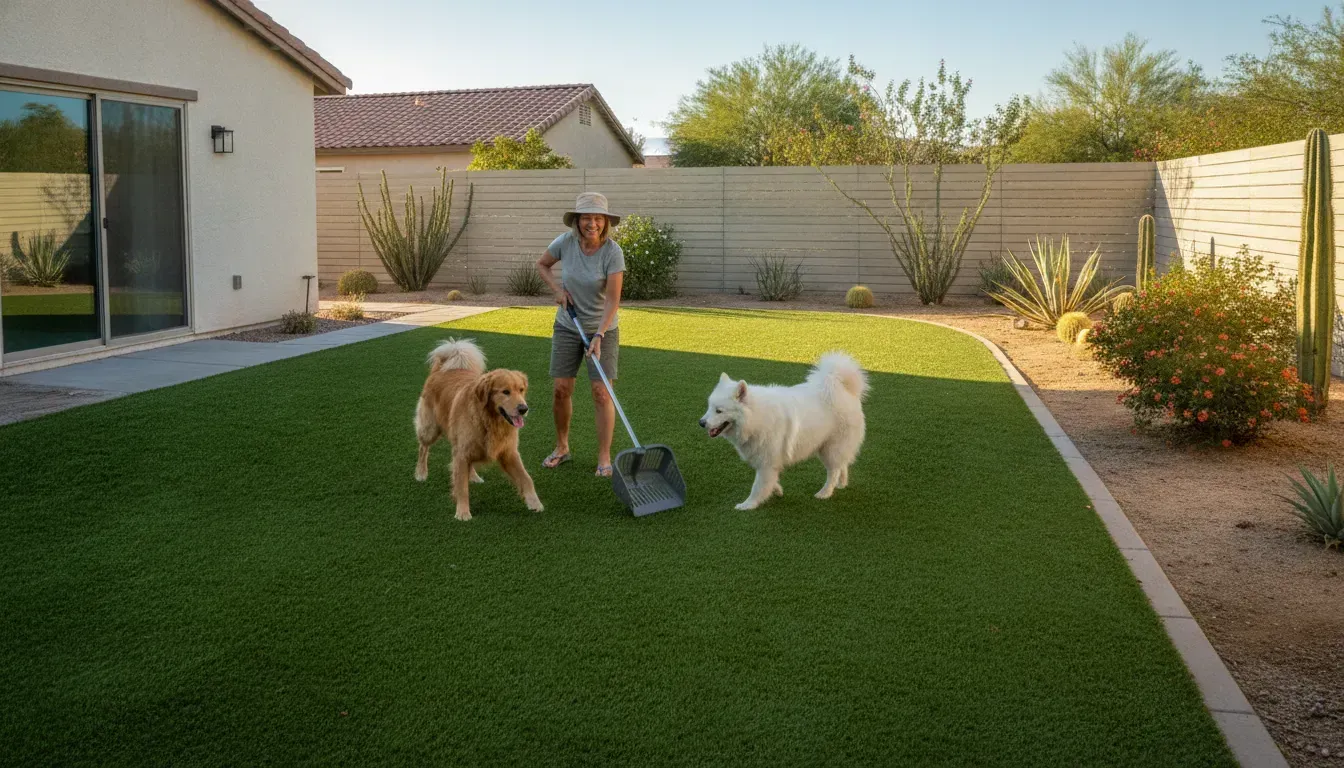
Think of these as quick, two-minute tasks that prevent bigger problems later. The most important daily habit is to pick up any solid pet waste immediately. Use a pooper scooper or doggy bag to lift the waste off the turf without smearing it into the fibers. While you're out there, do a quick scan for any trash, sharp sticks, or other debris that could be harmful to your pets. Removing these items right away keeps the area safe for playtime and stops potential messes before they happen.
Your Weekly Rinse and Spot-Cleaning Routine
Once a week, give your turf a good rinse with a garden hose. This helps wash away urine residue, dust, and pollen that can accumulate. Pay special attention to the spots your dog frequents for potty breaks, as these areas need a more thorough flush to prevent odors from setting in. If you have trees or shrubs nearby, you might also notice leaves or dirt on the surface. You can easily clear this away with a leaf blower or a stiff-bristled broom to keep your turf looking its best.
How to Deep Clean and Deodorize Monthly
About once a month, it's time for a deeper clean to tackle lingering odors and refresh the turf fibers. You can use a pet-safe turf deodorizer or create your own by mixing equal parts white vinegar and water in a spray bottle. Lightly spray the entire turf area, focusing on urine spots. After deodorizing, use a stiff push broom to brush against the grain of the grass. This helps the fibers stand up straight again, keeping your turf looking full and new. If this sounds like a lot to handle, a professional artificial grass cleaning service can take care of it for you.
The Right (and Wrong) Tools for Cleaning Pet Turf
Having artificial turf is a fantastic, low-maintenance solution for pet owners, but keeping it clean requires more than just a quick rinse with the hose. Using the right tools and products is the key to protecting your investment and ensuring your yard is a safe, pleasant place for your family and pets. The wrong cleaner can not only fail to eliminate odors but could also damage the turf fibers or leave behind residues that are harmful to your furry friends.
How to Get Rid of Pet Urine Odor in Artificial Turf
That lingering urine smell is one of the biggest frustrations for pet owners with artificial grass.
Why Urine Odor Lingers in Turf
If you've noticed that pet urine odor seems to get trapped in your turf, you're not imagining it.
A Step-by-Step Process for Odor Removal
- Clear Debris: First, remove any solid waste, leaves, or other debris from the area.
- Rinse the Area: Use a garden hose to give the turf a thorough rinse.
- Apply a Cleaner: Use a pet-safe enzymatic cleaner or a specialized turf deodorizer.
- Rinse Again: After the cleaner has had time to work, give the turf another good rinse.
When You Might Need to Replace Your Infill
Sometimes, even after a deep clean, you might find the odor just won't go away.
Common Pet Turf Cleaning Mistakes to Avoid
Artificial turf is a fantastic, low-maintenance solution for pet owners, but to keep your turf fresh, sanitary, and looking its best, it's important to avoid a few common missteps.
Skipping Maintenance Just Because Turf Looks Clean
One of the biggest mistakes is assuming your turf is clean just because you can't see any mess.
Using the Wrong Cleaning Products
Reaching for just any household cleaner can do more harm than good.
Ignoring Drainage Problems
If your turf doesn't drain well, urine and cleaning solutions can get trapped in the base layers.
Waiting Too Long Between Deep Cleans
Regular light cleaning combined with periodic deep cleaning is the best way to keep your artificial grass looking and smelling fresh.
When Should You Call a Pro for Turf Cleaning?
Even with a consistent cleaning schedule, there are times when your artificial grass needs more than a simple rinse and spray.
What a Professional Cleaning Service Includes
When you hire a professional, you're getting a much deeper clean than you can achieve on your own.
Signs Your DIY Methods Aren't Cutting It
If you've tried every trick and still can't get rid of the odor, it's time to call for help.
How A1 Pet Waste Maintenance Cleans Artificial Grass
At A1 Pet Waste Maintenance, we use a proven process to deep clean and sanitize artificial turf.
Related Articles
- Artificial Grass Cleaning and Maintenance | Las Vegas, NV
- Pet Waste Maintenance | A1 Pet Waste Maintenance | NV
- Pooper Scooper FAQs | A1 Pet Waste Maintenance | NV
- Commercial Property Pet Waste Cleanup | Las Vegas, NV
Frequently Asked Questions
Why isn't just hosing down the turf enough to get rid of the smell?
Rinsing with water can wash away fresh liquid urine, but it doesn't remove the uric acid crystals that get trapped in the turf's backing and infill.
My turf already has a strong urine odor. Is it a lost cause?
Not at all, but it will take more than a simple rinse to fix.
I'm feeling overwhelmed. What's the most important habit?
Immediately pick up solid waste and invest in a good enzymatic cleaner for weekly use.
Are enzymatic cleaners really safe for my pets and family?
Yes, when you choose the right product.
What does a professional service do that I can't do?
A professional cleaning goes far beyond what a garden hose and spray bottle can accomplish.