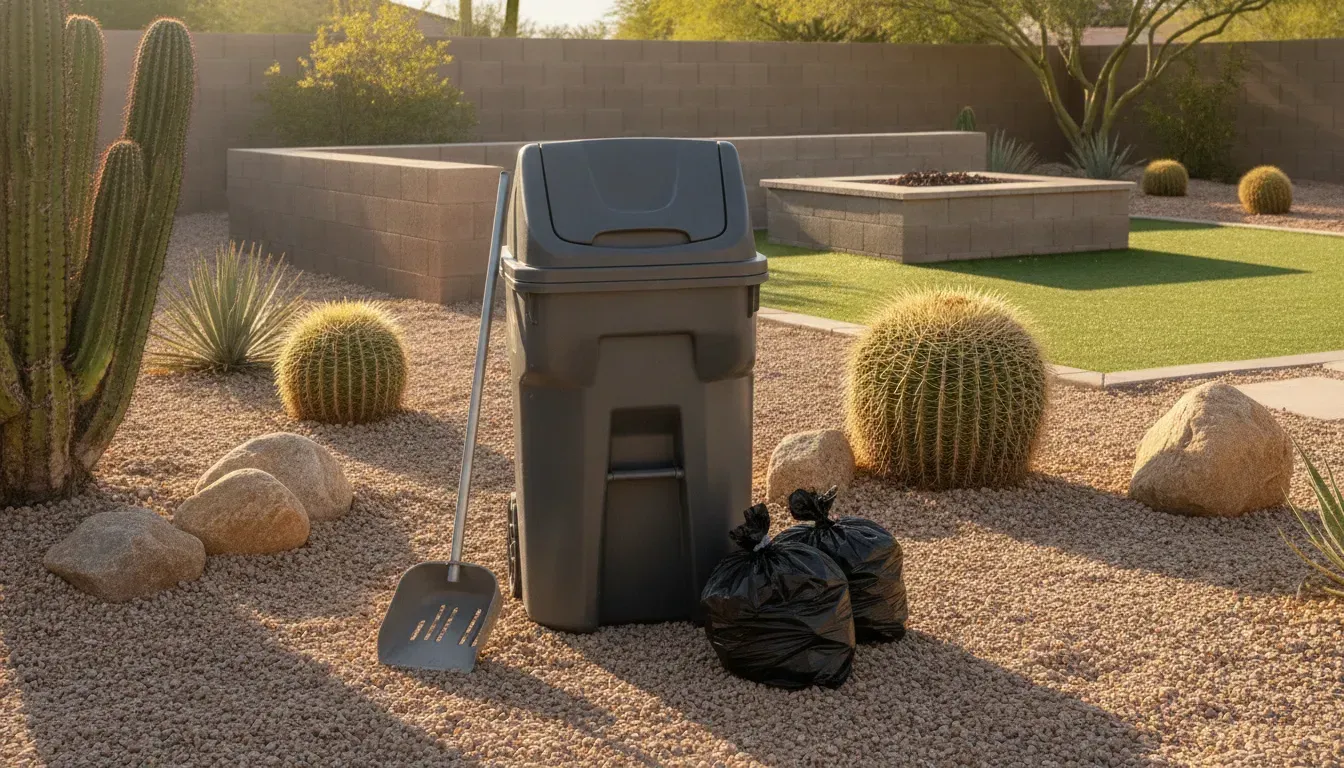
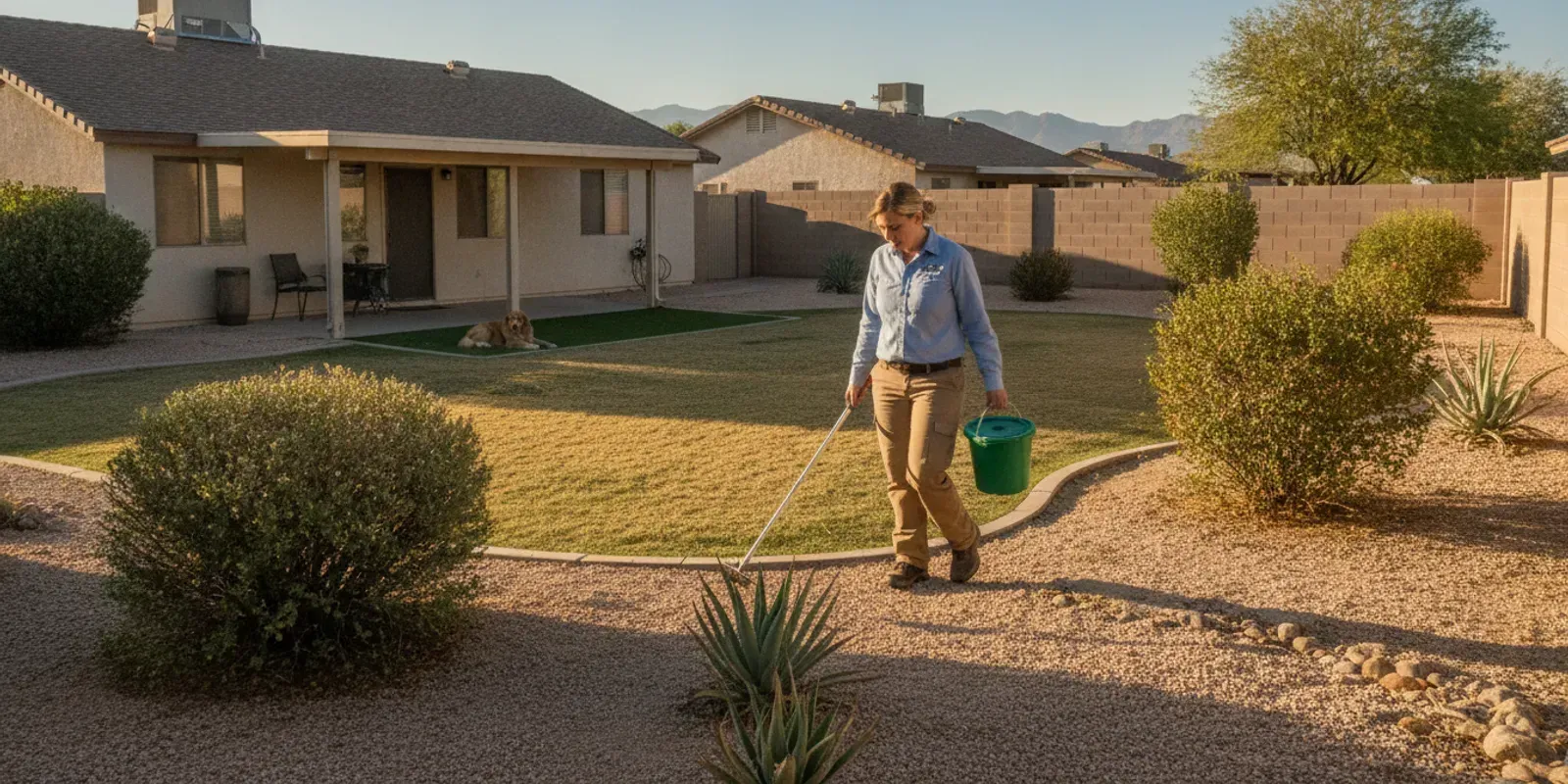
Pet Waste Cleanup for Construction Sites
Pet waste cleanup for construction sites needs a gate plan and a custom proposal. A1 publishes no jobsite rate. Call (702) 521-2624.
Pet waste cleanup for construction sites is a gate-and-schedule job, not a backyard signup. A superintendent or general contractor maps where dogs stop, names a crew window outside active lifts, and asks A1 Pet Waste Maintenance for a custom proposal. A1 does not publish a construction-site rate. Price depends on the zones, how often a crew can enter, and how waste leaves the fence.
Occupied apartments and HOAs already have a different guide. The commercial pet-waste manager's guide covers visit scope for property managers. This page stays on active building sites in Southern Nevada and Tucson.
Request a commercial property proposal or call A1 at (702) 521-2624.
Why pet waste cleanup for construction sites is its own job
A jobsite changes every week. Pads get graded, fences move, and a relief spot that was open on Monday can sit under a slab by Friday. A residential route assumes the same yard and the same gate. A construction request cannot.
Dogs show up with workers, inspectors, and neighbors who cut across an open corner. Waste on a haul road gets tracked into trailers. Waste near a storm inlet can wash off the pad. The U.S. Environmental Protection Agency says stormwater can pick up pet waste and carry bacteria and nutrients into streams. Pet waste is a leading source of that pollution in urban waterways. The 2023 fact sheet is EPA's pet waste management BMP.
A1 has removed pet waste in Southern Nevada since 1998 and also serves Tucson. The public commercial page lists multi-family sites, parks, mobile home communities, and special events. It does not list a construction client. Do not treat a city or HOA relationship as coverage for your pad. Ask for a site proposal.
Office campuses are a different buyer too. A corporate campus plan follows employee walking paths and a fixed gate. A jobsite follows the superintendent's shift and a moving fence line. Keep those requests separate.
Which parts of the pad belong on the route
Start with the ground dogs actually use. Do not ask a crew to walk every acre inside the limit of work.
- Gate and trailer edges, including the walk from the parking row to the office trailer.
- Staging yards and laydown areas where crews wait between tasks.
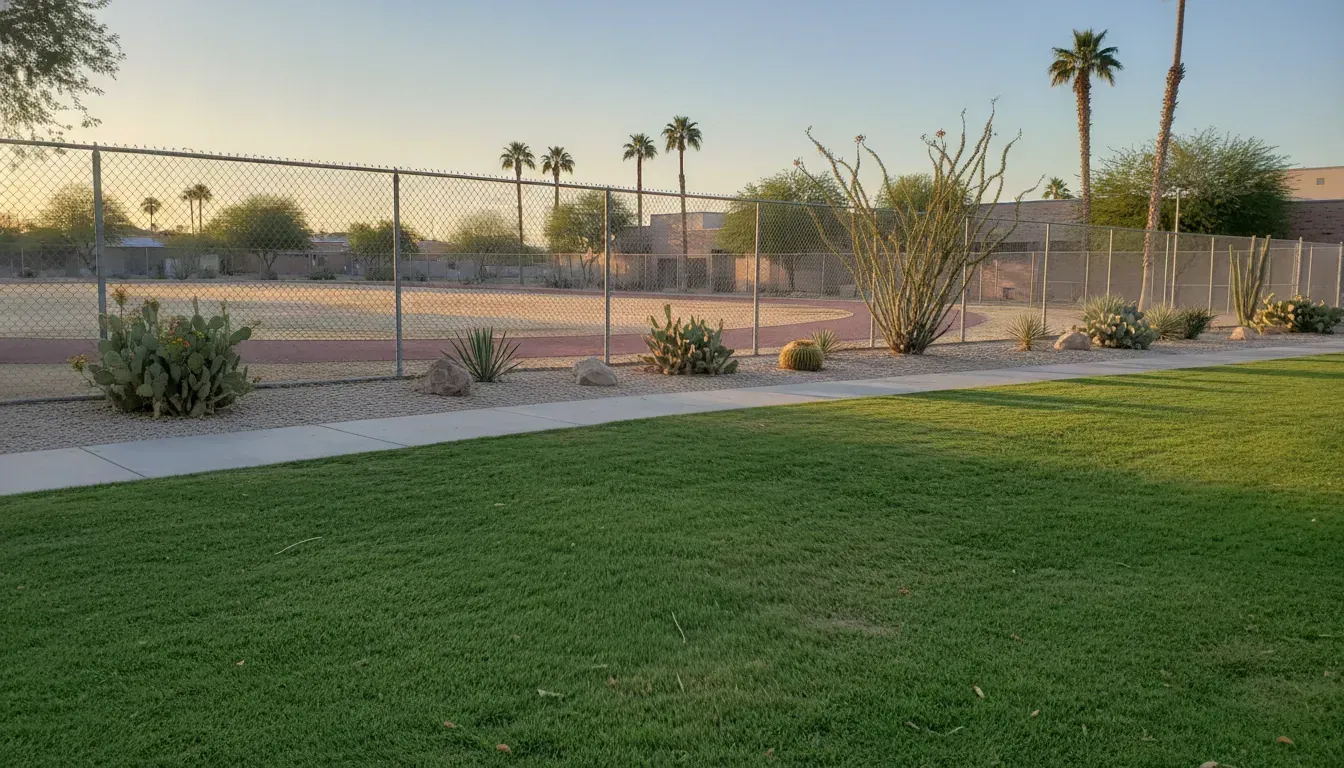
- Temporary sidewalks and the public side of the construction fence.
- Storm-inlet aprons and the downhill edge of a graded pad.
- Shade spots beside conex boxes, water buffalos, and break areas.
- Finished landscape strips that open before the rest of the building.
Skip active excavation, crane swing, and any zone the safety plan closes to visitors. If a city park shares the fence, note it, but do not fold a park program into the jobsite request. Park service is covered in the park waste-removal guide.
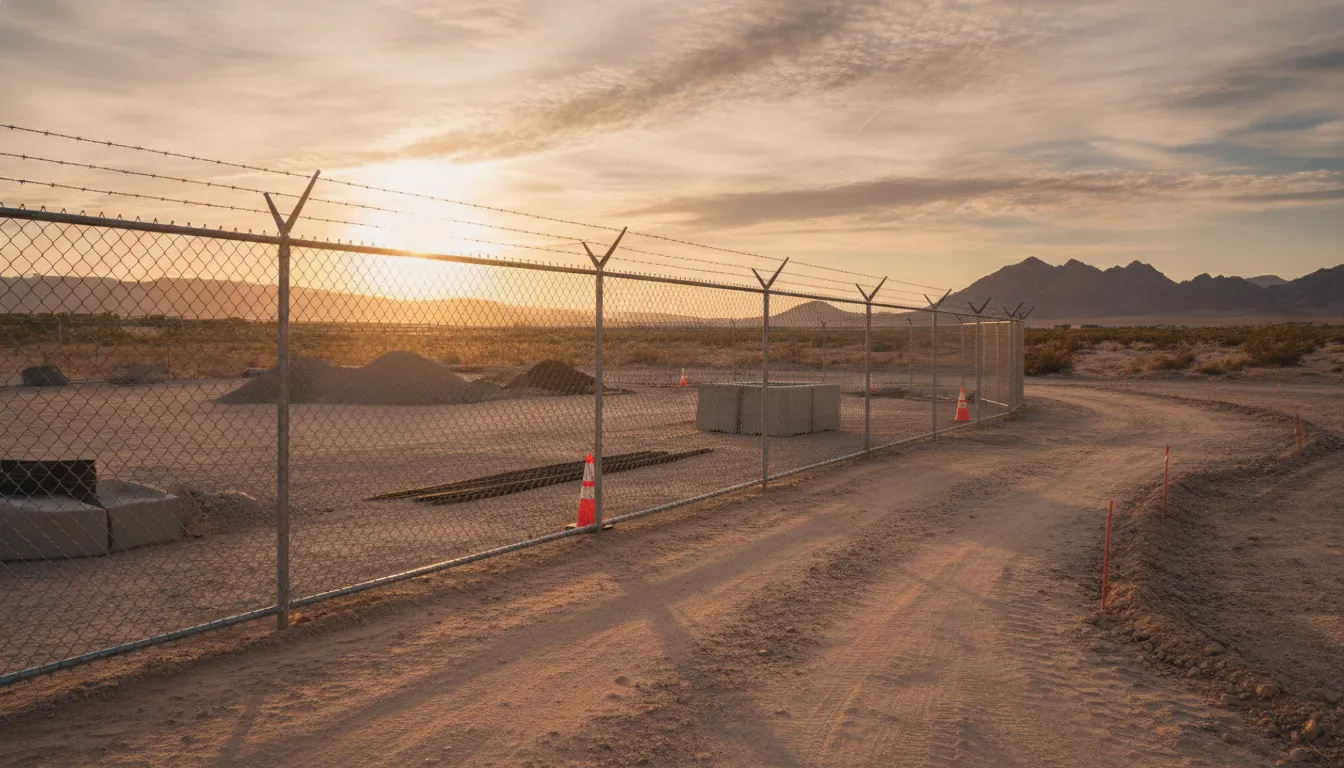 Mark the staging edge and the public side of the fence before you request a visit.
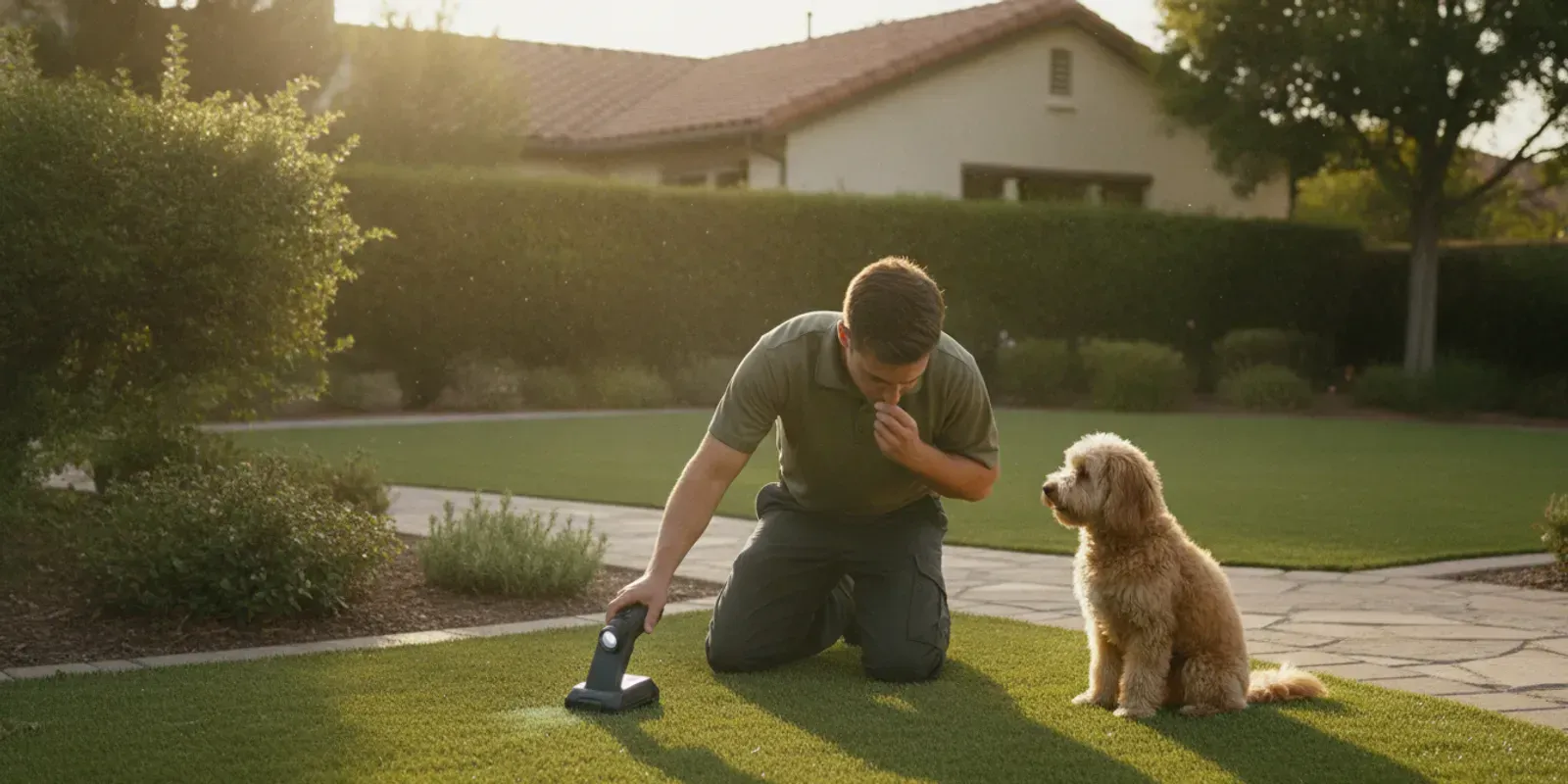
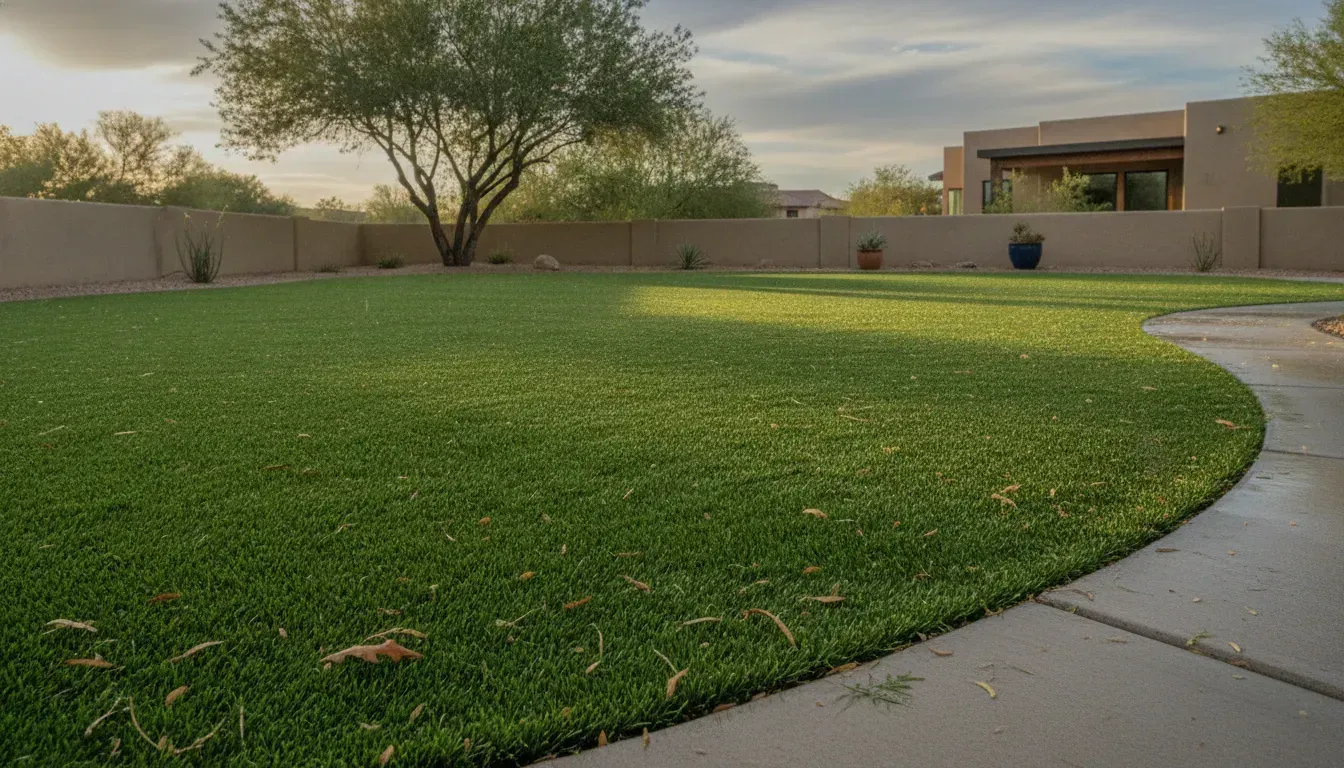
Artificial turf is rare on an active pad, but model homes and early landscape strips sometimes have it. A1's artificial grass cleaning removes waste, clears debris, applies an enzyme deodorizer, and rinses and agitates the fibers. Infill refresh is a recommendation, not an installation. A1 does not install turf.
What to tell A1 before the first visit
A useful request is a short site brief. Send it with the proposal ask so the crew is not guessing at the gate.
- Name the site, the cross streets, and whether it sits in Southern Nevada or the Tucson area.
- Name the contact who can open the gate, and a backup if that person is in a meeting.
- List the zones from the section above, and say which ones are inside the fence.
- Give a service window that avoids concrete pours, crane picks, and student or public events on adjacent land.
- Say how often you need a pass: one reset before a city walk, or a repeating visit while dogs keep using the edge.
- Say where bagged waste may be staged for city collection, or that the crew must haul it off.
- Flag locked areas, badging rules, and any PPE the site requires for visitors.
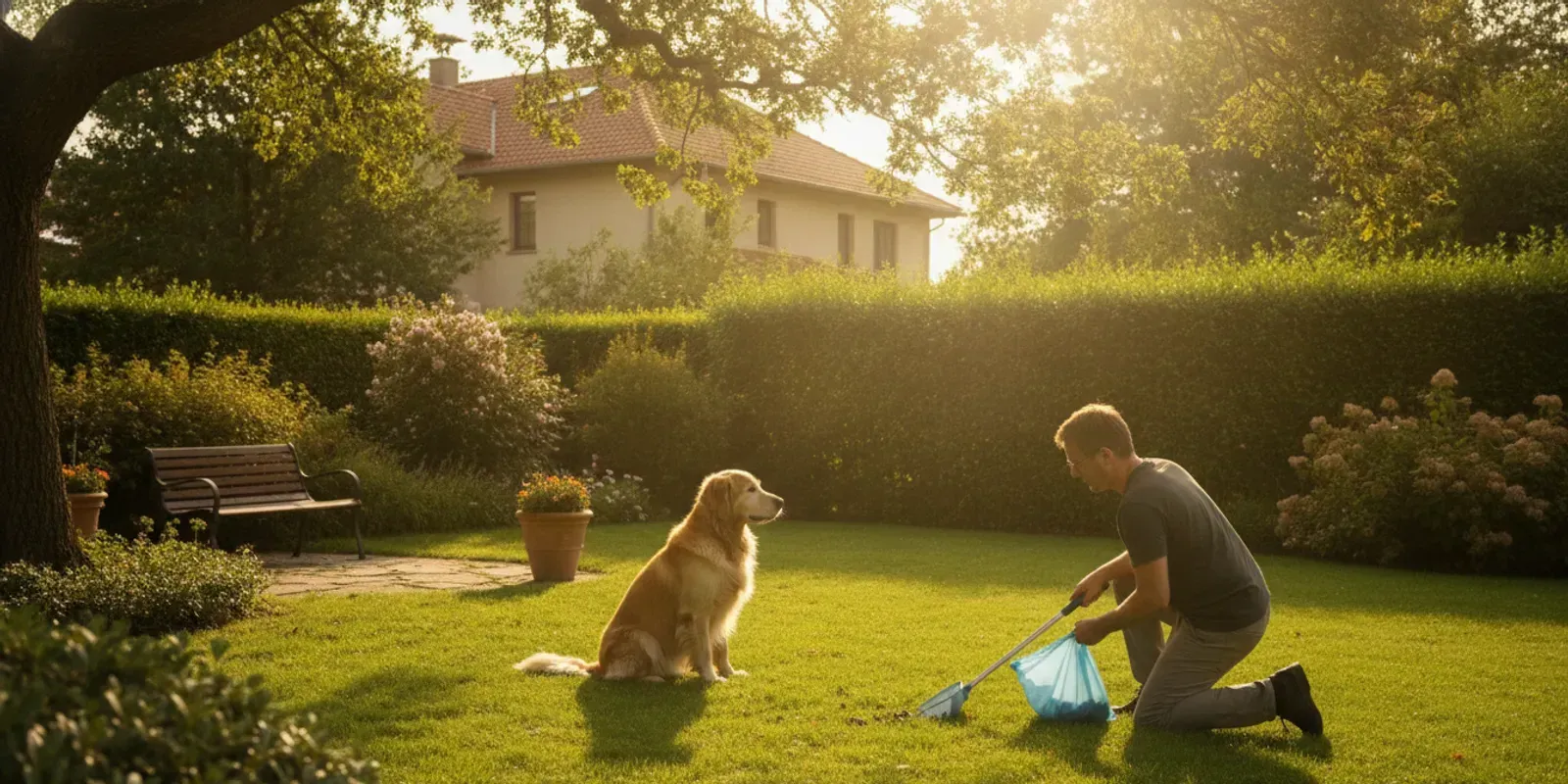
A1 bags pet waste, hauls it off the property, and leaves it for city sanitation collection on ordinary routes. A jobsite may not have that cart yet. Say so in the brief. Do not assume a residential trash plan fits a fenced pad.
One-time residential cleanups are listed at $50 to $150 on the one-time cleanup page. That range is not a construction quote. Commercial work, including a jobsite, is a proposal. Weekly home rates by dog count are also the wrong table for a superintendent.
How a visit window fits a jobsite day
Pick a window when the pad is quiet enough for a person with bags to walk the edge. Early morning, before the first delivery, often works. So does the gap after a lunch concrete hold. A mid-pick window does not.
Tell the contact what "clear" means. The crew needs a path that is not under a load, not in a backing zone, and not across fresh slurry. If the only safe path is the public sidewalk, say that the visit stays outside the fence.
Heat in Las Vegas and Tucson changes the waste, not the need. Dry piles break up and blow. A hose or a storm can wake the smell again. A weekly pass during the months dogs use the shade line is more useful than one heroic cleanup after a complaint.
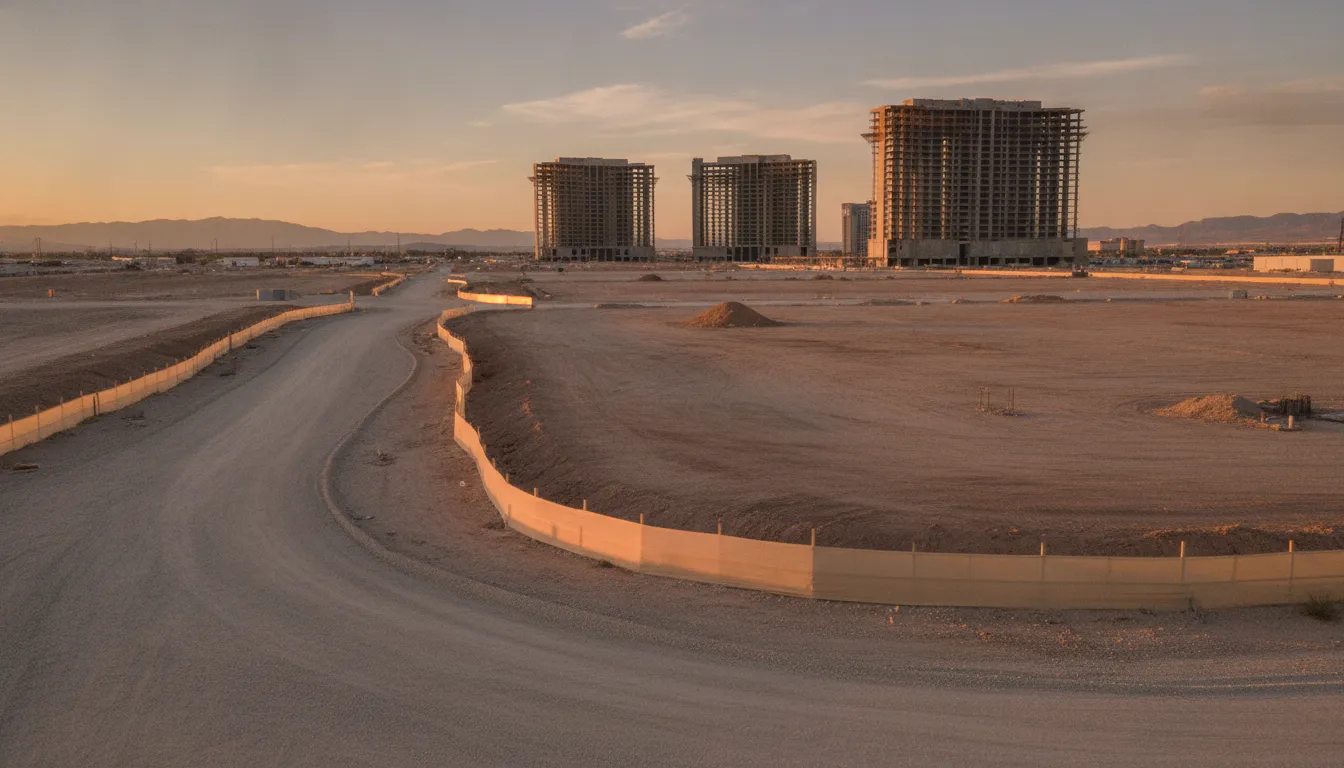 A silt fence and the gravel road are part of the access note, not a reason to skip the edge.
Special-event cleanups are already something A1 offers on the commercial page. A groundbreaking or a hard-hat tour can use that kind of one-day ask. Say it is an event on a construction site so the proposal does not get written as a park festival.
Jobsite cleanup versus other commercial visits
Use this split when you are not sure which request to send. The rows are decision checks, not a price list.
QuestionActive construction siteOccupied commercial siteWho calls?Superintendent or general contractor.Property or HOA manager.What ground?Moving pad, fence, and laydown yard.Same lawns and paths each week.What access?Gate contact and a shift window.Standing entry instructions.What price?Custom proposal only.Custom proposal, not home dog rates.Where does waste go?Named in the site brief.Hauled for city collection on ordinary routes.
- Who calls? On an active construction site, the superintendent or general contractor calls. On an occupied commercial site, the property or HOA manager calls.
- What ground? A jobsite is a moving pad, fence, and laydown yard. An occupied site keeps the same lawns and paths each week.
- What access? A jobsite needs a gate contact and a shift window. An occupied site uses standing entry instructions.
- What price? Both are a custom proposal. Neither uses home dog-count rates, and a jobsite has no published rate.
- Where does waste go? A jobsite names the end point in the site brief. An ordinary route is hauled for city collection.
If the building is already leased and dogs belong to tenants, you are past this page. Use the manager guide or the Las Vegas commercial dog-waste guide. If the site is still a pad, stay here.
What A1 will not treat as a construction service
A1 picks up pet waste and can clean pet turf that is already in place. It does not install artificial grass, place silt fence, or haul construction debris. It does not provide a site safety officer.
A company fact on the about page is not a promise that a jobsite contract already exists. Ask for the proposal, and ask for the insurance certificate your general contractor needs for the file. Do not treat a residential signup packet as that certificate.
Do not send crews into a zone your own safety plan marks closed. If badging takes a day, say that before anyone drives to the gate. A missed window wastes the visit and leaves the waste in place.
Cat trap rental is a separate A1 service. It is not part of a pet-waste pass. If the pad has a feral-cat issue, ask about traps on their own. Do not bury that request inside a dog-waste note.
How to request the proposal
Use the commercial contact path. Call (702) 521-2624 or start from the commercial property page. Email a1petmaintenance@gmail.com if you already have a site packet.
Put the site address, the gate contact, the zones, and the window in the first note. Add whether you need one reset or a repeating pass. Mention Southern Nevada or Tucson so the schedule matches the service area.
A1 services more than 400 single-family and multi-family properties weekly and has worked with the City of Las Vegas, Henderson, Clark County, associations, and nonprofits. Those relationships show the company can hold a route. They are not a construction price and not a list of jobsite clients.
After the building opens, switch the request. Tenant lawns, a dog run, and a station program belong on a property-manager plan. Keep the construction proposal closed when the fence comes down.
What changes between phases of the build
A pad does not stay one kind of ground. The request should change when the site changes, or the crew will walk last month's map.
Before the slab
Early work is dirt, silt fence, and a trailer. Dogs use the shade at the trailer and the public side of the fence. Ask for those two edges only. Do not ask for a full-pad walk while scrapers are moving.
Storm inlets matter most in this phase. A pile above a grate can wash off in one desert storm. Point out the grates in the brief. If a silt fence blocks the walking path, say which side is safe.
While trades are on site
This is the busy phase. Deliveries stack up. The useful visit is a short edge pass, not a tour of every floor. Name the laydown yard, the sidewalk, and any finished grass that landscape opened early.
If a trade brings a dog, or a guard arrangement is new, say so. A1 does not supervise animals. The crew only removes waste on the path you approved. A new dog does not create a new rate by itself. It may change how often you need the pass.
At turnover
Model homes, a sales trailer, and a first landscaped court can look residential while the rest of the block is still a site. Split the ask. The occupied court can move to a manager plan. The open pad stays on this construction request until the fence is gone.
Do not copy home weekly prices onto the model court just because it has a lawn. If people are not living there yet, keep it on the commercial proposal. The commercial pooper-scooper guide is the handoff once the property is in normal operation.
How to plan pet waste cleanup for construction sites
Write the cleanup into the same note you use for other visitors. A pet-waste crew is a visitor. They need the same gate rules as an inspector who is not swinging a hammer.
- Give a named contact and a phone that works on the pad, not only a main-office line.
- State the PPE you require. A hard hat and a vest are common. Say if boots must be site-issued.
- Mark no-go zones. Include open holes, energized areas, fresh slabs, and crane swing.
- Say whether photos of the cleaned edge are allowed. Some sites ban phones.
- Name where the crew parks so they are not sitting in the delivery lane.
If the site uses badges that expire daily, send the window a day ahead. A crew that cannot enter should not be treated as if they walked the pad. Put that expectation in the proposal ask so it is agreed before the first trip.
Rain and wind change the plan in both metros. After a storm, inlets and the downhill fence need the first look. After a wind day, waste may have broken up along the haul road. Say if you want those days added, or if you only want the standing window.
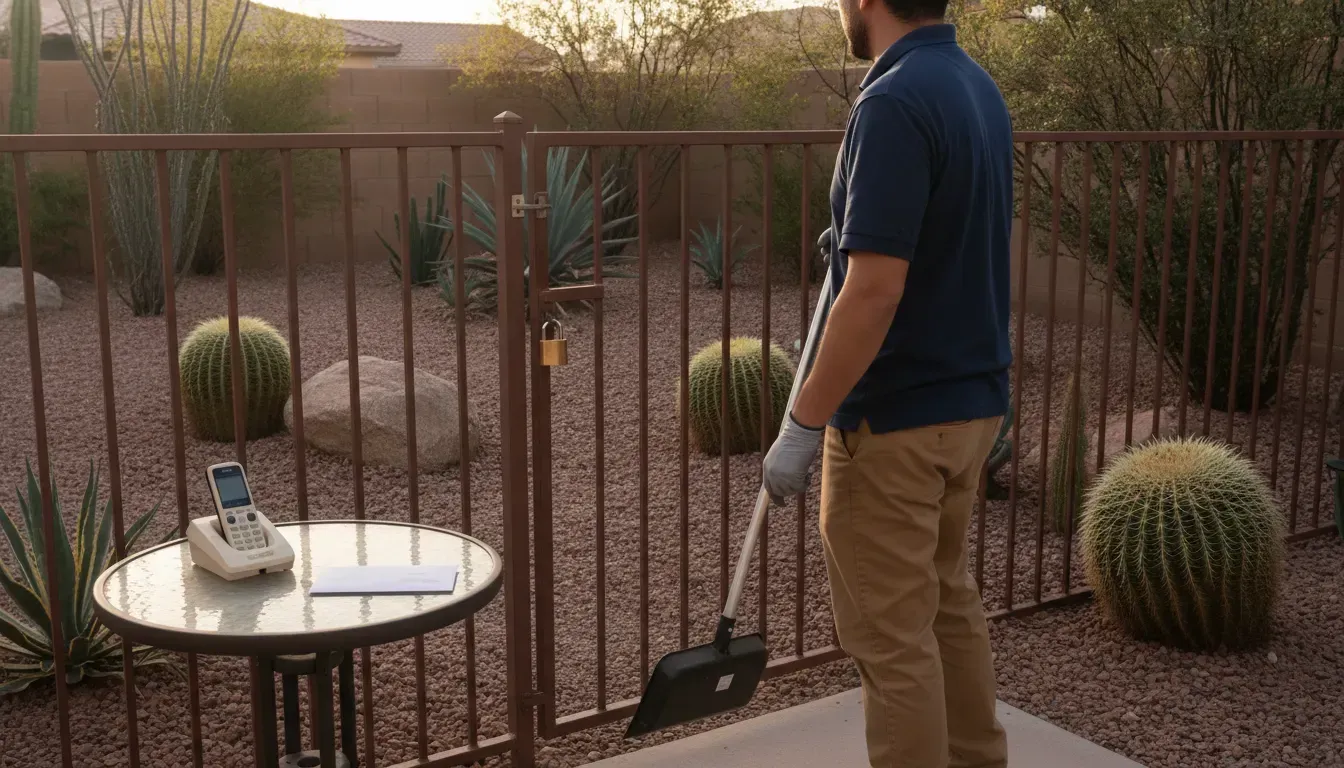
Neighbors complain when waste sits on the public side of a fence near a sidewalk. That strip is often the highest value pass on a tight site. Include it even when the interior pad is closed. A clean sidewalk does not require entry past the gate.
Records worth keeping with the proposal
You do not need a long contract memo to start. You do need a few lines you can show a city inspector or an owner.
Keep the proposal, the zones it covers, and the visit rhythm. Keep the date of a one-time reset if you ordered one before a walk-through. If A1 confirms the waste was hauled off rather than left in a site dumpster, keep that note with the ticket.
A1's about page says waste on ordinary jobs is bagged, hauled away, and collected by city sanitation workers. A construction site should confirm the same end point in writing. Dumpsters meant for lumber and drywall are a poor place for bagged pet waste, and many site rules forbid it.
Insurance certificates are a normal commercial ask. Request the certificate you need when you request the proposal. Do not assume the residential signup packet includes the additional-insured wording your general contractor wants.
None of this is a permit that A1 pulls for you. Erosion control, dumpster service, and stormwater logs stay with the contractor. Pet-waste pickup is one line in that file, not a replacement for it.
Frequently Asked Questions
Does A1 publish a price for pet waste cleanup for construction sites?
No. A1 does not publish a construction-site rate. The $50 to $150 one-time range is for residential cleanups, and weekly prices by dog count are for homes. A jobsite needs its own proposal.
Can a crew come once before an inspection?
Yes. Ask for a one-time reset and name the inspection window. If dogs will keep using the fence line after that day, ask for a repeating pass instead of hoping one visit holds.
Will the crew enter an active pad?
Only if you name a safe path and a person who can open the gate. If the safe path is the public sidewalk, say the visit stays outside the fence. Do not send a crew under a load or across fresh concrete.
Does this cover Tucson and Las Vegas?
A1 serves Southern Nevada and Tucson. Name the metro in the request. Do not assume a Las Vegas route automatically covers a Tucson pad, or the reverse.
Is this the same service as an HOA or apartment cleanup?
No. Those sites keep the same lawns and a standing entry plan. A construction site moves. Use the manager guide once people live on the property. Use this page while the pad is still a jobsite.
Ask for a jobsite proposal
Send the gate contact, the zones, and the window. A1 will price the visit as a commercial proposal, not as a home signup.
Request a commercial proposal or call (702) 521-2624.