What a Turf Cleaning Visit Includes After Rain
See what a turf cleaning visit includes after monsoon rain: waste removal, enzyme treatment, a fiber rinse, and when to book A1.

A hard desert storm can leave a dog yard looking rinsed and still smelling wrong by the next afternoon. Knowing what a turf cleaning visit includes after that rain helps you decide whether to book, and what to tell the crew when you do. Rain moves dust and fresh mess off the blades. It does not finish the work a professional visit is built to do.
Book artificial grass cleaning when the yard still smells after it dries.
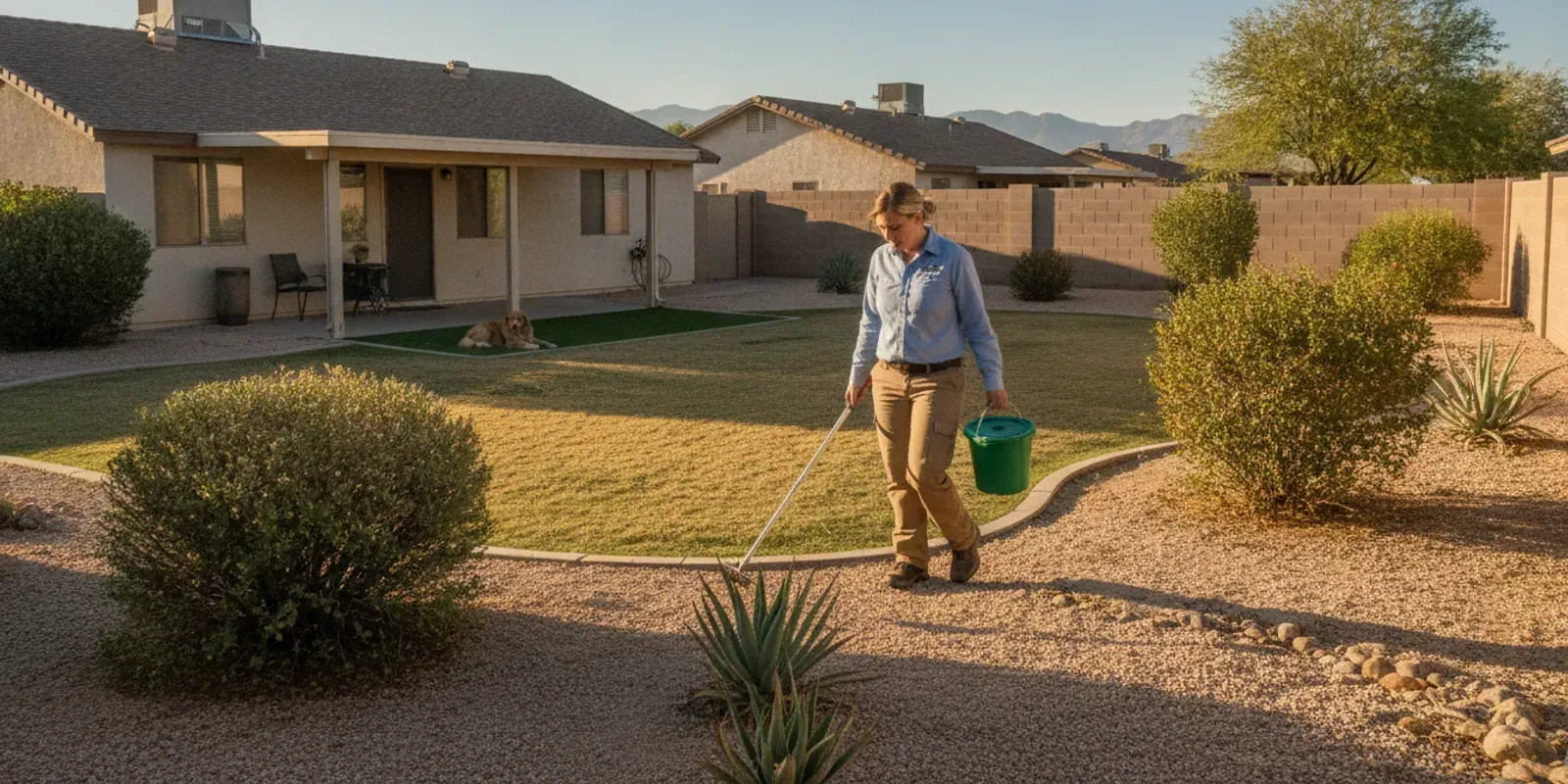
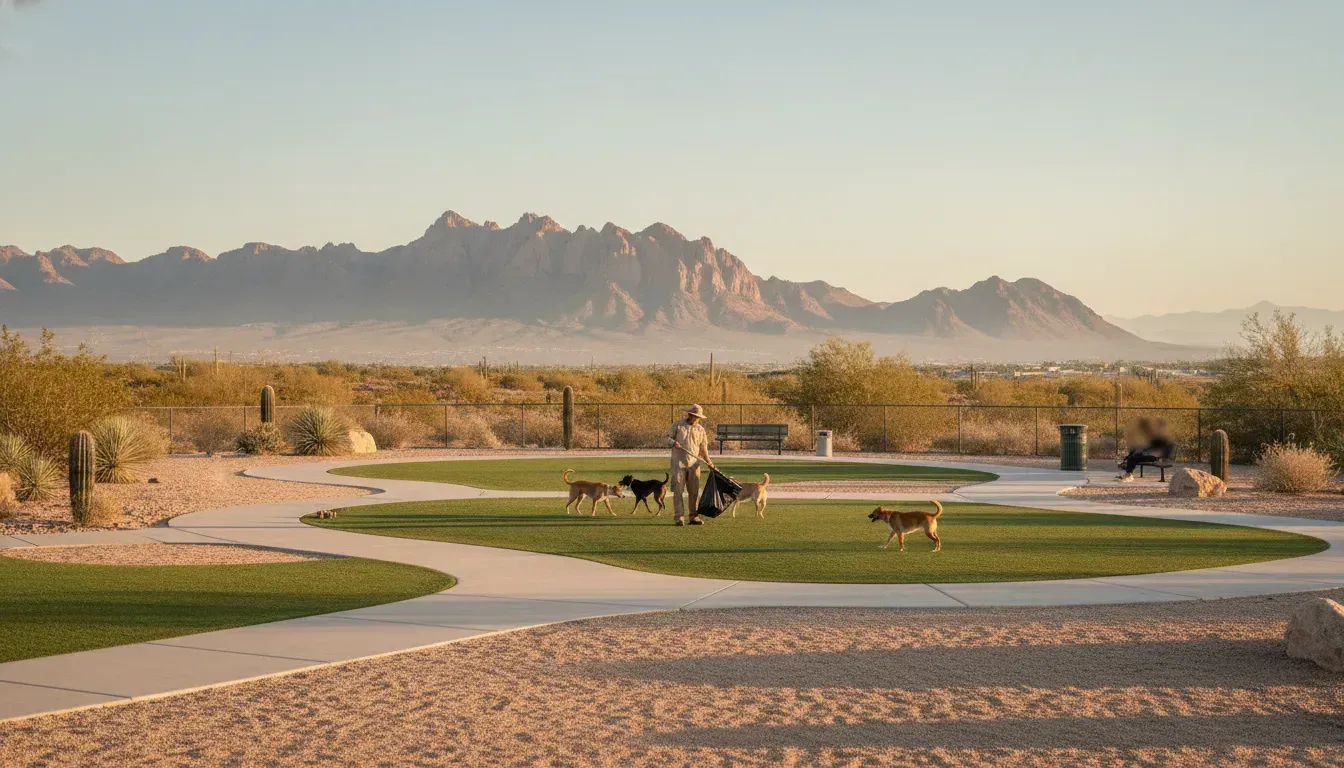
A1 Pet Waste Maintenance cleans pet turf in Las Vegas, Henderson, and nearby Clark County. The visit removes pet waste from the surface, clears leaves and dirt, applies an enzyme deodorizing treatment, and rinses and agitates the fibers. The crew can also recommend an infill refresh when the fill has shifted. That is the scope. A storm is one reason to use it, not a different service.
What a Turf Cleaning Visit Includes
The service page lists five parts, and they stay in that order for a reason. Waste comes off the surface first. Debris comes next. Then the enzyme treatment works on odor, and a deep rinse with agitation lifts the fibers. An infill recommendation is optional, and only when the fill actually needs it.
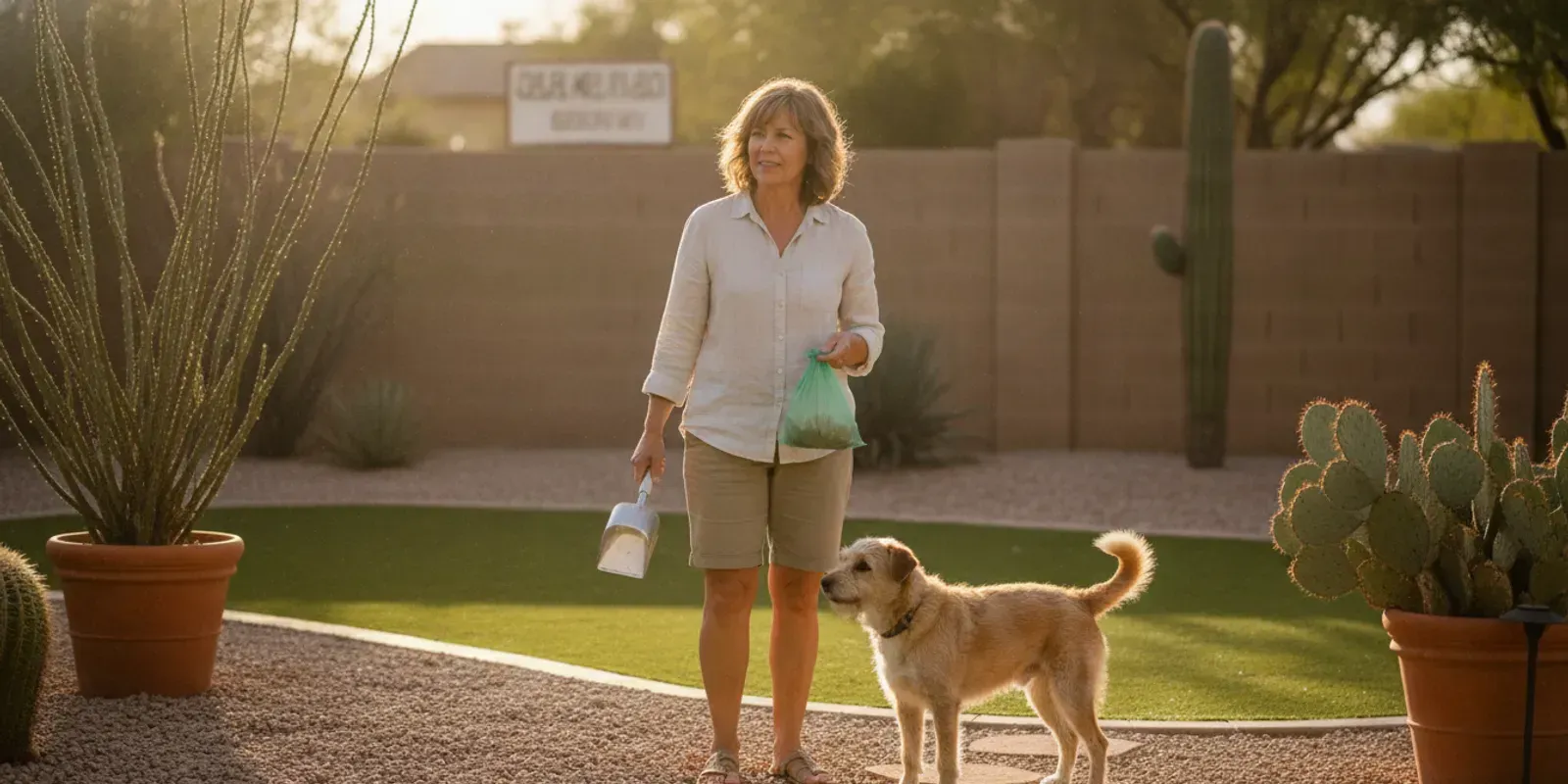
Complete pet waste removal means solids on the turf, not a guess that the rain already washed them away. A storm can smear waste toward a border or a low seam. The first job of the visit is to get that material off the lawn and out of the yard, the same way a regular pet-waste visit hauls waste away rather than leaving bags behind.
Debris clearing covers leaves, dirt, and organic buildup the storm pushed onto the grass. Seed pods and fine grit mat the pile along concrete edges. If that layer stays, the rinse cannot reach the fibers underneath, and the next shower sits on top of it.
The enzyme-based deodorizing treatment is meant to neutralize odor rather than cover it. Pet-safe enzyme products break odor down at the source, which matters in Nevada heat, where a damp yard can smell stronger on the first hot afternoon. The treatment is for urine residue in the fibers, not a fragrance spray.
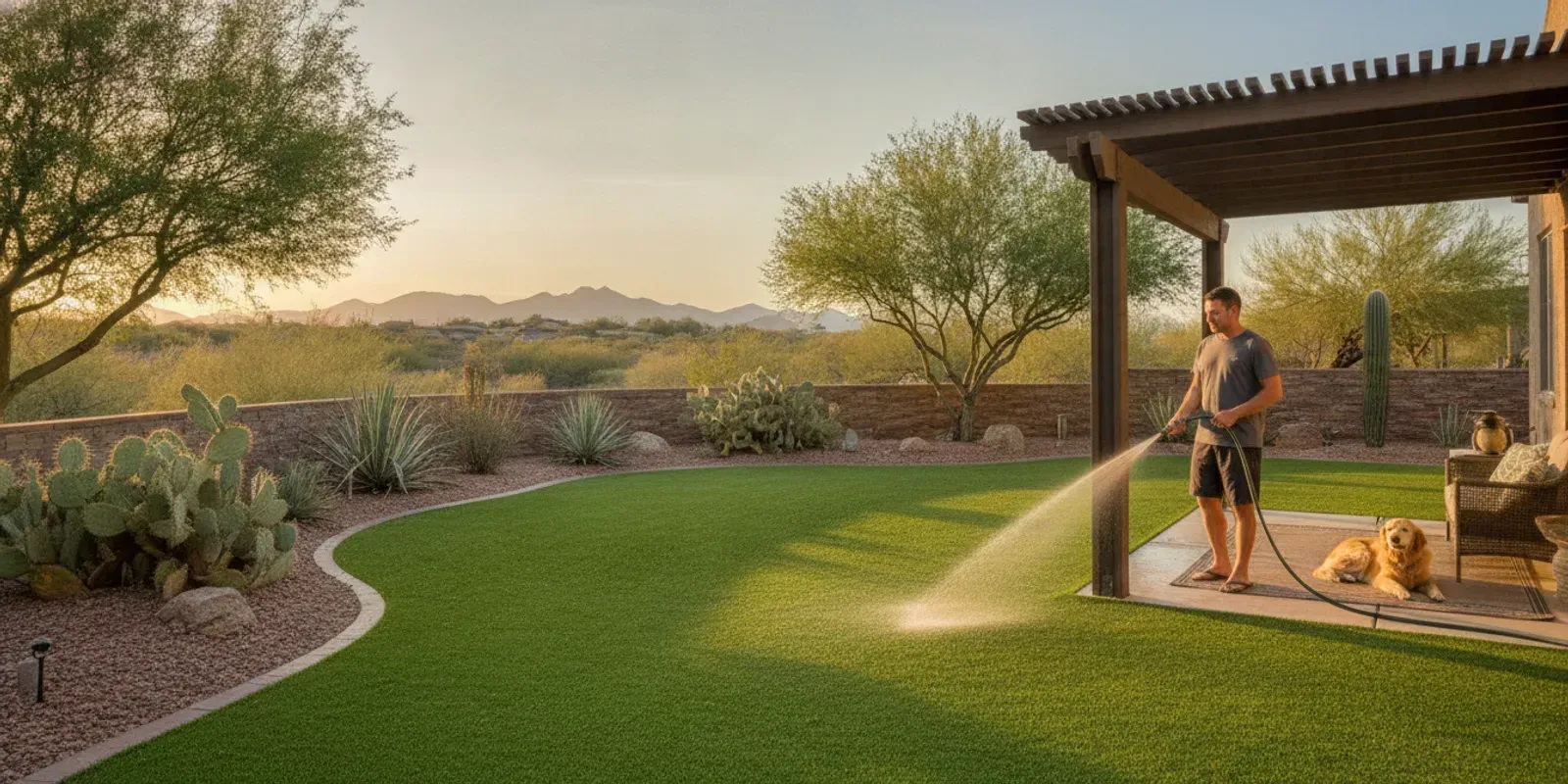
Deep rinse and agitation restore the turf fibers after that treatment. Agitation stands the blades back up and moves loosened residue out. It is not a pressure-washer pass. A tight jet can pull infill out of the lane a dog uses most, so the rinse stays controlled.
The last item is a recommendation, not a guaranteed rebuild. If infill has washed into piles along a border or a roof-discharge line, the technician can point that out and suggest a refresh. A1 does not list turf installation or grading work as part of this cleaning service. If the base or the slope is the problem, say so up front so the visit stays on waste, odor, and debris.
What the Visit Does Not Cover
Homeowners often book a clean hoping it will also fix a puddle. It will not. Cleaning adds water on purpose, through the rinse. If a corner is still holding yesterday's rain, more water is the wrong first move. The useful thing to tell the crew is where the water sat, not to ask them to rebuild the yard.
Turf Network describes why the gap is so wide. A standard hole-punched backing is often rated near 30 inches of water per hour, while a fully permeable backing can be rated at several hundred. Those are product ratings, not an A1 measurement of your yard. They explain a simple point: the grass is rarely the bottleneck. The base, the grade, or a blocked edge usually is.
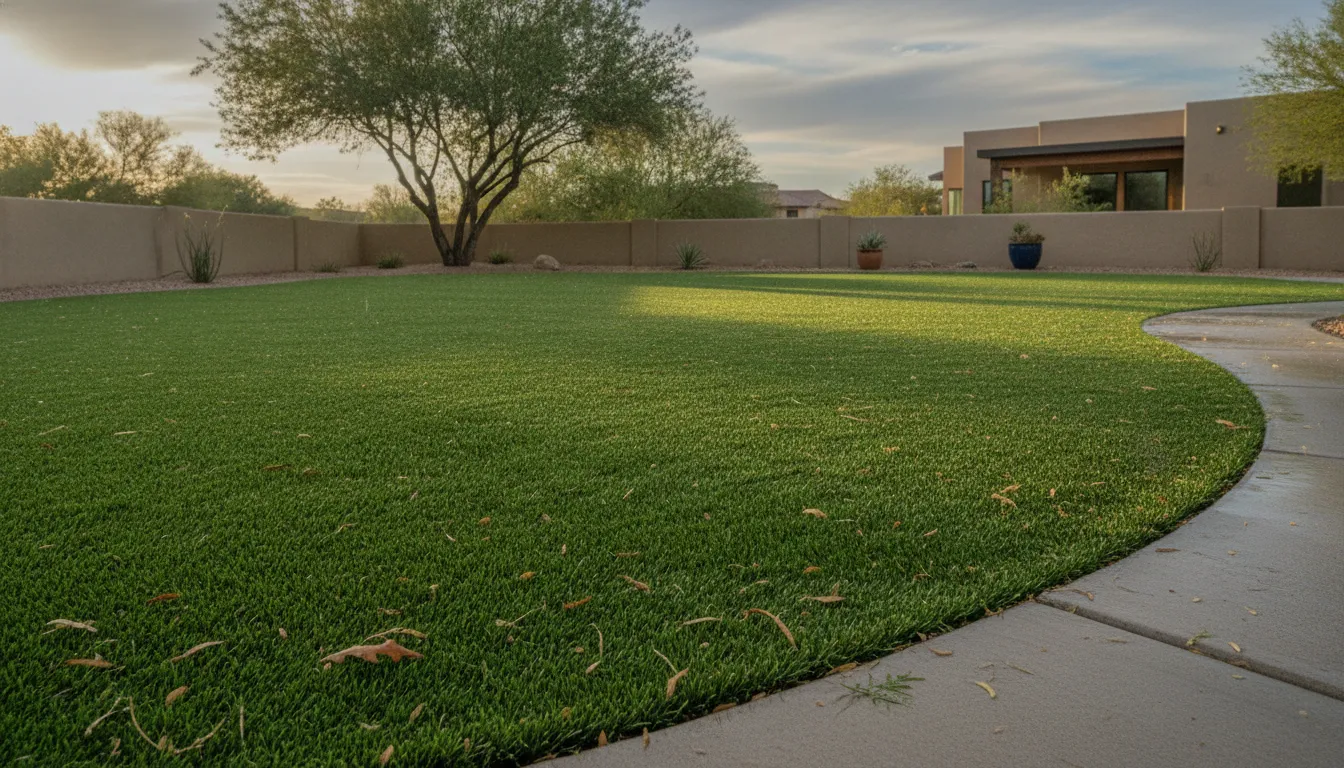
A gutterless eave or a roof scupper can dump a sheet of water onto one corner in minutes. That flow shifts infill and packs leaves into the seam. A cleaning visit can clear what is sitting on the grass. It cannot change where the roof sends the water.
The visit is also not a product comparison. If you want the difference between a hose, a store enzyme, and a hired clean, the guide to professional turf cleaners for pet urine already covers that. This page stays on the work order: what the crew does, what you should check before they arrive, and when a storm is enough reason to call.
Pricing is by quote. There is no published flat rate for artificial grass cleaning, because yard size and buildup change the work. Weekly pooper-scooper rates on the main site are a different service. Do not treat those monthly dog prices as the price of a turf visit.
Check the Yard Before You Book
A short walk the morning after the storm tells you whether you need the full visit or a smaller home pass. Do it after lightning has passed, in shoes you do not mind getting wet. You are looking for four things: solids, standing water, packed edges, and smell.
- Pick up any solids the rain smeared toward the border. Do this before anyone rinses.
- Note any spot that still holds water after the rest of the lawn has shed it.
- Look along roof discharge, downspouts, and the low side of each border.
- Lift leaves and seed pods off the blades so they do not mat down.
- Check seams at the perimeter, where fast sheet flow packs grit.
- Smell the usual potty lane once the surface is no longer dripping. Write down whether the odor is sharp or just musty.
Book the visit when the potty lane still smells after the yard has dried, when debris is packed into the edges, or when infill has washed into piles. Wait if the lawn drains, a single home enzyme pass clears the smell, and the only mess is a light dust film. Do not add hose water to a corner that is still a puddle the next morning.
A musty smell at the border is usually wet leaves and soil, not urine. Clearing that debris and letting air reach the fibers often fixes it. A sharp smell centered on the lane the dog uses is residue in the infill. That is the case the enzyme step in the visit is for.
Count dogs and space, not the calendar. One small dog on a large yard may be fine after a light rinse you do yourself. Two or three dogs on a narrow side yard reload the same square before a home treatment finishes. In that yard, a professional pass is the more honest choice after a soaking storm.
Why Smell Returns After the Storm
Owners often notice the yard for the first time the day after rain and assume the storm caused the odor. What usually happened is older. Urine seeps past the blades into the infill. While the yard is dry, that residue can sit quiet. Once it is wet again, the smell returns, and desert heat makes it stronger.
A hose after the storm can clean the surface and still leave the lane smelling by evening. Water moves fresh residue. It does not break down material already stuck in the system. That is the gap between a rain rinse and the enzyme treatment inside the visit.
If you want the longer reason turf holds urine smell, read why artificial grass smells like dog urine. For how to apply an enzyme product yourself without harming the lawn, use the enzyme treatment safe-use guide. Use those when you are still deciding. Use the cleaning visit when you already know the home pass did not finish the job.
Shade and a closed side yard stretch the wet time. A corner that stays damp into the next afternoon is the place to point out when you book. Hot sun on the rest of the lawn does not cancel a pocket that never dried. If that pocket is also where the dog prefers to go, say so. The crew should treat that lane, not only the spots that look dirty from the patio.
Match the Problem to the Visit
Not every wet morning needs a crew. The table below is the decision, not a second service menu. Home care stays home care. The professional column is the same visit described above, used only when the row calls for it.
What you see after the rainReasonable next stepLight rain, turf drains, no new smellLet it dry. Rinse only the lane a dog used during the shower.Debris on the borders, blades lying flatClear debris the same day. Book a visit if the fibers stay packed after they dry.Potty spots smell once the yard is wetOne home enzyme pass is fair. Book if the smell remains after it dries.A puddle remains the next morningStop adding water there. Tell the crew, and do not expect the clean to fix the slope.Smell, packed waste, or shifted infill remainsBook the turf cleaning visit for waste removal, enzyme treatment, and a fiber rinse.
Routine summer prep is a different job. If you are getting the lawn ready before the hot months, start with preparing artificial turf for summer dogs. For how often a dog yard needs a scheduled clean outside storm week, see how often artificial turf should be cleaned for dogs.
If the mess is ordinary dog waste on soil or rock rather than the synthetic lawn, a one-time yard cleanup is the closer match. That visit is priced from the waste on the ground, not as a turf sanitation service. Mixing the two leads people to book the wrong crew.
Southern Nevada and the Tucson area both see fast summer storms. A1 documents artificial grass cleaning for Las Vegas, Henderson, and surrounding Nevada areas. If you are outside that turf service area, use the home checks here and call a local turf cleaner for the hands-on visit. Do not assume a Nevada crew can roll to every Arizona address.
Request a turf cleaning quote when home care does not clear the smell.
Frequently Asked Questions
What does a professional pet turf cleaning visit include?
A1's artificial grass cleaning removes pet waste from the surface, clears leaves and dirt, applies an enzyme deodorizing treatment, and rinses and agitates the fibers. The technician can recommend an infill refresh when the fill has shifted. Installation and grading are not part of that visit.
Does rain replace a turf cleaning?
No. Rain can rinse dust and fresh surface mess when drainage is open. It does not remove urine residue already in the infill, and it can bring that smell back once the yard is wet. Book a cleaning if the odor remains after the lawn dries.
Will the visit fix standing water?
No. A puddle usually means the base, the slope, or a blocked border is holding water. The crew can clear debris that blocks flow. They are not there to redesign the grade. Tell them about the wet spot so they do not rinse more water into it.
How much does the visit cost?
Artificial grass cleaning is quoted for the yard. There is no published flat rate, because size and buildup change the work. Weekly pet-waste prices on the main site are for a different service. Ask for a turf quote rather than guessing from those rates.
Who is the visit for?
It fits homeowners with dogs on artificial turf, plus pet daycares, apartment properties, and other high-traffic pet areas in Las Vegas, Henderson, and nearby Clark County. A small yard with one dog and an open drain may not need it after a light shower.
Book the Visit for the Work Rain Left Behind
If the storm left a smell, packed edges, or waste a hose did not clear, the cleaning visit is the scoped answer. You should expect pet-waste removal, debris clearing, an enzyme deodorizing treatment, and a deep rinse with agitation. You should not expect a new slope, a new lawn, or a published flat price.
Call (702) 521-2624 or request the visit from the artificial grass cleaning page. If the lawn is already dry and only needs a seasonal plan, use the summer and frequency guides above instead of booking a storm cleanup you do not need.