How Many Yards Can a Pooper Scooper Service Per Day?
There is no fixed daily yard count for a pooper scooper service. Learn what affects route capacity and how to estimate a realistic cleanup plan.
How many yards can a pooper scooper service per day? There is no reliable one-size-fits-all number. A route that includes small, regularly maintained yards close together can fit more stops than a day of large properties, heavy initial cleanups, locked gates, or long drives. The useful question is not just how many addresses fit, but how much cleanup each yard needs and how much time the full route takes.
Ask about service for your property
For homeowners, this helps set expectations about a visit. For property managers, it helps distinguish a realistic staffing plan from a guess based on the number of buildings or units. This guide explains the factors behind daily capacity and gives you a practical way to compare yards without treating an example as a promise of a particular crew’s output.
Why is there no fixed number of yards per day?
A “yard” can mean a compact fenced lawn, a long lot with several dog areas, or a shared outdoor space serving many households. Even two yards of similar size can take different amounts of time. One may have clear, open grass and a regular service schedule. The other may have dense landscaping, toys, narrow side passages, or waste that has accumulated between visits.
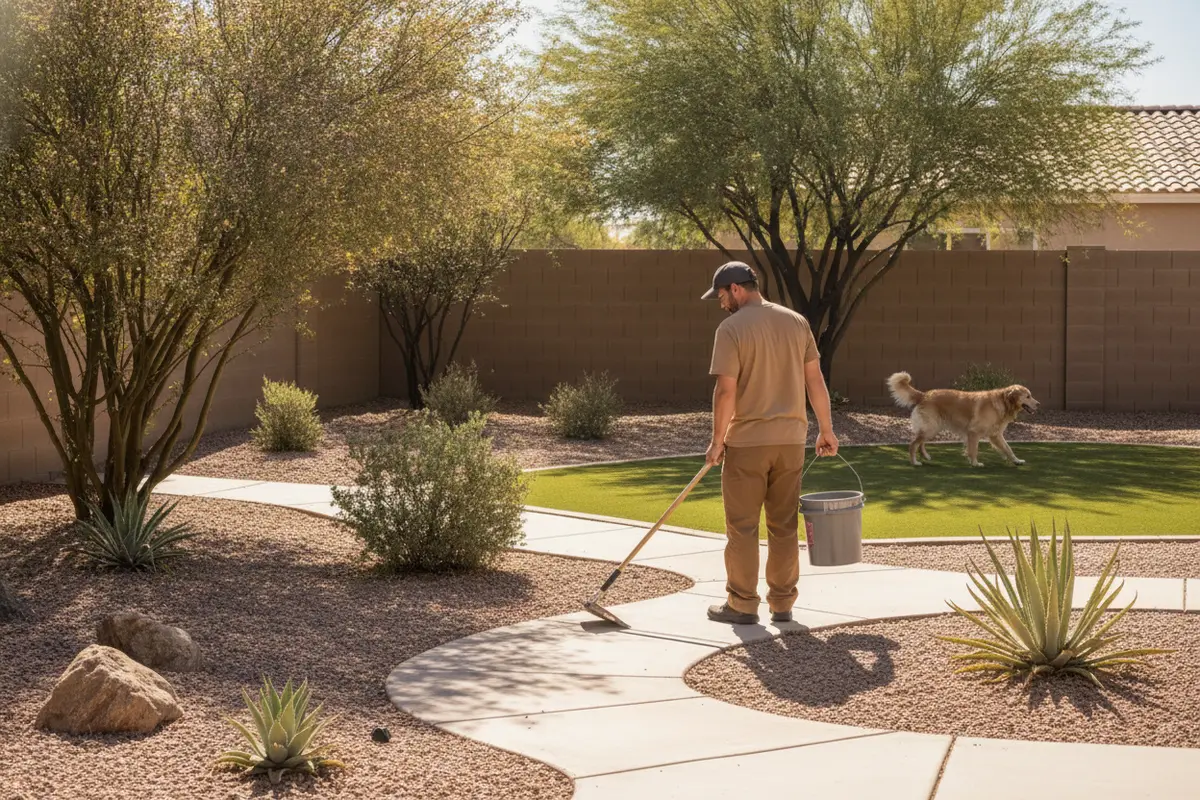
Daily route capacity is shaped by the whole workday, not just the time spent scooping. A crew may need to travel between stops, park, check access, walk the property, collect and contain waste, and handle any agreed disposal or site procedures. A delay at one location can affect the later stops. Distance between customers matters too: several nearby homes are easier to group into a route than the same number spread across a wide service area.
That is why a provider should discuss property conditions and service frequency before giving a useful estimate. A generic claim such as “we do X yards every day” does not say whether the yards are small, whether the waste is maintained weekly, or whether travel and special tasks are included.
What changes the time needed at each property?
Use these factors to explain the property clearly when you request a quote or plan a route:
- Usable area and layout: A larger area generally takes longer to walk and inspect. Trees, garden beds, play equipment, gravel, and multiple enclosed sections can make a full check slower than an open lawn.
- Number and habits of pets: The number of dogs is a helpful starting point, but it is not a precise measure of waste. Pets use different areas and have different routines.
- Time since the last cleanup: A regularly maintained yard is different from an initial visit or a property that has gone several weeks without pickup. More accumulated waste means more searching, collection, and bagging.
- Ground and weather conditions: Wet, muddy, very dry, or uneven ground can affect visibility and walking pace. Shade, leaf cover, and other yard debris can also make waste harder to spot.
- Access and safety: Locked gates, a dog in the yard, unclear entry instructions, or an obstructed path may require a pause or a changed visit plan. Agree on access and pet arrangements in advance.
- Requested scope: A basic waste pickup is not the same as a deep cleanup, removal of other debris, or artificial grass care. Make sure everyone is estimating the same work.
- Travel and route density: Several stops in the same neighborhood can reduce time spent driving. A remote stop may take a similar amount of on-site time but occupy more of the day.
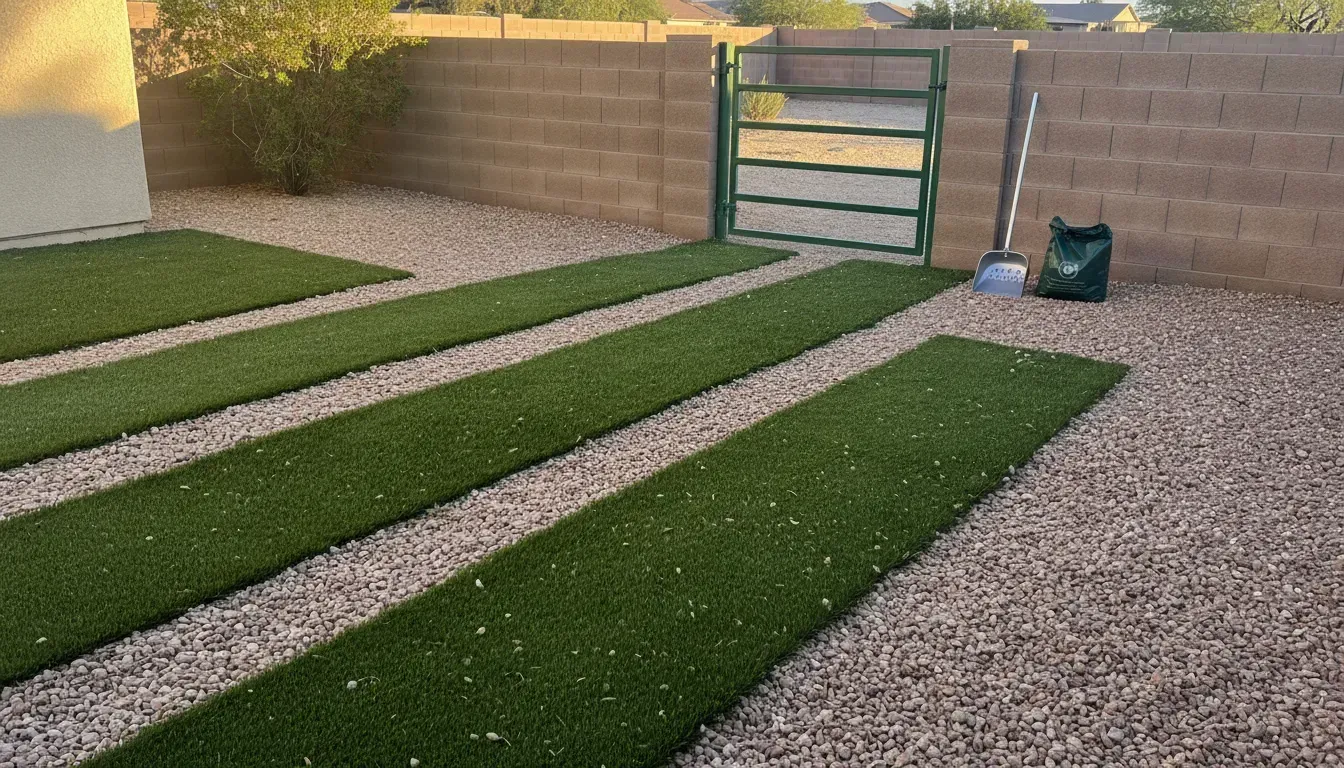
If the property has artificial grass, describe that specifically. Turf may need care beyond picking up solid waste, and the appropriate work depends on the requested service. See A1’s information about artificial grass cleaning and maintenance for that separate service context.
 How can you estimate a realistic daily route?
Start with available work time, then account for on-site work and the travel between properties. This simple calculation is more useful than assuming every yard takes the same number of minutes:
Estimated daily stops = time available for service visits ÷ average total time per stop.
“Total time per stop” should include the cleanup and the portion of route travel allocated to that stop. For example, imagine a hypothetical six-hour service window. If each stop takes an average of 30 minutes on site and 10 minutes of allocated driving and arrival time, the rough planning estimate is nine stops. That is arithmetic for an example, not a typical industry rate or a guarantee. If properties take 45 minutes on site and travel averages 15 minutes, the same window fits about six stops.
For a mixed route, calculate each stop separately rather than using one average. A quick sketch could look like this:
- Write down the available work window after allowing for the crew’s required start, finish, and breaks.
- Group stops by neighborhood or property type, and estimate on-site time for each one.
- Add realistic driving, parking, and access time between stops.
- Reserve some schedule flexibility for a locked gate, a customer question, weather, or a cleanup that takes longer than expected.
- Compare the estimated total with the available window. If it does not fit, reduce stops, adjust the service area, or revisit the assumptions.
For a community with shared areas, do not divide the total area by the number of units and assume every stop is equivalent. Map the dog-use zones, entrances, stations, and common paths that actually need attention. A property manager can start with A1’s guide to commercial property pet waste cleanup and its planning information for dog poop stations.
How do different property types compare?
The table below compares route-planning considerations, not promised visit times or daily production figures. Use it to identify what a provider needs to know before estimating a schedule.
For commercial sites, the number of yards may not be the right unit at all. A route plan may need to account for dog runs, courtyards, walking paths, waste stations, and shared spaces separately. A1’s guides to multifamily pet waste management and community pet waste solutions can help property teams think through those service areas.
 What should you ask a pooper scooper service?
Ask questions that make the estimate specific to your site. A helpful conversation should clarify both the work and the schedule, not just the number of stops a crew might complete.
- What does a standard visit include? Confirm which areas are checked and whether the estimate covers only pet waste pickup or additional tasks.
- How do you handle an initial cleanup? If waste has accumulated, ask whether the first visit is assessed or scheduled differently from routine maintenance.
- What access do you need? Confirm gate arrangements, whether a person needs to be present, and how pets should be secured during service.
- How is the schedule set? Ask how often visits are available and what happens if weather or access changes the route.
- What would change the estimate? Share changes in pet count, yard use, condition, or service scope and ask how those affect the plan.
- Can the route be reviewed after service begins? A practical plan may need adjustment once the provider understands the property and actual visit conditions.
Review the provider’s pet waste service FAQs for common service and billing questions. If you need occasional rather than recurring help, compare the details of a one-time pet waste cleanup with the routine service you have in mind. The right fit depends on your needs and the property, not on a maximum-yard claim alone.
How should homeowners and property teams plan differently?
For a homeowner, give the provider a clear picture of the yard and your routine. Mention the number of dogs, how long it has been since the last pickup, whether the entire yard is accessible, and any area that needs special attention. If you are not sure what schedule is appropriate, discuss the actual use of the yard and the service options rather than choosing a frequency based only on a neighbor’s routine. A1’s pet waste removal guide offers more background on what to consider before arranging service.
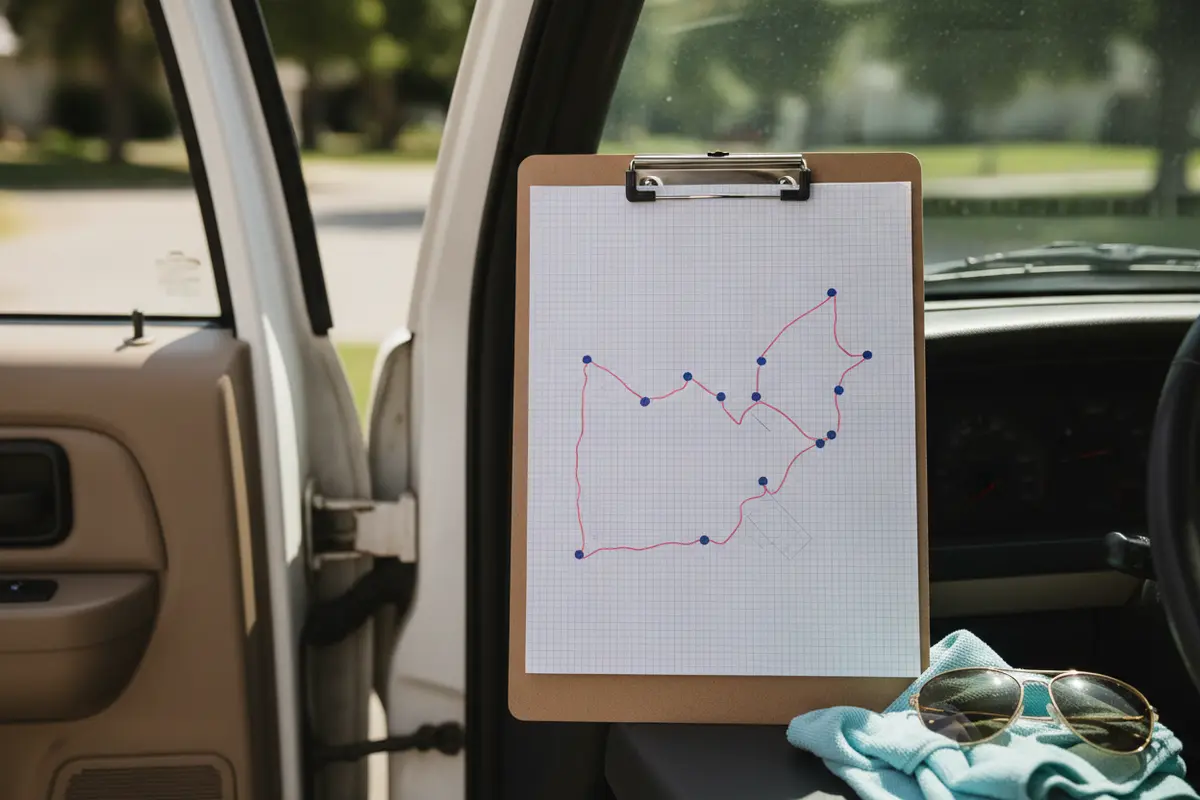
For a property manager or HOA, prepare a site map and define the service scope before requesting a route estimate. Mark common areas, pet relief zones, access points, waste stations, and areas that are excluded. Decide who will coordinate access and report a missed or blocked area. If the site has multiple buildings, explain whether you want service organized by building, zone, or visit day. Specific instructions make it easier to compare proposals on the same basis.
In both cases, the goal is a repeatable service plan. Clear boundaries and access instructions help reduce avoidable delays. A regular schedule can also make the condition of the site easier to assess over time, though it does not make every visit identical.
What does a daily yard-count estimate not tell you?
A daily count alone does not tell you how thoroughly a property is checked, which areas are included, how waste is handled, or how much travel sits between stops. It also does not tell you whether the estimate assumes a routine visit or a first-time cleanup. Before comparing providers, ask each one to describe the assumptions behind its estimate.
Be cautious about comparing a single large number with a detailed plan that accounts for your property. The more useful comparison is whether the service scope, visit frequency, access arrangements, and likely route fit your needs. For a cleanup after an absence or a long service gap, see the practical considerations in A1’s guide to dog poop cleanup after vacation.
Waste disposal rules can vary by community, so check current local guidance for your address. For broader environmental information, the U.S. Environmental Protection Agency is a government resource; use your local city or county instructions for specific disposal requirements.
Contact A1 to discuss your yard or property
Frequently Asked Questions
Can a pooper scooper service give me an exact daily yard count?
A provider can estimate a route after reviewing the property type, cleanup condition, service scope, and travel area. An exact count without those details is not very meaningful because stop times vary.
Do small yards always take less time than large yards?
Not always. Size matters, but access, landscaping, waste levels, number of pets, and the layout can change the time required. A small yard with difficult access may take longer than a larger, open yard that is regularly maintained.
Does an initial cleanup affect route capacity?
It can. An initial visit may involve more accumulated waste and more time checking the property than a routine visit. Tell the provider when the yard was last cleaned so the estimate reflects its current condition.
How can an HOA estimate service needs across a community?
Map the shared areas that require service, identify access and waste stations, and explain how often each area should be checked. Ask the provider to estimate by defined zones or tasks rather than relying only on the number of homes.
What is the best way to compare service estimates?
Compare what each estimate includes, how often service occurs, how access is handled, and whether initial cleanup or special areas are treated differently. Matching these assumptions makes the estimates more useful than comparing daily stop counts alone.
The most realistic daily capacity is the one based on your specific yard or site, the work requested, and the route around it. Share those details first, then evaluate the service plan rather than relying on a generic number.
| Property or visit type | What may make it quicker | What may add time | Details to share |
|---|---|---|---|
| Small, regularly serviced yard | Compact area, clear access, waste picked up on a consistent schedule | Several dogs, obstacles, a gate or pet-access issue | Dog count, visit frequency, gate instructions |
| Large or divided residential yard | Open layout and well-defined cleanup areas | Long walking distance, landscaping, multiple fenced sections | Approximate layout, surfaces, areas pets use |
| Initial or overdue cleanup | Waste is visible and access is straightforward | Accumulated waste, hidden areas, debris, or a longer gap since last service | Last cleanup, number of pets, known problem spots |
| Apartment or HOA common areas | Stops are close together and service zones are mapped | Many shared zones, access coordination, multiple waste stations, resident activity | Site map, requested zones, access and service requirements |
| Artificial grass area | Defined turf area and a clear request for the work needed | Odor concerns or a request for cleaning beyond solid-waste pickup | Turf area, pet use, whether cleaning or maintenance is requested |