Live Animal Trap Rental: What to Check First
A live animal trap rental sounds straightforward until the visitor turns out not to be a cat. A1 Pet Maintenance rents humane traps for feral and stray cats in Southern Nevada and Tucson. That rental is not a wildlife service, and it is not permission to move a raccoon, skunk, or other wild animal across town. Identify the visitor first, then rent only when the animal is a cat you can handle under the terms published on A1's cat trap page. Henderson dog owners who need a pickup schedule, not a cage, should start with the Henderson weekly and bi-weekly pickup guide.
Call 702-521-2624 to ask about a cat trap rental.
What a live animal trap rental actually covers
Homeowners search for a live animal trap rental when a nighttime visitor needs to leave the yard without being harmed. The phrase covers many species, but A1's published offer covers only one.
On the cat trap rentals page, A1 rents feral cat traps at $70 per trap for up to 7 days. The same page adds $10.00 per day when a trap is still rented after the 7th day. It also applies a $100 charge if the trap is not returned. Before you bring it back, clean it with Clorox and water, and return it in working condition. Those are the only rental terms that page publishes.
That page never mentions raccoons, opossums, skunks, rabbits, or squirrels. If the question is whether any yard visitor qualifies, the honest answer is no. You can rent a cat trap for a cat.
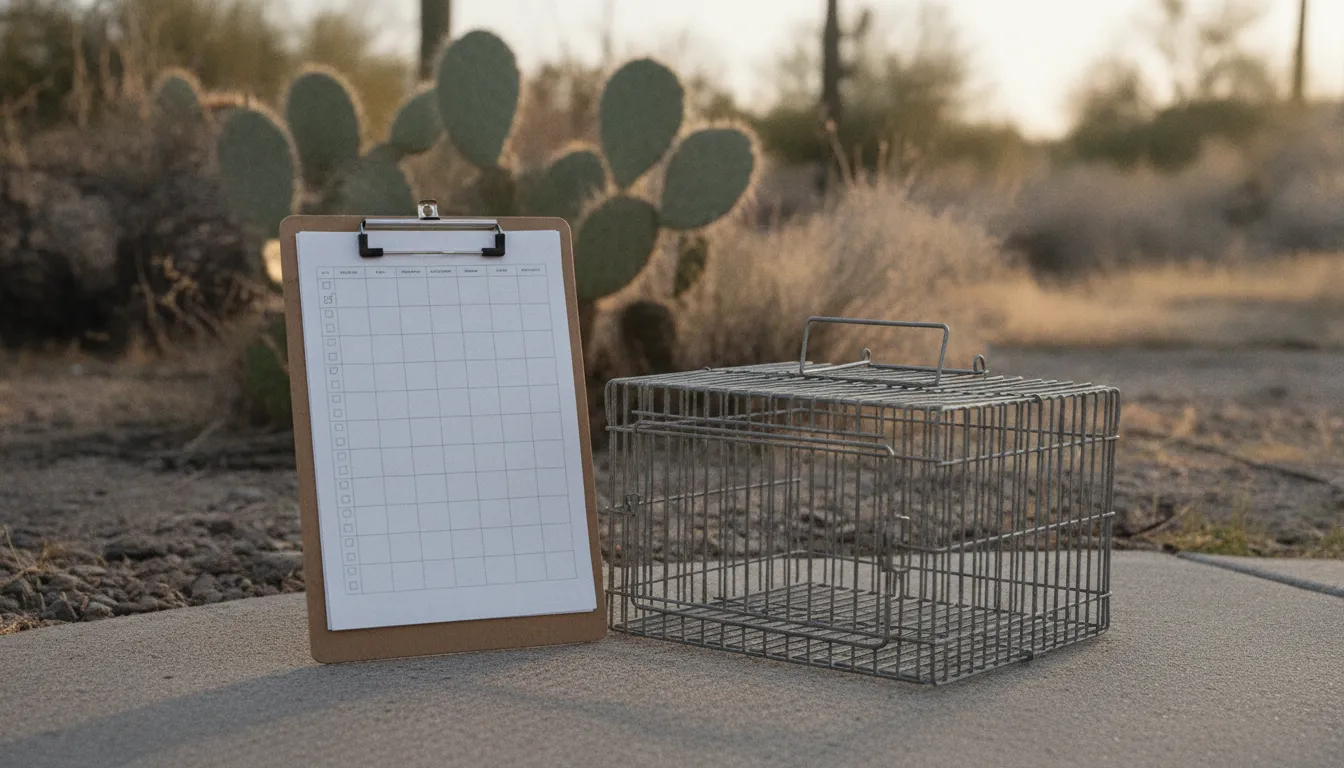
A live trap is a holding cage whose door shuts when an animal steps on the trigger plate. The cage does not decide what the renter is allowed to do next. For a cat, the next step is a calm hold, a carrier plan, and a handoff to a clinic or caretaker. For wildlife, Nevada guidance is stricter, and a rented cage does not change that guidance.
Confirm the animal before you rent
Renting before identification is how the wrong animal ends up in a cat-sized cage. Watch for one evening before reserving anything.
- Shape and size. A house cat or community cat fits a standard cat trap. A raccoon is heavier, has a ringed tail, and can bend a light cage. A skunk is low and wide. An opossum has a bare tail and a pale face.
- Time of night. Community cats often show up around feeding time. Many wild visitors come later, after trash or pet food is left out.
- What it wants. A cat returns to food and shelter. A raccoon returns to a loose lid, a pet door, or an attic gap. If the attractant is the house, a trap will not fix the entry.
- How many. One shy cat is a rental question. A group of cats under a porch is a colony question, and A1's Las Vegas HOA trap guide is the page for shared-property planning, not this one.
If you cannot tell which animal it is, do not set a trap just to find out. University of Nevada, Reno Extension says the first step with nuisance wildlife is to identify the species. Many Nevada animals are protected for all or part of the year, and misidentifying one can bring a fine. Their fact sheet, Dealing with Nuisance Wildlife, is the reference to use before you decide a cage is the tool.
When A1's cat trap is the right rental
Rent from A1 only when three things are already true. You know the animal is a cat. You need the cage for a short window. You can meet the return rules printed on the cat trap page.
The rental fits a homeowner with one stray or feral cat in the yard. That includes Las Vegas, Henderson, the rest of Southern Nevada, and Tucson. It also fits someone who does not want to buy a trap for a single capture. It also fits a short second attempt after a first night failed, as long as the extra days are planned. The cat trap page is where the $10.00 daily add-on, after day 7, is printed.
It does not fit a product search. If you want model names, door types, and a buy-versus-rent comparison of cat traps, that is a different article. This page stays on the rental decision. The humane trap planning guide covers how to choose and set a cat trap safely. How to catch a stray cat covers the capture itself. Read those before you set the door. Do not treat this page as the how-to.
Call 702-521-2624 or use the contact form and say you need a cat trap, which city you are in, and how many nights you expect to need it. A1 does not publish a separate wildlife rate, a delivery promise, or a list of non-cat species it will rent for. If the desk cannot confirm a cat, do not book the rental as a workaround.
Cat rental versus a wildlife problem
Use this split before you reserve a cage. Every dollar figure below is copied from the live cat trap rentals page. Wildlife rows have no A1 price because that page does not sell that job.
| Situation | Who handles it | What the cat trap page says |
|---|---|---|
| One feral or stray cat in a yard. | You, with a clinic or caretaker ready. | $70 per trap for up to 7 days. |
| Trap still out after day 7. | You, only if the cat is still the target. | $10.00 for each extra day. |
| Trap not returned. | You, before the return deadline. | A $100 charge applies if the trap is not returned. |
| Trap comes back dirty or broken. | You, before you hand it in. | Clean it with Clorox and water. It must still work. |
| Raccoon, skunk, opossum, or other wildlife. | Wildlife authority, not a cat-trap desk. | No wildlife rental and no wildlife price. |
| Animal in an attic, wall, or crawl space. | Close the entry, then call wildlife control. | No building-entry service. |
Read the table as a yes-or-no check, not as a price menu for every animal. Only the cat rows have an A1 dollar amount, and each one is printed on the cat trap rentals page.
UNR Extension is direct about the wildlife half of that table. You may live-trap some nuisance animals, but you may not relocate them. Trapped wildlife must be destroyed because moving it can spread disease, including disease that reaches people. USDA Wildlife Services loans traps and humanely euthanizes trapped animals. The fact sheet lists 1-866-487-3297 and (775) 851-4848. That is the call for a raccoon or skunk, not A1's cat-trap line.
Nevada's broader hunting and trapping rules sit with the Nevada Department of Wildlife. Protected species and local firearm rules are theirs to explain. A rental receipt does not replace that check.
If you rent, plan the return on day one
The expensive part of a live animal trap rental is rarely the first week. It is the trap that sits in a garage, or comes back unfit to rent again.
- Write the pickup day and the day-7 date on the same note as the phone number you will call if you catch something.
- Check the trap on a schedule you can keep. A closed door with an animal inside is not a problem to solve in the morning if you set it at dusk and left town.
- Keep pet food, trash lids, and water bowls handled the same week. A trap next to an open food source just invites the next visitor.
- After a cat capture, follow the stray-cat guide for the hold and the handoff. Do not improvise a release point across the valley.
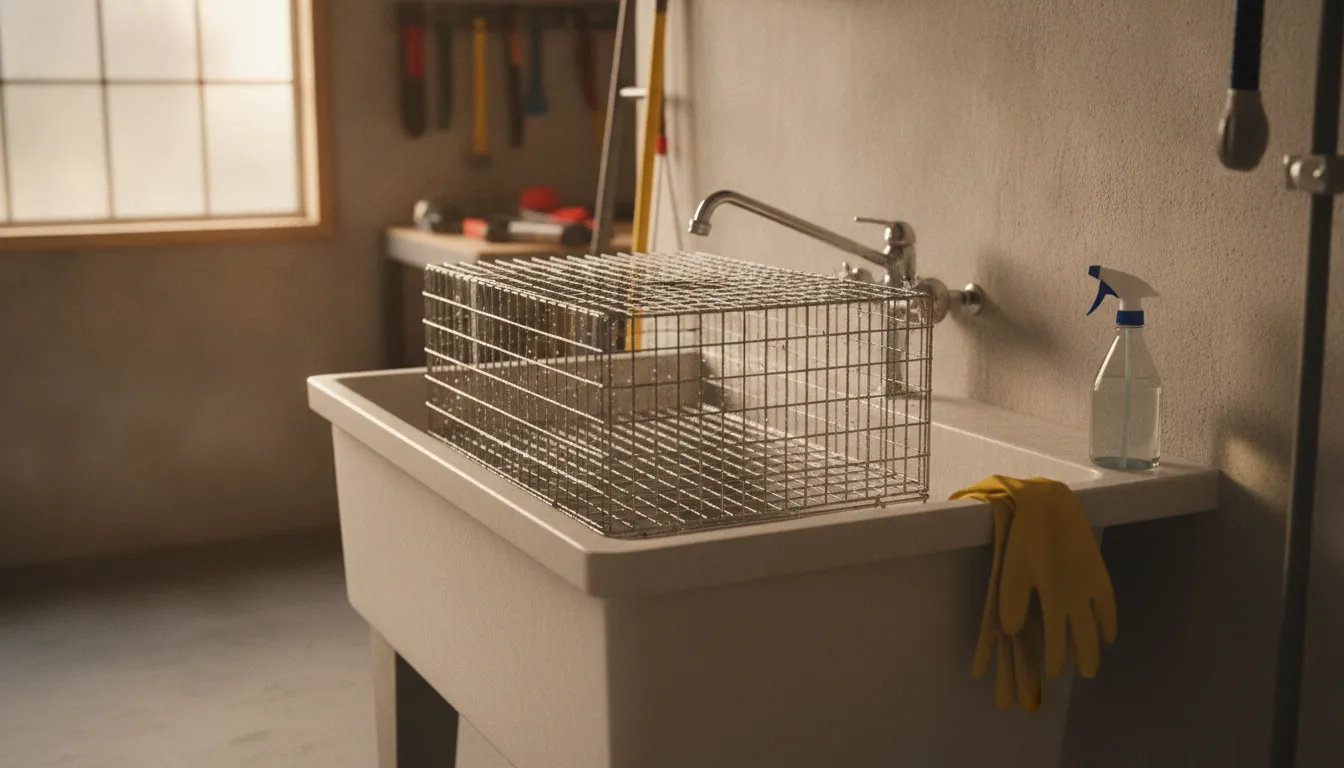
- Before return, wash the trap with Clorox and water and confirm the door still locks. A $100 charge applies if the trap is not returned.
Yard waste is a separate job. If the real mess is dog waste on the grass, not an animal in a cage, A1's yard cleanup service and one-time cleanups are the pages to use. This article does not repeat Henderson pickup rates or neighborhood lists.
Call 702-521-2624 if the visitor is a cat and you need a trap this week.
What to do the night you set a cat trap
Once you have confirmed a cat and picked up the trap, the rental clock is already running. A calm night beats a second week of daily fees.
Set the trap where you have actually seen the cat, not where you hope it might walk. Level ground matters. A rocking cage makes a wary cat back out before the plate trips. Face the door toward the path the cat already uses, and keep the rest of the yard quiet. Pull in other food that night so the bait in the trap is the only meal.
Check it on a schedule you can keep. Dusk and early morning are the usual windows. If the door is still open, leave the set alone. If the door is shut, cover the trap with a light sheet so the cat is not staring at the yard. Then move to the plan you wrote down before you rented. That plan should name the clinic, rescuer, or caretaker who will take the cat. A1 rents the cage. A1 does not pick up the cat or run a shelter.
Do not add a second animal to the same night. If a raccoon is also working the trash, secure the cans and skip the set. A cat trap is the wrong tool for that visitor, and a mixed night is how the wrong animal ends up in the cage.
Weather counts in both markets. Summer pavement in Las Vegas and Henderson heats a metal trap fast. Tucson yards do the same. Do not leave a closed trap in full sun while you run an errand. Shade, a cover, and a short drive to the handoff matter more than a perfect photo.
Questions to ask before you reserve the trap
A five-minute call prevents a rental that does not match the animal. Use these questions with A1, and stop if any answer is no.
- Is the animal a cat? Say what you saw: size, tail, and the time of night. If you are guessing, wait and watch another evening.
- Which city? A1's cat trap rental is for Southern Nevada and Tucson. Name Las Vegas, Henderson, or the Tucson area so the desk can tell you if a trap is available there.
- How many nights? The cat trap page prices the first stretch at $70 for up to 7 days. If you already know you need longer, ask what the $10.00 daily add-on will total before you take the trap home.
- Who takes the cat if the door shuts? Have that name before pickup. A rental without a handoff is just a cage in the garage.
- Can you meet the return rules? You need Clorox and water, a working door, and a plan to bring it back. A $100 charge applies if the trap is not returned.
Skip the call if the animal is wildlife, if it is inside a structure, or if you want A1 to relocate it. Those are not services on the cat trap page. For wildlife, start with the UNR Extension fact sheet and the Nevada Department of Wildlife rules, then use the USDA Wildlife Services numbers printed there.
Dog waste on the same property is still a separate visit. A trap rental does not include scooping the yard, and a scooping visit does not include setting a cage. Keep the two requests on two calls so neither job gets mixed into the other.
Frequently asked questions
Does A1 rent live traps for raccoons or skunks?
No. The cat trap rentals page publishes a feral cat trap only. The printed terms are $70 per trap for up to 7 days, then $10.00 per day. A $100 charge applies if the trap is not returned. Raccoons, skunks, and other wildlife are not part of that offer. UNR Extension says relocation is not allowed and points homeowners to USDA Wildlife Services.
Can I use a cat trap and release a wild animal somewhere else?
No. The Extension fact sheet says trapped nuisance wildlife must not be relocated because the animal may carry disease. Releasing it in another neighborhood can spread that disease. Call wildlife services instead of driving the animal across town.
What does the cat trap rental include?
The published offer is the trap itself for up to 7 days at $70. Extra days are $10.00 each on the cat trap page. You clean it with Clorox and water and return it working. A $100 charge applies if the trap is not returned. A1 does not publish delivery zones or a promise to set the trap for you.
Where can I rent a cat trap from A1?
A1 serves Southern Nevada, including Las Vegas and Henderson, and the Tucson area. Call 702-521-2624 or write through the contact page and name the city. The same number is printed on the cat trap rentals page. Confirm the animal is a cat before you ask them to hold a trap.
What if I already have dog waste in the yard and a visiting cat?
Treat them as two jobs. Book yard cleanup or a one-time waste visit for the dog waste. Rent a cat trap only for the cat, and only after you have read the humane setup guide. Do not ask a waste crew to trap wildlife.