Outdoor dog poop odor eliminator: What A1 Customers Should Know
An outdoor dog poop odor eliminator works best after the waste itself is removed and the affected spot is cleaned for its surface. Pick up visible waste, clear nearby residue, then use a product labeled for that surface and follow its directions. If odor keeps returning, check for missed waste, a concentrated pet-use area, or residue in porous material instead of simply spraying more fragrance.
What should an outdoor dog poop odor eliminator do?
A useful outdoor odor-control product should be suitable for the surface where you plan to use it and clear about how to apply it. Some products are intended to clean a particular material; others mainly add fragrance. Read the label before buying so you know what the product is designed to do, whether it must be diluted, how long it should remain in place, and whether the area needs to be rinsed.
Do not treat scent as proof that the source is gone. A strong fragrance can cover an odor temporarily while waste or residue remains underneath. Start with removal and cleaning, then reassess once the area has dried. If the smell remains, inspect the spot again and check adjacent ground, the edge of a path, or a nearby dog-frequented area.
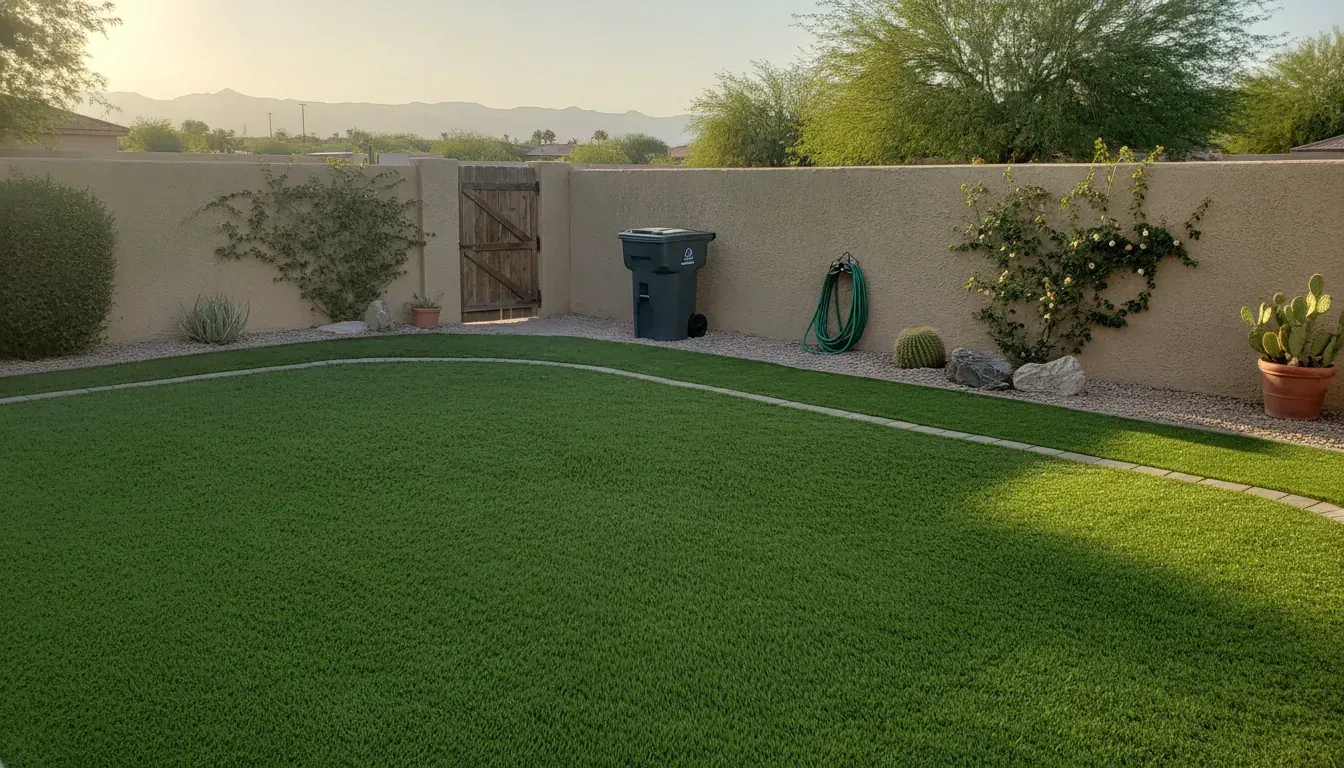
Match your expectations to the problem. A small, recent spot may need a simple pickup and surface-appropriate cleaning. A yard with accumulated waste needs a thorough clear-out before an odor product can make much difference. If the affected area is artificial turf, use guidance designed for pet turf rather than assuming that a lawn product is appropriate. A1 explains its artificial grass cleaning and maintenance service separately.
What should you do before using a neutralizer?
- Keep pets away while you work. Choose a time when you can manage access to the area, and follow the product label about re-entry and use around animals.
- Pick up all visible waste. Use a scoop or bag, and check around the immediate spot for small pieces. Removing the source is the first step; a product is not a substitute for pickup.
- Inspect the surrounding surface. Look for residue between grass blades, at the edge of gravel, in cracks, or where runoff may have carried material. A lingering smell may come from a nearby spot rather than the one you first noticed.
- Read the label and test cautiously. Confirm the product is intended for the material and follow its instructions. If you are concerned about a finish or a particular surface, test a discreet area as directed by the manufacturer.
- Apply only as directed. Avoid combining cleaning products. Use the stated amount and method, and allow the surface to dry or be rinsed as directed before letting pets back into the area.
Use gloves if you prefer, wash your hands after cleanup, and store products where children and animals cannot reach them. Do not assume a product is safe for every surface or every animal simply because it is sold for outdoor use. Its label is the right place to check the intended use and precautions.
Which odor-control option fits the problem?
Choose an approach based on the waste, the surface, and how much of the yard is affected. The comparison below is a practical starting point, not a substitute for the product label or service details. No single product is right for every outdoor material.
| Situation | First step | Next option | Check before you start |
|---|---|---|---|
| One recent spot on a lawn | Pick up the waste and inspect the grass. | Use a lawn-compatible product only if odor remains and the label fits. | Application and pet re-entry directions. |
| Waste on gravel or soil | Remove waste and visible residue without spreading it. | Follow directions for the specific ground material; reassess after it dries. | Whether the product is meant for gravel or soil. |
| Waste on a hard path | Lift the waste and clean the affected patch. | Use a cleaner labeled for that hard surface if needed. | Rinse, runoff, and surface-finish instructions. |
| Pet waste odor on artificial turf | Remove solids and identify the affected turf area. | Use turf-specific cleaning guidance or ask about professional turf cleaning. | Compatibility with the turf and its backing. |
| Accumulated waste across the yard | Clear the waste across the affected area. | Consider a one-time cleanup before treating remaining odor. | Area size, access, and what cleanup includes. |
| Odor that returns repeatedly | Look for missed waste or a frequently used spot. | Set a consistent pickup routine or ask about recurring removal. | Service area, visit schedule, and service scope. |
How do you handle odor on grass, gravel, pavement, or artificial turf?
Grass
Pick up the waste and inspect the grass blades and the ground below. If a residue remains, use only a product labeled for lawns, following its directions. Avoid treating a whole lawn when the problem is limited to one area. If odor persists after the spot is cleaned and dry, check nearby ground and other places where the dog tends to go. More fragrance will not remove a missed source.
Gravel and soil
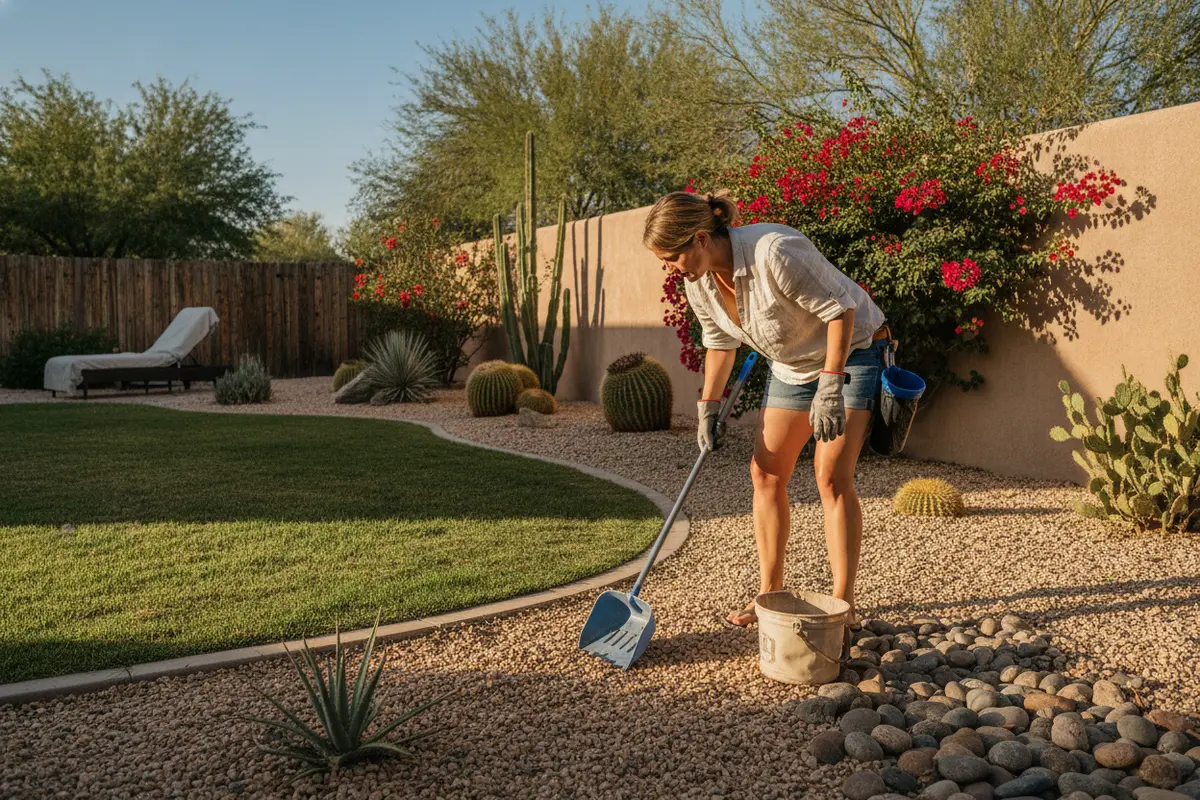
Gravel can make it harder to see small pieces, so inspect around the exact spot and nearby stones. Remove visible waste and residue carefully. Use a product only if it specifically suits the material; instructions for a hard patio or lawn may not apply to gravel or bare soil. If the odor has spread through a large area, a surface treatment alone may not solve the underlying cleanup problem.
Concrete and other hard surfaces
Pick up the waste, then clean the affected patch with a product intended for that surface. Pay attention to cracks, joints, and edges, where residue can be easy to miss. Follow directions for rinsing and runoff, and do not mix products in an attempt to make them stronger. Let the area dry and check whether the odor has actually improved.
Artificial turf
Remove solid waste promptly and use instructions made for artificial turf. Turf systems differ, so do not assume that a lawn chemical or a general-purpose cleaner is suitable for the grass fibers, backing, or base. If odor continues over a larger section or returns after routine cleaning, review artificial turf cleaning options or A1’s guide to booking artificial grass cleaning.
Why can the smell return after cleaning?
Recurring odor usually means it is worth checking the source and the routine before changing products. A few common issues can explain why an outdoor space still smells after a first attempt.
- Waste remains nearby. A small piece can be hard to notice in grass, gravel, or a shaded corner. Inspect beyond the exact location where the smell seems strongest.
- The material needs a different approach. A cleaner made for one surface may not work as intended on another. Check the product label and the surface type before repeating an application.
- The area is used frequently. If a dog returns to the same place, new waste may be mistaken for a failed cleaning. Regular pickup reduces the chance that waste accumulates between cleanups.
- There is more waste than a spot treatment can address. When several parts of the yard need attention, clear the area first. A spray applied to one patch cannot take the place of a full-yard cleanup.
- The odor is coming from another source. Check around bins, paths, gates, and other places where waste may be carried or left. Do not assume the first visible spot is the only one.
After cleaning, wait for the area to dry as the product label directs, then reassess. If you cannot find the source or the affected area is extensive, note where the smell is strongest and what surfaces are involved. Those details make it easier to choose the next practical step.
How do you choose and apply an outdoor odor product?
Before buying, start with the surface and the product label, not a broad promise on the front of a bottle. Look for a clear statement that the product is intended for the material you need to clean. If your yard includes more than one surface, check that the label covers each one; do not assume a product suitable for pavement is also suitable for lawn or turf. Also note whether the product is ready to use or needs dilution, and use only the method and amount specified.
Think about the location as well as the material. A spot near a walkway, planting bed, or drain may need extra attention to the directions for rinsing and runoff. Avoid applying a product more broadly than the problem requires. If directions call for a dwell time, allow that time rather than wiping it off immediately; if they call for rinsing, do so as specified. Keep pets and children away for the period stated on the label, and store the container safely afterward.
Do not combine products, and do not repeat an application simply because a scented product has faded. First confirm that waste was removed and that the area has been cleaned as directed. Let it dry, then check whether odor remains. If the same spot continues to smell, inspect for a fresh deposit or residue and reconsider whether you have the right product for the surface. When in doubt, follow the manufacturer’s directions or contact the manufacturer for product-specific guidance.
How can you make a simple outdoor odor-control routine?
A manageable routine is more useful than waiting until waste has built up. Adjust it to your property, your dog’s habits, and the conditions in your yard. The goal is to notice new waste early, remove it, and deal with a problem spot while it is still easy to locate.
- Choose a repeatable time to check the yard. Tie pickup to a daily household routine or another regular reminder that works for you.
- Walk the whole area. Check common-use spots as well as less visible corners, side yards, and the edges of outdoor paths.
- Remove waste before treating odor. Bag or scoop it, then inspect the ground for residue.
- Use surface-specific cleaning when needed. Follow the label and keep pets away for the period stated by the manufacturer.
- Keep track of repeat trouble spots. If the same area smells again, look for an ongoing source or consider whether your pickup routine needs to change.
For a yard that has fallen behind, a one-time pet waste cleanup may be a useful reset. For continued help, A1 describes its dog poop service and how it works. Residential service may be weekly or bi-weekly, as appropriate to the arrangement; confirm the available schedule and scope when you ask. A regular visit handles waste pickup, while a product for odor should still be selected for the specific surface and used as directed.
When is a one-time cleanup or recurring service useful?
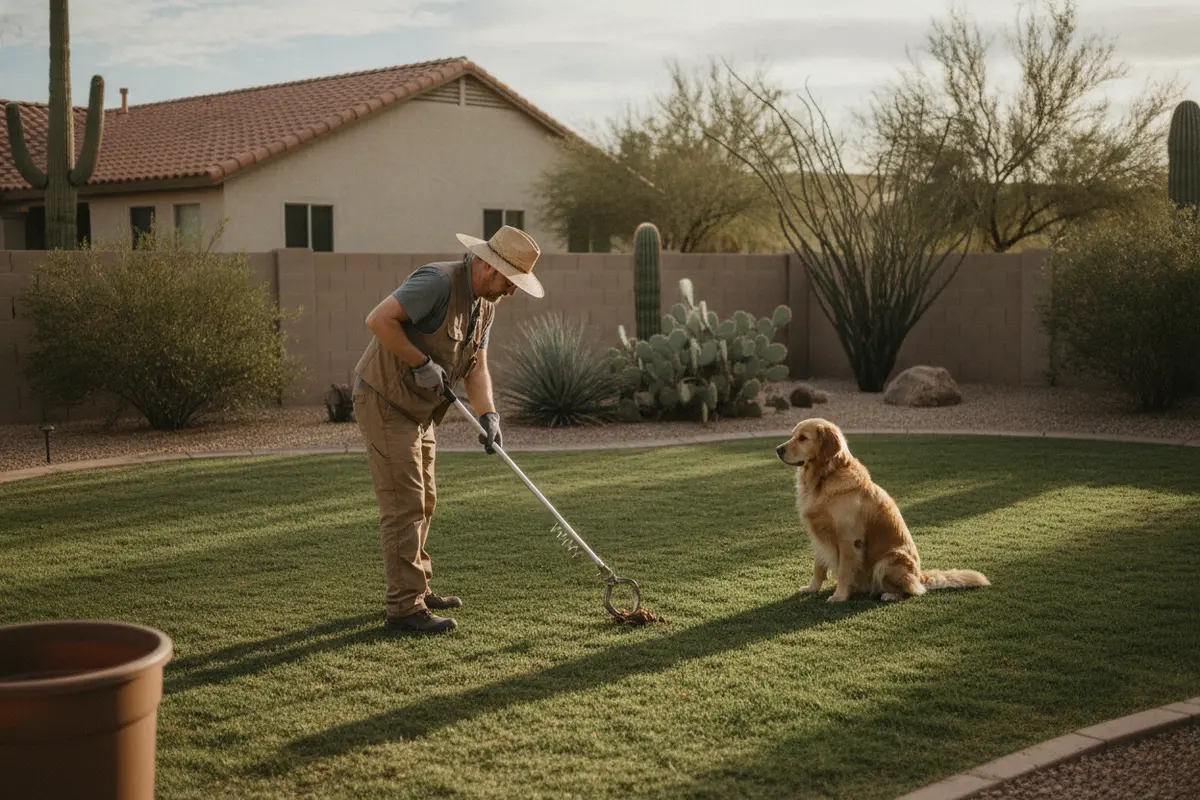
A one-time cleanup can suit a yard with accumulated waste, a property that needs a reset, or a temporary situation when you cannot keep up with pickup. A1 offers yard cleanup guidance and a separate one-time cleanup service. Ask what area will be covered and whether the service fits your property before arranging a visit.
Recurring removal may make sense when you want ongoing help keeping a yard clear. A1 offers pet waste removal in Southern Nevada and the Tucson area; confirm your address and the available schedule with the company. Weekly or bi-weekly service can be discussed, but the right arrangement depends on the property and service details. There is no need to guess about scope: provide the number of dogs, yard layout, and current condition when requesting information.
Odor treatment and waste removal address related but different parts of the problem. A cleanup removes waste from the property; an odor-control product is for a residual smell and must suit the surface. For service details or help deciding which kind of cleanup to ask about, see the pet poop removal guide or contact A1 directly.
What details help when requesting cleanup help?
Share practical details instead of only saying that the yard smells. A clear description helps the company understand what you are looking for and whether to discuss a one-time visit, recurring pickup, or artificial turf cleaning.
- Your city or neighborhood, so the service area can be confirmed.
- How many dogs use the area and whether waste is recent or accumulated.
- The approximate size and layout of the area, including gates or access notes.
- The surfaces involved: lawn, gravel, pavement, or artificial turf.
- Where odor is strongest and whether it returns after cleanup.
- Whether you are seeking a one-time reset or ongoing waste removal.
A1’s contact page is the place to ask about your situation. You can also review the service and billing FAQs for general account questions. Confirm the schedule and included work directly rather than relying on assumptions about a particular property.
How should you dispose of pet waste?
Collect waste in a suitable bag or scoop and follow applicable local disposal instructions. The proper option can depend on local rules and the waste system available where you live. If you are unsure about disposal requirements, consult your local public works or sanitation department. The U.S. Environmental Protection Agency’s official website is also a starting point for general environmental information; it is not a substitute for local instructions.
Keep collected waste contained during transport and do not leave it where people or pets may encounter it. For shared properties, make sure residents know where waste belongs and how to use the designated receptacles. A well-placed bin or clear property routine can make regular pickup easier, but check property rules before changing a shared disposal arrangement.
Frequently asked questions
What is the best outdoor dog poop odor eliminator?
The best choice depends on the surface and the product’s labeled use. Pick up the waste first, then choose a cleaner or odor-control product specifically intended for grass, hard surfaces, gravel, or artificial turf as applicable. Follow its directions rather than choosing only by fragrance.
Can I spray an odor eliminator directly on dog poop?
Remove the waste first. A spray does not replace pickup, and the label may not direct you to apply a product to waste. After collection, use the product only on the surface and in the manner stated by its manufacturer.
Why does my yard still smell after I clean it?
There may be waste or residue nearby, the product may not suit the surface, or the area may be used again before you notice. Inspect the surrounding ground and common-use spots, then reassess after the cleaned area dries as directed.
Can I use the same cleaner on lawn and artificial turf?
Do not assume so. Check the product label for the exact surface, and use turf-specific guidance for artificial grass. If you need help with a larger turf area, ask about the artificial grass cleaning options available for your location.
Should I arrange a one-time cleanup or recurring service?
A one-time cleanup may fit accumulated waste or a yard that needs a reset. Recurring service may suit households seeking ongoing pickup. Explain your property, location, and needs to A1, then confirm the available schedule and included work before deciding.
Remove waste before treating the smell, match any product to the surface, and ask for cleanup help when the yard needs more than spot care.