Dog Waste Stations Apartment Complex Las Vegas: A Guide
This is a subtitle for your new post

In a busy Las Vegas apartment community, a clean dog-walking route depends on more than asking residents to be responsible. Bags need to be available where people actually walk, receptacles need regular service, and the system must be easy for property staff to manage.
The best dog waste stations apartment complex las vegas setup combines strategically placed bag dispensers, covered receptacles, clear signage, and a dependable emptying schedule. A practical starting point is one station for every 50 to 80 units, adjusted for entrances, pet areas, green spaces, and walking paths. Professional maintenance helps keep stations usable, reduce odors, and support resident compliance.
A1 Pet Maintenance has served Las Vegas properties for more than 26 years and maintains pet waste programs for over 400 properties each week. For the broader service strategy, see our Commercial and HOA Pet Waste Removal in Las Vegas: The Property Manager's Guide. First, let us define what a complete station includes and why each part matters.
What Are Dog Waste Stations and Why Does Every Apartment Complex Need Them?
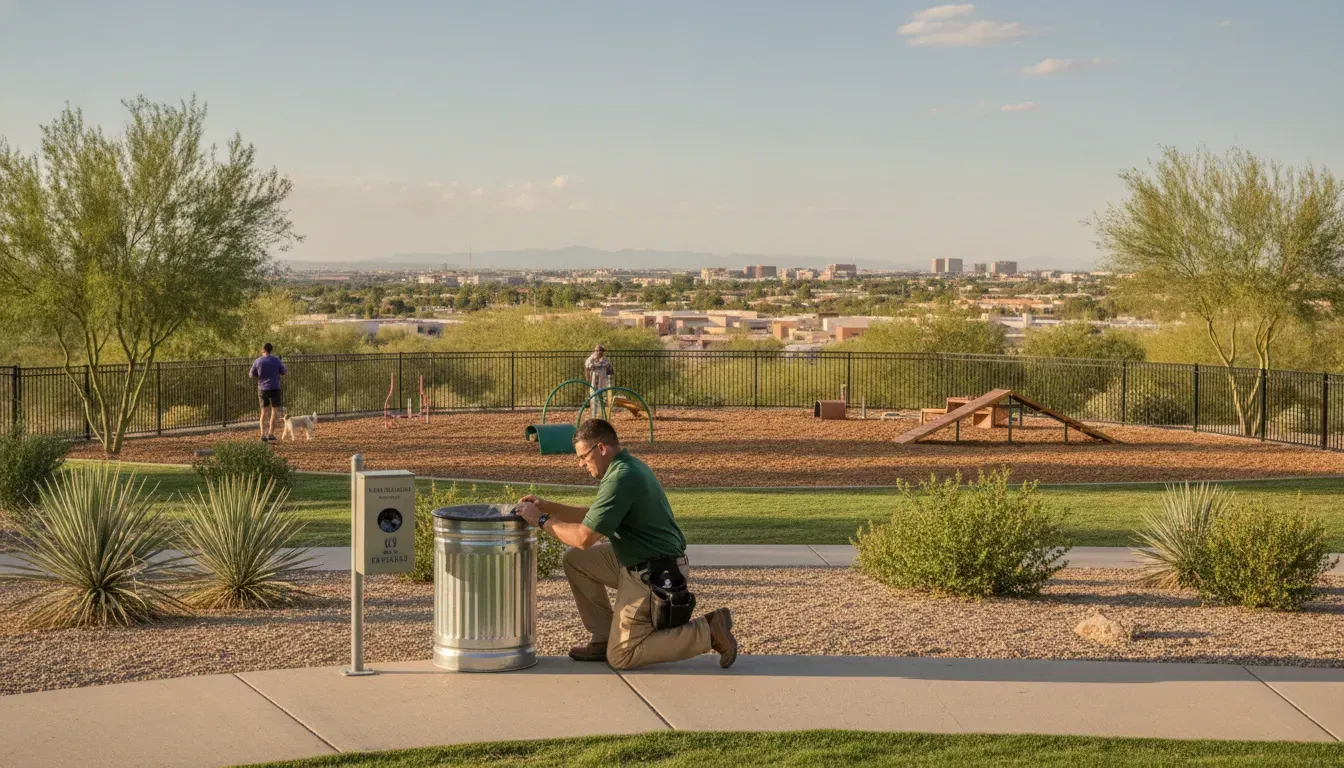
A dog waste station is a simple piece of shared community infrastructure. It combines a bag dispenser, a covered or durable waste receptacle, and clear signage that encourages residents to clean up after their dogs.
For a Las Vegas apartment complex, that combination puts the right action close to the places where residents already walk. It also makes the community's expectations visible instead of leaving cleanup rules buried in a lease or resident handbook.
How do dog waste stations improve resident compliance?
Residents are more likely to pick up waste when bags are available, the disposal point is convenient, and the purpose is clear. A missing bag or overflowing bin creates an easy excuse to leave waste behind.
The U.S. Environmental Protection Agency identifies stations with trash bag dispensers, public signs, and trash bins as an effective management approach for property owners. Read the EPA pet-waste management BMP guidance.
Signage adds an educational function. The EPA explains that signs placed next to stations can inform pet owners about the importance of responsible pet waste management. That reminder supports consistent behavior without requiring staff to confront residents during every walk.
Why does apartment community cleanliness matter?
Dog waste left along sidewalks, turf, and common green spaces quickly affects how residents experience the property. A visible station gives residents a practical way to keep those areas cleaner between scheduled maintenance visits.
Stations do not replace regular servicing. Bins must be emptied before they become full, foul-smelling, or difficult to use. Clean, stocked stations communicate that management takes shared spaces seriously.
That visible consistency can reduce complaints about waste near entrances, pet areas, and walking routes. It also helps property staff spend less time reacting to individual reports and more time managing the broader community.
How can stations support sanitary public-health outcomes?
Pet waste is not only an appearance problem. The EPA identifies it as a leading source of nutrient and bacteria pollution in urban streams and waterways.
During rain, stormwater can carry waste from the ground into nearby streams, lakes, and rivers. Pet waste entering waterbodies can make people and animals sick, while also promoting nuisance weed and algae growth.
Las Vegas properties still need to manage these risks, even in a dry climate. Irrigation, occasional storms, drainage systems, and shared outdoor areas can move contamination beyond the original spot.
A station system supports prevention at the point where waste is created. Bags, receptacles, and reminders make proper disposal easier for residents. Regular maintenance keeps the system usable.
Every apartment complex has different traffic patterns, pet populations, and landscaping. The basic need remains the same: make cleanup convenient, visible, and dependable. When stations are installed thoughtfully and maintained consistently, they protect community cleanliness, support resident compliance, and reduce avoidable complaints.
How Many Dog Waste Stations Does an Apartment Complex in Las Vegas Need?
A practical starting point is one dog waste station for every 50 to 80 apartment units. That range gives residents reasonable access without placing stations so close together that they become difficult to service. It is a planning estimate, not a fixed rule. A large property with several buildings, multiple pet-relief areas, or heavy dog traffic may need additional stations.
For example, a 200-unit community would begin with four stations at the lower-density end of the range. A property manager might choose five or more if residents walk long distances between buildings or if complaints cluster in certain areas. Review the layout, not just the unit count, before finalizing the plan. The right setup for dog waste stations apartment complex Las Vegas properties depends on access, walking patterns, and the location of landscaped areas.
Where should apartment dog waste stations be placed?
Distribute stations across the routes residents and dogs already use. Recommended locations include:
- Community entrances and exit points where residents begin or end walks.
- Green spaces and designated pet-relief areas where dogs spend time.
- Walking paths that connect buildings, parking areas, and shared amenities.
Placement should make the station visible and convenient without obstructing sidewalks, gates, fire access, or accessible travel paths. Avoid hiding a dispenser behind landscaping. Residents are more likely to use a station when they can see it before or during a walk.
Las Vegas properties should also consider heat, sun exposure, irrigation, and wind. Choose sturdy locations that protect the dispenser and receptacle from unnecessary damage. Keep stations near a route that maintenance staff can access efficiently. A station that is convenient for residents but difficult to empty will create overflowing bins and avoidable odors.
How can managers adjust the initial station count?
Track bag usage, bin capacity, resident complaints, and recurring waste hotspots after installation. Add a station when residents regularly pass full bins or leave waste near a route without convenient access. Relocate one when it receives little use because it sits away from normal walking patterns.
Station quantity works best as part of a larger property plan. The Commercial and HOA Pet Waste Removal in Las Vegas: The Property Manager's Guide covers the broader system, including station upkeep and recurring cleanup. A consistent maintenance schedule keeps the stations useful after installation.
Use the 50-to-80-unit range as the first calculation, then validate it against the community's map and resident behavior. That approach gives property managers a defensible starting point while leaving room to improve coverage.
What Happens to Bagged Waste After It Is Deposited?
Once a resident ties a bag and places it in the receptacle, the station becomes part of the property's sanitation system. The waste should move through a consistent cycle: collection, secure transport, and proper disposal.
Collection starts with a reliable emptying schedule
Maintenance staff or a contracted service empties each receptacle before it becomes overfilled. Regular emptying reduces odors, keeps bags available, and helps the surrounding area remain clean. It also prevents residents from placing bags beside a full bin.
There is no single schedule that fits every apartment community. Usage changes with the number of residents, pets, station locations, weather, and seasonal activity. A high-traffic dog run may need more frequent service than a station near a lightly used path.
Property teams should monitor fill levels, odor, loose bags, and litter around each station. Those observations help establish a practical route schedule. The goal is consistent service before residents notice a sanitation problem.
What happens when a station is ignored?
An overflowing receptacle creates more than an unpleasant appearance. Loose bags can fall onto walkways or landscaping, while odors can discourage residents from using the station. That can increase complaints and reduce cleanup compliance across the community.
Uncollected waste also creates an environmental concern when bags tear or waste escapes into landscaped areas. The Environmental Protection Agency explains that stormwater can pick up pet waste left on the ground. It can then carry that waste through storm sewer systems or directly into nearby streams, lakes, and rivers. The EPA's pet waste management guidance identifies this runoff pathway and its risks.
Pet waste can introduce bacteria and nutrients into waterways. It may also contribute to algae and weed growth, and contaminated water can make people and animals sick. In Las Vegas, runoff management remains important even when rainfall is infrequent. A single overflow or torn bag can still move through drainage infrastructure during a storm.
Why the station is only one part of disposal
A station provides the bag dispenser and receptacle that make responsible disposal easier. The EPA describes pet waste stations as an effective management approach when they combine bags, trash bins, and educational signs. However, the system works only when someone keeps supplies stocked and removes the collected waste.
Professional maintenance gives property managers a documented, repeatable process. It keeps stations usable, reduces odor complaints, and helps protect walkways, landscaping, and drainage areas. For a broader plan, see Commercial and HOA Pet Waste Removal in Las Vegas: The Property Manager's Guide.
How a Professional Removal Service Complements Dog Waste Stations
Dog waste stations give residents the tools to clean up after their pets. They do not, however, maintain themselves. Bags run out, receptacles fill, and waste still lands beside the station or along the property.
That is why stations work best as part of a managed service system. A professional team keeps the equipment usable while removing waste from shared grounds. This combination supports cleaner common areas without making onsite staff responsible for another recurring maintenance route.
For a broader planning framework, see Commercial and HOA Pet Waste Removal in Las Vegas: The Property Manager's Guide.
DIY station upkeep compared with professional serviceConsiderationDIY station upkeepProfessional serviceEffortStaff must inspect stations, restock bags, empty bins, and address overflow.A service team handles recurring station care and waste removal.Schedule consistencyTasks compete with landscaping, repairs, inspections, and resident requests.Planned visits create a dependable maintenance routine.Result for residentsSupplies and cleanliness can vary when other priorities intervene.Usable stations and cleaner grounds make responsible cleanup easier. Why station upkeep affects compliance
A full station sends a practical message to residents: cleanup is expected, and the property supports it. An empty dispenser or overflowing receptacle sends the opposite message. Professional station maintenance improves resident compliance because the system remains ready when residents need it.
Regular care also protects the resident experience. Clean, supplied stations help reduce avoidable odors, visible waste, and sanitation concerns. Property managers can improve facility sanitation and resident satisfaction through a consistent maintenance schedule.
The environmental case matters as well. The EPA's pet waste management guidance explains that stormwater can carry waste from the ground into nearby waterways. A station helps prevent that problem, but only when waste is collected and removed properly.
What professional removal adds
Professional removal extends beyond emptying a bin. It addresses waste deposited around buildings, sidewalks, landscaped areas, and other shared spaces. That work reduces the workload for property maintenance staff and gives managers a clearer accountability path.
It can also be a cost-effective choice. Managers avoid pulling employees away from core duties or relying on irregular cleanup when complaints increase. The right service plan combines station installation, supply checks, scheduled emptying, and grounds cleanup around the property's actual use patterns.
A1 Pet Maintenance provides turnkey commercial dog waste station installation and maintenance. The team can pair that work with recurring removal, giving Las Vegas apartment communities one coordinated approach instead of disconnected tasks.
How A1 Pet Maintenance Helps Las Vegas Apartment Complexes Set Up a Full System
A full pet waste system should make the right behavior easy for residents and manageable for your maintenance team. A1 Pet Maintenance helps Las Vegas apartment complexes plan, install, and maintain the stations that support that system.
Start with the right station layout
A1 can assess how residents move through your community before recommending station locations. The plan can account for entrances, walking paths, dog relief areas, green spaces, and the distance between buildings. That approach helps residents find bags and receptacles when they need them.
The goal is not to place equipment randomly and hope it works. Each station should have a clear purpose, easy access, and enough capacity for the area's traffic. A1 provides turnkey dog waste station installation and maintenance for commercial clients, so property managers can coordinate setup and ongoing care through one local provider. A practical setup sequence keeps the launch consistent:
- Map resident walking routes, pet-relief areas, and building entrances to choose station locations.
- Match the station count to the community using the 50-to-80-unit planning range.
- Install dispensers, receptacles, and clear signage at each chosen spot.
- Schedule recurring emptying, bag restocking, and grounds cleanup around usage.
Keep the system ready for daily use
Installation is only the first step. Empty receptacles, stocked bag dispensers, and clean station areas give residents a reason to use the system consistently. Regular service also helps reduce odors, overflowing bins, and the complaints that follow visible neglect.
A1's maintenance service is built around consistency. The team can monitor station conditions, replace supplies, remove waste, and identify issues before they become larger property concerns. That reduces the workload placed on onsite staff and supports a cleaner experience for residents and visitors.
For a broader service plan, see Commercial and HOA Pet Waste Removal in Las Vegas: The Property Manager's Guide. It explains how station care and scheduled removal can work together across a commercial property.
Why apartment managers choose an established local partner
A1 Pet Maintenance was founded in 1998 and brings more than 26 years of experience to pet-related property maintenance in Las Vegas. The company serves more than 400 properties weekly, including multi-family complexes, HOAs, and government entities.
A1 is also a validated government contractor for Las Vegas, Henderson, and Clark County. That experience reflects the operational standards required across different property types and service environments. A1's commercial clients maintain an average retention rate of 18.2 years, which points to long-term service relationships rather than one-time installations.
Apartment communities also need flexibility. A1 offers no-contract, flexible service, allowing managers to choose a practical level of station installation, maintenance, and pet waste removal. The result is a system that can adapt as occupancy, resident needs, or property priorities change.
When comparing providers, look beyond the station hardware. Choose a partner that can install the system correctly, maintain it reliably, and support the full property over time. That is the standard to use when choosing A1's dog waste station and removal system for your Las Vegas apartment community.
Frequently Asked Questions
How many dog waste stations do I need for an apartment complex?
A practical planning range is one station for every 50 to 80 apartment units, then adjust for the property's layout, pet population, and walking patterns. A larger community may need extra stations near isolated buildings, dog parks, or heavily used relief areas so residents do not have to cross the entire property.
Where should I place dog waste stations in my apartment complex?
Place stations along the routes residents actually use, including building entrances, green spaces, designated walking paths, and dog-relief areas. Keep each station visible, easy to reach, and close enough to a waste receptacle that residents can dispose of tied bags immediately.
What maintenance is required for apartment dog waste stations?
Maintenance includes replenishing bag dispensers, emptying receptacles, replacing damaged parts, cleaning contact surfaces, and checking that signage remains visible. A consistent schedule matters because overflowing bins and empty dispensers quickly discourage proper disposal and create more resident complaints.
How often should dog waste station trash bins be emptied?
Empty bins before they overflow, with the schedule based on occupancy, pet traffic, weather, and seasonal use. High-traffic stations may need service several times a week, while lower-use locations may need less frequent visits. Inspecting every station during each service helps catch odors, leaks, and missing bags early.
Can dog waste stations reduce pet waste complaints in Las Vegas?
They can help by making bags and disposal points available where residents need them, but stations work best as part of a complete program. Visible signage, regular station maintenance, and routine cleanup address both resident behavior and waste left outside the receptacles. The EPA identifies proper pet-waste management as a way to reduce pollution and protect water quality: EPA pet-waste management guidance.
Ready to Simplify Dog Waste Station Maintenance?
A well-placed station works best when bags, receptacles, and surrounding areas receive consistent attention. A1 Pet Maintenance can help your Las Vegas apartment complex set up a practical station system and keep pet waste removal on schedule. So property staff can spend less time managing cleanup details. Call A1 Pet Maintenance today to discuss your property.The body content of your post goes here. To edit this text, click on it and delete this default text and start typing your own or paste your own from a different source.