Pet Waste Station Installation Service Guide
A pet waste station installation service helps property teams place stations safely. See when to hire, what a quote should cover, and how to plan upkeep.

A pet waste station installation service is the hire you call when a property needs stations set in the right spots, rather than a weekend project for whoever happens to be free. Property managers and HOA boards in Las Vegas, Henderson, and Tucson usually already know that a station holds bags and a bin. The harder question is who should place it, what the quote should include, and what still has to happen after the post is in the ground.
Request a commercial property quote
This guide is for that hiring decision. If your crew is ready to dig and set the post itself, use the pet waste station installation steps for the physical work. This page stays with the service decision around that work.
When Does a Pet Waste Station Installation Service Make Sense?
Hire when the job is bigger than one post behind the leasing office. A single station on soft soil, with a free staff member and a clear path, can stay a staff task. A row of stations across an apartment community, a condo common area, or an HOA trail is a different job. Missed utility marks, a leaning post, or a station nobody can see will cost more than the visit you skipped.
The U.S. Environmental Protection Agency notes that pet waste left on the ground adds nitrogen, phosphorus, parasites, and bacteria to local water when rain carries it into storm drains. A station only helps if people can find a bag and a bin on the walk they already take. Placement is the service, not a side note.
Signs your team should not DIY the whole job
You need more than two stations, or the spots sit on different surfaces.
Nobody on staff is cleared to dig, and 811 marks are not already scheduled.
The board wants one scope, one visit window, and one person to call if a post leans.
Stations failed before because they were hidden, too far from the path, or left empty.
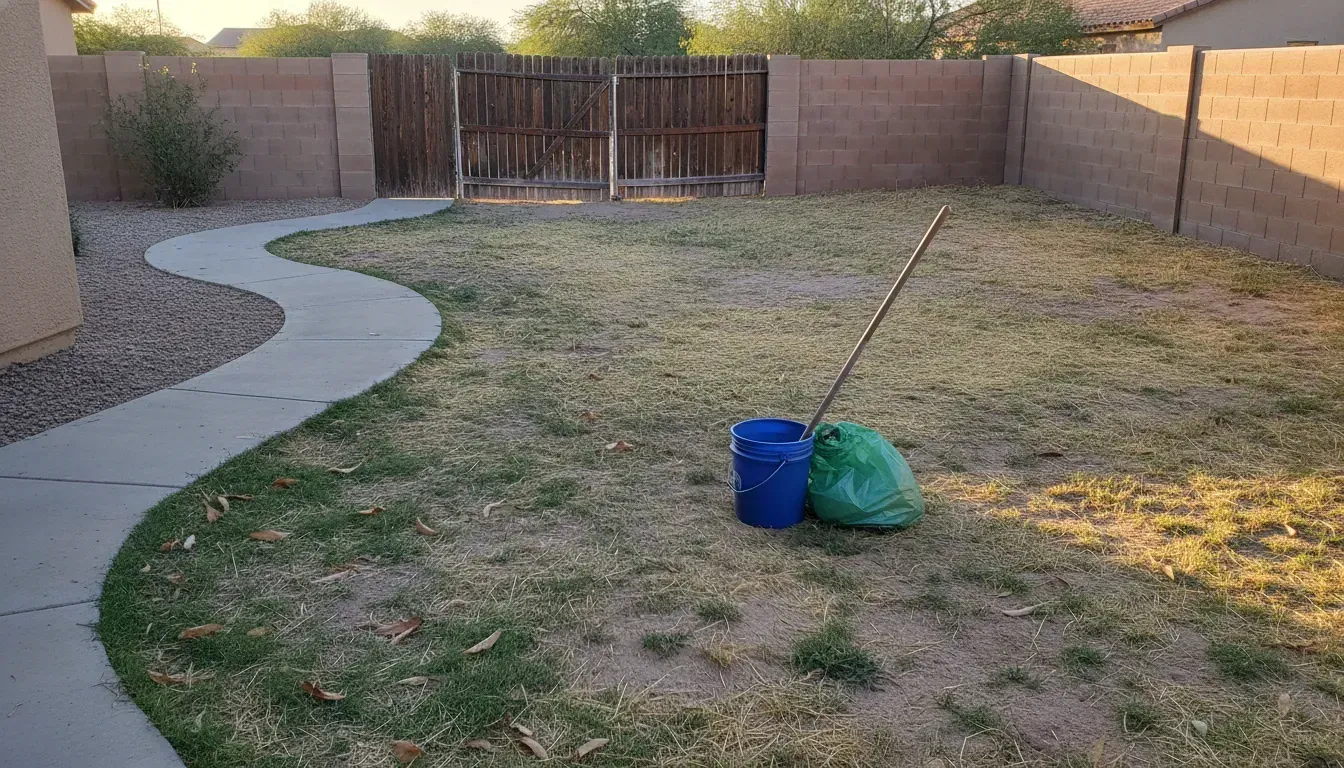
You also need the grounds picked up before residents will trust the new bins.
A1 Pet Maintenance has serviced commercial properties, HOAs, and multi-family communities in Southern Nevada and Tucson since 1998. Commercial work is quoted per property. There is no public install price list, because lot size, station count, and access change the visit.
Boards often ask for a station because complaints piled up, not because anyone mapped the walks residents already use. That is a reasonable reason to start the project. It is a poor reason to drop hardware at the first patch of open dirt. A service visit earns its fee when it slows that impulse down and puts stations where the mess already happens.
A short test before you call
Walk the property once in the morning and once after dinner. Mark every pile you see and every spot where a leash naturally stops. If those marks cluster at doors, mailboxes, and path splits, you have a placement plan. If they are scattered across a lawn with no path, stations alone will not fix it. You need a grounds pickup first, then stations on the route people are willing to use.
Desert properties add one more check before you lock the map. Summer heat makes residents cut the walk short, and an overflowing bin starts to smell the same day. Plan shade when you can, but do not hide the station in a side yard just to get it. A visible station in the sun beats a cooler station that nobody finds.
What Should the Service Cover Before Anyone Digs?
A useful pet waste station installation service starts with a walk, not a pallet of hardware. Ask the provider to mark proposed spots on a simple site map before you approve labor. You are buying judgment about where dogs already go, where a truck can stop, and where a post would block a sidewalk.
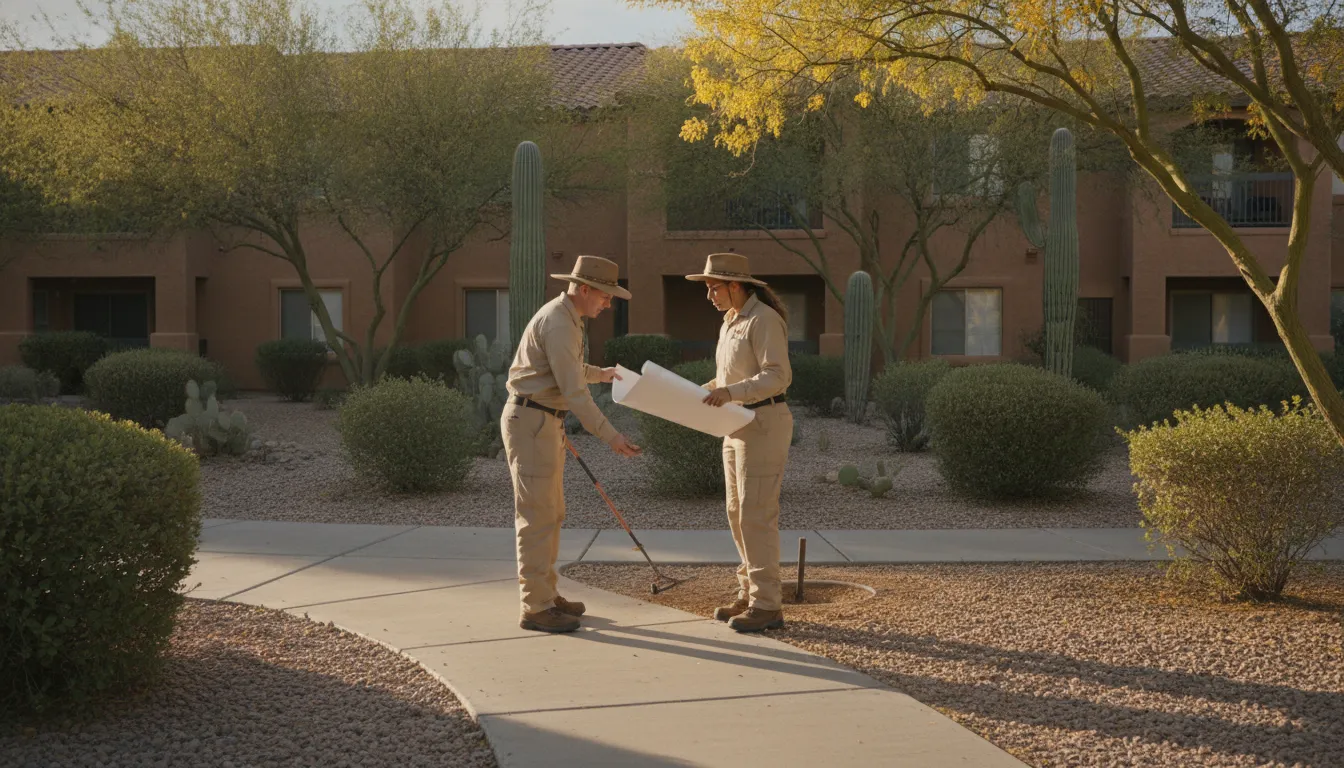
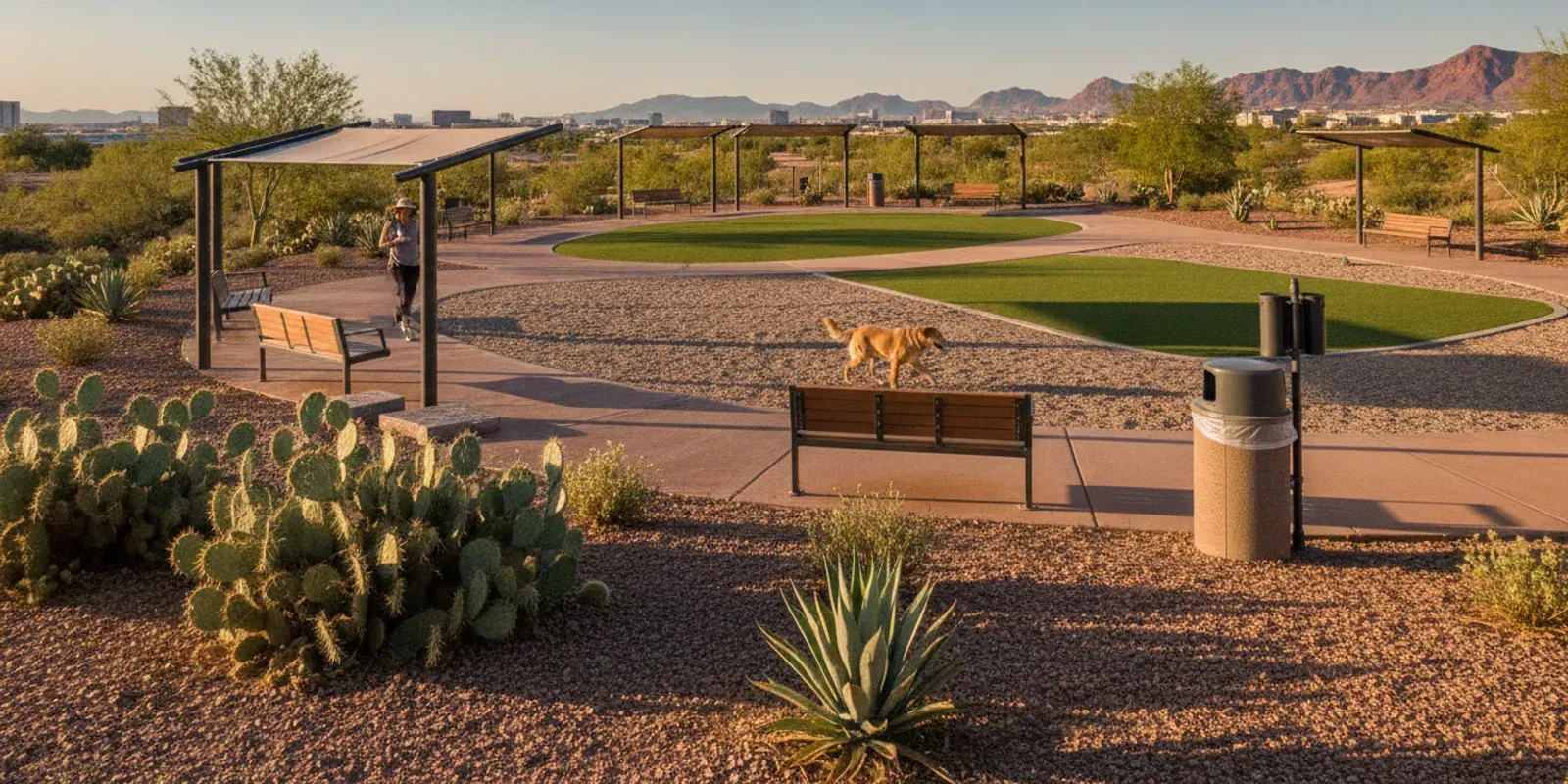
Walk the route a resident actually uses before you approve a single spot. Start at the door, pass the mailbox or the dog run, and end where people turn back. A station belongs on that line and in plain sight, not behind a transformer or at the far edge of a gravel lot. Shade helps in a Southern Nevada summer, but shade that hides the station does not help anyone.
Put these items in the written scope
Station count and whether each unit is a new post or a replacement.
Who orders the hardware, and who stores it until install day.
A map of proposed spots, plus any spots you rejected and why.
Utility locate responsibility. Someone must call 811 before digging.
Surface type at each spot: soil, decomposed granite, or a hard pad.
Access hours, gate codes, and where the crew may not drive.
What "done" means: plumb posts, stocked bags, lids that close, and a photo of each spot.
Do not treat bag restocking as part of the install. That is upkeep. The commercial pet waste station maintenance guide is the page for emptying bins and keeping dispensers filled after the posts are set.
Questions to ask on the site walk
Bring the person who hears resident complaints, not only the person who writes checks. They know which building generates the calls. Ask the installer to stand at each proposed spot and answer four questions out loud. Can a resident see this from the path? Can a service cart reach it without driving on turf? Is there room to open the lid? What is under the soil that would stop a dig?
Write the answers on the map. A spot that fails any of those questions should come off the quote before you approve it. Replacing a bad location after the concrete cures is the expensive version of the same decision.
Also decide who owns the hardware. Some communities already have stations in a storage room from a past vendor. Say so. A fair quote will install equipment you already bought, or it will name the model it plans to supply. Vague language such as "stations as needed" is how a three-station job becomes a six-station invoice.
How Should You Compare a Quote With Staff Labor?
Compare the full week, not the hourly rate printed on one line. Staff labor looks cheaper until you add utility locates, a second trip when the concrete needs time, and the complaint that follows a crooked post. A service quote should separate hardware, placement labor, and any first cleanup of the grounds around the new spots.
Decision
Best fit. Staff install: One or two posts on soft soil, with a trained person on site. Service: Several spots, mixed surfaces, or a board that wants one scope.
What you still own. Staff install: The 811 call, the tools, the cure time, and a straight post. Service: Access, the station count, and the yes on the map.
Main risk. Staff install: A hidden or leaning station that residents ignore. Service: A quote that installs hardware but skips the walk.
After the posts are set. Staff install: Your team stocks bags and empties bins. Service: Ask whether ongoing station service is a separate line.
Residential yard cleanup has published ranges on A1's site. One-time cleanups run about $50 to $150 based on yard size and buildup, and weekly home service is priced by the number of dogs. Those figures are not a station install bid. A community quote depends on how many stations you need, how far apart they sit, and whether the crew is also picking up the grounds.
If the property is a kennel, clinic, or groomer in Las Vegas rather than a housing community, start with the commercial pet waste station service page. That visit is about keeping a pet business sanitary. It is not the same decision as placing stations along an HOA path.
Ask for the quote in plain lines. Hardware, labor, utility locate, and a first grounds cleanup should not be mashed into one number you cannot explain to the board. If a line is excluded, the quote should say who does it. "Owner supplies bags" is fine. Silence is not.
Time is part of the comparison too. A staff install often slips behind work orders. A service date is a date the board can announce. If your crew can do the work this month without skipping other repairs, keep it in house. If the stations have been "on the list" for a quarter, the delay is already the cost.
What Should Happen on Installation Day?
Hold the crew to the map you approved, because a last-minute move to easier dirt often puts the station where nobody walks. If a spot is truly unsafe because of a marked utility line, the installer should stop and call you rather than guess a new corner.
You do not need to watch every shovel, but you do need a finish check the same day before the crew leaves the property.
Each post is plumb and does not rock when you push the bin.
The dispenser and lid work, and a starter pack of bags is loaded.
The station does not block a sidewalk, a gate swing, or a sprinkler head.
You have a photo and a label for each location for the maintenance log.
The crew hauled away packing, extra soil, and any waste they picked up.
Tell residents before the stations open. A short note that says where the bags are, where the trash goes, and that the bins are checked on a set schedule prevents the first week of "it is already full" calls. If the grounds are already buried, book a one-time cleanup before you announce the stations. New hardware next to an old mess teaches people to walk past both.
Keep the note practical. Name the closest station to each building, say that bagged waste goes in the station bin and not in the pool trash, and give the day the bins are checked. Skip a lecture. People use the station that is on their way. They ignore the one that comes with a rule packet and no bags.
On a large property, install in phases if the budget requires it. Do the worst cluster first, confirm residents use it for two weeks, then add the next cluster. Phasing is not an excuse to skip the map. It is a way to spend the first invoice where the piles already are.
How Do You Keep the Stations Useful After Install?
Installation ends when the posts are set and the first bags are loaded. The program starts the next morning, when a resident looks for a bag and either finds one or does not. Assign a person, even if a vendor does the work, and write the check frequency where the board can see it. Busy dog walks in summer heat need more than a once-a-week glance. An empty dispenser teaches residents that the cleanup rule is optional.
Split the work into three lines so the next budget meeting is honest.
Install. Hardware, placement, and the first stock of bags.
Station service. Bags, liners, bin emptying, and a damage note.
Grounds pickup. Waste in the grass, gravel, and turf that never reached a bin.
A1 quotes commercial station and grounds work as a custom proposal. Call 702-521-2624 and describe the property, the city, and how many stations you are planning. Southern Nevada and Tucson are the service areas. Do not expect a national chain price sheet.
When you call, have three facts ready: how many stations you think you need, whether the ground is soil or a hard pad, and whether you want install only or install plus a recurring check. That is enough for a real conversation. You can refine the map on the walk.
Review the stations 30 days after they open. If one bin stays empty, it is in the wrong place and should move before you buy another. If one bin is always full, shorten the service interval or add a station on that same route. The first month is part of the installation decision, not a separate project.
Contact A1 about your property
Frequently Asked Questions
Does a pet waste station installation service include weekly emptying?
Not unless the quote says so. Installation is placement and a working station. Weekly emptying, bag restock, and grounds pickup are separate service lines. Ask for them as their own items so the board can approve install now and upkeep on a schedule.
Can our maintenance tech install one station?
Yes, if the person can dig safely, call 811 first, and set a plumb post. Use the step-by-step install guide for that single job. Switch to a service when you have several spots, hard surfaces, or nobody who should be digging on the clock.
How many stations should the quote include?
Count the walks people already take, not a ratio of doors to posts. A resident should see a station on the route from the door to the usual relief spot. Add a station where the path splits or where the last one drops out of sight. Cut any spot that is hidden or far from foot traffic.
What should we tell the board before approving the hire?
Show the map, the station count, who buys the hardware, who calls 811, and what is not included. Then show the upkeep plan. A station with no bag budget becomes litter. The install decision and the service decision belong in the same packet, even if they are different invoices.