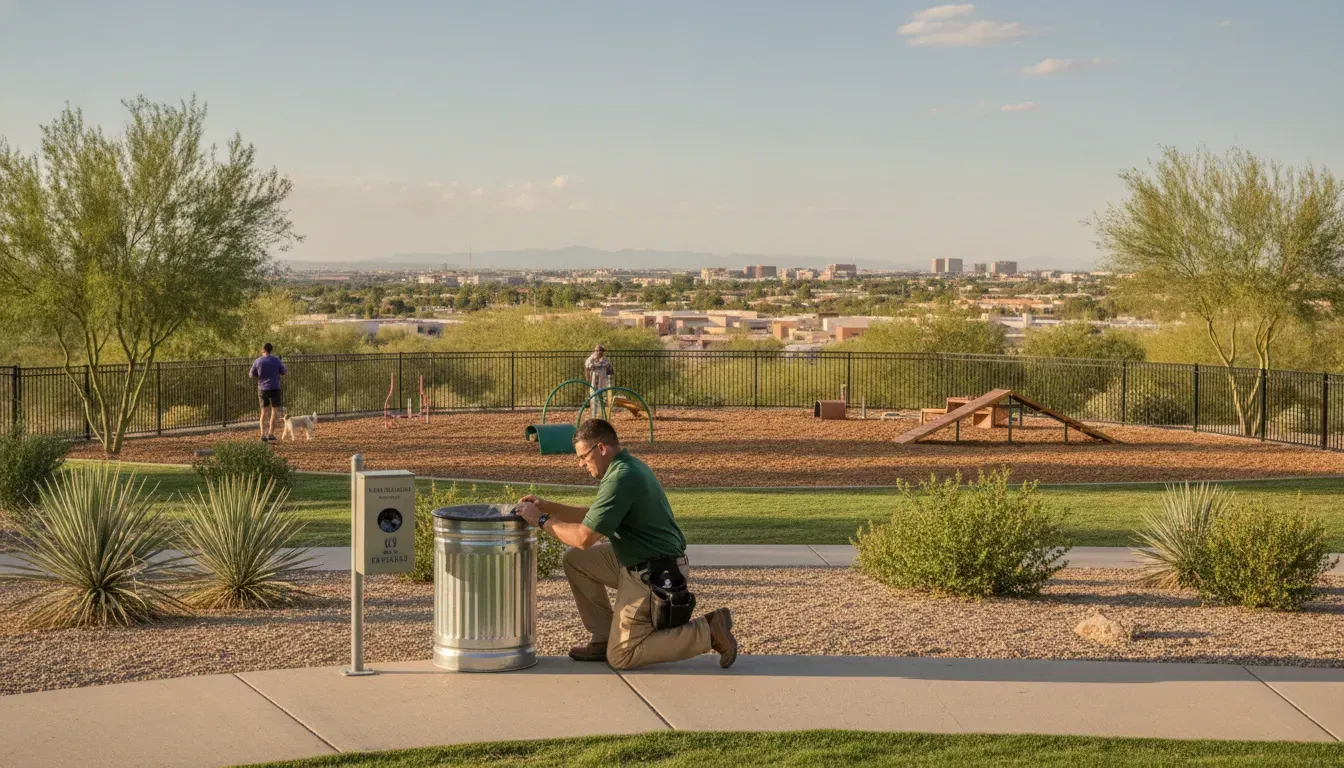
Pet Waste Removal Condominium Association Las Vegas Guide
Schedule pet waste removal condominium association Las Vegas service today to control odor and keep common areas clean, from walkways to landscaped paths.

Shared courtyards, walkways, dog areas, and landscaped grounds can turn a small pet waste problem into a recurring board concern. In Las Vegas, heat and heavy foot traffic make consistent pickup especially important for sanitation, odor control, and resident satisfaction.
Pet waste removal condominium association las vegas services help condo boards keep common areas sanitary through scheduled pickup, hotspot inspections, proper disposal, and a plan matched to pet density and traffic patterns.
Schedule professional pet waste removal for your Las Vegas condo board today
A practical program also supports the association's rules and CC&Rs without making board members responsible for daily cleanup logistics. For broader guidance on building a property-wide program, see our Commercial Pet Waste Removal Contract in Las Vegas guide. The right approach starts with understanding how condominium associations assign responsibility, communicate expectations, and manage shared spaces.
How Do Condominium Associations in Las Vegas Handle Pet Waste?
Effective pet waste management starts with a policy that residents can understand and the board can apply consistently. In shared condominium communities, that policy should identify where pets may exercise, where waste should be deposited, and what each pet owner must do after cleanup. Federal housing rules provide a useful model by calling for sanitary pet-waste standards, designated pet exercise areas, and the prompt removal and proper disposal of removable waste. Boards can review the applicable requirements for their property and align their community rules with the governing documents and local expectations.
Designated areas make the system easier to follow. A board may identify dog-walking routes, pet relief areas, and disposal points near the places residents already use. Clearly placed waste stations and visible instructions help keep cleanup expectations practical rather than relying only on enforcement after a problem occurs. They also give managers a consistent way to explain the rules to new residents, tenants, and guests.
Communication is another important part of the process. Condo associations can organize a pet waste outreach campaign that reminds residents why pickup matters and how improper disposal affects shared spaces. The U.S. Environmental Protection Agency identifies condo associations among the groups that can organize community outreach around pet waste. A short notice, resident email, move-in packet, or seasonal reminder can reinforce the policy without making every conversation punitive.
Many boards pair a clear pet-waste policy with a professional removal service. This separates resident responsibility from the association's common-area maintenance responsibility. Residents still need to pick up after their own pets. While the service provides scheduled inspection and removal in designated areas, walkways, landscaped zones, and other agreed service areas. That consistency supports sanitation, odor control, and a cleaner appearance for residents and visitors.
A service also gives the board a practical way to respond when pet ownership, traffic patterns, or waste accumulation changes. Management can identify recurring problem areas and adjust the service schedule or station placement instead of waiting for complaints to build. The goal is not simply to remove visible waste. It is to create a repeatable system that supports community hygiene, resident cooperation, and responsible property maintenance.
Sources: 24 CFR 5.350 and the EPA pet waste outreach guidance.
Why Is Condo Pet Waste Management Different from HOA Management?
Both condominium associations and HOA communities need clear pet waste rules, reliable cleanup, and resident cooperation. The operational challenge is not identical, however. A condominium association typically manages a more concentrated property where residents share hallways, entrances, elevators, sidewalks, courtyards, dog areas, and other common spaces. Those shared areas make the board's maintenance decisions visible to nearly everyone who lives there.
Condo governance also connects day-to-day cleanup with the community's declaration, covenants, conditions, and restrictions, commonly called CC&Rs. The governing documents may define owner responsibilities, permitted pet areas, enforcement procedures, and the association's authority to maintain common elements. A service plan should support those documents rather than operate as a generic residential cleanup schedule.
Key differences in pet waste management for condo associations and HOA communitiesManagement considerationCondo associationsHOA communitiesCommon areasShared indoor and outdoor spaces can include entryways, corridors, elevators, courtyards, walkways, and landscaped areas. One missed spot may affect many residents quickly.Common areas are often spread across streetscapes, parks, greenbelts, trails, pools, and neighborhood amenities. Coverage must account for distance and varied use.Governing standardsCleanup and pet conduct should align with the declaration, CC&Rs, board policies, and rules for shared elements. The plan needs clearly mapped responsibility between owners, management, and vendors.Rules commonly focus on lots, sidewalks, association amenities, and neighborhood-wide standards. The board may need separate procedures for private property and association property.Service planningPet density, building access, indoor transitions, elevators, and high-use relief areas can influence route design and inspection priorities.Pet density, neighborhood size, trail connections, parks, and amenity schedules can influence route length, frequency, and station placement.Resident experienceOdor, visible waste, or tracking near a shared entrance can become an immediate quality-of-life and board-communication issue.Problems may be more localized, but neglected parks, paths, or stations can still generate complaints and reduce amenity usability.
The health rationale applies in either setting. The Centers for Disease Control and Prevention explains that pets can carry harmful germs even when they appear healthy, and diseases transmitted from animals are called zoonotic diseases. Read the CDC guidance on healthy pets and zoonotic diseases. That does not mean routine cleanup eliminates every health concern. It does mean boards should treat sanitation as a regular property-maintenance responsibility, not an occasional response to complaints.
For a condo board, the strongest approach combines three elements: rules that residents can understand, common-area coverage that matches the CC&Rs, and documented service that is applied consistently. A professional provider can help identify building entrances, pet relief zones, landscaped edges, and other recurring hotspots, then coordinate the work with management. That structure gives residents a clearer standard while giving the board a practical way to monitor whether shared areas are being maintained.
How Do You Structure a Pet Waste Service Agreement for a Condo Association?
A strong agreement turns a recurring common-area problem into a defined property-maintenance service. It should tell the board, property manager, residents, and service provider exactly what will be cleaned, how often the work will occur, and who handles each related responsibility. That clarity helps the association maintain consistent sanitation standards without asking volunteer board members to coordinate every detail themselves.
For a Las Vegas condo community, the agreement should also reflect the way residents use shared sidewalks, landscaped courtyards, dog areas, entry paths, and other common spaces. Use the following steps when preparing the scope and reviewing proposals.
- Map the service areas. Identify every area included in the agreement, not just the most visible dog run. Mark sidewalks, landscaped zones, pet relief areas, walking paths, waste stations, and known problem locations. A written map prevents assumptions about whether a provider is responsible for a side entrance, courtyard, or perimeter area. Designated pet areas can also make disposal easier to manage and keep waste contained within controlled zones, consistent with sanitary pet-waste rules described in 24 CFR 5.350.
- Set the service frequency. Choose a schedule based on pet density, foot traffic, property size, and seasonal use. A small, lightly used area may need a different schedule from a busy dog run beside a residential building. State the regular service days, expected visit frequency, and the process for requesting an extra cleanup after an event, complaint, or unusual accumulation. The goal is predictable removal before waste becomes a visible sanitation or odor-control issue.
- Define the work performed at each visit. Specify whether the provider will remove pet waste, service and restock waste stations, replace liners, inspect surrounding areas, and report access or maintenance concerns. Include disposal procedures and any limits, such as hazardous materials or repairs that fall outside routine service. Clear language gives the board a practical standard for evaluating completed work rather than relying on general promises of cleanliness.
- Assign responsibilities and communication channels. Name the association contact, property manager, and provider representative. State who supplies keys or access, who communicates resident notices, who handles damaged stations, and how urgent concerns are reported. A professional partnership can relieve the board of daily cleanup logistics while supporting consistent compliance with the association's sanitation expectations. The EPA also identifies condo associations as groups that can organize pet-waste outreach, so resident education can complement the contracted service: EPA pet waste campaign guidance.
- Document compliance, inspection, and review terms. Include visit records, inspection notes, missed-service procedures, insurance requirements, renewal terms, and a review date. Regular documentation helps the board identify recurring hotspots and adjust the schedule when conditions change. Professional management supports adherence to sanitary codes and can reduce liability concerns tied to neglected common areas, but the agreement should still make performance measurable. Review the scope with the association's governing documents and legal or risk advisers when needed, then update it as the community, pet population, or common-area layout changes.
The best agreement is specific enough to manage performance but flexible enough to respond to actual conditions on the property. That balance gives the board a dependable sanitation process, clearer resident expectations, and a practical record of how common-area pet waste is being managed.
What Are Common Condominium Association Pet Waste Problems and Solutions?
Even well-managed condominium communities can struggle with pet waste when resident habits, property layout, and association policies do not work together. The most common problems are straightforward: some owners fail to pick up after their dogs. Waste stations are too far apart or poorly maintained, and residents are unsure what the rules require. Pet waste left on sidewalks, lawns, and shared recreation areas is unhealthy and messy, according to the U.S. Environmental Protection Agency.
The strongest response is not a single sign or occasional cleanup. Boards and property managers should combine clear communication, convenient disposal infrastructure, and consistent inspection. That approach addresses both sides of the problem: encouraging residents to do their part while ensuring the association has a reliable process for common-area maintenance.
When residents do not pick up
Uncollected waste often reflects more than unwillingness. A resident may not understand the association's policy, may assume someone else handles the area, or may be walking through a route without a convenient station. A short, visible policy reminder can clarify that owners are responsible for picking up immediately. Tying the rule to shared sanitation rather than presenting it only as a penalty.
Education can reinforce that message. A condominium association can include pet waste guidance in move-in materials, resident emails, community notices, and seasonal outreach. The EPA identifies condo associations as groups that can organize pet waste outreach campaigns. Education about health and environmental concerns gives residents a practical reason to comply, while consistent enforcement keeps expectations fair.
When waste stations do not serve the property
Inadequate station coverage creates friction for responsible owners and makes missed cleanup more likely. Boards should review walking paths, building entrances, dog relief areas, parking routes, and other high-use locations. Stations should be visible, stocked with bags, and emptied often enough to remain usable. Designated pet areas can also help contain waste within zones that are easier to monitor and service.
- Place stations along common walking routes instead of concentrating them in one location.
- Check bags, receptacles, and surrounding pavement during routine property walks.
- Use resident reports to identify locations where coverage or servicing needs to change.
When recurring hotspots are missed
Regular inspection helps reveal patterns that an occasional complaint may not show. A board or service provider can record repeat problem areas, compare them with traffic patterns, and adjust inspection or removal schedules accordingly. Professional pet waste removal can then provide consistent support for the association's sanitation policy, while resident education and clear rules address the behavior behind the complaints.
How Does Pet Waste Removal Work for a Las Vegas Condominium Association?
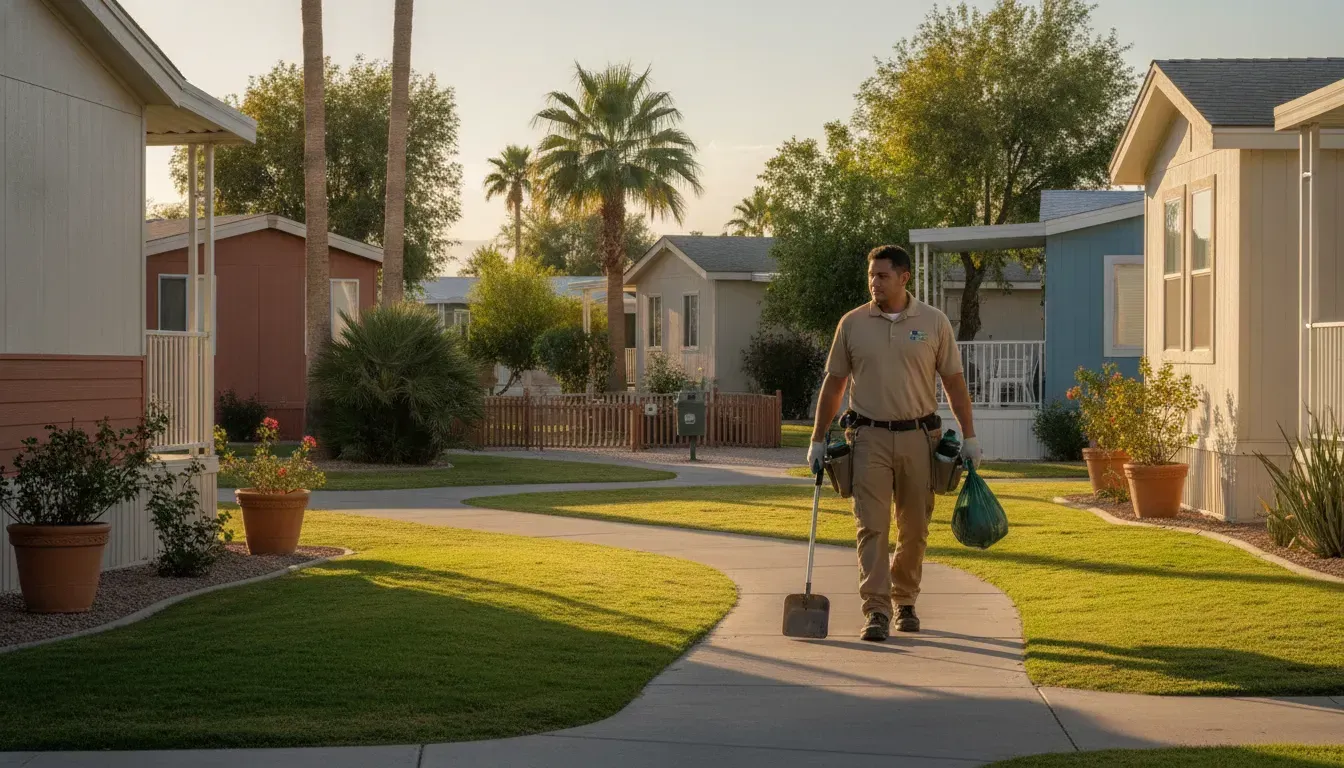
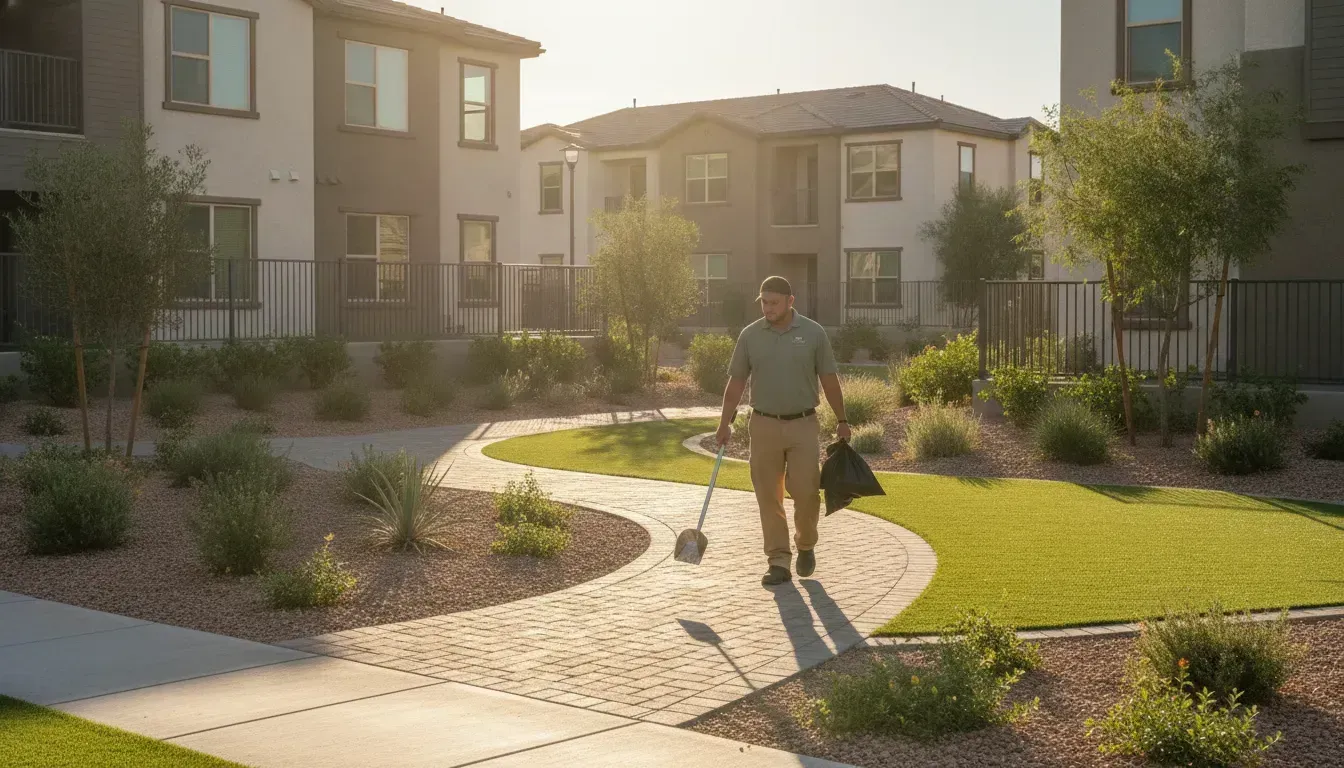
Professional service begins with a practical review of the property, not a one-size-fits-all route. The association or property manager identifies where residents walk their dogs, where waste is most often left behind, and which shared spaces need the most attention. That typically includes sidewalks, landscaped paths, entrances, dog relief areas, courtyards, and other high-traffic pet zones.
Service frequency should reflect the community's pet density and how heavily residents use its common areas. A smaller condominium with limited pet traffic may need a different schedule from a large Las Vegas property with several buildings, landscaped corridors, and a busy dog area. High-traffic locations generally require more frequent removal so waste does not accumulate between visits. This usage-based approach keeps the plan practical while protecting sanitation and resident experience.
What happens during a scheduled visit?
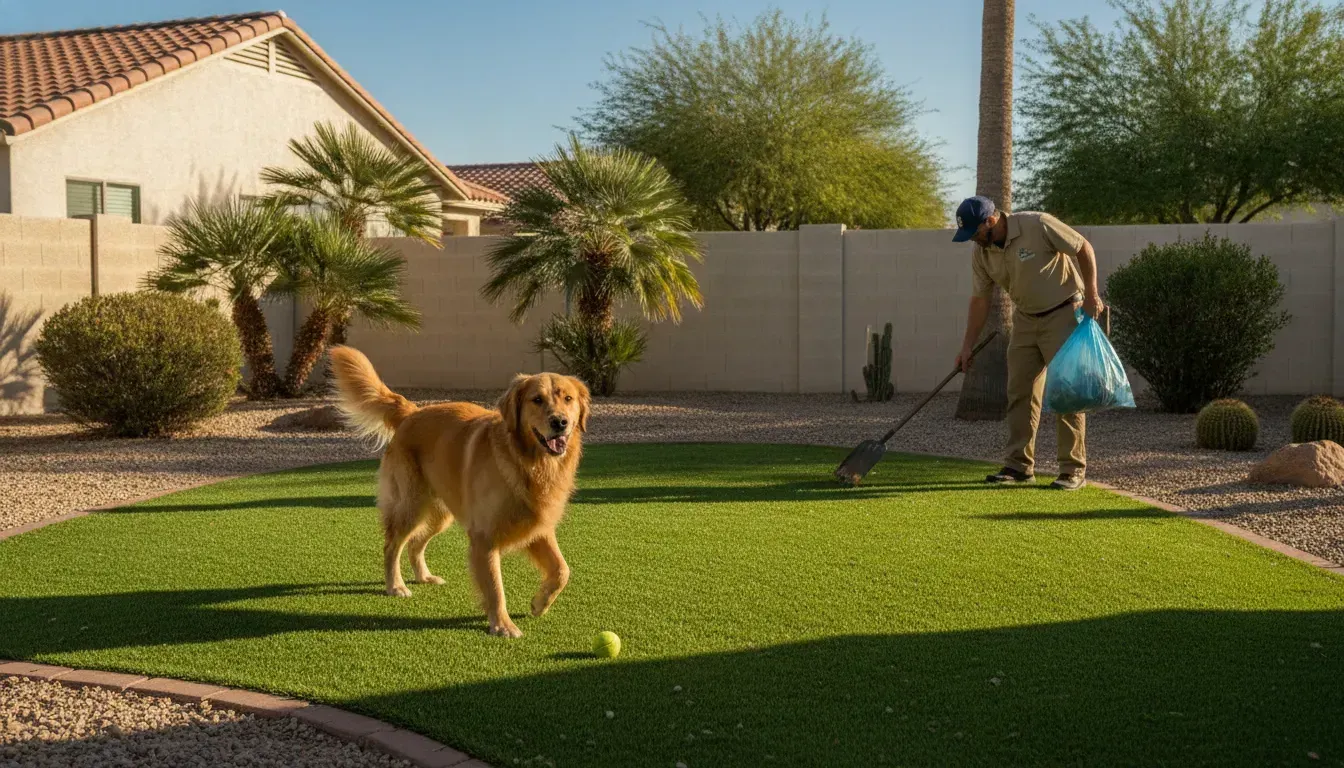
On each scheduled visit, the technician follows the agreed route through the association's common areas and removes visible pet waste from the defined service zones. The work should be consistent, documented, and focused on the spaces residents share. A clear scope helps prevent gaps, such as a dog area receiving attention while the paths leading to it are overlooked.
After collection, waste is handled and disposed of appropriately. The objective is not simply to make one spot look cleaner for a few hours. Regular removal helps prevent accumulation and addresses the public health concerns associated with pet waste left on sidewalks, playing fields, parks, and other shared spaces. The EPA's pet waste guidance describes unattended waste as a potential public health risk and emphasizes proper disposal.
Which common areas should a board include?
The service plan should name each area the association expects the provider to maintain. Boards may prioritize designated pet relief areas, paths near building entrances, grass and landscape edges. Pool or recreation-area approaches, and locations where residents regularly report odor or waste concerns. Designated pet areas also make expectations easier to communicate and give residents a clear place to take their dogs.
Professional pet waste removal gives a Las Vegas condominium association a reliable way to keep common areas sanitary and consistent. While residents remain responsible for picking up after their own pets. A board can review pet density, resident traffic, complaints, and seasonal use with the provider, then adjust the schedule when the property changes. The result is a defined, repeatable maintenance routine rather than cleanup that depends on occasional reports or staff availability.
How Do You Get a Custom Pet Waste Removal Plan for Your Las Vegas Condo?
A custom plan starts with the property, not a generic service schedule. A1 Pet Maintenance can review the size of your Las Vegas condominium community, the number and location of shared pet areas. Resident traffic patterns, existing waste stations, and the locations where board members or residents are seeing recurring problems. That information helps shape a practical scope for service rather than applying the same routine to every property.
During the planning conversation, the board or property manager should identify the common areas that need attention. Such as sidewalks, landscaped paths, dog relief areas, courtyards, and other high-use zones. It is also helpful to discuss how often those areas need service, how access will be handled, and how concerns will be communicated. A plan may be adjusted when seasonal conditions, resident activity, or a change in pet density affects the amount of waste accumulating on the property.
The goal is dependable sanitation that residents can see in the condition of the landscape. Proper disposal helps keep shared spaces cleaner and more attractive. While reducing the complaints that can arise when pet waste is left in paths, lawns, or other common areas. The EPA guidance on pet waste notes that waste left in public-use areas can be unhealthy and messy, which is why consistent maintenance matters beyond appearance alone.
A comprehensive plan also gives the association a clear, documented approach to community wellness. It shows residents that the board is addressing a shared property concern through defined maintenance practices, resident expectations, and responsible disposal. For a closer look at service components, review A1's professional pet waste maintenance plan. Boards comparing staff time, resident complaints, and recurring cleanup needs can also evaluate cost-effective pet waste removal against handling the work internally.
To begin, share your property's layout, service concerns, and preferred communication process with A1 Pet Maintenance. The resulting plan can give your association a consistent way to protect common-area cleanliness without asking board members to manage daily cleanup logistics.
Frequently Asked Questions
How can condominium associations enforce pet waste rules?
Start with clear CC&R language, designated pet areas, visible disposal stations, and consistent communication. The board can document service issues, remind residents of their responsibilities, and apply the same process across the property. Federal housing rules recognize sanitary pet waste standards, designated exercise areas, and owner cleanup requirements as practical components of pet policies (24 CFR 5.350).
What are the benefits of hiring professional pet waste removal for condos?
A professional service provides scheduled coverage for sidewalks, dog runs, landscaped areas, and other shared spaces. That consistency reduces accumulation, supports sanitation and odor control, gives management a clearer maintenance process, and helps the board respond to complaints with documented service expectations.
Who is responsible for pet waste removal in common areas of a condo?
Residents remain responsible for picking up after their pets, while the association or its property manager is generally responsible for maintaining shared common areas under the governing documents. A service provider can handle routine cleanup, but the board should define responsibilities in the rules and service agreement so no area is overlooked.
How do you structure a pet waste service agreement for an association?
Specify the exact service areas, visit frequency, station servicing, waste disposal, inspection expectations, reporting, and the responsibilities of residents, management, and the provider. Include a process for adjusting coverage when pet density, traffic patterns, or seasonal conditions change. This keeps expectations measurable rather than relying on informal complaints.
Why is pet waste management critical for Las Vegas condo communities?
Shared walkways, landscaped spaces, and pet areas receive repeated use, so missed waste quickly becomes a sanitation, appearance, and resident-satisfaction issue. The EPA identifies pet waste left in public spaces as a potential public health risk and notes that runoff can carry associated organisms into waterways (EPA pet waste guidance). A documented plan helps Las Vegas boards manage those risks consistently.
Schedule Pet Waste Removal for Your Las Vegas Condo Association
A consistent service plan can help keep shared areas cleaner, support sanitation goals, and give your board a practical way to manage recurring pet waste concerns. Call A1 Pet Maintenance at (702) 521-2624 to schedule pet waste removal for your Las Vegas condominium association. We can discuss your community's common areas, service needs, and preferred maintenance approach.