Artificial Grass Cleaning for Dogs Las Vegas: A Guide
Call A1 Pet Maintenance for artificial grass cleaning for dogs Las Vegas. From odor control to deep sanitation, keep your Southern Nevada turf fresh all year.

Artificial turf gives Las Vegas dog owners a cleaner-looking yard, but Southern Nevada heat can make small amounts of urine and organic waste much harder to ignore. Odor can settle into the turf fibers and backing, while debris and waste remain in areas a quick rinse does not reach.
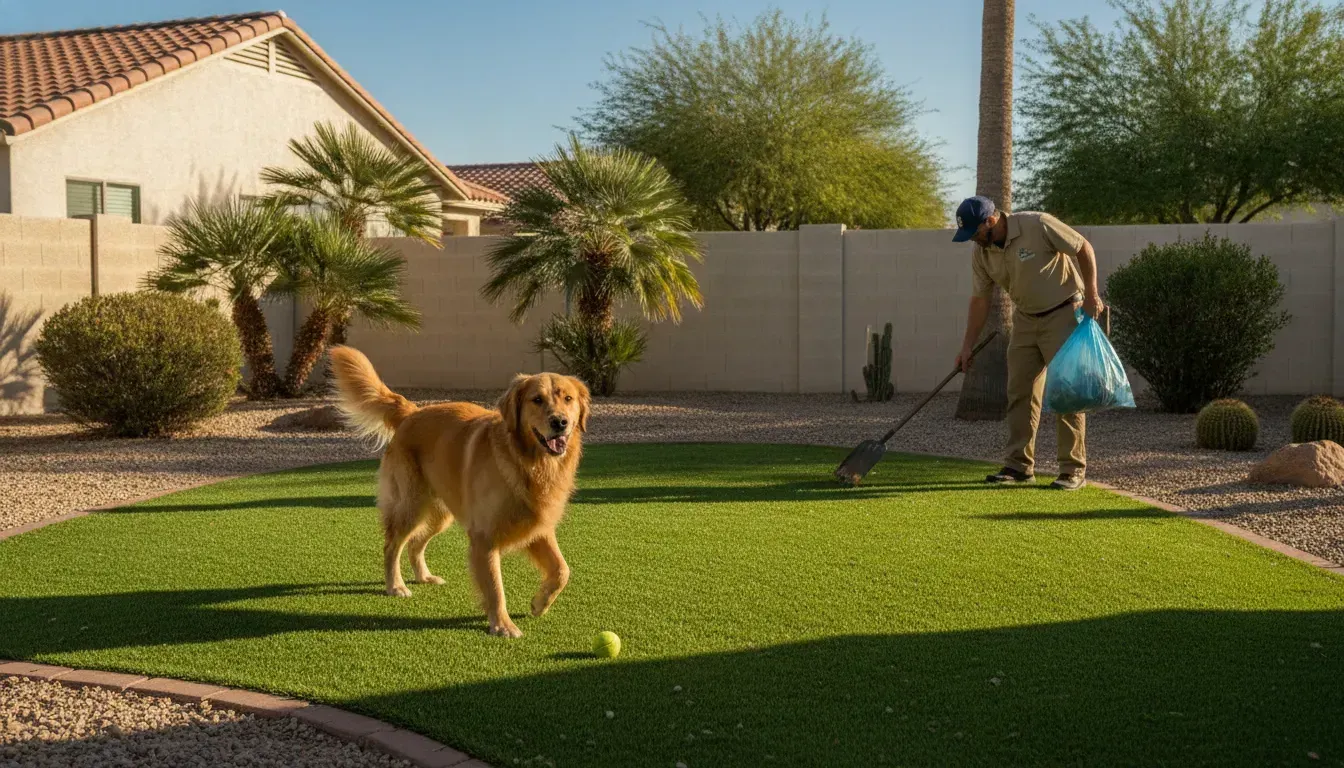
For dog owners, artificial grass cleaning for dogs las vegas service means more than spraying the surface. A professional cleaning removes waste and debris, uses enzyme-based deodorizing to address embedded organic buildup, and thoroughly rinses and agitates the turf. That practical maintenance helps keep a frequently used yard fresher and easier to enjoy.
A1 Pet Maintenance has served Las Vegas and Henderson since 1998, with more than 26 years of experience in pet waste removal and artificial turf sanitation. Learn more about artificial turf pet hygiene and how the right cleaning approach fits your yard.
The need for that deeper approach becomes clearer when you look at what collects beneath the visible surface and how it affects a turf area used by dogs every day.
Why Does Artificial Grass Need Professional Cleaning If Dogs Use It?
Artificial turf does not absorb waste the way soil does, but that does not mean a dog-use yard stays clean on its own. Waste can remain between the blades, settle into the infill, and collect around the backing. Daily scooping removes visible deposits. It does not always remove the residue, moisture, and odor that build up below the surface.
Pet waste can affect more than the yard
Pet waste contains nutrients, parasites, and bacteria. When waste is not properly disposed of, runoff can carry those pollutants toward local water bodies, according to the U.S. Environmental Protection Agency. Artificial grass does not eliminate that concern. Waste sitting on a synthetic surface can still be moved by irrigation, rain, or cleaning water if it is not removed and managed properly.
Parasites are another reason routine sanitation matters. Research summarized by the National Library of Medicine documents contamination of lawns, parks, and other outdoor areas with infective parasitic elements. In dogs, parasites such as roundworms and hookworms can contaminate the environment. Keeping the turf and surrounding area cleaner helps reduce the opportunity for contaminated material to remain where pets and people use the yard. It is a sanitation step, not a substitute for veterinary care or responsible waste disposal.
Urine and odor can settle below the surface
Dog urine presents a different maintenance problem because it is liquid. Repeated use can carry urine through the turf fibers and into the backing, where surface rinsing may not address the source of a persistent smell. Heat can make the odor more noticeable, especially in a Las Vegas yard that receives strong sun for much of the year. A clean-looking surface may still need deeper attention when odor returns quickly after hosing.
Professional cleaning focuses on the areas a scoop and garden hose cannot reach. The service can remove accumulated debris, treat organic residue, and rinse the turf more thoroughly. The goal is not to make alarming promises or replace everyday upkeep. It is to reset the surface and backing so regular scooping, prompt waste removal, and sensible rinsing can work more effectively between professional visits.
What Does Artificial Grass Cleaning for Dogs in Las Vegas Include?
Professional artificial grass cleaning for dogs in Las Vegas is more than spraying the surface and rinsing away visible dirt. A thorough service addresses the waste, organic residue, and odor that can settle between turf fibers and in the backing. The goal is a yard that is properly cleaned from the top down, not simply made to look better for a few hours.
What happens during a professional cleaning?
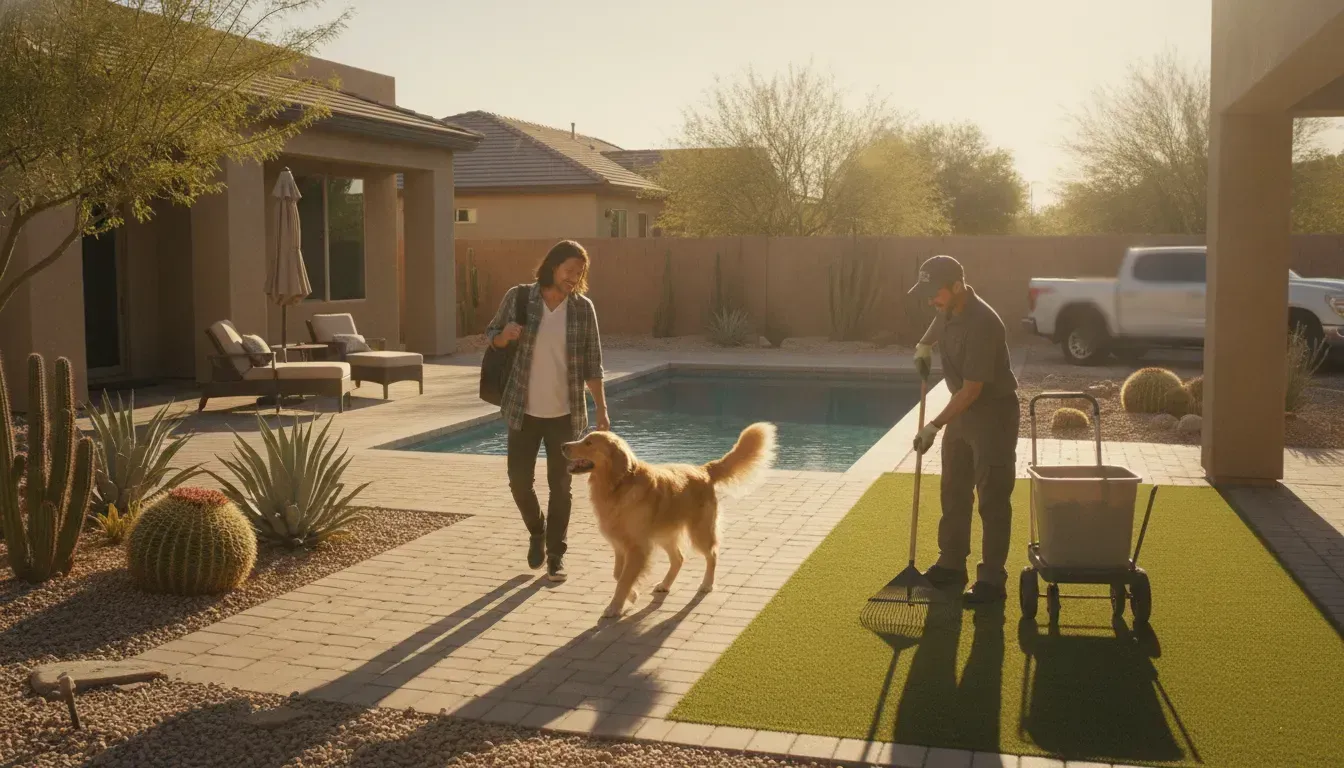
The process begins with debris removal. Technicians clear solid waste, leaves, hair, and other material that can block drainage or interfere with the cleaning solution. They then apply an enzyme-based treatment to areas affected by urine and pet waste. Enzymes help break down organic pet-waste molecules that contribute to persistent smells, rather than covering the odor with fragrance.
After treatment, professional cleaning commonly includes antibacterial treatment and deep sanitization. The final rinse and agitation help move loosened residue through the turf system. This matters because standard residential hosing is often insufficient when organic waste has reached the permeable backing. Basic homeowner maintenance still has value, but professional equipment is needed for deeper sanitization and odor removal.
For a practical overview of ongoing care, see our Las Vegas artificial grass cleaning guidance. It can help you separate daily upkeep from the deeper service your turf may need.
DIY and professional artificial grass cleaning compared
- Cleaning area: DIY: DIY maintenance Professional: Professional service
- Debris removal: DIY: Regular scooping, sweeping, and visible debris removal Professional: Thorough clearing of waste and debris before treatment
- Odor neutralization: DIY: Surface rinsing or a pet-safe product applied to accessible areas Professional: Enzyme treatment aimed at organic waste molecules in the turf system
- Bacteria and sanitization: DIY: Routine rinsing helps with surface residue Professional: Antibacterial treatment and deeper sanitization using professional equipment
- Equipment: DIY: Garden hose, brush, scoop, and household tools Professional: Commercial cleaning and agitation equipment suited to artificial turf
- Recommended frequency: DIY: Ongoing spot cleaning and waste removal between services Professional: Regular deep cleaning based on dog count, dog size, traffic, and odor buildup
DIY upkeep and professional cleaning work best together. Remove waste promptly and rinse when appropriate, then schedule a deeper service when odors persist, residue accumulates, or the turf no longer responds to ordinary hosing.
How Often Should You Have Artificial Grass Cleaned for Dogs?
There is no single schedule that fits every yard. The right frequency depends mainly on how many dogs use the turf, the size of the dogs. How much time they spend outside, and how quickly waste and odor begin to build up. Professional guidance commonly recommends regular artificial grass cleaning, often monthly, with the schedule adjusted for the number and size of dogs using the area.
Monthly service is a practical starting point for many households with one or two dogs. It gives the turf a consistent deep cleaning before residue and odor become a larger maintenance issue. A home with three or more dogs, large dogs, or frequent outdoor use may need service more often. Smaller households with limited turf use may be able to stretch cleanings farther. Provided the area is being maintained between visits and there is no accumulating odor or visible residue.
Use dog count as a starting point
- One dog: Start with a monthly professional cleaning and adjust based on use, odor, and the size of the turf area.
- Two dogs: Monthly service is often a sensible baseline, especially when the dogs use the same section of turf every day.
- Three or more dogs: Consider a more frequent schedule because waste and urine are concentrated in the same outdoor space.
- Large dogs or heavy use: Ask for a schedule based on the actual condition of the turf rather than relying on a calendar alone.
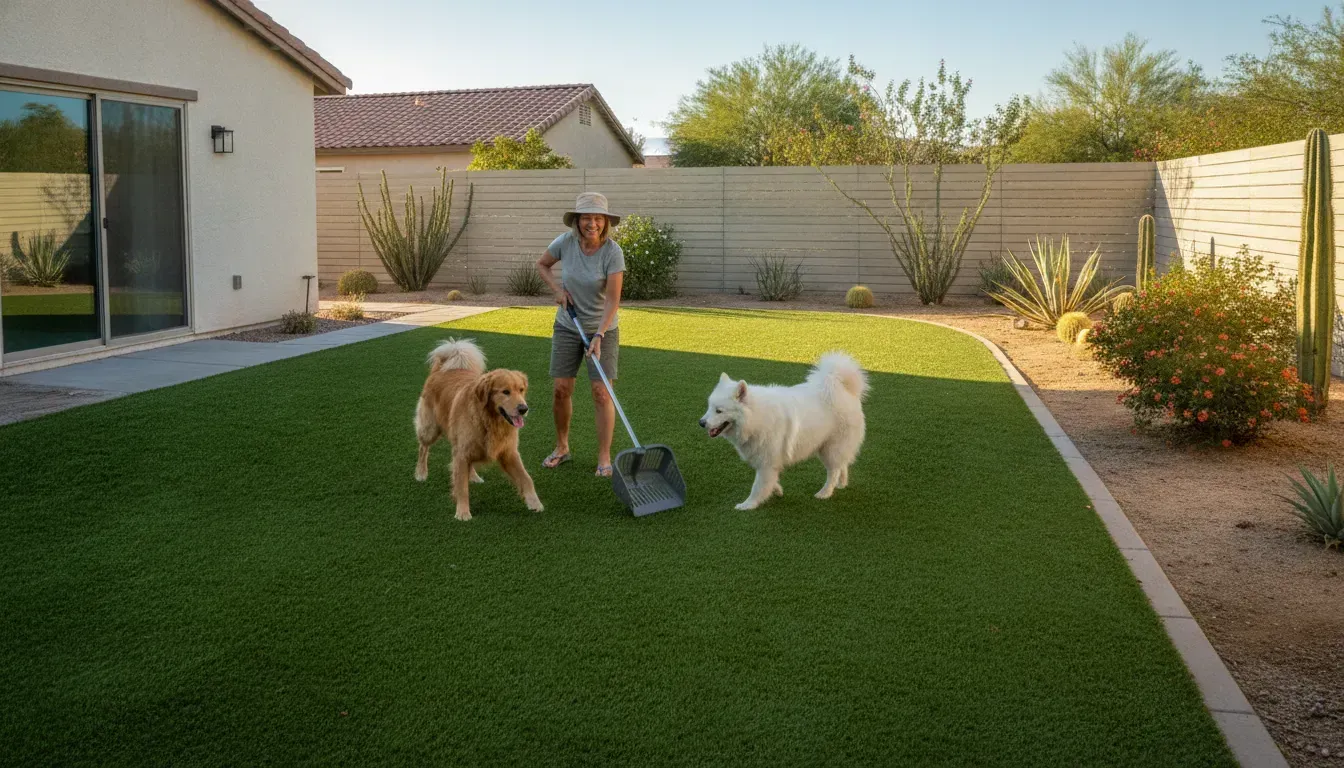
Daily or scheduled pooper-scooper service is still important between deep cleanings. Removing solid waste promptly helps prevent excessive buildup before the next professional service. It does not replace a deeper turf cleaning, but it keeps routine waste from sitting in the fibers and backing for extended periods. A regular scooping schedule is particularly useful when several dogs share one yard.
Move up the cleaning date if odor returns quickly, the turf feels or looks unclean, or the area receives more use than usual. If you are preparing a property for a new tenant, selling a home, or dealing with a neglected section of turf, an one-time cleanup can provide a reset before establishing a recurring schedule. The goal is a service plan that matches the dogs and the yard, not an arbitrary promise that every property needs the same frequency.
For a precise recommendation, have the turf area, dog count, and current condition reviewed together. That makes it easier to choose a schedule that keeps maintenance manageable without paying for more service than the property requires.
How Does Las Vegas Heat Affect Artificial Turf Odor?
Southern Nevada heat can make an existing turf odor much more noticeable. When dogs use an artificial grass area, urine does not always remain on the visible surface. It can move through the turf fibers and into the backing, where ordinary rinsing may not reach it. Over time, that embedded residue can produce a persistent smell, especially when a hot Las Vegas afternoon warms the surface. The issue is not that artificial turf is inherently dirty. It is that repeated use creates a maintenance challenge that becomes easier to notice in a hot, dry climate.
Heat can also shorten the window between routine cleanup and noticeable odor. A yard used by several dogs, a small dog run, or a frequently used pet area may accumulate residue faster than a household expects. Scooping solid waste promptly is still important, but scooping alone does not remove urine that has traveled below the blades. Likewise, a quick hose-down may wash the surface without addressing material held in the permeable backing.
Why surface rinsing may not solve the smell
Artificial turf is designed with drainage in mind, but drainage does not automatically equal deep cleaning. Urine and organic residue can remain in fibers or backing after surface debris has been removed. When the turf heats up, the odor may return even if the area looked clean earlier in the day. This is why recurring smells often call for a deeper process rather than more fragrance or repeated light rinsing.
For dog owners in Las Vegas, Henderson, and nearby Southern Nevada communities, the practical response is to combine daily waste removal with periodic turf sanitation. The right schedule depends on the number of dogs, how often the area is used, drainage conditions, and how quickly odor returns. Watch for a smell that becomes stronger after heat, dampness, or regular yard use. That pattern can indicate that residue is below the surface.
How enzyme treatment addresses embedded odor
Enzyme-based treatments are used to break down organic pet-waste molecules associated with persistent turf odors. Rather than simply masking the smell, the treatment targets residue in the areas where it has collected. Professional artificial grass cleaning services use enzyme deodorizing as part of a broader process that may include debris removal, agitation, and deep rinsing. The goal is a cleaner turf system, not a short-lived perfumed surface. For an overview of local service options, see A1's Las Vegas artificial grass cleaning information.
Regular scooping and sensible service timing help keep heat-related odor from becoming a recurring frustration. If the smell persists after basic maintenance, a professional assessment can identify whether the problem is concentrated in the turf fibers, backing, or surrounding drainage area.
How A1 Pet Maintenance Cleans Las Vegas Artificial Turf
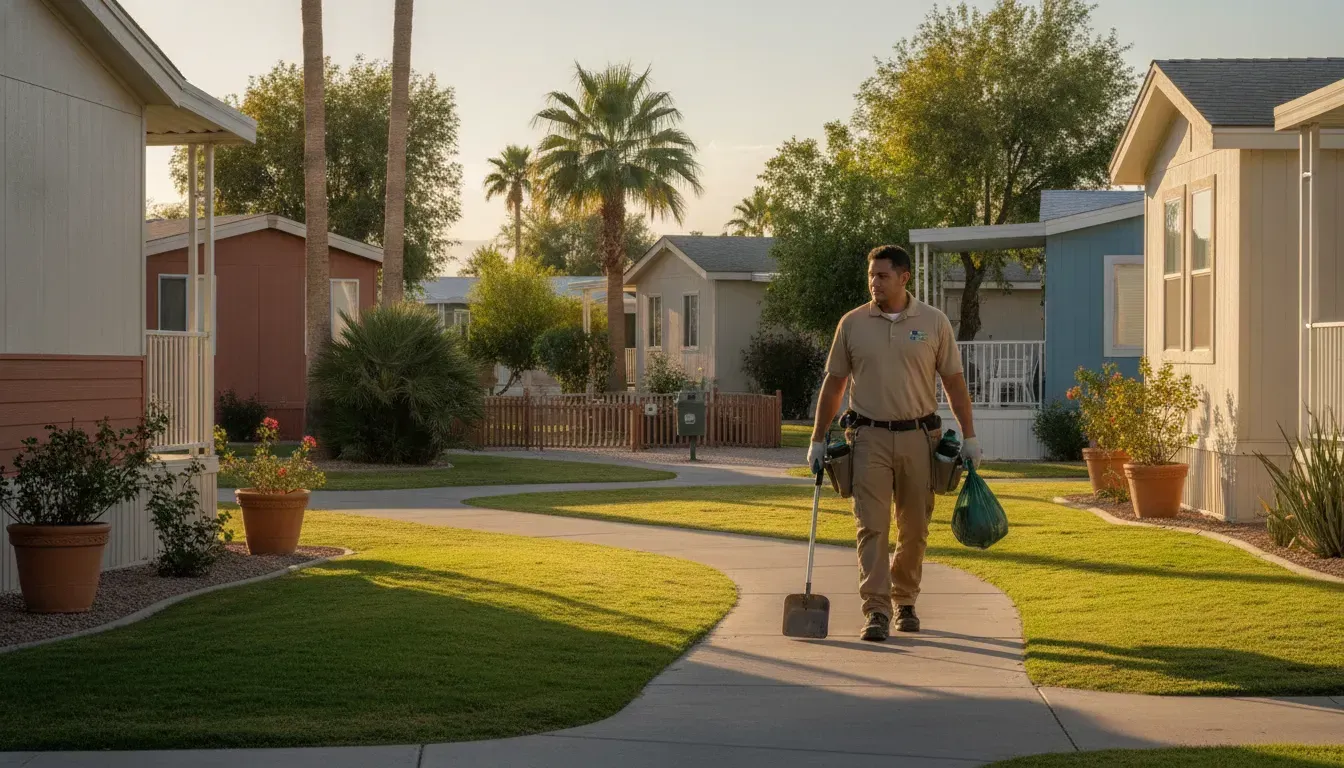
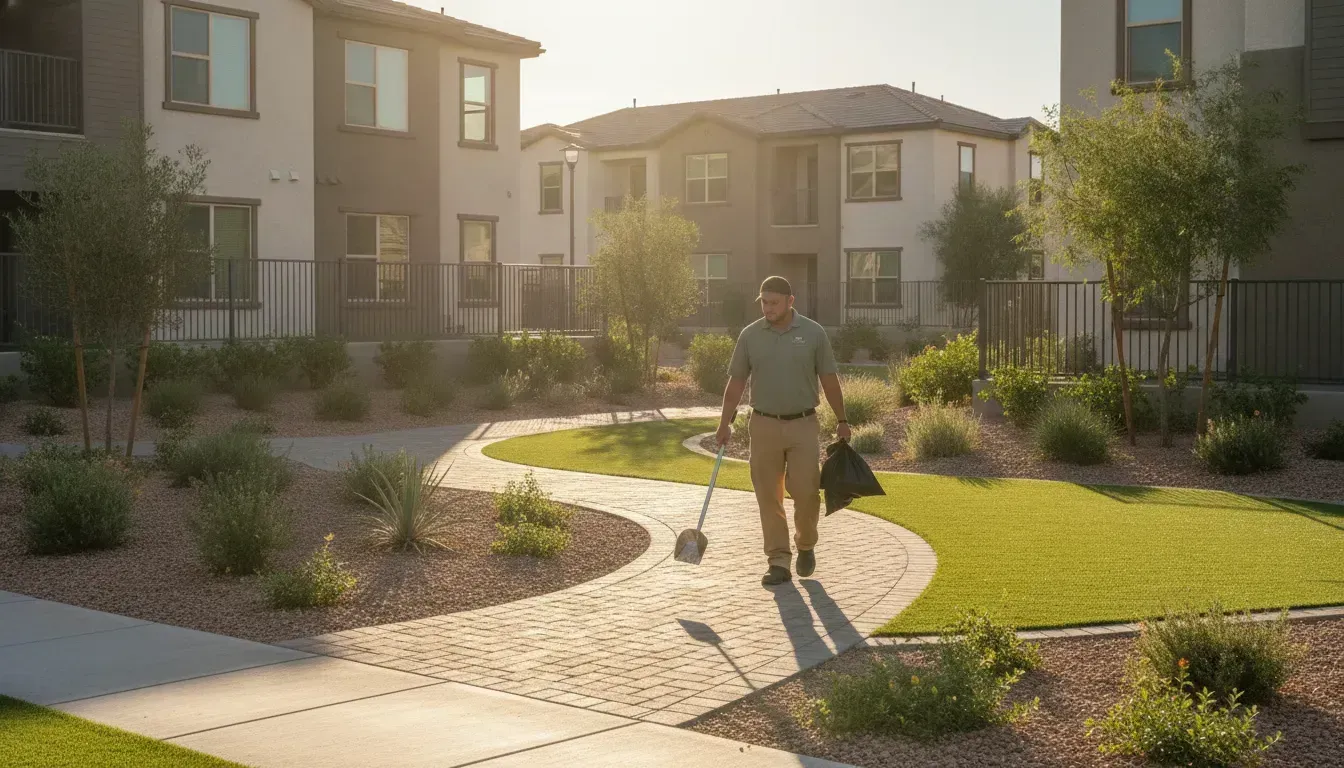
A clean artificial turf yard starts with removing the material that creates the problem. A1 Pet Maintenance begins by clearing pet waste from the surface, including any waste that has collected around turf seams, edges, or heavily used areas. The team also removes leaves, dirt, loose debris, and other organic material that can settle into the grass and make routine rinsing less effective.
That first pass matters because deodorizing works best when the source of the odor is addressed rather than covered. After the surface is cleared, A1 applies an enzyme-based deodorizing treatment designed to break down organic residue that can remain in and around synthetic turf fibers. This is a practical step for Las Vegas dog owners who notice that a yard smells clean immediately after hosing but develops odor again later.
The final part of the service is a deep rinse and agitation process. Water and agitation help loosen residue from the turf surface and backing so it can be rinsed away more thoroughly than a quick garden-hose spray. The exact approach depends on the condition of the yard, the amount of pet use, and the buildup present when the service begins. A1 focuses on cleaning the area properly instead of applying the same routine to every property.
A local process built around your yard
A1 Pet Maintenance was founded in 1998 and has served Las Vegas and Henderson for more than 26 years. That local experience matters when artificial turf is exposed to Southern Nevada's heat, dust, and regular dog traffic. The goal is not to sell an unnecessary package. It is to provide dependable maintenance that makes the yard easier to use and manage.
Artificial grass cleaning for dogs in Las Vegas is priced by custom quote based on the property's needs. A smaller residential yard with light buildup may require a different plan than a larger yard used by several dogs. A1 can review the condition of the turf, discuss the cleaning needed, and recommend a straightforward service without locking you into a contract. For more detail about the service, visit the Las Vegas artificial grass cleaning page.
How to Request an Artificial Grass Cleaning Quote in Las Vegas
Getting a quote from A1 Pet Maintenance is straightforward. You do not need to estimate the work yourself or commit to a recurring plan before you understand what your yard needs. A1 uses custom-quoted pricing based on the property, the condition of the turf. And the service requirements, so the conversation starts with your situation rather than a one-size-fits-all package.
- Contact A1 Pet Maintenance. Call (702) 521-2624 and explain that you are looking for artificial grass cleaning for dogs in Las Vegas. If you are in Henderson or another nearby Southern Nevada community, mention your location as well. That helps A1 understand the service area and begin with the right local context.
- Describe your turf and pets. Share how much artificial grass you have, how many dogs use it, and whether the yard serves a household, a rental property, or a shared space. It is also useful to mention how often the turf is used and whether you are dealing with visible waste, debris, urine odor, or general buildup. These details help identify the level of cleaning that may be appropriate.
- Explain the current condition. Tell the A1 team when the turf was last cleaned, if you know, and what routine maintenance is already in place. Regular waste removal can help limit accumulation between deeper cleanings, while a yard with persistent odor or heavy organic material may need a more thorough service. Be specific about the problem you want resolved, rather than focusing only on the size of the yard.
- Review the recommended service and custom quote. A1 can discuss the cleaning work that fits your needs, which may include complete waste removal, debris clearing, enzyme-based deodorizing, and deep rinsing or agitation. Ask any practical questions about the proposed service, including what is included and how the price was determined. The quote is customized to the property and its needs.
- Choose the service timing that works for you. Once you are comfortable with the scope and quote, arrange a suitable appointment. A1 follows a no-contract, easy-in, easy-out model, so you can request the service you need without being locked into a long-term agreement. If your yard needs attention again later, you can contact the team and reassess the situation at that time.
A clear description of the yard gives A1 a better starting point and helps keep the quote practical. Whether you need a one-time artificial turf cleaning or are considering ongoing maintenance for a busy dog-use area. The next step is simply to call and discuss the property.
Call A1 Pet Maintenance at (702) 521-2624 today for your artificial grass cleaning quote.
Frequently Asked Questions
Why does artificial grass need professional cleaning when dogs use it?
Picking up solid waste is essential, but urine, organic residue, and odor can remain in turf fibers and backing. A professional service adds debris removal, enzyme deodorizing, agitation, and a deep rinse that routine hosing may not provide. Proper waste disposal also helps limit nutrients, parasites, and bacteria entering waterways through runoff, according to the EPA.
How often should artificial grass be cleaned for dogs?
Many dog households benefit from a professional cleaning about monthly. But the right interval depends on the number and size of your dogs, yard use, drainage, and odor buildup. Daily or frequent scooping removes waste between deep cleanings. A one-time cleanup can also make sense after an accumulation problem, move, event, or period without maintenance.
Does professional cleaning remove dog urine odors?
It can substantially reduce persistent odors by treating residue that has worked into the turf and backing. Enzyme-based products target organic waste molecules, while deep rinsing and agitation help remove loosened material. Results depend on the turf's condition, drainage, and how long the buildup has been present, so severe odor may require more than one service.
Is artificial grass cleaning safe for dogs?
Ask your provider which products are being used and follow the product's re-entry instructions. Keep dogs off the turf during service and until the area is fully dry or the technician confirms it is ready. A professional should explain the treatment, rinse process, and any precautions before leaving.
Can I clean my own artificial grass, or do I need a professional?
Homeowners can scoop waste, clear leaves, and rinse accessible areas as part of routine care. Professional equipment is useful when organic residue, urine odor, or material trapped in the backing needs deeper treatment. The practical choice depends on the turf's size, pet traffic, drainage, and whether basic maintenance is controlling the odor.
Ready to Schedule Your Artificial Grass Cleaning Quote?
Regular cleaning can help keep dog-used artificial grass fresher and easier to enjoy between routine waste removal visits. A1 Pet Maintenance provides practical artificial turf sanitation for dog owners across Southern Nevada, with service tailored to your yard and its use. Schedule your artificial grass cleaning quote by calling (702) 521-2624 today.The body content of your post goes here. To edit this text, click on it and delete this default text and start typing your own or paste your own from a different source.