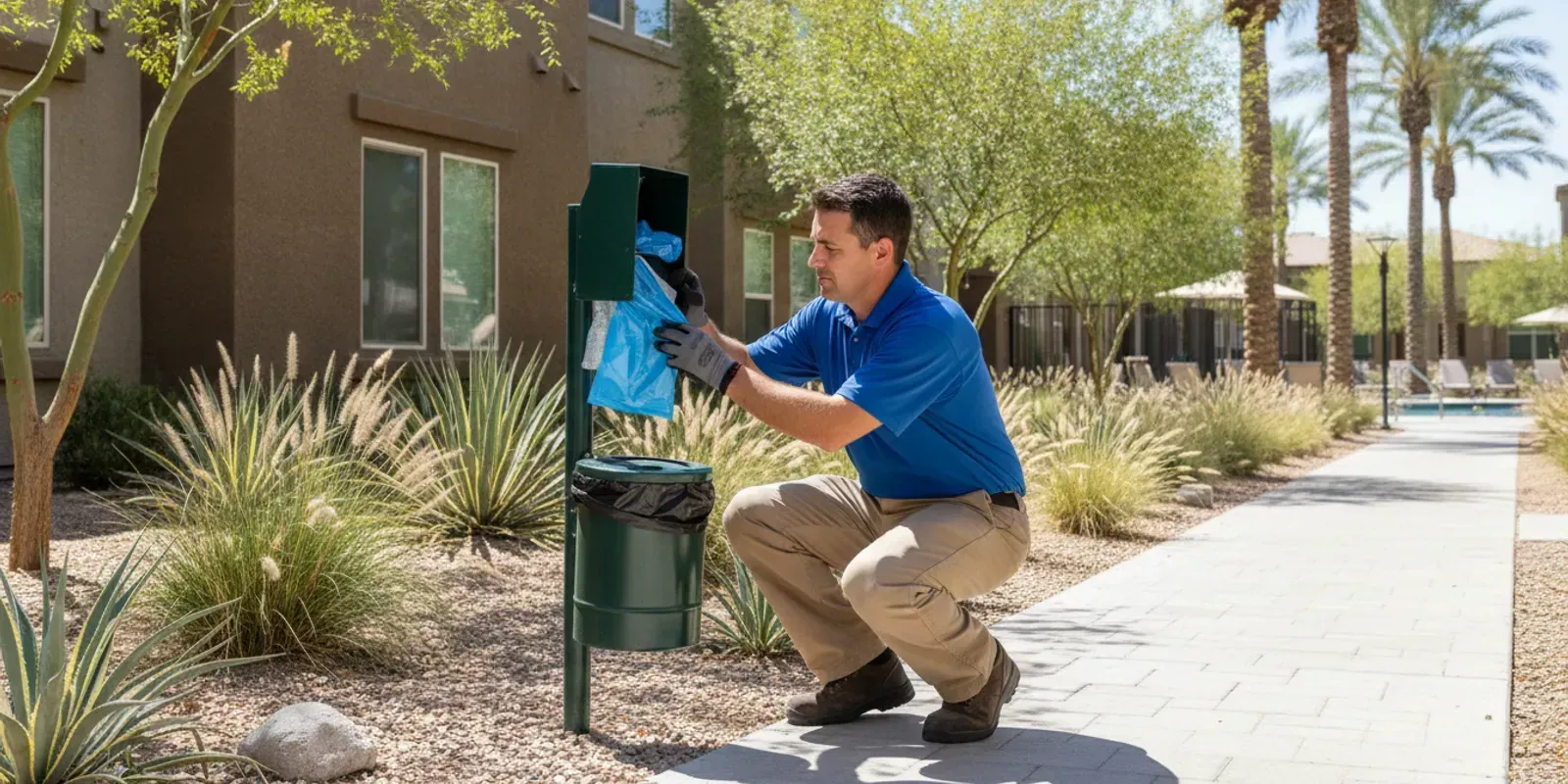
Condominium Pet Waste Removal Service Guide
A condominium pet waste removal service can keep shared areas cleaner. Learn how boards and managers can define scope, schedules, vendor duties, and follow-up.

Pet waste in shared condominium spaces is a recurring property-management concern, not a one-time landscaping detail. When responsibilities are unclear, waste can remain near walkways, lawns, entrances, or pet stations. A written service plan gives the board, manager, residents, maintenance team, and vendor a practical standard to follow.
Call A1 Pet Maintenance at (702) 521-2624 Today
A condominium pet waste removal service works best when the community defines service areas, visit frequency, access requirements, disposal responsibilities, resident expectations, and follow-up procedures in writing. This framework helps a manager maintain cleaner common areas and evaluate vendor performance without relying on scattered complaints or informal reminders.
For boards and managers, the goal is not simply to find someone who can pick up waste. The goal is to create a repeatable program that fits the property, communicates clearly with residents, and gives the management team a reasonable way to confirm that agreed work is being completed.
How Does a Condominium Pet Waste Removal Service Support Shared Areas?
A condominium pet waste removal service supports shared areas by turning recurring cleanup into a defined operating program. The provider follows an agreed route. The manager knows which areas are included. Residents understand their own responsibilities. That clarity reduces missed expectations and makes service concerns easier to investigate.
Map every service zone
Begin with a property map or written list of service zones. Include shared lawns, sidewalks, paths between buildings, entrances, courtyards, dog-relief areas, and the ground around waste stations when those locations are part of the plan. A vendor should not have to guess whether a narrow strip behind a building or a landscaped edge is included.
For a community with multiple buildings, phases, or courtyards, name each zone. "The community grounds" is too broad for a useful service standard. A labeled map, checklist, or route sheet allows the board and provider to discuss the same locations during onboarding and later reviews.
Define access and disposal
Access details should be written down before the first visit. List locked gates, enclosures, pet areas, elevators, codes, keys, escorts, and any timing limitations. Assign a manager or staff contact who can update access information. Also confirm how collected waste will be bagged, removed from the property, and handled when a receptacle is full.
State what is outside routine service. Private patios, balconies, interiors, construction areas, blocked spaces, and non-pet debris may need separate treatment. If landscaping, events, weather, or access problems can affect a visit, document the notice and rescheduling process instead of leaving it to assumption.
Keep resident duties visible
Recurring vendor service does not replace resident responsibility. Owners and tenants should continue picking up after their pets, using designated receptacles, keeping pets under control, and reporting concerns through the channel selected by management. A short resident notice can explain the service areas, normal schedule, reporting process, and the limits of vendor work.
That distinction matters because a community can have a dependable service program and still experience isolated incidents between visits. Clear resident communication helps the board evaluate recurring patterns instead of treating every individual report as proof that the entire program failed.
How Should Boards and Managers Set Service Frequency?
Boards and managers should set service frequency based on pet traffic, the number and location of shared areas, waste accumulation, resident use patterns, and the appearance standard the community wants to maintain. A site review can establish a reasonable starting schedule, which can then be adjusted using documented observations and complaints.
There is no universal schedule for every condominium. A compact property with concentrated traffic near one relief area may need a different plan from a larger community with several buildings, long paths, and multiple lawns. The useful question is whether the schedule keeps up with the way residents and pets actually use the property.
Use site conditions as signals
Before choosing a frequency, note the number of buildings, pet stations, dog-walking routes, lawns, sidewalks, entrances, and areas that are difficult to inspect. Observe when traffic is heaviest, including mornings, evenings, weekends, and periods when residents are more likely to use common areas. A vendor can use this information to recommend a route and service cadence that match the property.
Complaint patterns are another practical signal. Record the location, date, and type of concern rather than relying on general statements that the grounds are dirty. Repeated reports in one zone may indicate a coverage gap, a high-traffic area, an access problem, or a resident communication issue. Each possibility calls for a different response.
Plan for changes
A service plan should explain how the manager and vendor will handle holidays, community events, landscaping work, construction, locked gates, and severe weather. It should identify who receives notice when a visit cannot be completed and what follow-up is expected. This protects accountability without promising that every visit will occur under every condition.
Start with a schedule the property can monitor. After a defined review period, compare the service log with resident feedback and visible conditions. Adjust the route or frequency when the evidence supports a change. A written review process is more useful than changing vendors every time a single complaint arrives.
 What Should a Condominium Service Scope Include?
A condominium service scope should identify the exact areas, tasks, schedule, access process, disposal method, exclusions, communication contacts, and completion records included in recurring work. The more specific the scope, the easier it is for a manager to compare proposals and determine whether a concern is a missed task or an out-of-scope request.
Scope itemWhat to defineWhy it mattersService areas.Buildings, lawns, paths, courtyards, entrances, and pet stations.Prevents uncertainty about where the route starts and ends.Routine tasks.Ground pickup, inspection, bagging, removal, and any agreed receptacle work.Separates included work from optional services.Access.Keys, codes, gates, escorts, contacts, and timing restrictions.Reduces incomplete visits caused by avoidable access issues.Schedule.Visit frequency, service day, notice process, and rescheduling steps.Creates a repeatable expectation for management and residents.Reporting.Visit log, completion note, exception report, and escalation contact.Gives the board a consistent basis for follow-up.
Separate recurring and special work
Recurring pickup should be distinguished from accumulated-waste cleanups, event support, turf cleaning, or other special requests. A property may need a one-time reset before routine service begins. Defining that difference helps the manager request the right service and prevents an unusually heavy cleanup from being treated as an ordinary route visit.
If artificial turf is used in dog-relief areas, ask whether the property needs a separate cleaning and deodorizing plan. A1 Pet Maintenance describes its artificial grass cleaning and maintenance service as a separate offering. It should be included only when the property actually needs that type of work.
Write measurable completion standards
A completion standard does not need to be complicated. It can say that the provider will inspect the listed zones. Remove visible pet waste found during the visit, bag and remove collected material, and report blocked or inaccessible areas. Specific language lets the manager ask a focused follow-up question when a resident reports a concern.
Keep the scope accessible to the people who use it. A manager may maintain the detailed route sheet, while residents receive a shorter summary. The board should know where the full scope and service records are stored for periodic review.
How Can Managers Communicate the Program to Residents?
Managers can communicate a condominium pet-waste program with a short notice that explains what the vendor covers, when routine visits occur, how residents should report concerns, and what residents must continue doing themselves. Clear, respectful communication supports cooperation and helps the manager distinguish isolated incidents from recurring service issues.
Residents usually need practical information, not a lengthy policy lecture. Explain the purpose of recurring service, the locations included, the normal service window, and the best way to submit a concern. If the property has designated pet areas, identify them clearly and remind residents that vendor visits do not remove their obligation to clean up after their own pets.
Use one reporting channel
Choose one primary reporting channel, such as the management office, resident portal, or designated property email. Ask residents to include the location, approximate time, and a short description. This gives the manager information that can be compared with the route sheet and visit record. It also reduces duplicate reports sent to several people.
A manager should acknowledge useful reports without promising a result before checking the facts. The follow-up may involve the vendor, maintenance team, access contact, or resident communication. A neutral process protects trust and avoids turning a maintenance concern into a dispute between neighbors.
Respect the shared community
Not every resident will use the same areas or have the same expectations. Keep notices factual and respectful. Avoid naming individual residents or implying that one report establishes a community-wide pattern. The best communication explains the shared standard and makes the next action clear.
For more context on how A1 works with multi-family properties and communities, managers can review the company's commercial property pet waste cleanup services. The page is a useful starting point for discussing property-specific scope rather than assuming a residential route will fit a condominium.
What Questions Should a Board Ask a Vendor?
A board should ask a vendor about relevant property experience, included service areas, visit frequency, access procedures, waste removal, exception reporting, communication, insurance documentation if required by the community, and how schedule changes are handled. The answers should be specific enough to compare one proposal with another on service quality, not just price.
- Which shared areas will you service? Ask the vendor to review a map and identify included zones, difficult access points, pet stations, and exclusions.
- How will the route be performed? Confirm the normal service day or window, who receives access information, and what happens when a gate or area is unavailable.
- What happens to collected waste? Ask how waste is bagged, removed from the property, and handled when a station or receptacle needs attention.
- How are completed visits documented? Determine whether the manager receives a log, completion note, exception report, or another record.
- Who handles concerns and schedule changes? Identify the regular contact and the process for reporting a missed zone, event, access issue, or requested adjustment.
- What is recurring service versus special work? Separate routine pickup from accumulated-waste cleanups, event support, and artificial turf cleaning.
- How will the program be reviewed? Ask whether the vendor can participate in a periodic scope review and recommend route changes when property use changes.
- What does onboarding require from management? Clarify the property map, access credentials, service contacts, resident notice, and start-up information needed before the first visit.
These questions help a board compare operational fit. A lower proposal is not useful if the service areas are vague, access is unresolved, or the manager has no reliable way to document exceptions.
 How Can a Board Track Accountability After Service Begins?
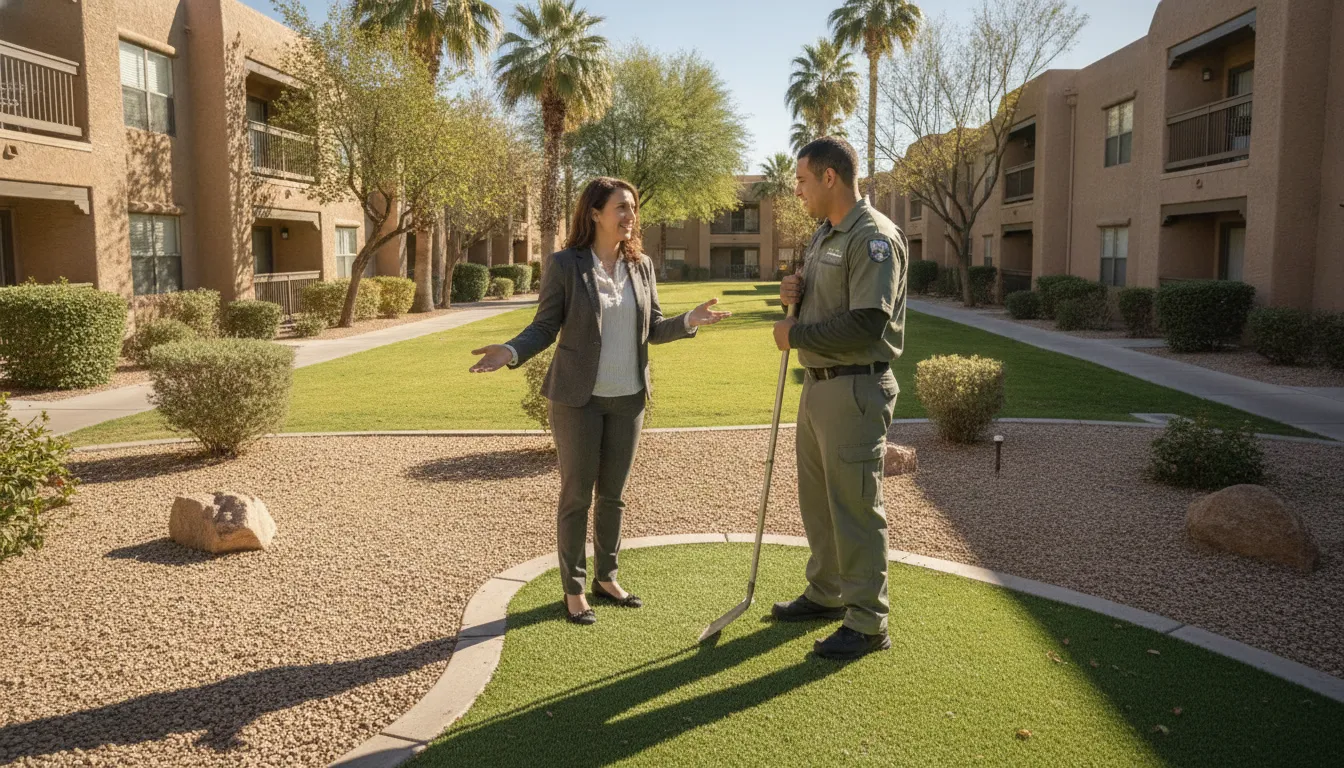
A board can track accountability by keeping the approved scope, route map, visit records, reported concerns, access exceptions, and follow-up actions together. Periodic review should focus on patterns, such as repeated misses in one zone or recurring access failures. This creates a practical record for improving the program.
The manager is usually the day-to-day owner of the process, while the board provides oversight. The exact division depends on the community's governance and management arrangements. This guide does not establish legal duties or interpret governing documents. It offers an operational framework that can be adapted to the property's existing procedures.
Use a simple service record
A useful record can include the scheduled date, completed zones, inaccessible areas, unusual conditions, resident reports, vendor response, and the date of resolution. The purpose is not to create paperwork for its own sake. The purpose is to make the next conversation specific and evidence-based.
When a concern is reported, compare it with the service scope and the latest visit record. If the area was not included, the manager can explain that boundary and decide whether the scope should change. If it was included, the manager can ask the provider for a focused review. If access prevented the work, the record should identify the access correction.
Review before changing providers
Allow the program enough time to produce useful observations, unless there is a serious and immediate issue. Review the same measures each time: coverage, visit consistency, exception handling, response time, and resident feedback. Consistent records help the board decide whether to adjust the route, improve communication, expand the scope, or evaluate another vendor.
A1 Pet Maintenance has operated since 1998 and reports service for more than 400 properties weekly. Its commercial background includes condominium, HOA, and other multi-family properties. Those facts do not replace a property-specific review, but they give boards a relevant basis for asking how an established provider would approach a recurring program.
What Makes a Condominium Pet Waste Program Sustainable?
A sustainable condominium pet waste program combines a realistic scope, dependable scheduling, resident cooperation, documented exceptions, and periodic review. It should be easy for a manager to explain, practical for a vendor to perform, and clear enough for a board to evaluate. The program can then change as buildings, pet traffic, or common areas change.
Sustainability begins with an honest operating plan. Do not include areas that the vendor cannot access or tasks that the community has not discussed. Do not assume residents understand the service boundaries. Do not rely on a single person's memory when access, schedules, or contacts change.
It also depends on matching the service to the property's priorities. Some communities need reliable route coverage across many buildings. Others need close attention to one high-traffic relief area, better receptacle coordination, or a clearer reporting process. A board can prioritize those needs without making unsupported promises about eliminating every incident.
Finally, keep the next step simple. Gather the property map, identify the decision-maker, note access requirements, and request a property-specific discussion. The live commercial pet waste removal contract guide provides another A1 resource for managers considering recurring service and vendor expectations.
Call A1 Pet Maintenance at (702) 521-2624 Today
Frequently Asked Questions
What does a condominium pet waste removal service usually cover?
It may cover agreed shared lawns, sidewalks, paths, entrances, courtyards, pet-relief spaces, and areas around waste stations. Coverage depends on the written scope. Boards should confirm the exact zones, routine tasks, access requirements, disposal process, exclusions, and reporting method before service begins.
How often should a condominium schedule pet waste removal?
The right frequency depends on pet traffic, property size, the number of shared areas, waste accumulation, and the community's appearance standard. A site review and documented complaint pattern can establish a starting schedule. Management can then review results and adjust the route or frequency when conditions change.
Are residents still responsible for picking up after their pets?
Yes. A recurring vendor program supports shared-area maintenance, but it does not replace a resident's responsibility to clean up after a pet. The community notice should explain the vendor's service areas and schedule while reminding residents to use designated receptacles and report concerns through the selected management channel.
What should a board include in a vendor request?
Include a property map, service zones, expected tasks, access details, preferred schedule, disposal expectations, reporting requirements, special conditions, and the contact responsible for follow-up. Ask each vendor to identify exclusions and explain how it handles inaccessible areas, schedule changes, accumulated waste, and special requests.
How can a manager tell whether the program is working?
Keep the scope, route records, access exceptions, resident reports, vendor responses, and follow-up actions together. Review patterns rather than relying on one isolated report. Repeated concerns in one zone may point to a coverage or access issue, while broad concerns may call for a schedule, communication, or scope review.