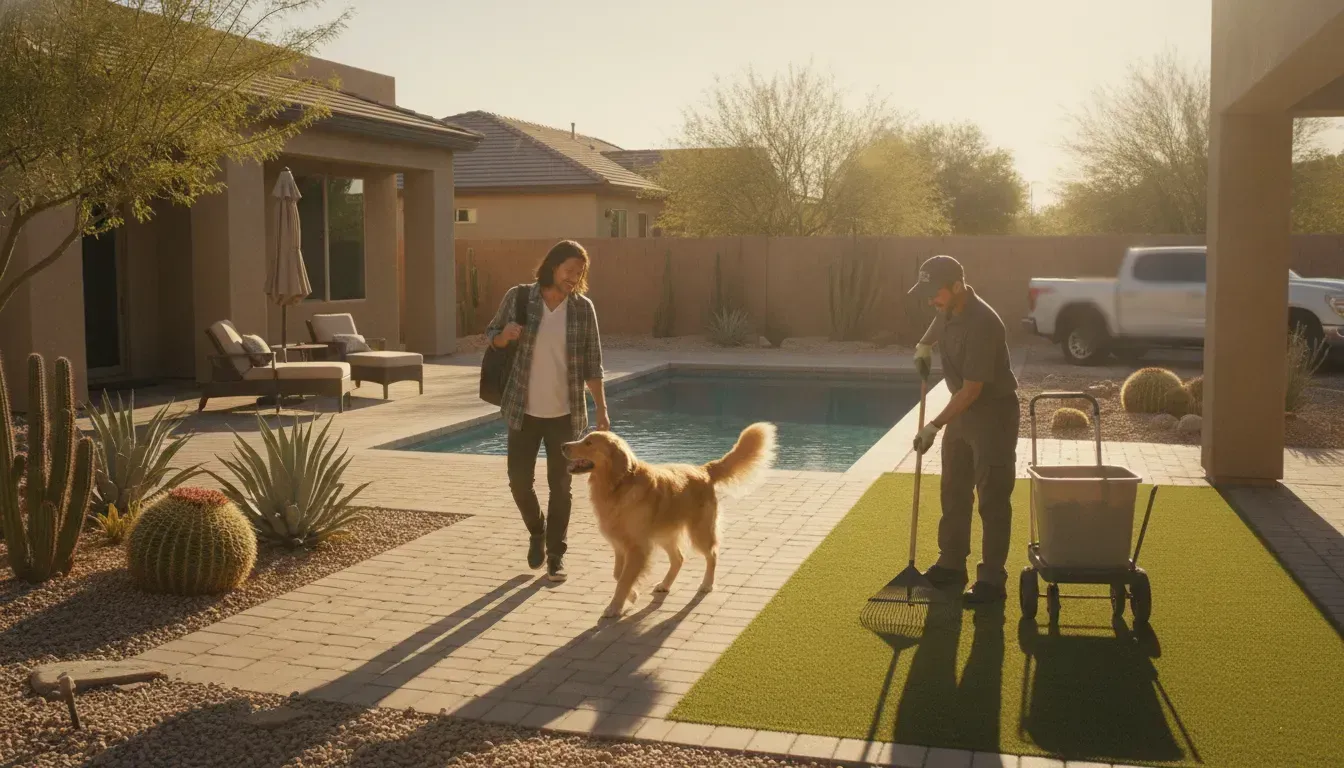
Turf Deodorizing Service: Pet Odor Control in Hot Weather
This is a subtitle for your new post

When artificial turf still smells after visible waste is gone, the problem is usually below the surface.
Call A1 Pet Maintenance at (702) 521-2624 Today
Urine can collect in the infill and porous backing, where routine scooping cannot reach it. In a hot climate, that trapped residue becomes especially noticeable as warmth increases the release of odor compounds.
A1 Pet Maintenance's turf deodorizing service can address persistent pet odor more thoroughly than surface cleaning. The service may assess the turf profile, rinse deeper layers, agitate the fibers, and use an enzyme-based treatment suited to the installation. Results depend on drainage, infill condition, usage, and ongoing care, so no treatment should be presented as a permanent guarantee.
This guide explains what creates the odor, which routine steps help limit buildup, and when professional cleaning makes sense for a home, HOA, or rental property. First, it helps to understand why heat can turn a manageable maintenance issue into a recurring odor problem.
Why Does Artificial Turf Smell Like Dog Urine in Hot Weather?
A1 Pet Maintenance's turf deodorizing service looks beyond the visible surface. Urine can move through turf fibers and remain in porous backing or infill, where ordinary scooping cannot reach it. Over time, bacteria break down urea and produce ammonia, a major source of sharp synthetic-turf odor (extension guidance on pet waste and synthetic turf).
What happens after urine reaches the infill?
Every elimination leaves some liquid behind, even when the surface appears dry. On a well-draining installation, water can help dilute and carry residue away. If urine collects in the infill or backing, however, the turf profile becomes a warm, damp environment. Ammonia-producing bacteria can thrive under those conditions, particularly when routine rinsing and deeper cleaning are inconsistent.
The type and condition of the turf also matter. Synthetic turf backings vary in porosity, so some installations are more likely to retain organic waste than others. Infill that is compacted, displaced, or poorly drained can add to the problem by slowing the movement of water through the system. That does not mean every odor indicates a damaged lawn, but it does mean surface appearance alone is not a reliable way to locate the source.
Why does the smell get stronger in hot weather?
Heat changes how noticeable the odor becomes. Temperature and UV exposure can increase the volatilization of ammonia and other odorous compounds from organic material on synthetic turf. In practical terms, hot, sunny conditions can make residue that was barely noticeable in the morning much more apparent later in the day (NIEHS information on artificial turf and heat).
That is why a quick pass with a scoop may seem sufficient during cooler weather but fail during a Las Vegas summer. Scooping removes solid waste, which is essential, but it does not extract urine from the layers below. A hose rinse may provide temporary improvement, yet trapped residue can continue feeding odor when moisture, warmth, and bacteria come together.
Persistent odor is a signal to look below the blades, not simply apply more fragrance. A qualified inspection can consider the infill, backing, drainage, and maintenance history before recommending a cleaning approach. Treatment should be practical and appropriately matched to the turf rather than based on a one-size-fits-all promise.
What Routine Turf Care Helps Prevent Pet Odor?
Odor prevention works best as a routine, not an occasional rescue. A1 Pet Maintenance recommends removing solid waste promptly, diluting fresh urine, flushing high-use zones, clearing debris, brushing fibers, and checking the yard more often during hot weather. Adjust the routine for pets, traffic, drainage, and local conditions.
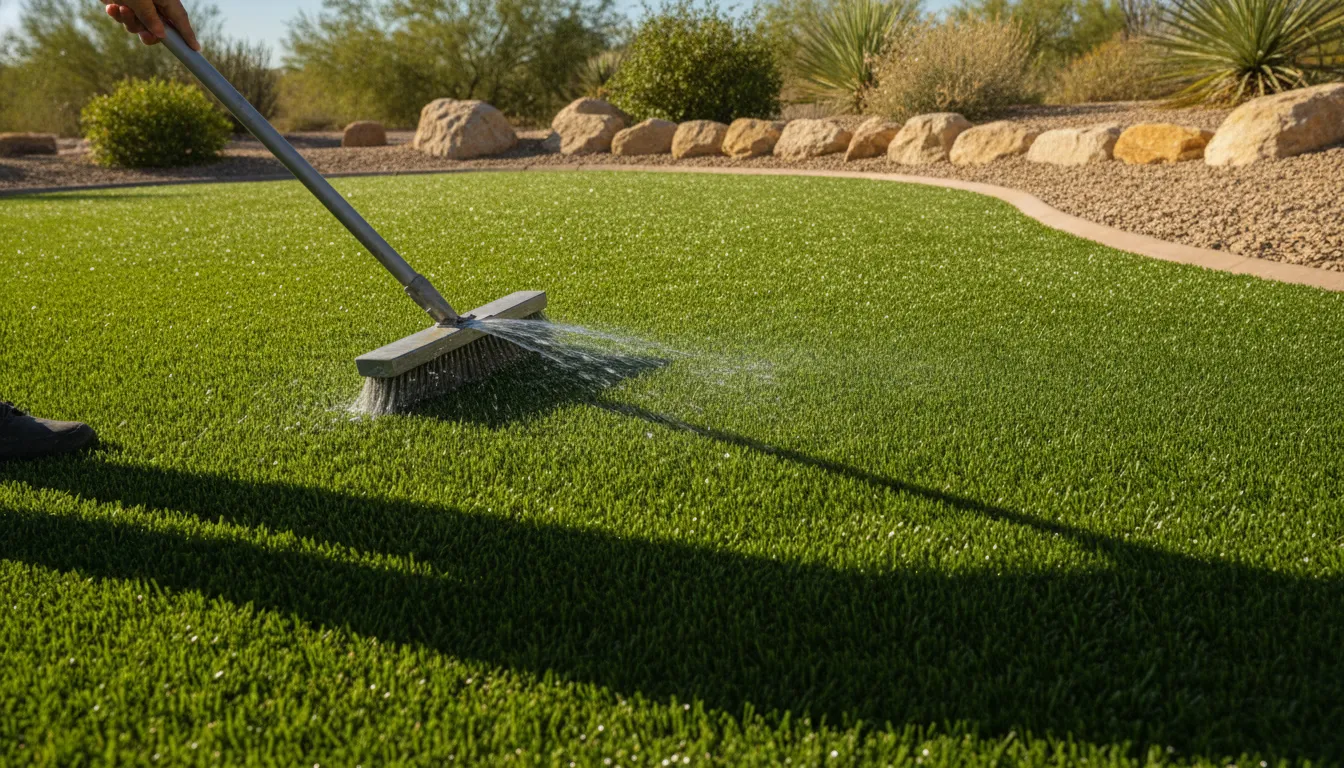 Remove solid waste promptly. Scoop as soon as reasonably possible, then check nearby fibers for residue. Prompt waste removal helps limit the conversion of urea into ammonia, a major source of persistent pet odor.
Extension guidance explains the connection between waste buildup and odor.
Remove solid waste promptly. Scoop as soon as reasonably possible, then check nearby fibers for residue. Prompt waste removal helps limit the conversion of urea into ammonia, a major source of persistent pet odor.
Extension guidance explains the connection between waste buildup and odor.- Dilute fresh urine immediately. After a dog uses the turf, apply enough clean water to flush the affected area rather than lightly misting the surface. Immediate dilution is one of the simplest ways to reduce the concentration of urine before it moves deeper into the infill and backing.
- Flush the high-use zones regularly. Give favorite potty areas, along with narrow side yards and corners, a thorough rinse on a recurring schedule. Regular flushing helps move diluted waste away from turf fibers and infill. Follow the installation's drainage limitations, and watch for water that pools instead of draining.
- Clear leaves, dirt, and other debris. Organic debris can hold moisture and add to the material available for odor-producing breakdown. Remove it before rinsing or arranging a deeper cleaning, especially around edges, gates, and shaded areas.
- Brush and rake the turf. Use a turf-safe brush or rake to lift flattened fibers and reduce infill compaction. Routine raking can help preserve drainage through the turf profile, while agitation also helps water reach beyond the surface. Avoid aggressive tools that pull fibers or displace large amounts of infill.
- Increase attention during hot months. Heat and strong sun can make odors more noticeable, and deodorizing treatments may need to be applied more often during high-temperature periods. Inspect high-use areas weekly in summer, and respond to odor early instead of waiting for the entire installation to smell.
Consistency matters more than an occasional heavy cleaning. If routine rinsing and brushing are not controlling the odor, the problem may involve trapped residue, compacted infill, or drainage conditions below the surface. A professional artificial grass cleaning service can help assess the turf and determine whether a deeper, targeted treatment is appropriate.
How Do Drainage and Infill Affect Turf Odor?
A1 Pet Maintenance checks drainage when artificial turf continues to smell after routine cleanup. Urine and rinse water need a clear path through the turf profile. If moisture and waste stagnate in the infill, odor can return even when the surface looks clean. Inspection helps determine whether liquids move through the system or remain below the fibers. Extension guidance identifies drainage and maintenance as important controls for odor retention.
Infill affects that process in several ways. The material can hold moisture and waste when drainage is inadequate. Infill that compacts may reduce the open spaces needed for water to pass through, while infill that becomes displaced can leave parts of the backing less protected. High-traffic areas are especially prone to displacement, so paths, gates, and favorite pet spots deserve closer attention. Maintaining an appropriate infill level also helps protect the backing from excessive exposure and damage.
The backing itself matters because synthetic turf designs vary in porosity. Some backings may retain organic waste more readily than others. An inappropriate, non-porous infill can further compromise drainage and contribute to stagnation. These conditions do not prove that one cleaning method will solve every odor problem, but they do explain why a surface rinse may provide only temporary relief.
Drainage and infill inspection signalsHealthy drainage signalsWarning signalsPractical next stepWater moves through the turf profile without obvious pooling.Moisture or odor lingers in one area after rinsing.Inspect the drainage path and consider a deeper turf assessment.Infill appears reasonably even across the installation.High-traffic zones look sparse, matted, or uneven.Check for infill displacement and restore the affected area as appropriate.Fibers remain supported and the backing is not visibly exposed.Backing is exposed or appears vulnerable where infill has shifted.Address the infill condition before repeated cleaning leaves the same problem in place.Routine inspection finds no obvious trapped debris or stagnant moisture.Odor returns quickly despite regular waste removal.Have the infill and backing evaluated instead of relying only on surface scooping.
Regular raking can help limit compaction and support more consistent drainage, but it is not a substitute for evaluating a damaged backing or a blocked drainage layer. When the turf profile is difficult to inspect, a professional turf deodorizing service can assess the infill and backing and match the cleaning approach to the condition found.
What Should You Avoid When Cleaning Artificial Turf?
Artificial turf can look clean while urine and other organic residue remain below the surface. That is why a few common cleaning shortcuts may hide the problem briefly without addressing the source. Avoiding the wrong products and techniques protects the turf and helps you decide when a deeper assessment is worthwhile.
Why should you avoid household bleach?
Do not reach for household bleach as a default turf deodorizer. A product that is suitable for a hard, nonporous floor is not automatically suitable for turf fibers, infill, or the drainage layer beneath them. It may also create problems when applied without knowing the condition of the backing, infill, drainage, or nearby landscaping. Follow the turf manufacturer's care guidance, avoid mixing cleaning chemicals, and ask a turf professional before applying a new product across the yard.
Other harsh household cleaners can create similar problems. A product that is suitable for a hard, nonporous floor is not automatically suitable for turf fibers, infill, or the drainage layer beneath them. Follow the turf manufacturer's care guidance, and avoid mixing cleaning chemicals. If you are unsure whether a product is appropriate, pause and get advice before applying it across the yard.
Why is surface-only cleaning often incomplete?
Scooping solid waste and rinsing the visible blades are useful parts of routine care, but they do not necessarily reach residue trapped in the infill or porous backing. Those layers can hold moisture and organic material, allowing odor-causing bacteria to continue breaking down urine. A surface spray may make the yard smell better for a short time while leaving the underlying buildup in place.
Effective cleaning needs to reach the turf profile without damaging it. Specialized turf brushes can agitate the fibers and help a suitable cleaner penetrate more thoroughly. Enzyme-based cleaners are designed to break down complex organic waste rather than simply cover its smell. Even then, the right process depends on how much residue is present and whether water is draining properly.
For practical maintenance steps, review this guide to artificial turf cleaning for dogs. Routine waste removal and appropriate rinsing can reduce buildup, but maintenance is not a substitute for diagnosing persistent odor.
When does a professional assessment make sense?
Consider a professional assessment when odor returns quickly after rinsing, remains strongest in one area, or becomes more noticeable during hot weather. Repeated odor can point to trapped residue, compacted or displaced infill, restricted drainage, or a backing condition that surface cleaning cannot resolve.
A professional turf deodorizing service can assess the infill and backing before choosing a treatment approach. A multi-stage process may include debris clearing, deep cleaning, agitation, an enzyme-based deodorizing treatment, and infill treatment when appropriate. This does not guarantee permanent odor removal, particularly when drainage or turf construction problems remain, but it replaces guesswork with a site-specific plan. For homeowners, that can prevent further product misuse. For HOAs and property managers, it can provide a clearer way to address recurring complaints while protecting shared outdoor spaces.
When Is Professional Turf Deodorizing Service the Better Choice?
A1 Pet Maintenance's turf deodorizing service is worth considering when odor returns soon after rinsing. Is strongest in a few high-use areas, or becomes noticeable to visitors, tenants, neighbors, or residents. Persistent smell can indicate that urine and organic residue have moved beyond the visible blades into the infill or porous backing. Surface scooping removes solid waste, but not residue held below the surface.
Homeowners may also want help when a yard has several dogs, limited time for routine maintenance, or a recurring odor problem during hot weather. High temperatures can make odors more noticeable, while treatments may need to be applied more frequently during the hottest months. A professional assessment can help distinguish a maintenance issue from a drainage or turf-condition issue before more cleaning products are applied.
What should a professional assessment look at?
The condition of the infill and backing matters. An experienced technician should consider whether the infill is compacted, displaced, holding moisture, or allowing waste to stagnate. They should also look at drainage and the pattern of odor across the installation. Areas near gates, dog runs, walls, and frequently used paths often deserve closer attention because repeated traffic can affect infill distribution and drainage.
Ventilation is another practical factor. Adequate airflow can help moisture evaporate and odors disperse, but it cannot replace cleaning when residue is trapped in the turf profile. For property managers and HOA boards, this assessment creates a consistent plan for shared spaces rather than relying on residents to treat isolated spots with different products.
How does professional deodorizing differ from a surface rinse?
A thorough service uses more than a quick spray. The process may include clearing leaves and dirt, agitating the turf fibers, applying an enzyme-based deodorizing treatment, and performing a deep rinse. Enzyme cleaners are designed to help break down organic pet waste trapped in the turf rather than simply masking the smell. A multi-stage approach can also include infill treatment when the condition of the turf profile calls for it.
Results should be viewed realistically. Professional cleaning can address accumulated residue and improve the condition of the area, but odor control remains a cumulative maintenance process. Continued waste removal, appropriate rinsing, and regular attention are still important. For properties with frequent pet traffic, a recurring schedule may be more practical than waiting until odor becomes severe. Hotter months may require a different service cadence than cooler periods.
Whether you manage one backyard or several common areas, A1 can help you evaluate the next step through its professional artificial grass cleaning service. The goal is a cleaner, more manageable outdoor space supported by a plan that fits the turf, traffic, and property needs.
What Does A1 Pet Maintenance Include in Turf Cleaning?
A1 Pet Maintenance approaches artificial turf cleaning as more than surface-level rinsing. It is designed for pet areas where waste, urine, leaves, and dirt can collect in the turf fibers, infill, and backing. The goal is a thorough clean that makes ongoing yard care easier. Odor control also depends on turf condition, drainage, pet traffic, and continued maintenance.
 What happens during the cleaning service?
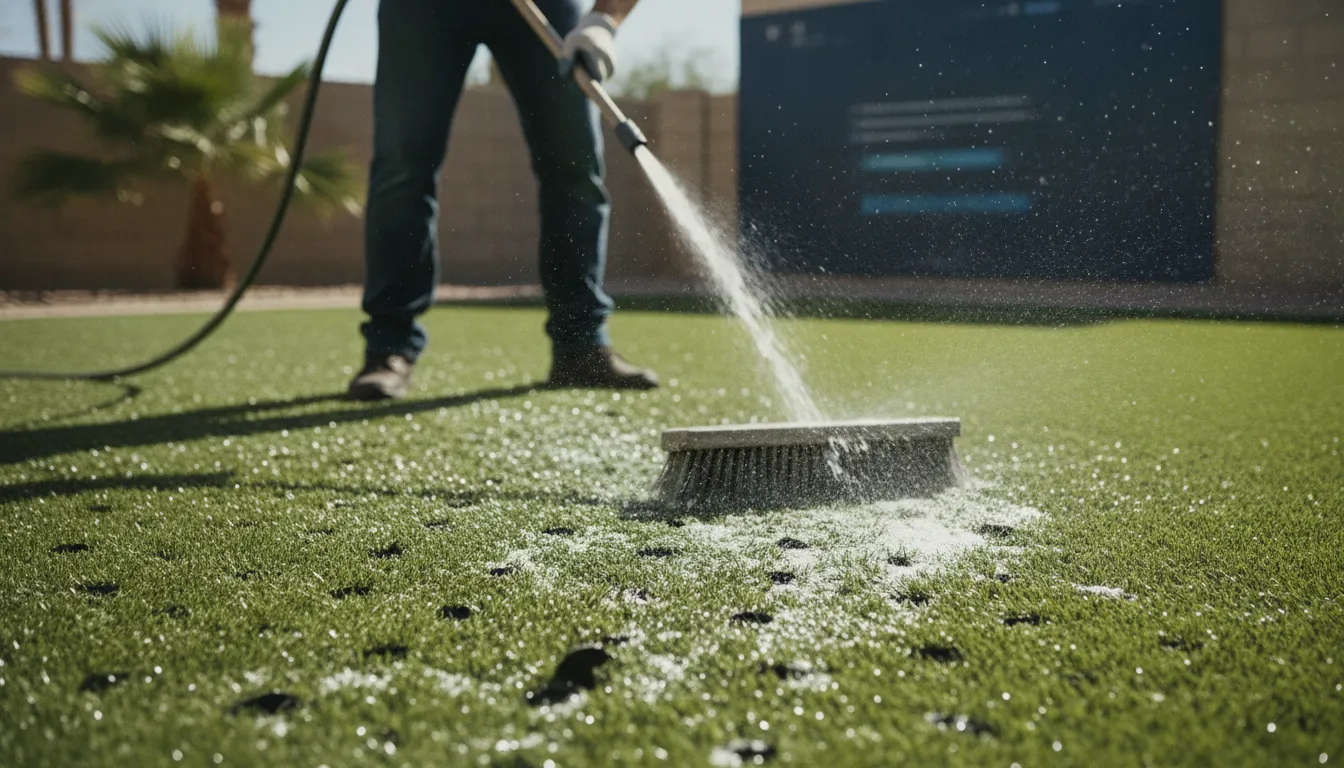
The process begins with pet waste removal and debris clearing. Leaves, dirt, and other material need to be taken off the turf before deodorizing so the treatment can reach the surface and the spaces below it. A1 then uses agitation to work through the turf fibers, followed by a deep rinse to flush away loosened residue. This is different from simply spraying the top of the grass, especially when urine odor has reached the infill or porous backing.
A1 also provides enzyme-based deodorizing for artificial grass. Enzyme treatments are used to break down organic pet waste that can remain in the turf profile. The treatment is part of a broader cleaning process, not a promise that every odor will disappear permanently after one visit. Existing drainage issues, heavily affected infill, backing condition, weather, and the frequency of future pet use can all affect the result.
Can infill be part of the recommendation?
After evaluating the turf, A1 may recommend an infill refresh when the existing infill is displaced, compacted, or no longer supporting proper drainage. This is an evaluation-based recommendation, not an automatic add-on. Keeping appropriate infill levels can help protect the backing and support the turf's intended performance. In high-use pet areas, a refresh may be worth discussing as part of a longer-term maintenance plan.
A1 Pet Maintenance has served Southern Nevada and Tucson for more than 26 years and services over 400 properties weekly. That experience supports a practical approach for homeowners, HOAs, and property managers who need a repeatable sanitation plan rather than a one-time surface spray. You can review the professional turf deodorizing service options to understand how artificial grass care fits into your property needs.
Artificial grass cleaning pricing is custom, so the right next step is to request a quote based on the property, turf condition, and service requirements. For larger communities and shared pet areas, A1 can also discuss commercial turf care for HOAs and other managed properties.
Call A1 Pet Maintenance at (702) 521-2624 Today
Frequently Asked Questions
How often should artificial turf be rinsed to help control pet odor?
Rinse pet-use areas regularly to dilute urine and move residue through the turf profile. Prompt waste removal, routine rinsing, and occasional brushing work together. During hotter months, existing odors may be more noticeable, so inspect high-use areas more often.
What is the best odor eliminator for artificial grass?
Use a product specifically made for pet turf and follow its label directions. Enzyme-based cleaners are designed to break down organic waste trapped below the surface. A professional can select and apply a treatment based on the turf, infill, and odor conditions.
Can drainage problems cause artificial turf to smell?
Yes. Compacted or displaced infill, blocked drainage, and non-porous materials can allow urine and moisture to stagnate. Check whether water drains normally, especially in heavily used areas. If rinsing does not improve the smell, the backing and infill may need a closer inspection rather than more surface deodorizer.
How much does a turf deodorizing service cost?
Artificial grass cleaning is custom priced. The cost can depend on the yard or property size, odor severity, turf and infill condition, access, and whether the work is a one-time treatment or recurring maintenance. Request an evaluation and quote instead of relying on a generic price.
When should I hire a professional turf deodorizing service?
Consider professional help when odor returns quickly, covers a shared property, persists after careful rinsing, or appears connected to drainage or infill problems. A service can assess the turf profile and combine deep rinsing, agitation, and enzyme-based deodorizing. Consistent maintenance usually supports better odor control than infrequent heavy cleaning.
Ready to Get Started With Turf Deodorizing Service?
Persistent pet odor can make an outdoor area less comfortable for residents, guests, and pets. A practical assessment can help identify whether routine cleaning, deeper deodorizing, or ongoing maintenance fits the property's needs.
Call A1 Pet Maintenance to discuss artificial turf cleaning and deodorizing for your home, HOA, apartment community, or commercial property.