Artificial Turf Deodorizing Tucson Guide
Artificial turf deodorizing Tucson owners book when heat or monsoon rain brings pet odor back. See what a visit includes.
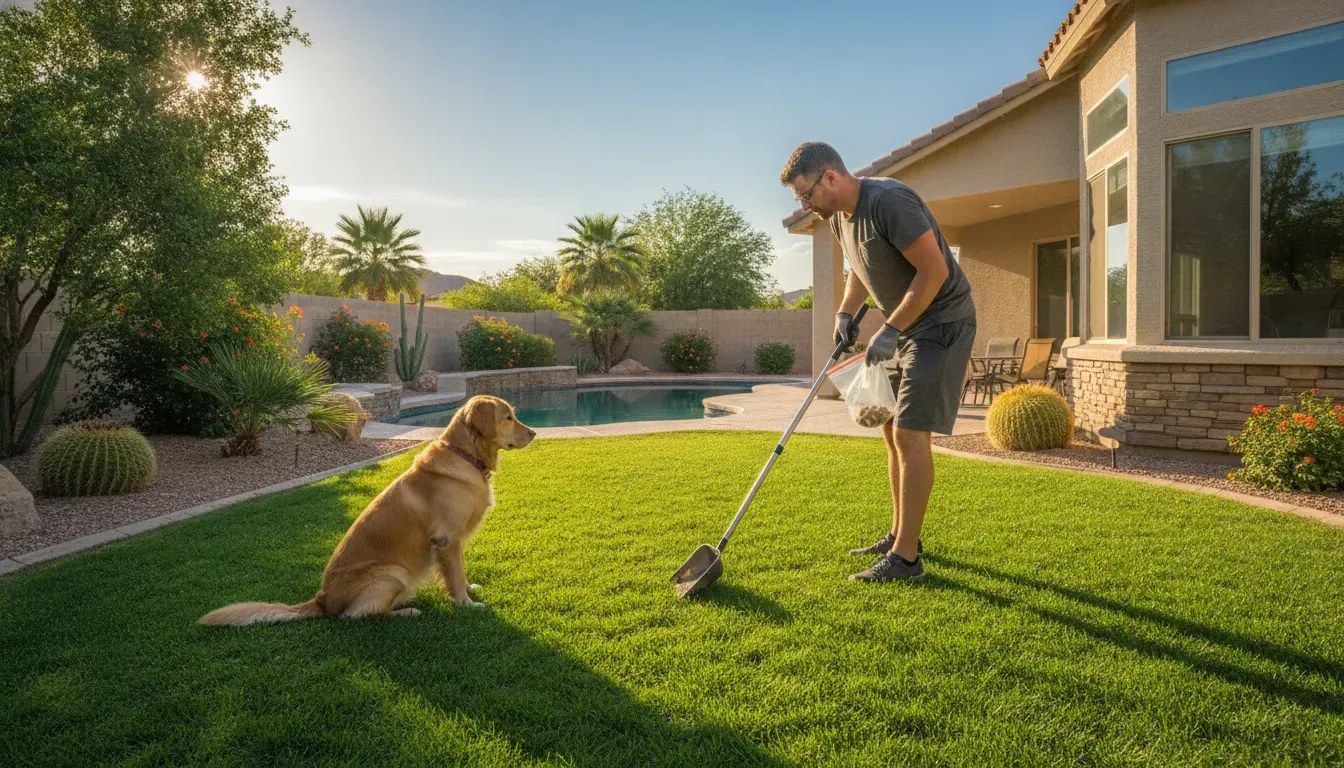
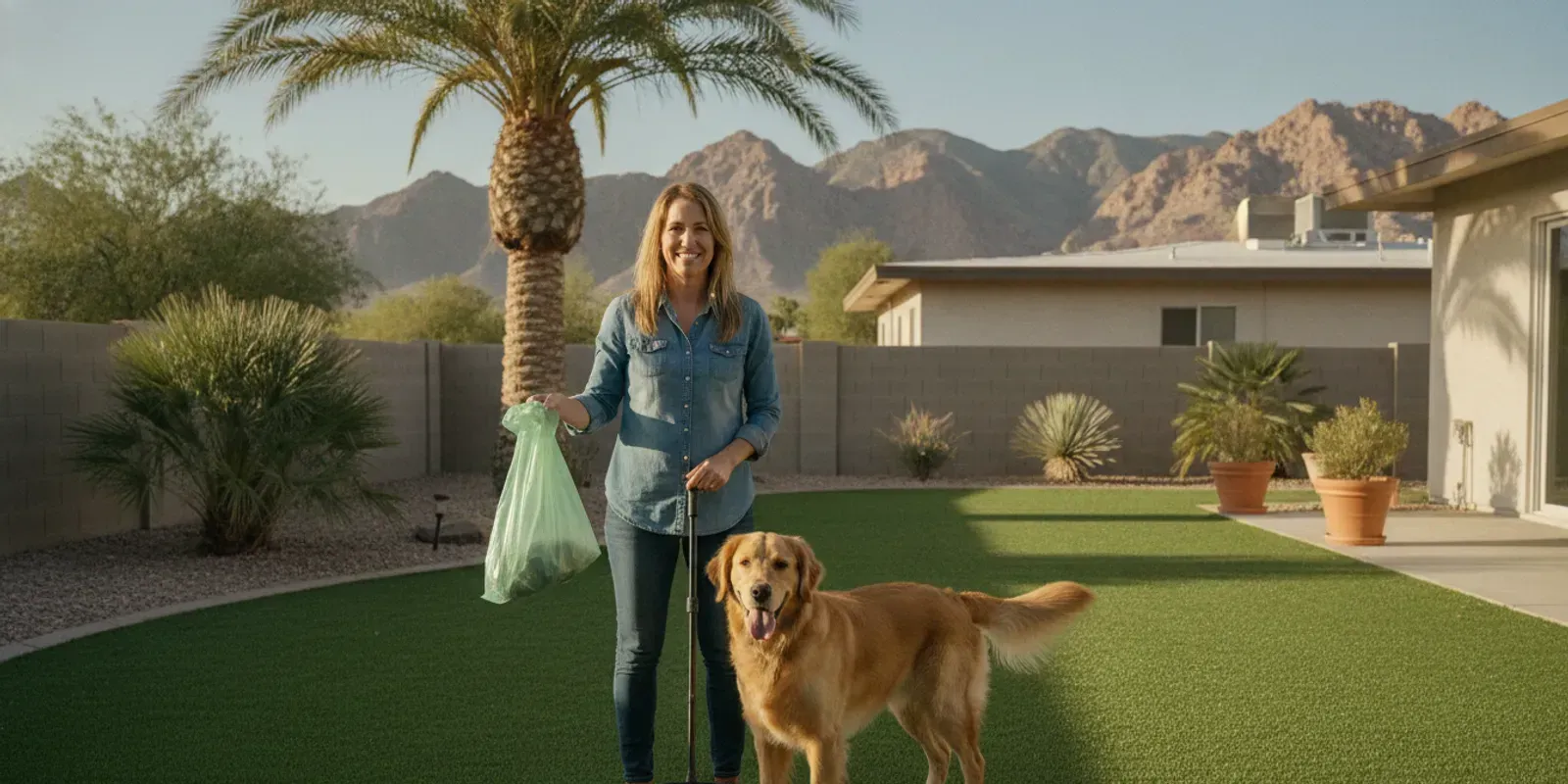
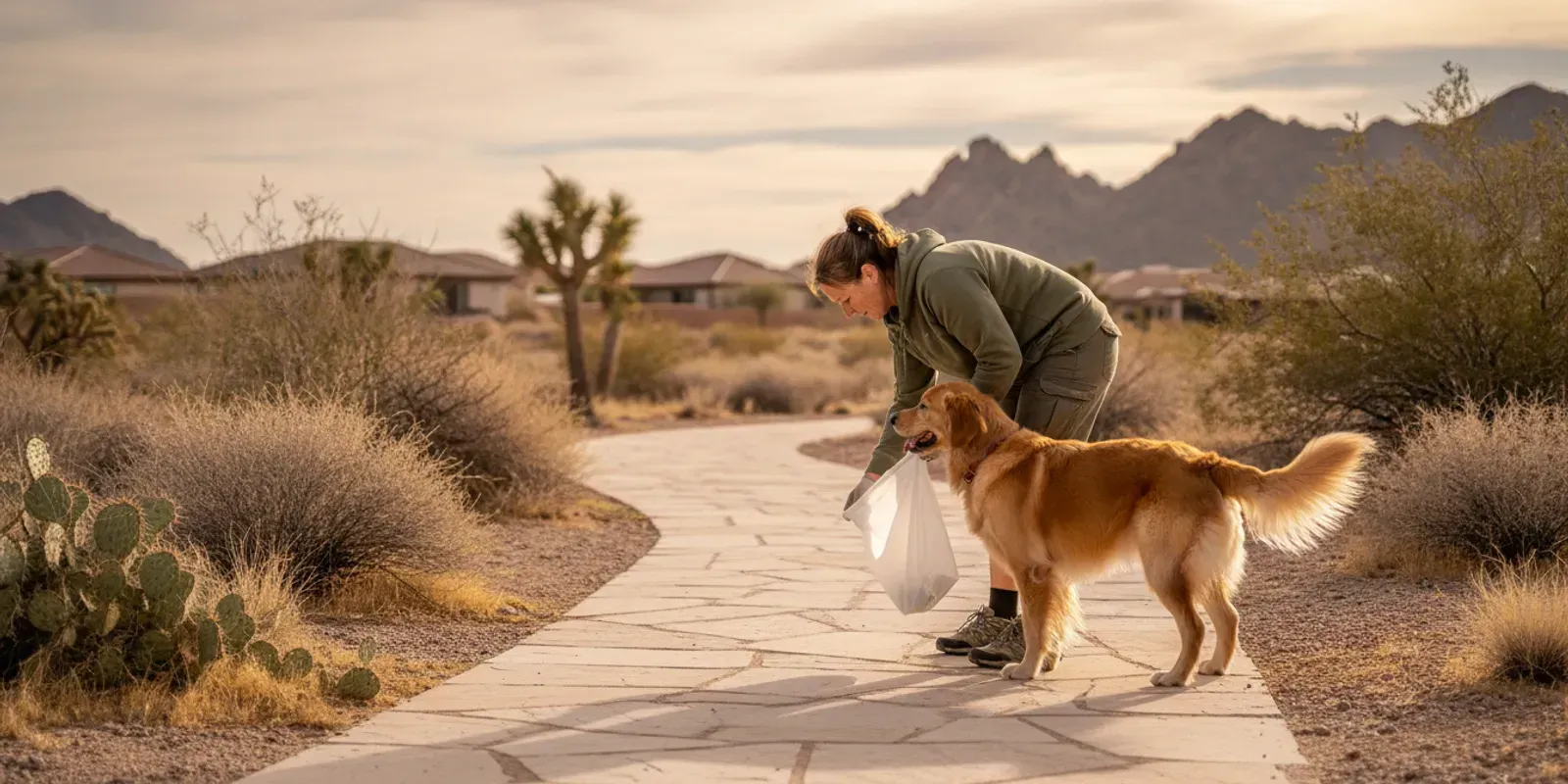
Tucson homeowners often book artificial turf deodorizing Tucson when the yard smells again after a hot week or a monsoon rain. A1 Pet Waste Maintenance removes the solid waste first, then applies an enzyme treatment, a deep rinse, and fiber agitation so the odor is treated in the turf rather than covered up. The turf visit is priced as a custom quote. It is not the same appointment as weekly waste pickup.
Call A1 at (702) 521-2624 to ask about turf deodorizing in Tucson.
Smell after a storm usually means urine and bacteria are held in the backing and infill. The same is true when the turf stays sour even though you scoop every day. Pickup alone does not reach that layer. This guide covers when to book, what the visit includes, and how it fits with regular service.
When Artificial Turf Deodorizing Tucson Yards Need a Visit
Book deodorizing when the odor is held in the turf itself. A fresh pile smells only until someone picks it up. A yard that still smells after every pile is gone has urine salts and bacteria below the blades. That buried layer is the job this visit is built to treat.
Tucson makes that problem show up on a fairly predictable schedule. Summer heat bakes urine residue into the fibers and the infill underneath them. The North American monsoon, which the National Weather Service treats as June 15 through September 30, can then wet that residue and push the smell back out of the yard. Desert storms often build from late morning into the afternoon, so a yard can smell acceptable at breakfast and sour by dinner.
Watch for these signs before you book:
- The yard smells after you have already scooped every pile.
- Odor is strongest in one corner, a gate path, or a shaded run.
- A hose rinse helps for an hour, then the smell returns in the sun.
- The turf stays damp or slick after a storm instead of draining.
- Guests notice the yard before they see any waste.
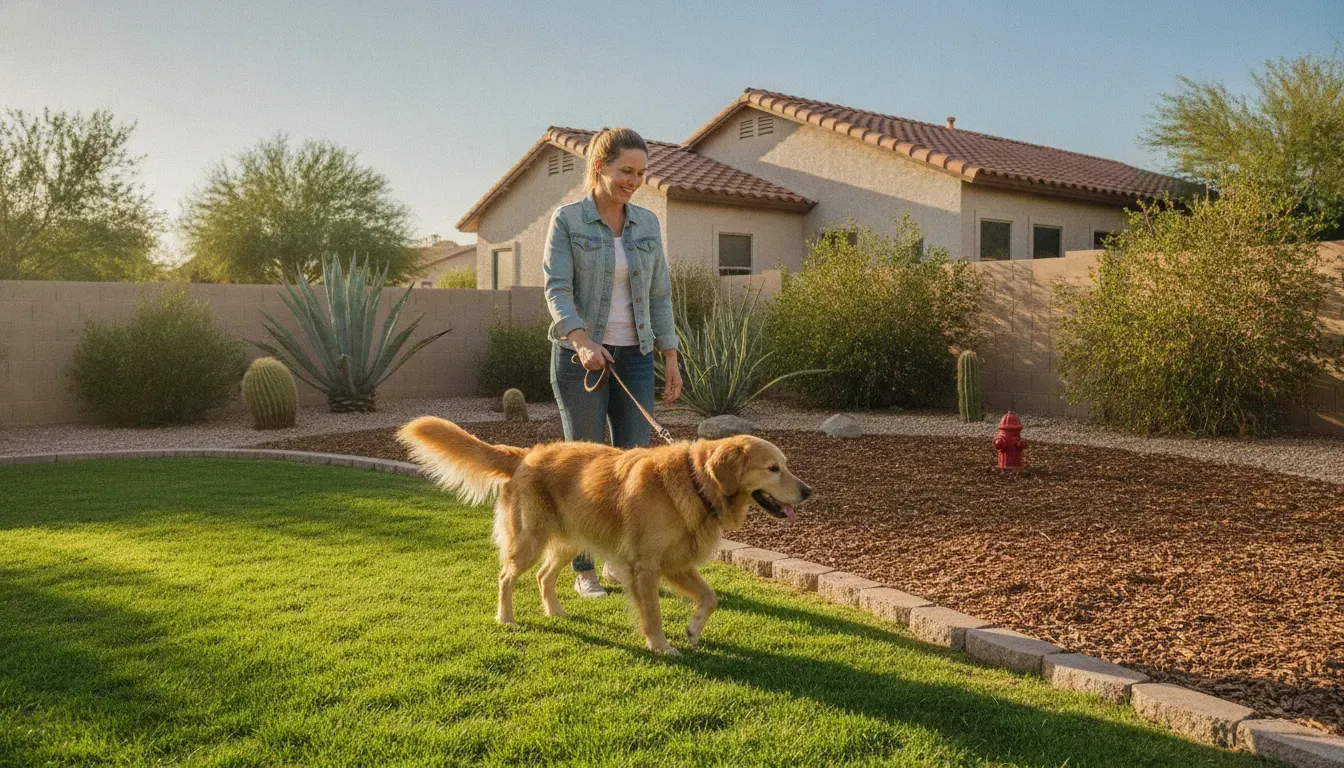
One dog that uses a small patch every day can load that spot faster than two dogs with a large yard. The repeat path is often the same. The dog leaves the patio, walks the wall, and stops in the shade. That strip gets every visit, so the infill there fails first.
Multiple dogs, a boarding run, or a rental between tenants are the cases where a one-time treatment is often not enough. Those yards usually need a repeat visit tied to the hot months. If you are comparing how often to send someone for ordinary scooping, how often to schedule Tucson dog poop cleanup is the pickup guide. Keep that cadence even after the turf is treated, or the solids will rebuild the smell.
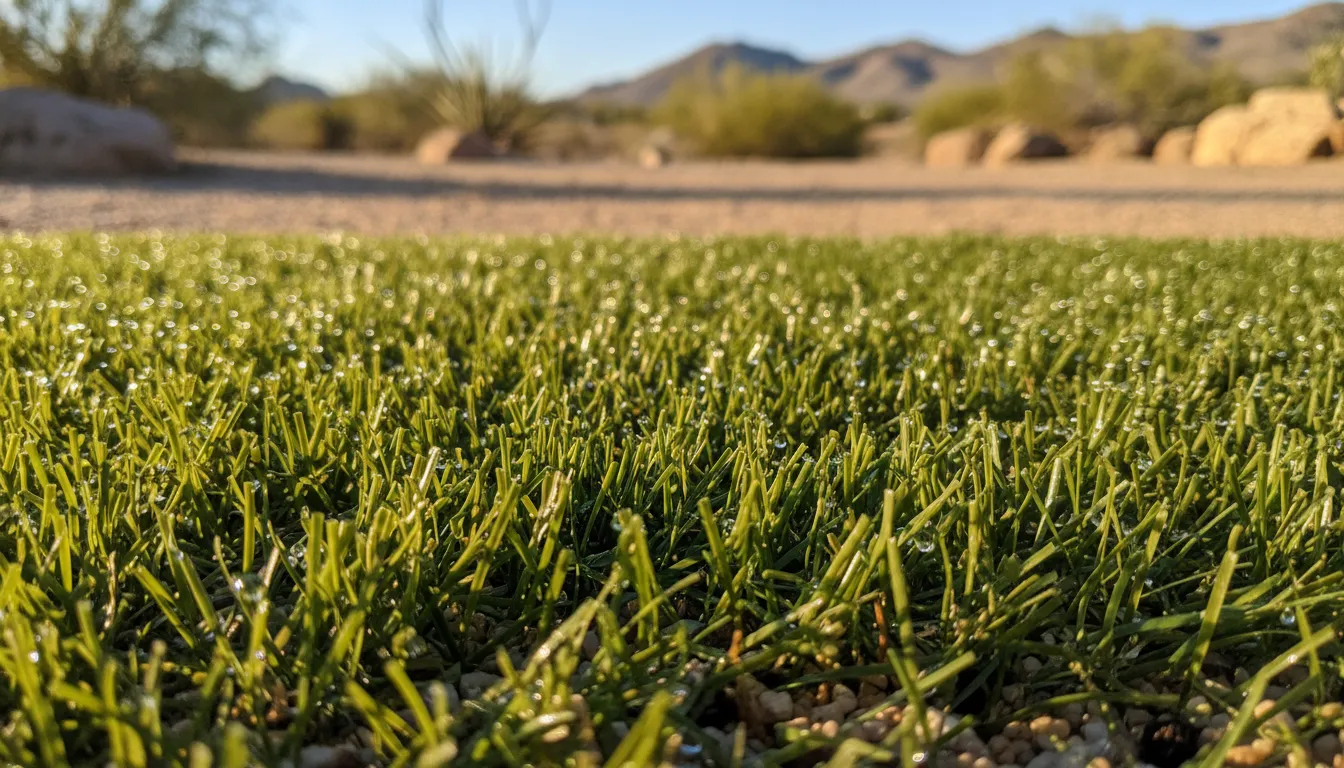 Surface water on the blades is not the same as a rinse that reaches the infill.
Why Tucson Heat and Monsoon Rain Bring Turf Odor Back
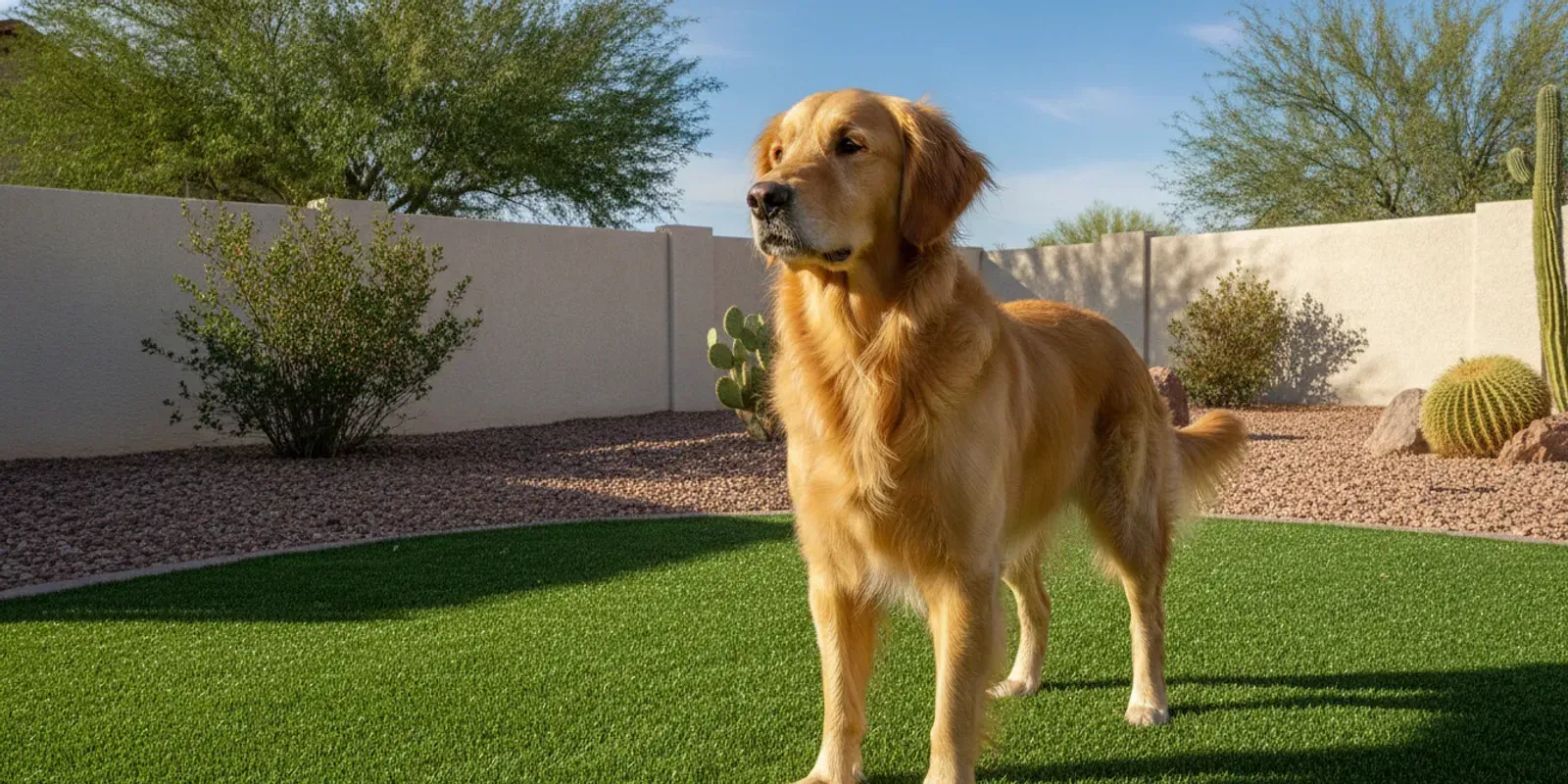
Artificial grass does not absorb urine the way bare soil does. Liquid runs down the blades, into the infill, and toward the backing. Dry heat concentrates those salts. A sudden rain wets them again. Either way, the odor comes from material you cannot scoop off the surface.
Tucson yards often sit on hard desert soil. Water that cannot leave the turf sits under the fibers and keeps bacteria active. After a storm, check the low corner and the area along the wall. Standing water there is a drainage clue, not just a smell clue. A deodorizing visit can treat the odor. It cannot rebuild a base that holds water.
Shade changes the pattern too. A palo verde or a patio cover keeps the surface cooler, so dogs choose it, and the spot dries more slowly after a storm. A sunny center yard can smell fine while the shaded edge stays sour. Treat the edge, not only the open lawn you see from the door.
Do not wait for a full puddle. Press a shoe into the low corner the morning after rain. If the print stays wet, or if you smell ammonia when the sun hits that strip, the residue is still there. A light hose pass on the blades will not move it. The rinse has to reach the infill, then the yard has to drain.
The U.S. Environmental Protection Agency says stormwater can carry pet waste into streams and lakes, and that this waste is a leading source of bacteria in urban waterways. Leaving piles on the turf until the next rain does not solve the odor, and it can move that waste off the property. Scoop first. Then treat what the scoop cannot reach. The EPA fact sheet is Pet Waste Management.
Household bleach and heavy vinegar soaks are a poor match for pet turf. They can irritate pets and still miss the layer under the blades. A1 Pet Waste Maintenance uses an enzyme treatment made to break odor down, then rinses and agitates the fibers. That is the same process described on the artificial grass cleaning page, applied to Tucson yards.
Heat timing is covered in does pet waste removal work in Tucson summer. That page is about pickup in extreme heat. This one is about the smell that stays after the piles are gone.
What a Deodorizing Visit Includes and What It Does Not
A turf visit is a cleaning visit, not a weekly scoop route. The artificial grass service includes waste removal from the surface, debris clearing, an enzyme deodorizing treatment, a deep rinse, and agitation to lift the fibers. If the infill looks packed or thin, the technician can point that out. Any follow-up work is discussed on its own, not folded into the deodorizing visit.
The visit does not include these items:
- It does not replace weekly or twice-weekly waste pickup.
- It does not rebuild drainage or fix a base that holds water.
- It does not cover cat trap rental or a separate one-time yard reset.
- It does not come with a published flat price. Turf cleaning is a custom quote.
Weekly pet waste removal is a different service, billed by how many dogs use the yard and whether the route comes once or twice a week. A one-time yard cleanup is priced from the yard size and how much waste has built up. Those quotes cover waste removal, not enzyme turf treatment. Ask for the turf quote on its own so the two jobs stay clear.
Use this table to match the smell to the visit.
Fresh piles, with little smell once they are gone. Likely cause: solid waste sitting on the surface. What to book: weekly or twice-weekly pickup.
A sour smell, with no piles in sight. Likely cause: urine residue held in the infill. What to book: an enzyme deodorizing visit.
The smell returns the day after rain. Likely cause: rewetted residue, or poor drainage. What to book: deodorizing, plus a drainage look.
Months of piles before a move-in or a party. Likely cause: heavy surface buildup. What to book: a one-time cleanup, then deodorizing if odor stays.
A shared run at an apartment or HOA. Likely cause: many dogs using one surface. What to book: a commercial plan with a turf quote.
If you want the hands-on version of a urine rinse, read how to clean pet urine from turf. Use that for a small spot. Book a visit when the smell is across the yard or keeps returning.
How Often Tucson Pet Owners Should Repeat Deodorizing
There is no single interval that fits every yard. A small dog on a large turf area may need one visit before summer and a check after the first hard monsoon. A multi-dog home, a daycare run, or a rental with pets often needs a visit at the start of summer and another after the wettest storms.
Use three Tucson seasons, not twelve equal months:
- Late spring is the setup. Heat has started, rain has not, and daily scooping still keeps most yards acceptable.
- June and July are the bake. Urine salts concentrate, and a yard that seemed fine in May can turn sour within a week.
- Storm season is the reset test. Rain through September rewets whatever the heat left in the infill.
A useful home log only needs three notes. Write the date, whether you scooped that morning, and whether the yard smelled at dusk. Two sour evenings with no piles left are enough reason to book a visit. You do not need a lab test to justify the call. You need a short pattern so you are not guessing after one humid afternoon.
Use the yard, not the calendar, to decide:
- Scoop solids before they bake on. Daily is the useful habit in summer.
- Note the first week the yard smells with no piles left. That is the treatment cue.
- After a storm, wait until the surface drains, then smell the low corner.
- If the sour smell is back within a day, book deodorizing rather than another hose rinse.
- Keep weekly pickup on its own schedule so solids never become the odor source.
Rental turnovers are a special case. A yard can look clean and still smell once the next tenant's dog uses it, because old urine is already in the infill. Tucson pet waste removal for rentals covers the pickup side of a turnover. Add a turf quote when the complaint is smell, not piles.
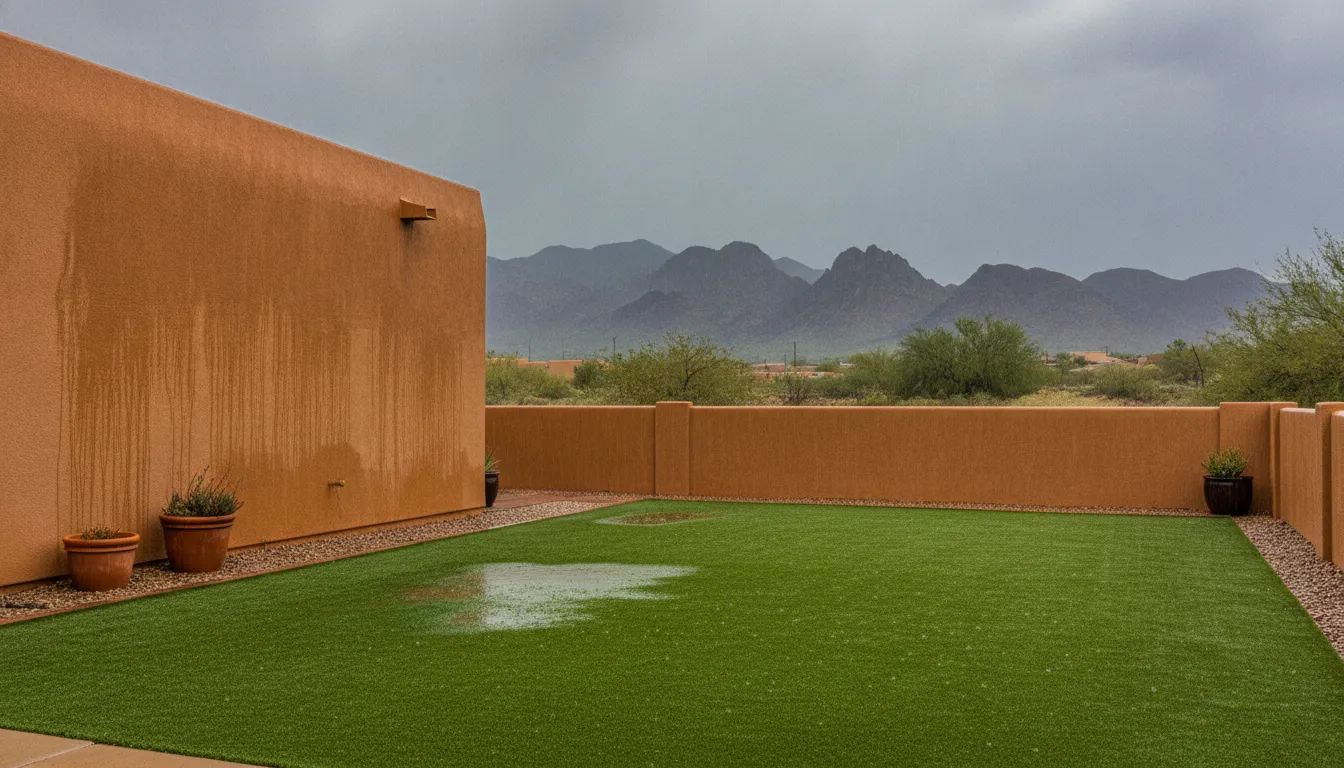 A puddle after rain is a cue to check drainage before you only treat odor.
Apartments and HOAs with a shared pet lawn should not wait for a resident complaint. A shared surface gets more urine in less space, and one missed week shows up as a building-wide smell. Commercial pet waste removal in Tucson explains route planning for those properties. Deodorizing is an add-on to that plan, not a substitute for it.
How to Book Turf Deodorizing With A1 in Tucson
A1 Pet Waste Maintenance has served Tucson and Southern Nevada since 1998. The company is a Nevada LLC, and the Tucson work sits on the same crew model as the Nevada routes. Turf deodorizing is part of the artificial grass cleaning service. Waste comes off the surface, debris is cleared, then the enzyme treatment, rinse, and fiber agitation follow. You do not need a long contract. Tell the office whether you want a one-time treatment or a repeat visit through summer and monsoon.
Say which problem you actually have. "The yard smells after I scoop" is a turf visit. "Nobody has scooped in two months" is a one-time cleanup, and the turf visit comes only if odor remains. Mixing those asks on one call is fine. Pricing them as one flat job is not, because the published scoop rates do not include enzyme treatment.
Have this ready when you call:
- The city and a rough turf size, or the number of dog runs.
- How many pets use the yard, and whether it is a home, rental, or shared lawn.
- Whether the smell is constant or only after rain and heat.
- Whether you already have weekly pickup or only need the turf visit.
- Gate codes and the best time for a technician to enter.
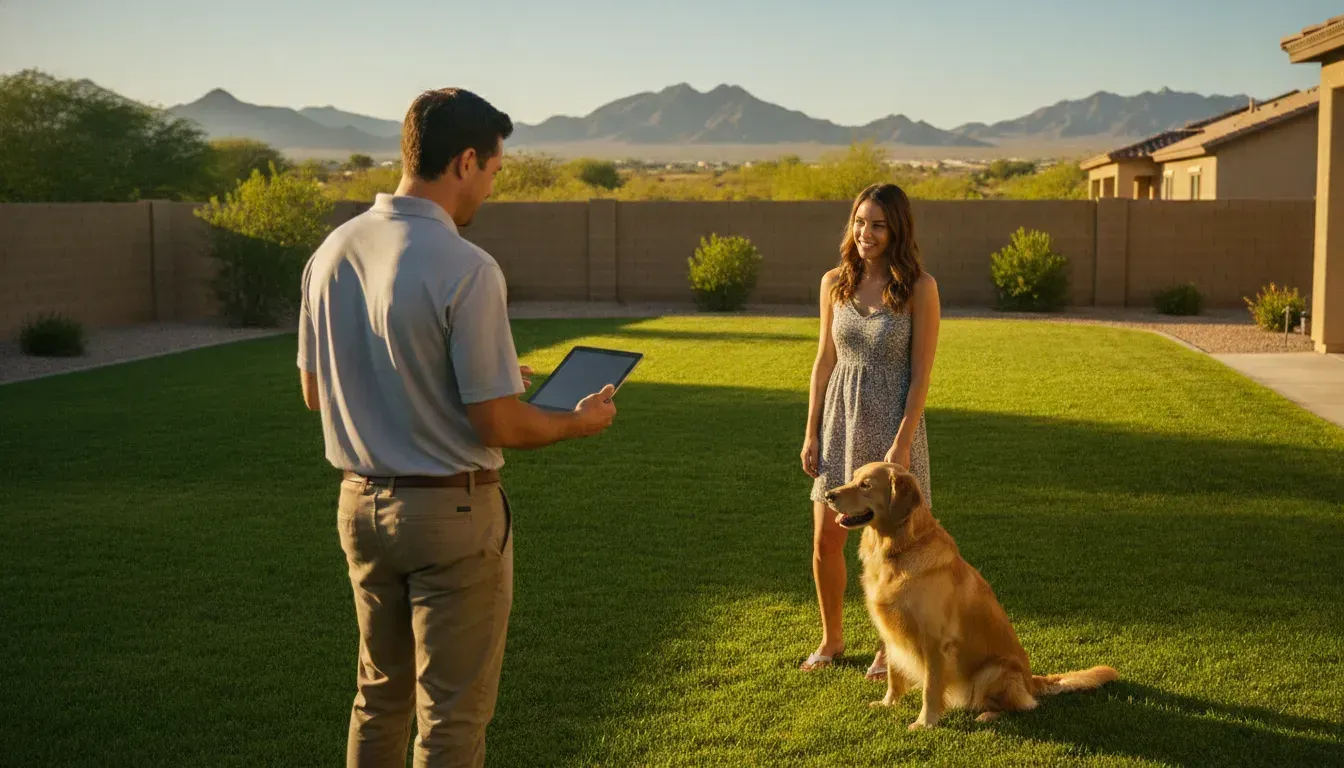
Call (702) 521-2624 or use the contact page and ask for a turf quote. If you also want recurring scoop service, ask about that on the same call. Scoop rates and turf quotes stay separate, so neither one is priced as a discount on the other.
For a yard buried in old piles, start with a one-time cleanup. If the smell remains after the surface is clear, add deodorizing. Single dog poop cleanup in Tucson walks through that surface reset. It does not replace an enzyme treatment.
Call (702) 521-2624 and ask for a Tucson turf deodorizing quote
Frequently Asked Questions
What is the best way to deodorize artificial turf in Tucson?
Remove solid waste first, then treat the infill with a pet-safe enzyme product, rinse, and agitate the fibers. A surface spray only masks the smell. The visit follows that order and is quoted for the yard, not sold as a flat online price.
Why does my Tucson turf smell worse after rain?
Monsoon rain rewets urine residue that heat has concentrated in the backing and infill. If a puddle sits in a low corner, drainage is part of the problem. Deodorizing treats the odor. It does not rebuild the base.
How often should I deodorize a dog yard in Tucson?
Book when the yard smells after the piles are gone. Many single-dog homes need a visit before summer and a check after the first hard storms. Multi-dog homes and shared runs often need another visit during monsoon season, which the National Weather Service runs from June 15 through September 30.
Is turf deodorizing the same as weekly poop pickup?
No. Weekly and twice-weekly pickup remove solid waste on a route. Deodorizing is a separate cleaning visit with enzyme treatment, a rinse, and fiber agitation. Pickup prices are published. Turf cleaning is a custom quote.
Can A1 deodorize turf at a Tucson rental or apartment?
Yes. A1 Pet Waste Maintenance serves homes, rentals, and commercial pet areas in Tucson. A turnover or a shared dog run can look clean and still hold odor in the infill. Ask for a turf quote in addition to any pickup plan.