How Often Should I Get Dog Poop Cleaned Up in Tucson?
Wondering how often should I get dog poop cleaned up in Tucson? Use this practical guide to choose weekly, twice-weekly, or one-time yard service.

In Tucson, a yard can go from manageable to unpleasant quickly when several dogs use it every day. The right cleanup schedule depends on how many dogs you have, how often the yard is used, and whether waste, heat, or odor is becoming noticeable.
For most Tucson homes, weekly professional service is a practical starting point. Twice-weekly or customized visits may make more sense for multiple dogs, heavy yard use, visible buildup, or persistent odor. If you are asking, "how often should I get dog poop cleaned up in Tucson," the best answer depends on your yard and your preferred level of cleanliness.
Daily pickup is ideal when a household can manage it, but recurring service can keep the task from becoming a backlog. The sections below explain how to match service frequency to your dogs, your yard, and Tucson's hot conditions.
Call A1 Pet Maintenance at (702) 521-2624 Today
How Often Should I Get Dog Poop Cleaned Up in Tucson?
For many Tucson households, daily pickup is the simplest routine when someone has the time and mobility to manage it. If you prefer professional help, weekly service is A1 Pet Waste Maintenance's most popular recurring option. That means one yard visit each week. It is a practical starting point for many homes, especially when the yard has modest use and waste does not noticeably accumulate between visits.
When is weekly cleanup a good fit?
Weekly service can work well for a household with one or two dogs that uses the yard normally and can maintain it between visits. It keeps cleanup on a consistent schedule without requiring you to handle every yard visit yourself. A regular route can also make the task easier to remember, since the service day stays predictable.
Still, weekly is not a universal rule. The right frequency depends on how many dogs use the space, how often people and pets spend time there, and what you observe in the yard. More dogs, frequent outdoor use, visible accumulation, odor, or an upcoming gathering may make a more frequent schedule more comfortable.
When should you consider twice-weekly service?
Twice-weekly service may be a better fit when one weekly visit does not keep up with the household's routine. A1 documents this option as two visits per week. It can make sense for homes with several dogs, heavy yard use, or waste that becomes noticeable before the next scheduled visit. It can also help when you want the yard checked more often during a particularly busy period.
Choose frequency based on the condition of your yard rather than an arbitrary number. If waste is regularly visible, odor is becoming a concern, or you are avoiding the yard because cleanup has fallen behind, consider moving from weekly to twice-weekly service. These are practical signs that the current schedule may not match your needs.
What if you only need occasional help?
You do not have to choose a recurring plan immediately. A one-time cleanup is available when waste has already accumulated, and custom schedules can be considered when weekly or twice-weekly service does not fit your routine. A one-time visit can reset the yard, after which you can decide whether daily pickup, weekly service, or another schedule is easier to maintain.
During service, A1 technicians inspect the yard, collect the waste, double-bag it, haul it away, and dispose of it through city sanitation. For a Tucson dog owner, the best schedule keeps the yard usable and manageable between visits.
What Factors Should Determine Your Cleanup Schedule?
There is no single schedule that fits every Tucson yard. The right frequency depends on how quickly waste accumulates, how often people and pets use the space, and how clean you need the yard to feel. A schedule that works for one or two dogs may not be practical for a larger household or a yard used for frequent outdoor activities.
How many dogs use the yard?
Dog count is one of the clearest starting points. More dogs generally mean more waste between visits, even when each pet has a consistent routine. A household with a modest number of dogs and light yard use may find that weekly service keeps accumulation manageable. Homes with several dogs may need a more frequent visit, particularly if waste is easy to see or the yard begins to smell before the next scheduled cleanup.
Consider the areas where your dogs actually spend time, too. If they use one small section, waste may build up quickly in that space. If they spread out across a larger yard, the total amount may be less obvious while still requiring a thorough inspection.
How is the yard used between cleanups?
Frequency should reflect more than the number of pets. A yard used by children, guests, or pets throughout the day may need more attention than a space that is rarely occupied. If you host gatherings, regularly let your dog run outside, or avoid part of the yard because you worry about stepping in waste. That is useful evidence that the current schedule is not keeping pace.
Visible accumulation, odor, and the condition of the ground are also practical signals. Tucson's hot conditions can make waste and odor more noticeable as material remains in the yard. Artificial turf can require separate attention when waste, debris, organic buildup, or urine odor becomes trapped in its fibers. In that situation, routine scooping and a deeper artificial grass cleaning and odor treatment may address different parts of the problem.
When should you increase service or start with a reset?
Twice-weekly service may make sense when waste is accumulating before the next visit, when multiple dogs use the yard heavily, or when sanitation and guest-readiness are priorities. It is practical guidance, not a universal rule. Watch the yard for a week and note whether waste, odor, or reduced usability returns soon after cleanup.
If waste has already accumulated, a one-time reset can establish a cleaner starting point before you choose a recurring schedule. A1 offers one-time yard cleanup for that situation. After the reset, the number of dogs, actual yard use, visible conditions, and your preferred level of convenience can guide the next service frequency.
How Does Tucson Heat Affect Yard Cleanup Frequency?
Tucson heat can make an inconsistent cleanup routine feel like a bigger problem. When waste remains in a yard between visits, odor may become more noticeable, especially during hot afternoons. Dry conditions can also make older waste harder to spot in gravel, landscaping, or turf, allowing accumulation to continue until the next thorough cleanup.
Why does heat make waste and odor more noticeable?
Temperature is only one part of the decision, but it is a practical reason to pay attention to what is happening in your yard. A small amount of waste may be manageable for a household that uses its yard rarely. The same amount can become an annoyance when dogs use the space every day, children or guests spend time outdoors, or the yard has limited shade and ventilation.
Use your senses and the condition of the yard as scheduling signals. If you notice odor before seeing waste, find droppings in multiple areas. Or avoid letting your dogs use part of the yard, weekly service may no longer feel frequent enough. This does not mean every Tucson household needs twice-weekly service. It means the schedule should reflect how quickly waste accumulates and how often the space is used.
For a broader look at managing recurring cleanup during hot weather, see this guide to Tucson summer waste removal.
How should Tucson homeowners adjust their schedule?
Weekly service is A1 Pet Maintenance's most popular recurring option and may work well for a household with modest yard use and a manageable dog count. Consider a twice-weekly schedule when several dogs share the yard, the space receives heavy daily use, or waste and odor return well before the next visit. A custom schedule can also make sense when your needs change seasonally, when guests are expected, or when you are preparing an outdoor area for regular use.
If waste has already accumulated, starting with a one-time cleanup can reset the yard before recurring visits begin. After that reset, monitor how quickly the yard becomes difficult to enjoy. The goal is not to follow a universal rule. It is to choose a frequency that keeps accumulation manageable in Tucson's conditions and fits the way your household actually uses the property.
When Is Weekly Service Enough, and When Is Twice-Weekly Better?
Weekly service is A1 Pet Maintenance's most popular recurring option, and it is a practical fit for many Tucson households. One visit each week can work well when you have one or two dogs, moderate yard use, and enough time between visits for waste to remain manageable. It also gives you a consistent service day, so cleanup does not depend on remembering to schedule each visit.
Twice-weekly service may make more sense when your yard is used heavily, several dogs share the space, or waste and odor become noticeable before the next weekly visit. Tucson heat can make an already accumulated yard feel less comfortable, especially when your family, guests, or pets use the outdoor area often. The right schedule is not a universal rule. It should reflect what is actually happening in your yard.
Compare the schedule to your yard's conditions
Use the table below to compare service options without relying on a one-size-fits-all rule.
Choosing a dog waste cleanup schedule for a Tucson yardService optionMay fit whenWhat to monitorWeeklyOne or two dogs use the yard moderately, and waste stays manageable between visits.Visible accumulation, odor, guest plans, and whether the yard still feels comfortable to use.Twice-weeklySeveral dogs, frequent outdoor activity, or faster accumulation makes one visit feel insufficient.Whether waste or odor returns before the next scheduled visit, particularly during hot conditions.Custom scheduleYour household has changing needs, special requests, or a yard that does not fit a standard routine.Seasonal changes, travel, events, and shifts in dog count or yard use.One-time cleanupWaste has already accumulated, or you need a reset before choosing a recurring schedule.How quickly waste returns after the reset, which can help guide the next service plan.
A one-time cleanup can be a sensible starting point if the yard has been neglected or you are moving into a home with accumulated waste. A1 technicians perform a complete yard inspection, collect the waste, double-bag it, haul it away, and dispose of it through city sanitation. After the reset, you can decide whether weekly, twice-weekly, or a custom schedule best matches your routine.
Artificial turf may also influence that decision. Visible waste is only one consideration when urine odor, debris, or organic buildup needs attention. A recurring waste-removal schedule and periodic turf maintenance address different parts of keeping the yard usable.
Start with weekly service if your household needs dependable routine cleanup and the yard remains manageable between visits. Consider twice-weekly service when accumulation, odor, dog count, or outdoor activity consistently outpaces that schedule. If you are unsure, describe your yard conditions and service goals to A1 so the schedule can be matched to the property rather than guessed.
What Should You Do If Waste Has Already Accumulated?
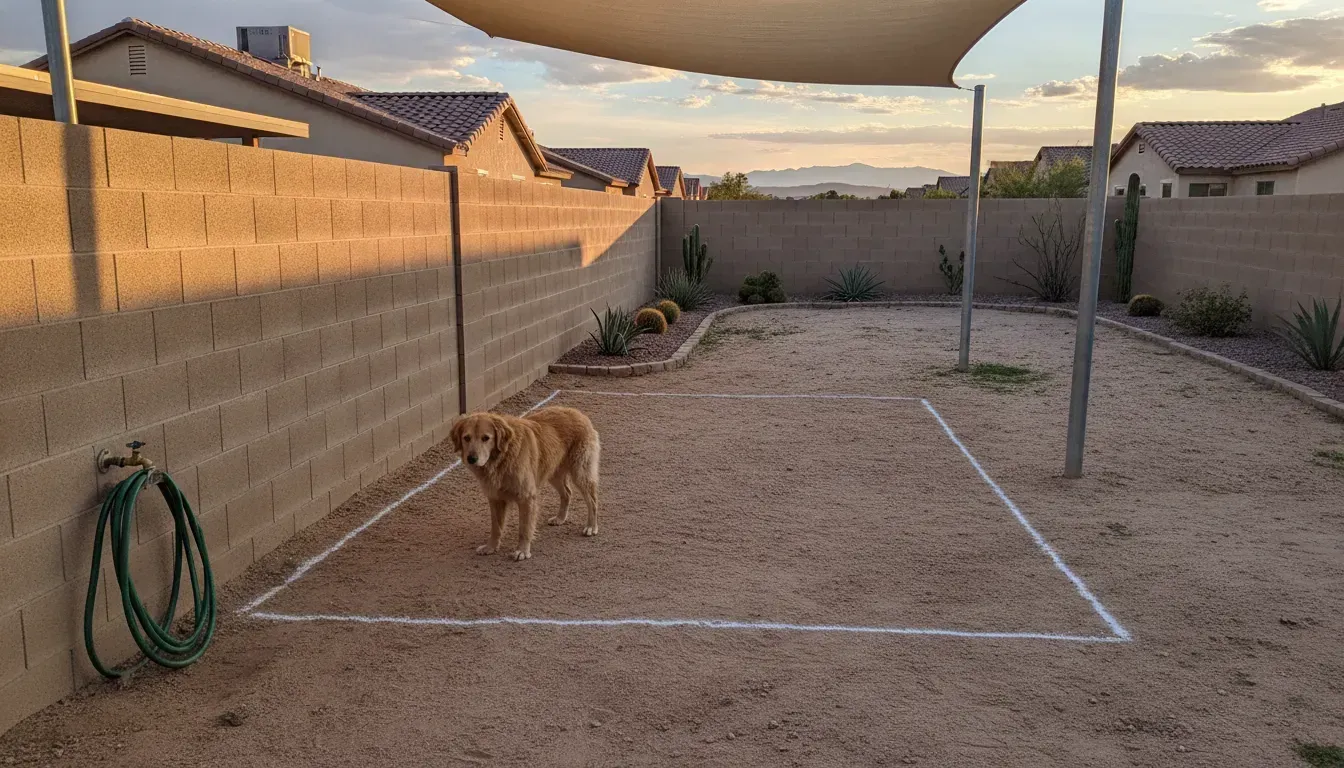
If several days or weeks of waste have collected, a normal recurring visit may not give your yard the reset it needs. A one-time cleanup is practical when waste has built up, you recently moved into a home, or your usual schedule was interrupted. A1 Pet Maintenance offers a one-time yard cleanup before you decide whether recurring visits are necessary.
The cleanup process is designed to address the current condition of the yard first. A technician can assess the space, collect the accumulated waste, and remove it from the property. The service is not a substitute for choosing a workable ongoing frequency, but it can put the yard back in a manageable condition.
- Schedule an initial assessment. Share that waste has accumulated and describe the yard, the number of dogs, and how heavily the space is used. The technician can inspect the yard before beginning the cleanup.
- Complete the full collection. During the visit, the technician performs a complete yard inspection and collects the waste that has accumulated throughout the service area.
- Double-bag and haul away the waste. Collected waste is double-bagged, hauled away, and disposed of through city sanitation. This keeps the removal process focused on clearing the property rather than leaving filled bags for the homeowner to manage.
- Choose the follow-up schedule. Once the yard is reset, consider how quickly waste returns. Weekly service is A1's most popular recurring option. Twice-weekly or custom service may make more sense for more dogs, frequent yard use, visible accumulation, or recurring odor.
A one-time visit can also reveal which frequency is realistic. If the yard remains manageable between visits, weekly service may be a sensible starting point. If waste accumulates quickly, a higher-frequency schedule can reduce the time it sits in the yard. The answer depends on dog count, yard use, heat, odor, and the condition of the space.
Does Artificial Grass Change Your Cleanup Routine?
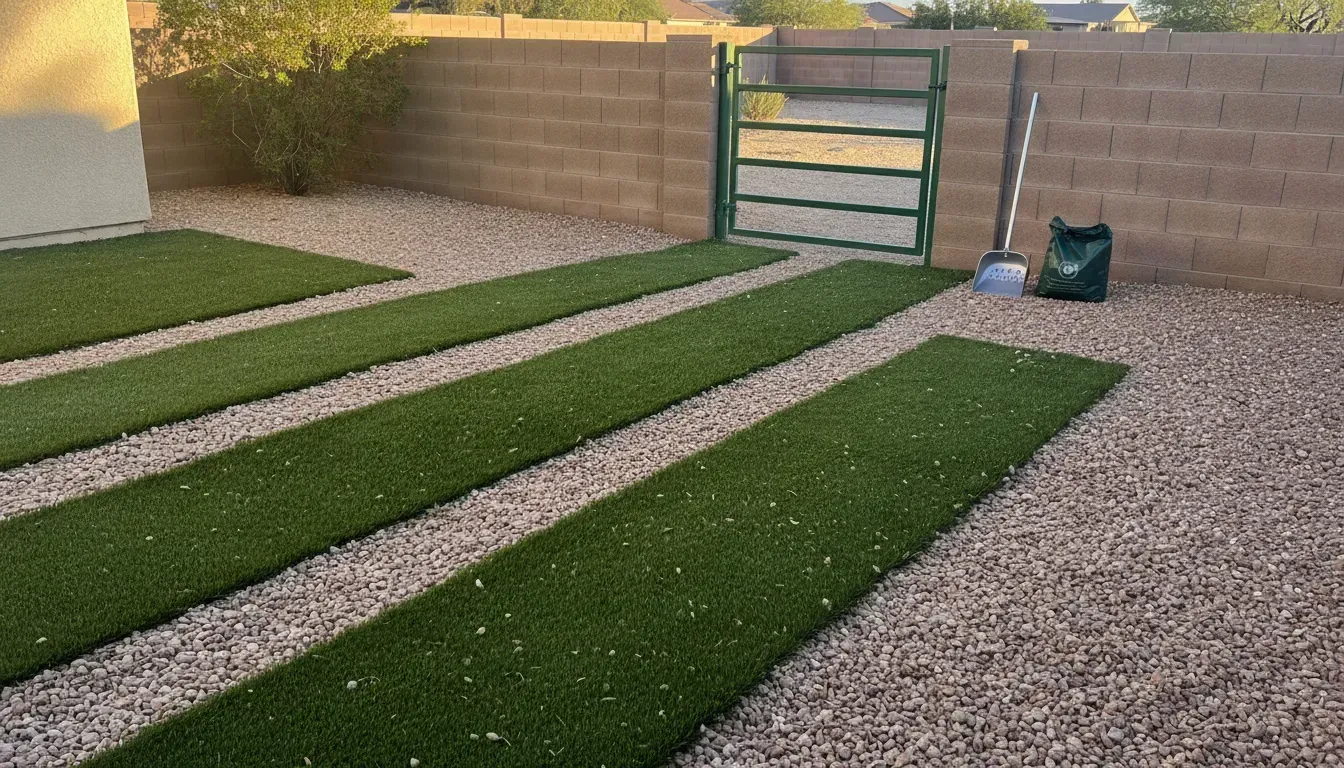
Artificial grass can make a yard easier to use, but it does not make pet waste disappear. Dog poop can remain on the surface until it is removed, while urine may move into the turf fibers and base below. Over time, the combination of waste, urine, leaves, dust, and other debris can create a cleanup routine that requires more than a quick visual pickup.
Why turf may need more than regular scooping
On natural grass, some moisture and organic material may be absorbed into the soil. Artificial turf has a different structure. Waste left in place can contribute to visible buildup, and debris can collect between the blades. Urine odor can also become trapped in the turf fibers, especially when the area receives frequent use and is not thoroughly rinsed.
This does not mean every artificial-grass yard needs the same schedule. Start with consistent waste removal, then pay attention to the conditions of the turf. If you notice lingering odor, visible debris, organic buildup, or areas that look difficult to keep fresh, regular scooping may not be enough. These signs suggest that the turf needs a deeper cleaning step in addition to the normal pickup routine.
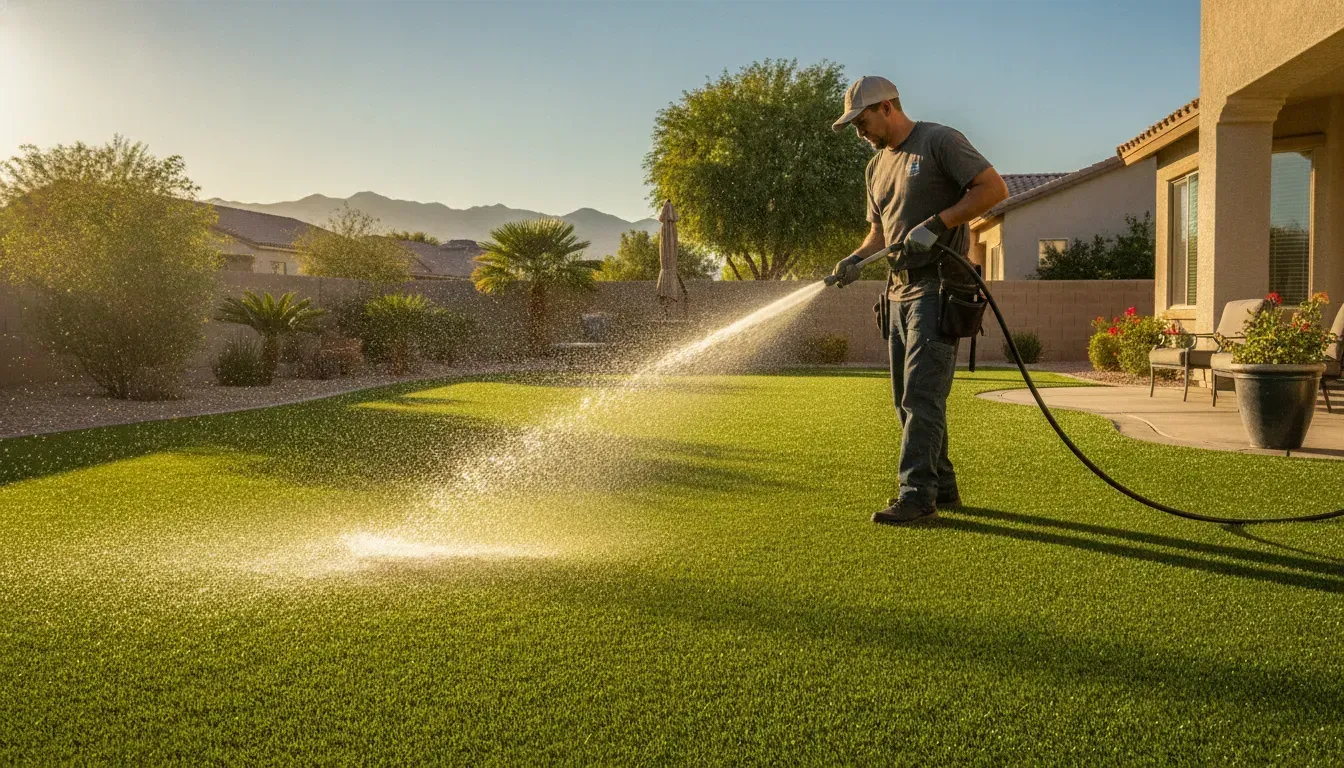
A1's artificial grass cleaning service addresses pet waste buildup, debris, organic buildup, and bacteria accumulation. The documented process includes waste removal and debris clearing, along with enzyme-based deodorizing and deep rinsing or agitation. You can learn more about artificial grass cleaning and odor treatment before deciding whether your yard needs that added service.
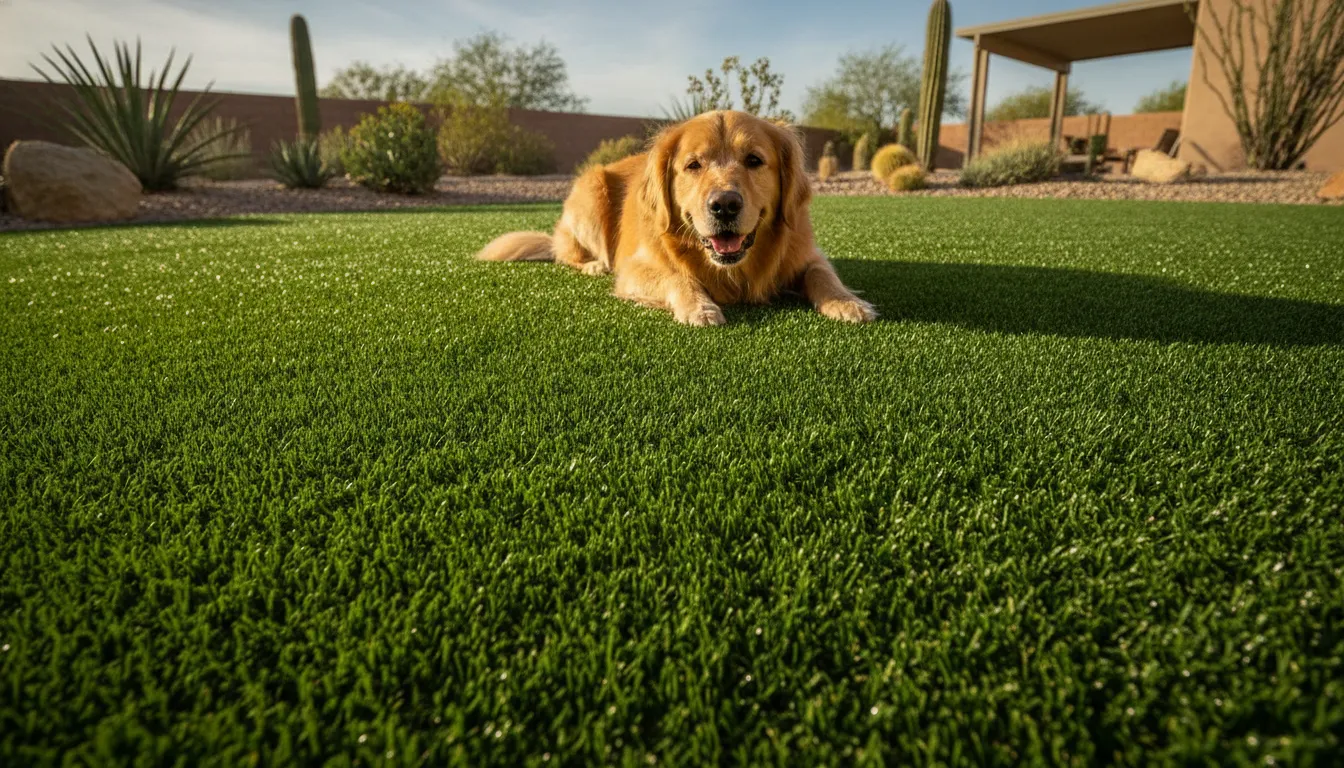 For Tucson homeowners, yard use and heat can make an existing odor or accumulation problem more noticeable. A household with several dogs, frequent outdoor activity, or artificial turf around a play area may need to inspect the surface more often than a lightly used yard. The practical goal is to keep waste from accumulating and address odor or debris before the turf becomes difficult to enjoy.
Artificial grass changes the type of maintenance your yard needs, not the basic need for dependable cleanup. The FAQ below addresses common questions about timing, yard conditions, and choosing a schedule that fits your Tucson household.
Call A1 Pet Maintenance at (702) 521-2624 Today
Frequently Asked Questions
How often should dog poop be cleaned up in Tucson?
Daily pickup is a practical choice when your household can manage it. For professional service, weekly cleanup is A1's most popular recurring option. Twice-weekly or a custom schedule may make more sense when you have several dogs, use the yard often, notice odor, or see waste accumulating.
Are you supposed to pick up dog poop in your backyard?
Yes. A backyard should be included in your regular cleanup routine, especially when dogs and people use the space. Tucson's Parks and Recreation guidance also emphasizes cleaning up after dogs in public settings. A consistent home schedule helps keep waste from building up between visits.
What if waste has already accumulated in my yard?
Start with a one-time cleanup rather than trying to fold a large buildup into a normal visit. A1 offers one-time cleanups for accumulated waste, then can help you choose a recurring schedule based on your dog count, yard use, heat, odor, and sanitation needs.
Does artificial grass need a different cleanup routine?
It can. Beyond removing solid waste, artificial turf may need attention for urine odor trapped in the fibers, debris, organic buildup, and bacteria accumulation. A1's artificial grass service includes waste and debris removal, enzyme-based deodorizing, and deep rinsing or agitation.
How much does dog poop cleanup cost in Tucson?
There is no single price for every yard. One-time cleanup cost varies with yard size and the amount of accumulated waste, while recurring service depends on the schedule and property needs. Contact A1 for a current recommendation based on your yard.
Ready to Choose a Tucson Dog Waste Cleanup Schedule?
The right service frequency can make yard care easier while keeping dog waste from becoming an ongoing chore. A1 Pet Maintenance can help you discuss a Tucson cleanup schedule based on your household, dogs, and yard use. Call A1 Pet Maintenance at (702) 521-2624 to talk through your options and get started with a practical routine.