Artificial Turf Bacteria Germs Dog Waste Las Vegas
This is a subtitle for your new post

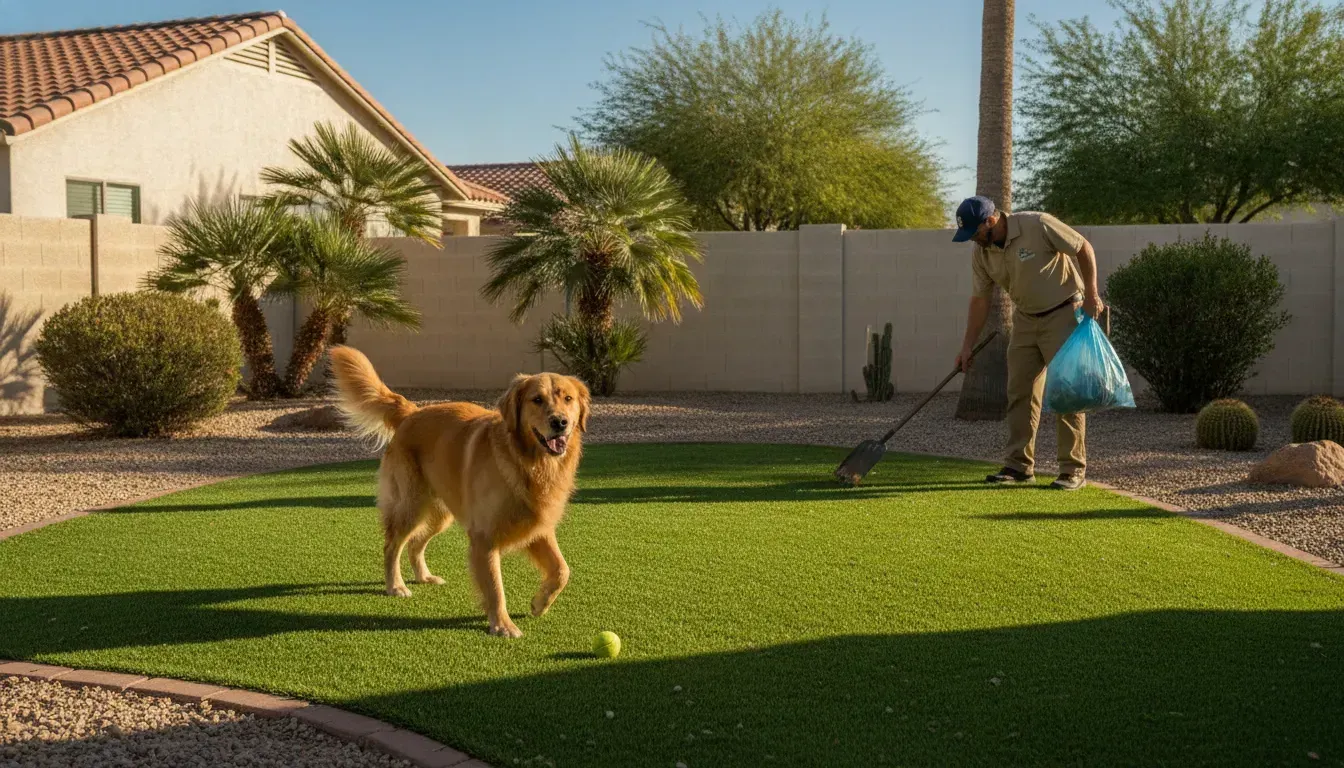
Artificial turf can look clean while small amounts of pet waste residue remain in the fibers or infill below. In a hot Las Vegas yard, that hidden organic matter deserves practical attention, especially when children and pets share the space.
Artificial turf bacteria germs dog waste las vegas concerns are best managed with prompt waste removal, rinsing, and periodic professional sanitation that reaches beyond the surface.
Daily cleanup is the first step, but it does not always remove material trapped near the turf backing. A deeper artificial turf cleaning service can help keep the yard fresher and more hygienic without relying on fear-based claims. The first question is why this buildup occurs in the first place.
Call A1 Pet Maintenance Today.
Why Do Bacteria and Germs From Dog Waste Build Up on Artificial Turf in Las Vegas?
Artificial turf does not create germs by itself. The problem starts when dog waste leaves behind microscopic organic residue that settles between the blades, into the backing, or within the infill. In a Las Vegas yard, repeated pet use can turn those small traces into a sanitation concern, especially when cleanup focuses only on what is visible.
Research on artificial turf has identified bacteria associated with the canine gut, confirming that recurring exposure to pet waste can shape the surface's microbial community. Synthetic turf can also retain organic matter differently than natural soil, so contamination may remain in places a quick visual inspection cannot find. The published turf-microbiology research helps explain why regular surface care matters.
Which bacteria and parasites can dog waste leave behind?
Fecal contamination may include common gastrointestinal bacteria such as E. coli and Salmonella. It can also involve organisms that are harder to recognize by smell or appearance. The CDC explains that infected animal feces can spread Giardia to people or other animals, even when the animal looks healthy. Anything that contacts infected poop can become contaminated, including outdoor surfaces, toys, shoes, and paws. Dogs may also pick up Giardia after contact with a contaminated surface and then licking their bodies.
MRSA is another reason to take contaminated synthetic surfaces seriously. A study published in the National Library of Medicine found that MRSA can survive on synthetic turf systems. Making the surface a potential route for bacterial transmission under the right conditions. This does not mean every artificial lawn is hazardous. It means that residue should not be allowed to accumulate.
Dog feces may also contain roundworm eggs associated with toxocariasis. According to the CDC, people can become infected by accidentally swallowing infectious Toxocara eggs. Good hand hygiene, prompt waste removal, and keeping children from putting dirty hands in their mouths are practical safeguards.
For Las Vegas homeowners, the goal is consistent hygiene rather than alarm. Remove solid waste promptly, rinse affected areas, and use a thorough artificial turf cleaning plan that addresses residue below the surface as well as what is visible.
How Does Las Vegas Heat Speed Up Bacterial Growth in Artificial Turf?
Las Vegas heat does not create bacteria by itself, but it can intensify the conditions that allow bacteria to multiply. When pet waste residue, moisture, and elevated temperatures remain together in an artificial turf system, the combination creates a favorable environment for bacterial colonization. Organic debris can include microscopic traces left after solid waste is removed, along with shed material, dirt, and other residue carried into the turf by normal yard use.
High temperatures also accelerate the decomposition of that organic matter. As residue breaks down, it can produce stronger ammonia-like odors and provide an ongoing food source for microbes. That is why a yard may smell worse during a hot afternoon even when no fresh waste is visible on the surface. Odor is not a laboratory test for contamination, but a persistent smell is a practical sign that organic material may be trapped below the visible fibers.
Why moisture still matters in a desert climate
Southern Nevada is dry overall, yet artificial turf can hold localized moisture after irrigation, rinsing, pet urine, or cleaning. The backing is designed to drain, but accumulated waste and organic matter can slow that drainage. When residue blocks normal flow, damp pockets can remain in the infill or against the backing. Those pockets reduce the benefit of the desert air and create a setting where moisture-dependent microbial growth can continue.
Routine care helps interrupt this cycle. Remove solid waste promptly, rinse the affected area, and avoid leaving heavy organic buildup in the infill. For a broader maintenance plan, review our artificial grass cleaning guidance. It is also important to dry the turf effectively after deeper cleaning. Las Vegas professionals may use rapid-drying treatments designed for local heat and moisture conditions, helping prevent moisture-borne growth from settling back into the infill.
Heat-aware sanitation is therefore more than an odor-control step. It removes the residue that feeds microbial activity, supports drainage, and reduces the time moisture remains available for growth.
What Does Professional Turf Cleaning Remove That Hosing Down Leaves Behind?
Hosing is useful routine maintenance, especially after solid waste is removed. A thorough rinse dilutes some residue on the surface. But water flowing across the turf does not necessarily lift the organic material that settles between fibers or inside the infill. Pet-waste residue trapped in the turf matrix can provide a food source for microbes. While bacteria may colonize the deeper infill layer made from materials such as sand or crumb rubber. Sources: turf sanitation research.
That difference matters in a Las Vegas yard. Surface rinsing can make turf look cleaner without addressing the residue that contributes to recurring odors and bacterial buildup. Standard household cleaners may also remain too shallow to reach bacteria deep in the infill. Professional cleaning uses equipment and treatments designed to work below the visible surface, rather than simply moving contaminated water across the lawn.
Hosing versus professional deep cleaning for artificial turfCleaning factorHosing or surface rinsingProfessional deep cleaningWhat it removesLoose debris and some fresh surface residue.Trapped organic residue, debris, and contaminated material loosened from the turf system.Reaches infill?Limited; water may pass over or through without fully flushing the layer.Yes; infill flushing targets material held below the fibers.Bacteria controlDilutes contamination but does not reliably reduce deep bacterial loads.Pressure washing paired with antimicrobial treatment can significantly lower bacterial counts.Odor controlMay provide short-term relief when residue is only on the surface.Addresses deeper odor sources by extracting residue and treating the affected area.Cleaning depthPrimarily surface level.Fibers, infill, and turf backing, depending on the equipment and service.
Professional equipment can use high-pressure extraction to dislodge debris from the turf backing. Flushing the infill helps remove trapped pathogens and maintain more oxygenated conditions that are less favorable to bacterial growth. Antimicrobial treatments add another layer of control, while pet-safe products protect both the turf fibers and the animals using the yard. Learn more about professional turf cleaners when routine rinsing no longer keeps odors or hygiene concerns under control.
How Often Should Las Vegas Turf Be Professionally Sanitized?
Professional sanitization works best as part of a routine, not as a replacement for everyday cleanup. Pet owners should remove solid waste as soon as possible, then rinse the affected area with water. Immediate removal is the first line of defense, while rinsing helps dilute residue that may remain on the turf surface. This simple habit limits the material available for bacteria and helps keep odors from building between service visits.
For most Las Vegas homes, schedule a professional deep sanitization every six to 12 months. The right interval depends mainly on pet usage. A yard used by one small dog may need less frequent service than a shared run used by several large dogs. Increase the frequency if waste accumulates quickly, pets spend much of the day on the turf. Odors return soon after rinsing, or the infill has not been professionally cleaned in more than a year. This six-to-12-month range is also consistent with published turf-sanitization guidance for properties with different levels of pet use.
A practical maintenance schedule
- After each accident: Remove solid waste promptly and rinse the area to dilute remaining residue.
- Every week: Walk the yard and check high-use areas, corners, and spots where waste or organic debris may be missed.
- Every six to 12 months: Arrange professional deep sanitization, adjusting the schedule for the number of pets and how heavily the turf is used.
- Between professional visits: Follow the recommended care plan and use approved products rather than harsh household cleaners that may affect turf components.
This dual approach, combining owner-led pet waste removal with periodic professional deep cleaning, is more dependable than relying on either step alone. Routine rinsing addresses fresh surface residue, while deep service can reach contamination that has moved into the turf system. Depending on the treatment selected, an antimicrobial application may also leave residual protection that helps inhibit new bacterial growth for weeks after service. Review A1 Pet Maintenance's artificial grass cleaning guidance for additional upkeep practices, and contact a professional sooner if persistent odor or visibly soiled infill remains after normal rinsing.
How Does A1 Pet Maintenance's Cleaning Process Target Turf Bacteria?
A1 Pet Maintenance approaches artificial turf sanitation as more than a surface rinse. Pet waste residue can settle between turf blades, move into the infill, and collect near the backing where ordinary watering may not reach it. Our process is designed to address those layers while protecting the turf and the pets who use the yard.
Pet-safe sanitation reaches the problem area
We begin with a pet-safe sanitizer selected for effective hygiene without unnecessarily damaging turf fibers. This balance matters in a yard used every day. The goal is to reduce organic residue and bacterial contamination while keeping the surface suitable for dogs and people. Research on synthetic turf cleaning identifies pet-safe sanitizing agents as an important part of maintaining hygiene and turf longevity. Learn more about the sanitation approach.
Pressure washing and extraction remove trapped material
Next, high-pressure washing helps dislodge contamination from the turf surface and fibers. We also flush the infill, where bacteria and residue can colonize deeper in layers such as sand or crumb rubber. Proper infill flushing helps remove trapped pathogens and supports more aerobic conditions that are less favorable to bacterial growth.
High-pressure extraction adds another important step by pulling loosened debris and contaminated water away from the turf backing. This is different from simply spraying the top of the lawn. When organic matter accumulates near the backing, it can slow drainage and leave damp conditions that encourage buildup. Treating the surface, infill, and backing together produces a more thorough clean.
Desert-aware drying supports lasting results
Las Vegas heat changes how a turf yard should be maintained. A1 Pet Maintenance uses rapid-drying treatments suited to local desert conditions, helping limit the moisture that can remain in the infill after sanitation. We tailor the service to the yard, pet usage, and local environmental factors rather than relying on a one-size-fits-all schedule.
With more than 26 years of experience serving Las Vegas, A1 Pet Maintenance understands the practical demands of keeping pet yards clean in Southern Nevada. Routine waste removal still matters between visits, but professional deep cleaning helps address the residue that daily upkeep cannot reach.
Call A1 Pet Maintenance today at (702) 521-2624 to schedule professional turf sanitation.
Frequently Asked Questions
Does artificial turf smell like dog urine in the Las Vegas heat?
It can. High temperatures speed the breakdown of organic residue trapped in turf fibers and infill, which can intensify ammonia-like odors. Heat, moisture, and leftover waste also create conditions that support bacterial growth. Removing solid waste promptly, rinsing the area, and scheduling periodic deep cleaning can help control the odor at its source.
What health risks are associated with bacteria on artificial grass?
Pet waste can leave bacteria, parasites, and other germs where dogs, children, or adults may contact the turf. The CDC explains that infected animal feces can spread Giardia germs even when the animal looks healthy, and infected dog feces can transmit roundworm eggs associated with toxocariasis. Good hand hygiene, prompt waste removal, and regular sanitation reduce exposure.
How often should professional cleaning be performed on artificial turf?
There is no single schedule for every yard. Consider professional sanitation every six to 12 months, then adjust for the number of pets, yard use, odor, drainage, and the amount of waste. Between visits, remove solid waste immediately and rinse affected areas. This combination of routine care and periodic deep cleaning provides more consistent hygiene.
Can I remove pet odors from artificial turf at home?
Basic home care can reduce fresh residue and surface odor, but it may not reach bacteria and organic matter embedded in the infill or near the backing. Use products labeled pet-safe, avoid harsh chemicals that may damage turf, and rinse after removal. Persistent odor is a reason to have the turf inspected and professionally cleaned.
Why is professional pet turf sanitation necessary?
Professional cleaning reaches below the surface with high-pressure extraction, infill flushing, and appropriate pet-safe antimicrobial treatment. These steps remove trapped debris, dilute residues, and help maintain drainage conditions that discourage bacterial buildup. In Las Vegas, a drying-focused process is also useful because it limits lingering moisture in the infill.
Ready to Keep Your Las Vegas Turf Hygienic?
Professional sanitation can help remove residue and refresh the turf areas your dogs use every day. For practical guidance tailored to your Southern Nevada yard, call A1 Pet Maintenance at (702) 521-2624 to schedule professional artificial turf sanitation.