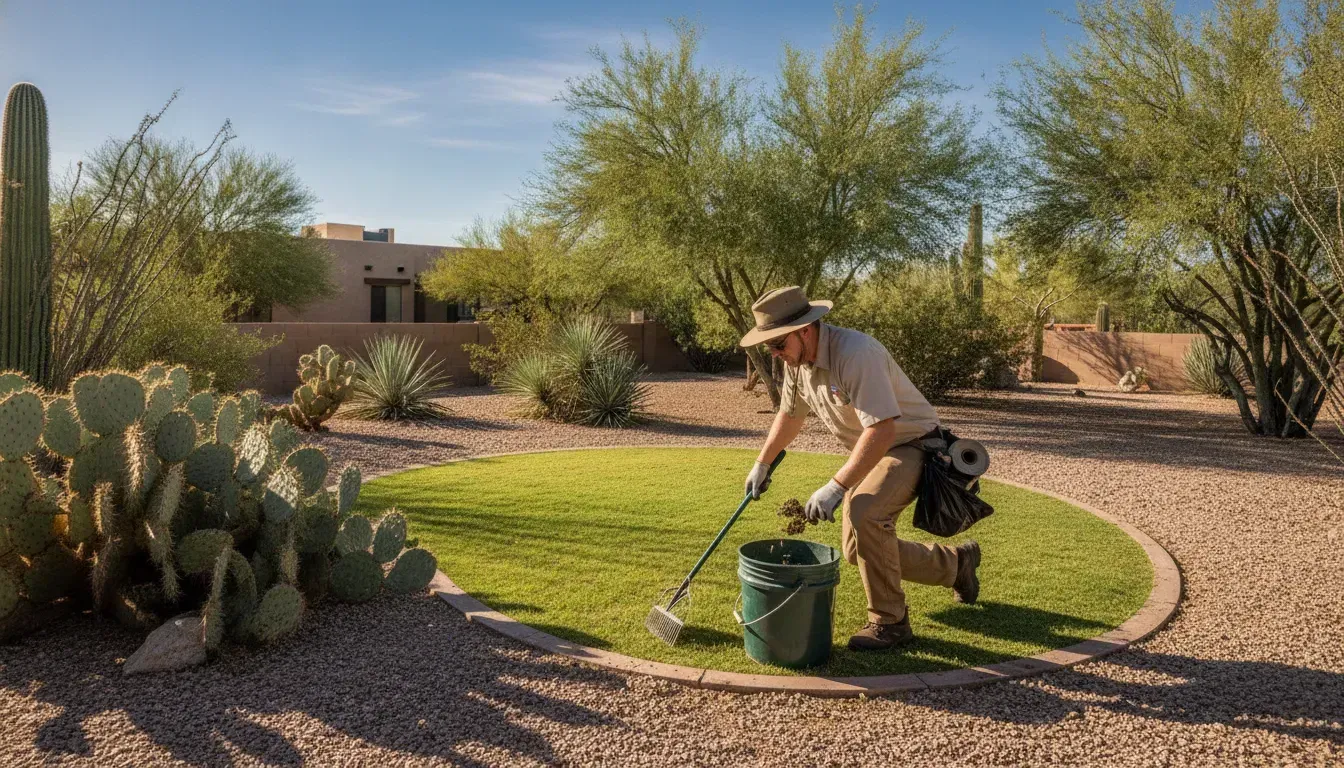
Municipal Pet Waste Removal Las Vegas: Keeping Parks Clean
This is a subtitle for your new post

Public parks need more than occasional litter pickup. Dog waste can remain along paths, lawns, and recreation areas until staff, contractors, or responsible visitors remove it. Creating sanitation concerns and increasing the chance that stormwater carries pollutants into local waterways.
Municipal pet waste removal las vegas services help cities, counties, and public agencies keep parks cleaner through scheduled waste pickup, proper bagging, disposal, pet-waste stations, and clear visitor education. The EPA identifies pet waste as a leading source of nutrient and bacteria pollution in urban streams and waterways. So a consistent program supports both public-space cleanliness and broader stormwater goals.
Call (702) 521-2624 today to schedule municipal pet waste removal.
For agencies evaluating service coverage, staffing, and contractor qualifications, A1 Pet Maintenance offers a Commercial Pet Waste Removal Las Vegas Manager's Guide as a practical starting point. First, it helps to define what this work includes and how it fits into municipal park maintenance.
What Is Municipal Pet Waste Removal in Las Vegas?
Municipal pet waste removal in Las Vegas is the organized management of dog waste in public parks, recreation areas, trails, and other city or county facilities. The work may be handled by municipal maintenance crews, parks personnel, or a contracted commercial provider assigned to service public spaces. In each case, the goal is the same: keep shared areas sanitary, usable, and easier for residents to enjoy.
This responsibility extends beyond picking up visible waste. A complete program can include routine inspections, removal from turf and walkways, emptying or servicing waste receptacles, and coordinating disposal through approved sanitation channels. It can also involve maintaining the infrastructure that helps visitors do the right thing, including bag stations and permanent receptacles.
Why do municipalities contract pet waste removal?
Pet owners live in virtually every community, which makes pet waste management a challenge for most municipalities. A park can receive heavy daily use, and even a small amount of waste becomes a recurring maintenance issue when many residents bring dogs to the same area. City and county departments often have broader responsibilities competing for the same staff time. Contracting a qualified provider gives the agency a defined service schedule and a dedicated team for this specialized sanitation task.
Professional coverage can also create more consistent accountability. A provider can work from fixed routes, document recurring service, identify problem areas, and alert the municipality when a station needs attention or a location requires additional visits. That consistency matters in high-use parks, where a missed service can quickly affect the visitor experience.
What role do signs and waste stations play?
Removal is only one part of a successful municipal program. The Environmental Protection Agency identifies educational signs in areas where people bring pets, such as public parks, as one way municipalities can address knowledge gaps. Clear reminders help connect leash and cleanup expectations with the condition of the shared space.
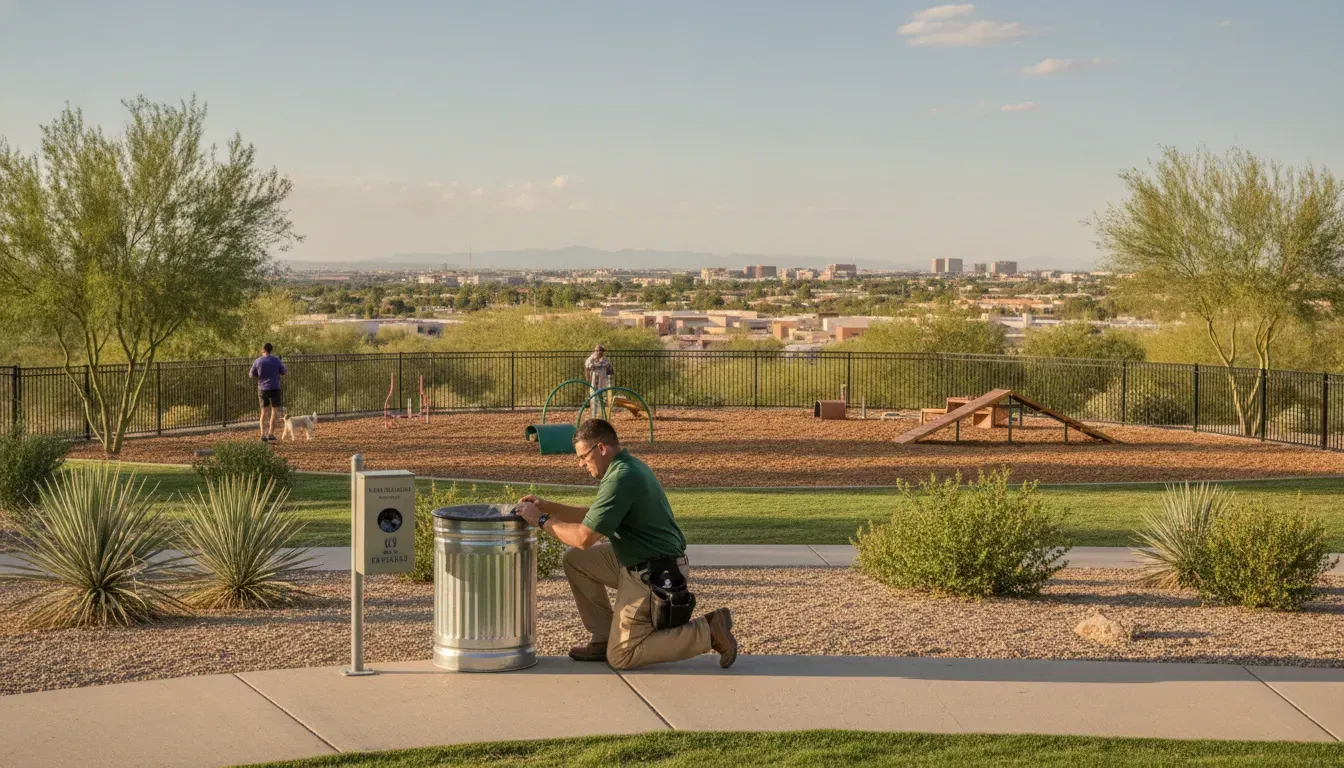
Access to disposal supplies matters just as much. Municipal efforts may include permanent structures such as pet waste bag stations and trash receptacles. Without an available place to discard a filled bag, visitors may leave it beside a path or on the ground even when they intended to clean up. Signs, bags, and receptacles support responsible behavior, while scheduled service keeps the system working after the waste is deposited.
For agencies evaluating coverage, the right approach depends on park size, visitor volume, existing staff, and the number and location of stations. The result should be a practical program that combines public education, convenient disposal, and dependable removal rather than treating any one measure as a complete solution.
How Government Facilities Manage Pet Waste in Public Spaces
Public parks, recreation areas, trails, and civic grounds need more than an occasional cleanup. They need a system that helps visitors do the right thing, makes disposal convenient, and keeps walkways usable between scheduled maintenance visits. For agencies evaluating municipal pet waste removal in Las Vegas, that system usually combines communication, infrastructure, and dependable field service.
Signs make the expectation clear
Educational signs are one of the simplest ways to address pet waste in areas where people bring their dogs. Clear reminders can explain that owners are responsible for picking up after their pets, show where waste belongs, and connect everyday cleanup with community cleanliness. The U.S. Environmental Protection Agency identifies signs and other educational materials in pet-use areas, including public parks, as tools municipalities can use to reduce knowledge gaps. EPA guidance on pet waste management also describes education, local ordinances, and infrastructure as complementary parts of an effective program.
Stations and receptacles remove a practical barrier
A sign cannot solve a disposal problem if a visitor has no bag or no nearby place to throw it away. Permanent pet waste bag stations and covered trash receptacles give dog owners the supplies and access they need while moving through a park. The EPA specifically includes permanent structures, such as pet waste stations and trash receptacles, among possible elements of a municipal education program.
This detail matters because behavior can change with the environment. The agency notes that an owner may clean up properly at home but leave a bag in a public park when bags or receptacles are unavailable. Agencies can reduce that failure point by placing stations near entrances, high-use paths, dog-friendly areas, and other locations identified through staff observations or visitor feedback. A dedicated pet waste station service can help facilities keep those supplies and receptacles part of an ongoing maintenance plan rather than treating installation as a one-time project.
Routine service supports the public program
Education and stations work best when walkways and grounds are inspected and serviced on a consistent schedule. Contracted crews can remove waste from high-traffic areas, check around stations, identify overflowing receptacles, and report maintenance concerns to the facility contact. The schedule may be adjusted for park size, visitor volume, seasonal activity, and the number of pet-use areas. In the Las Vegas Valley, residents also play an important role in stormwater quality. Pet waste left outdoors can contribute to stormwater pollution if it is not cleaned up, so facility operations and visitor participation reinforce each other. Las Vegas Valley stormwater guidance encourages proper cleanup and storage of materials that can pollute runoff.
What Makes A1 Pet Maintenance a Vetted Government Service Provider?
Government agencies need more than a provider who can remove visible waste. They need a service partner with a documented record, dependable operating practices, and a sanitation process that fits public facilities. A1 Pet Maintenance brings that level of experience to municipal pet waste removal in Las Vegas and throughout Southern Nevada.
Founded in 1998, A1 is a 26+ year veteran of pet waste removal and property maintenance. The company has government contract validation with the Cities of Las Vegas and Henderson, as well as Clark County. That validation gives agencies a practical starting point when evaluating a contractor for parks, recreation areas, and other community facilities.
Long-term performance is another useful measure. A1 reports an average commercial client retention of 18.2 years and currently serves more than 400 residential and commercial properties each week. Those figures do not replace an agency's procurement and verification process, but they show the operational consistency required for recurring public-space maintenance.
Evaluation areaWhat agencies should look forA1 Pet MaintenanceGovernment experienceEvidence of work or contract validation with public entitiesValidation with Las Vegas, Henderson, and Clark CountyOperating historyA sustained record serving properties and facilitiesFounded in 1998, with 26+ years in the fieldSanitation and disposalComplete removal, secure bagging, and an appropriate disposal routeDouble-bagging for sanitation and disposal through city sanitation servicesRetention and capacityProof of dependable recurring service at meaningful volume18.2-year average commercial retention and 400+ properties weekly
A1's process covers complete waste removal rather than leaving cleanup to park staff or facility teams. Waste is double-bagged for sanitation, then disposed of through city sanitation services. That clear handoff supports cleaner routes and a more consistent standard across busy public areas.
For a closer look at planning considerations, service expectations, and questions managers should ask before choosing a contractor, read the Commercial Pet Waste Removal Las Vegas Manager's Guide. Agencies can use the same evaluation framework when comparing municipal providers: verify public-sector experience. Ask how waste is handled, and confirm that the provider can sustain the required service schedule.
Why Municipal Pet Waste Compliance Standards Matter
Municipal pet waste standards are not simply about keeping a park looking tidy. They help protect visitors, pets, local waterways, and the public systems responsible for managing stormwater. With pet owners in virtually every community, the Environmental Protection Agency identifies pet waste management as a continuing challenge for municipalities. Clear rules, accessible disposal infrastructure, and dependable cleanup give parks departments a practical way to address that challenge.
Pet waste can affect public health
Pet waste is not harmless fertilizer. It can carry pathogens, and when waste reaches waterbodies, it may make people and animals sick. The EPA also identifies pet waste as a leading source of nutrient and bacteria pollution in urban streams and waterways. That matters in public parks, where children, families, athletes, and dogs share paths, lawns, and gathering areas. A visible or recurring sanitation problem can also reduce public confidence in the facility, even when the underlying issue began with only a few missed deposits.
For that reason, municipal programs commonly combine education, local ordinances, and physical infrastructure. Signs remind visitors to pick up after their pets, while bag stations and receptacles make compliance more convenient. The EPA notes that a lack of available receptacles can lead people to leave filled bags in a park. So providing the right equipment is part of the solution, not an optional amenity.
Runoff connects park maintenance to regional water quality
Las Vegas conditions make prompt removal especially important. Desert soils have poor water infiltration rates, so stormwater does not readily soak into the ground. Instead, runoff can move downhill while collecting pollutants. In the Las Vegas Valley, that runoff can be delivered through water conduits to the Las Vegas Wash and Lake Mead. The Clark County guide to controlling polluted runoff explains this local pathway in detail.
Improperly managed pet waste can also promote weed and algae growth in waterbodies and damage the health of surrounding ecosystems. That is why EPA pet waste management guidance supports a complete municipal approach: enforceable expectations, visitor education, available stations, and routine servicing of public areas. For agencies evaluating commercial pet waste removal in Las Vegas for managers, compliance-focused service helps turn those standards into consistent daily park conditions.
How Pet Waste Removal Works for Las Vegas Parks and Recreation Areas
Effective municipal pet waste removal in Las Vegas depends on a repeatable process, not occasional cleanup after a problem is reported. Parks, trails, sports fields, and recreation areas need predictable attention because visitors and their pets use these spaces every day. A professional service can coordinate route scheduling, sanitation practices, collection, and disposal so public spaces remain cleaner without placing the entire burden on parks staff.
The workflow below shows how a typical service program can support consistent park maintenance while complementing signs, bag stations, and receptacles already placed throughout a property.
- Review the site and define service areas. The service begins with a practical review of the park or recreation area. High-traffic paths, open turf, dog-friendly zones, picnic areas, entrances, and locations near waste stations are identified. The agency and provider can then establish the areas to be serviced, access expectations, safety considerations, and the appropriate visit frequency.
- Build a fixed, optimized route. A1 uses fixed and optimized routes designed for high-density consistency. Rather than treating each visit as a new request, the route establishes a dependable schedule for the assigned public spaces. That consistency helps reduce missed areas, supports easier oversight, and gives parks teams a clear maintenance rhythm.
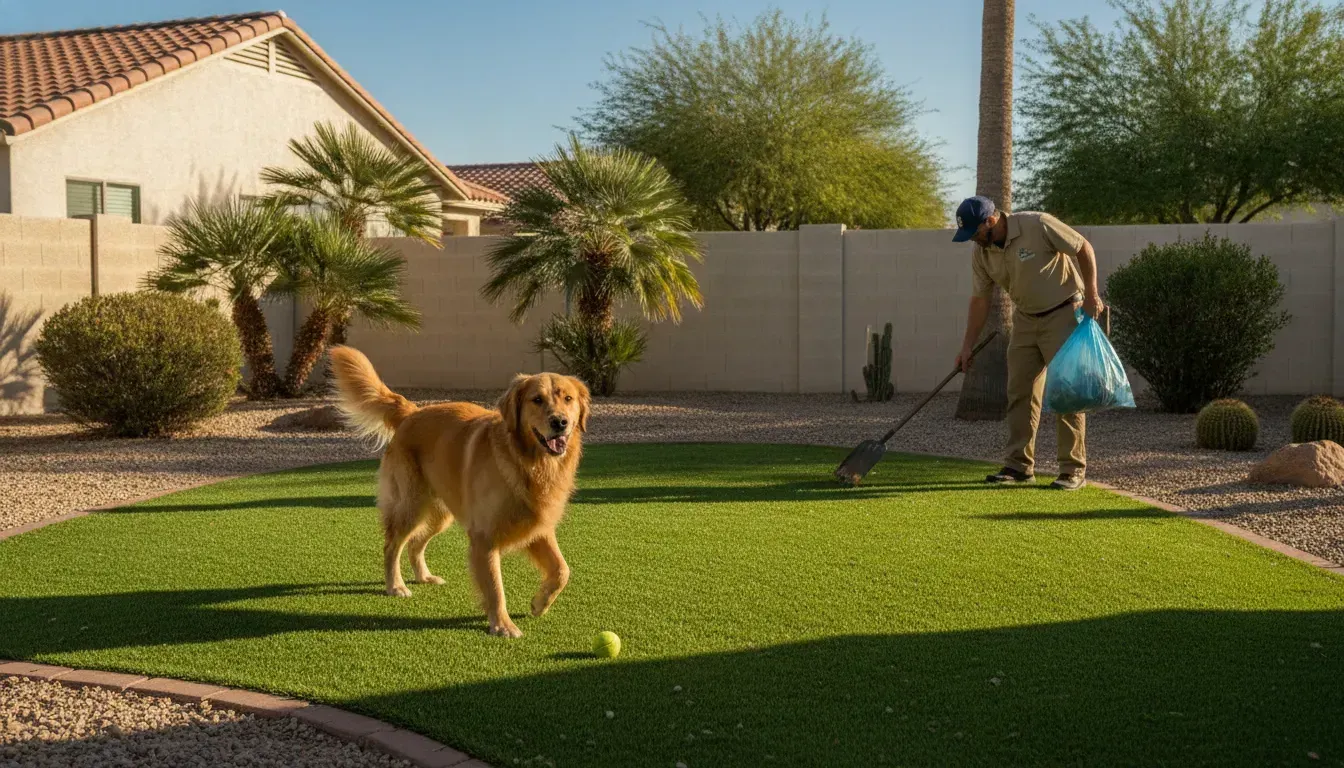
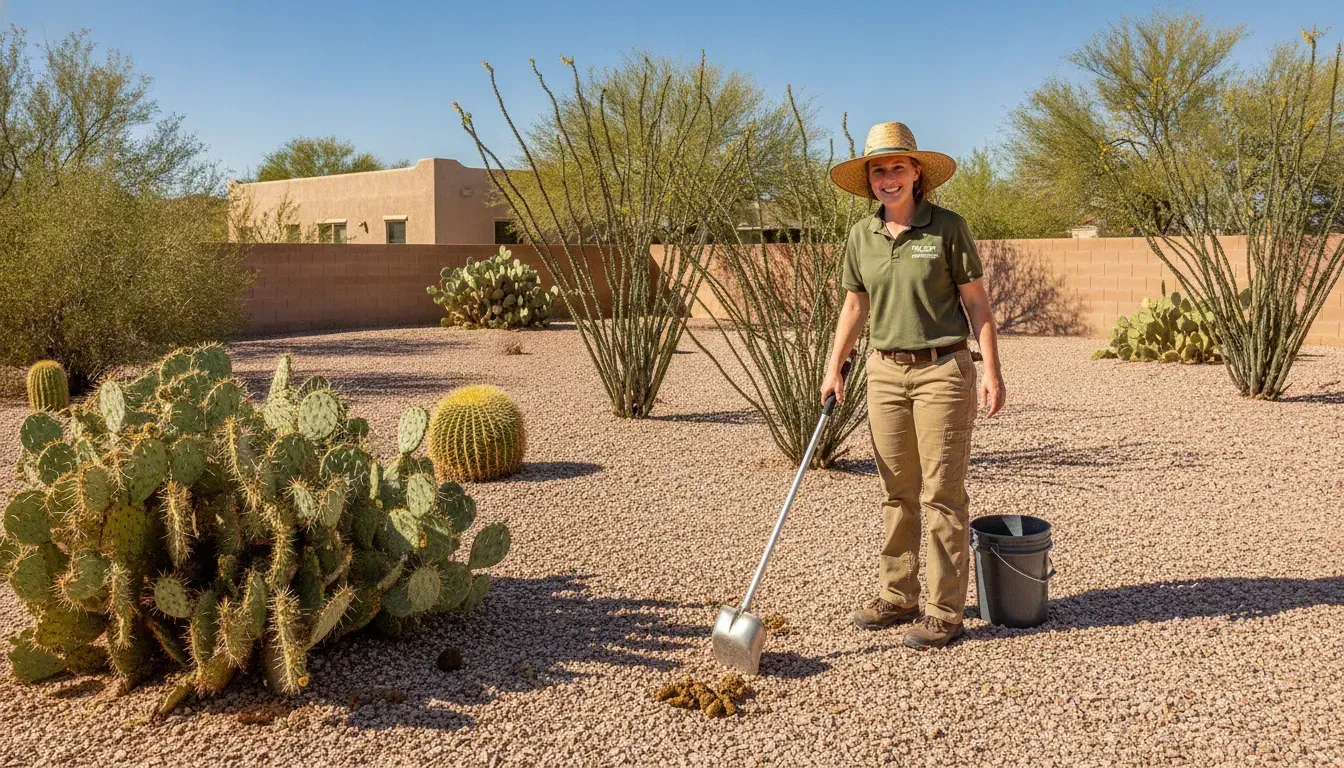
- Complete the waste removal service. During each visit, the crew checks the designated service areas and removes visible pet waste. Complete removal matters in public settings because one overlooked deposit can affect visitor experience, create an avoidable sanitation concern, or be carried into stormwater during runoff. The work is performed with attention to paths, landscaping edges, turf, and other areas where waste may be easy to miss.
- Double-bag waste for sanitation. Collected waste is double-bagged as part of A1's sanitation process. This provides an additional layer of containment during handling and transport, helping keep the collection process cleaner for workers, park personnel, and the public.
- Dispose through city sanitation services. After collection, the double-bagged waste is disposed of through city sanitation services. Using an established disposal channel keeps the final step organized and separates professional park maintenance from informal or inconsistent disposal practices.
- Coordinate supporting station maintenance. Waste removal works best when visitors can easily find bags and receptacles. Agencies that need help with those components can review A1's pet waste station service. For broader guidance on maintaining clean shared spaces, see the local pet waste removal standards.
This structured approach gives municipal teams a service they can evaluate over time: defined coverage, consistent routes, complete collection, sanitary handling, and an established disposal path. It also creates a clear foundation for adjusting service areas or frequency as park use changes.
How to Request a Government Service Quote from A1 Pet Maintenance
Requesting a quote for municipal pet waste removal can be straightforward. A1 Pet Maintenance works with government agencies, parks departments, and property managers that need dependable sanitation support for public parks, recreation areas, and other shared facilities. Start by calling A1 to describe the locations, service areas, and maintenance concerns you need addressed. The team can then discuss a practical service approach for your facilities and prepare a quote based on the scope.
A1 brings government contract validation with the Cities of Las Vegas, Henderson, and Clark County. That experience gives agencies a service provider familiar with the expectations surrounding public-facing maintenance, consistent routes, sanitation, and responsible disposal. A1 has also served the Nevada and Arizona markets for more than 26 years. Providing the established operational background agencies and property managers want when selecting a long-term vendor.
What to include when requesting a quote
To help A1 evaluate the work efficiently, be ready to share the names or locations of the parks and facilities. The areas that require routine attention, and any known access or scheduling requirements. You can also explain whether the need involves pet waste removal only, support for pet waste stations, or broader sanitation concerns. A1's standard operations include complete waste removal, double-bagging for sanitation, and disposal through city sanitation services.
A1 uses a flexible, no-contract subscription model with monthly billing. That setup gives agencies and property managers room to begin with an appropriate service scope without committing to a long-term contract before the program has been evaluated. The team can discuss the right arrangement for your facilities and adjust the conversation around actual site needs rather than forcing a one-size-fits-all package.
For a quote tailored to your public spaces, call A1 Pet Maintenance at (702) 521-2624 and speak directly with the team.
Call (702) 521-2624 today to keep your parks clean.
Frequently Asked Questions
Who is responsible for pet waste removal in Las Vegas public parks?
Responsibility can involve the public agency managing the park, its maintenance team, and a contracted service provider. A complete program typically combines routine cleanup with signs, bag stations, receptacles, education, and enforcement. The EPA identifies this combination as a practical municipal approach.
Is pet waste really a stormwater concern in Las Vegas?
Yes. Las Vegas Valley pet waste can become stormwater pollution when it is left outdoors and washed into drainage systems. Desert soils have poor water infiltration, so storm runoff can collect pollutants as it moves downhill toward the Las Vegas Wash and Lake Mead, according to Clark County guidance.
What should a park do if pet waste bags are being left on the ground?
Review whether bags and disposal receptacles are available where visitors need them, then pair better placement with clear signs and regular servicing. The EPA notes that people may leave filled bags in parks when disposal receptacles are not available. Consistent pickup also keeps walkways, turf, and recreation areas ready for public use.
What does a municipal pet waste removal service include?
The scope should be built around the facility, traffic patterns, waste volume, and required service frequency. It may include scheduled patrols, pickup around walkways and recreation areas, servicing of pet waste stations, and documented disposal procedures. A1 Pet Maintenance double-bags collected waste and disposes of it through city sanitation services.
Ready to schedule municipal pet waste removal?
A dependable service plan can help your agency keep public parks and recreation areas cleaner for residents, visitors, and staff. Call A1 Pet Maintenance today to discuss the right approach for your municipal or commercial property.