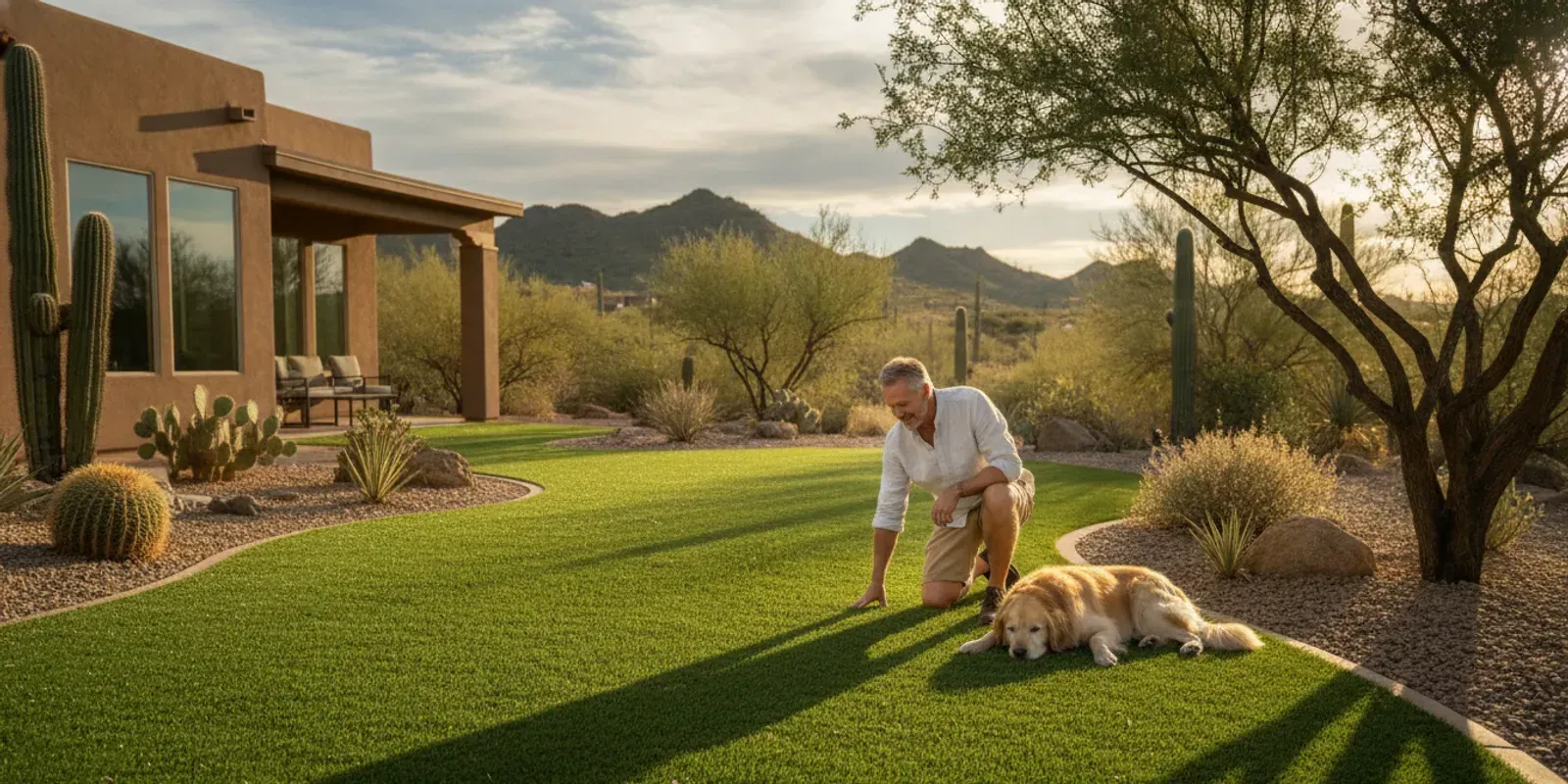
Artificial Turf Cleaning Las Vegas Daycare Plan
Artificial turf cleaning Las Vegas daycares can plan around play groups. Set staff rinses, closed windows, and a quoted infill visit.
For artificial turf cleaning Las Vegas daycares, the need is a facility schedule, not a homeowner rinse. A play yard that hosts rotating groups all day loads urine, hair, and crumbs into the infill faster than a backyard ever will. Staff can keep the surface usable between groups, while a professional visit reaches odor that has already settled under the blades.
A1 Pet Waste Maintenance, established in 1998, serves Las Vegas, Henderson, and Tucson. Its artificial grass cleaning page lists pet daycare and boarding as a fit for turf sanitation.
Request a daycare turf cleaning quote
This guide covers the operator job only. It explains what staff should do between rotations, when a pro visit is worth booking, and what to send so the quote matches the yard. It does not replace a public dog-park cleaner guide, a residential visit checklist, or a solid-waste pickup route. If the yard still needs scooping before anyone talks about sanitation, start with waste removal. Come back to turf cleaning after the surface is clear.
Why artificial turf cleaning Las Vegas daycares need a different plan
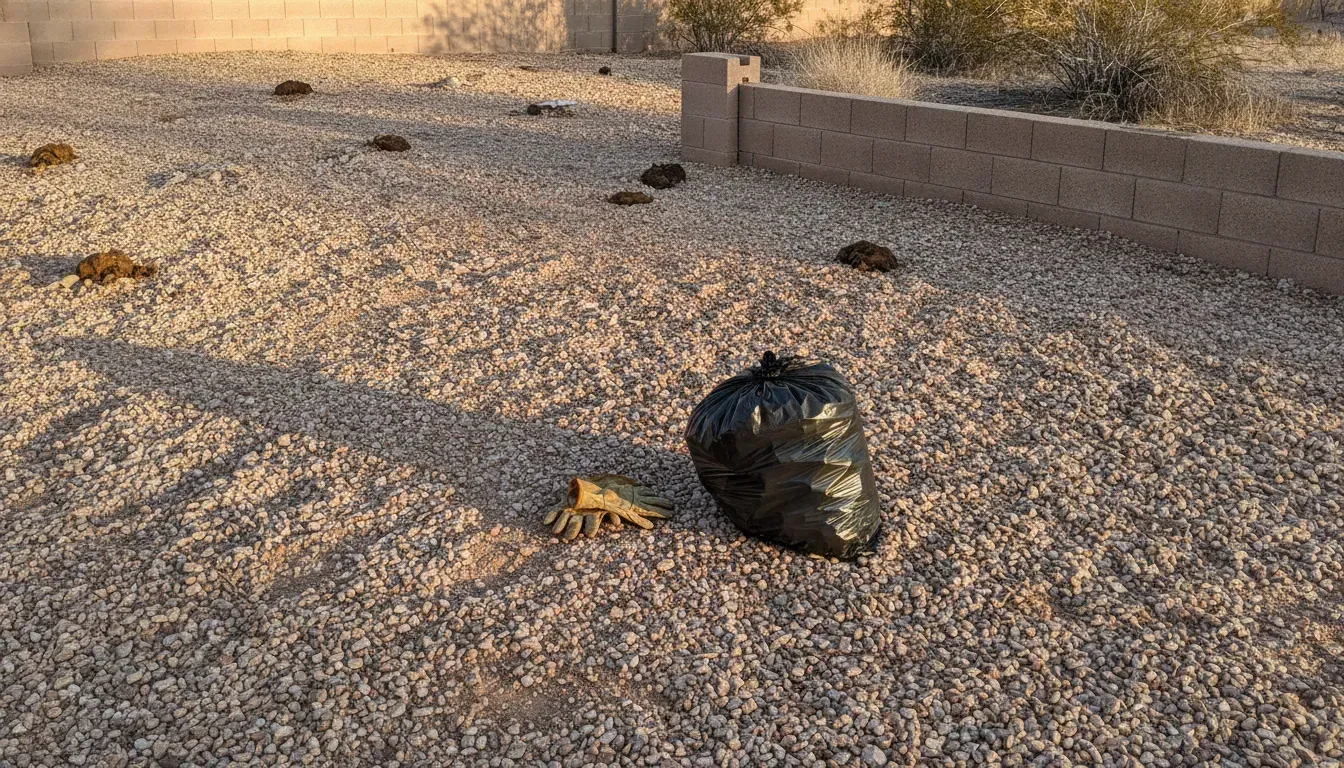
A household dog uses one yard a few times a day. A daycare may put many dogs on the same rectangle before lunch. Solids get bagged, but urine does not, so it sinks into the infill, dries under desert sun, and returns as smell when the next group arrives. Parents notice that smell at the gate faster than they notice a missed leaf.
The City of Austin watershed page says pet waste can spread bacteria and parasites, and that children and pets are most at risk in contaminated play areas. A daycare is that kind of shared play space. Staff already wash hands and rotate groups, yet the turf still needs its own plan, because a hose only moves what is still wet.
Las Vegas summer heat makes that gap obvious. A morning rinse can smell fine at drop-off and turn sour by afternoon pickup. That pattern is not proof the morning crew failed. It usually means the load under the fibers was never removed. Henderson yards show the same pattern on south-facing runs with little shade.
Three limits shape every daycare plan:
- Paid hours stay open. The yard cannot sit empty for a long chemical wait while groups are booked.
- Re-entry has to be safe. Dogs return as soon as the surface is dry, so the product has to be pet-safe.
- Smell complaints travel. One bad note at pickup can undo a week of good play reports.
Home turf pages can talk about weekend rinses. A daycare cannot run on that habit. The schedule has to fit drop-off, lunch, and pickup, or it will be skipped the first busy Tuesday.
Split staff surface work from a professional infill visit
Treat the job as two layers. Staff own the surface while dogs are on site. A turf crew owns the infill on a visit booked around those hours. Mixing the two jobs is how facilities buy a deep clean and still smell by Thursday, or how they rinse all day and never book the visit that would have helped.
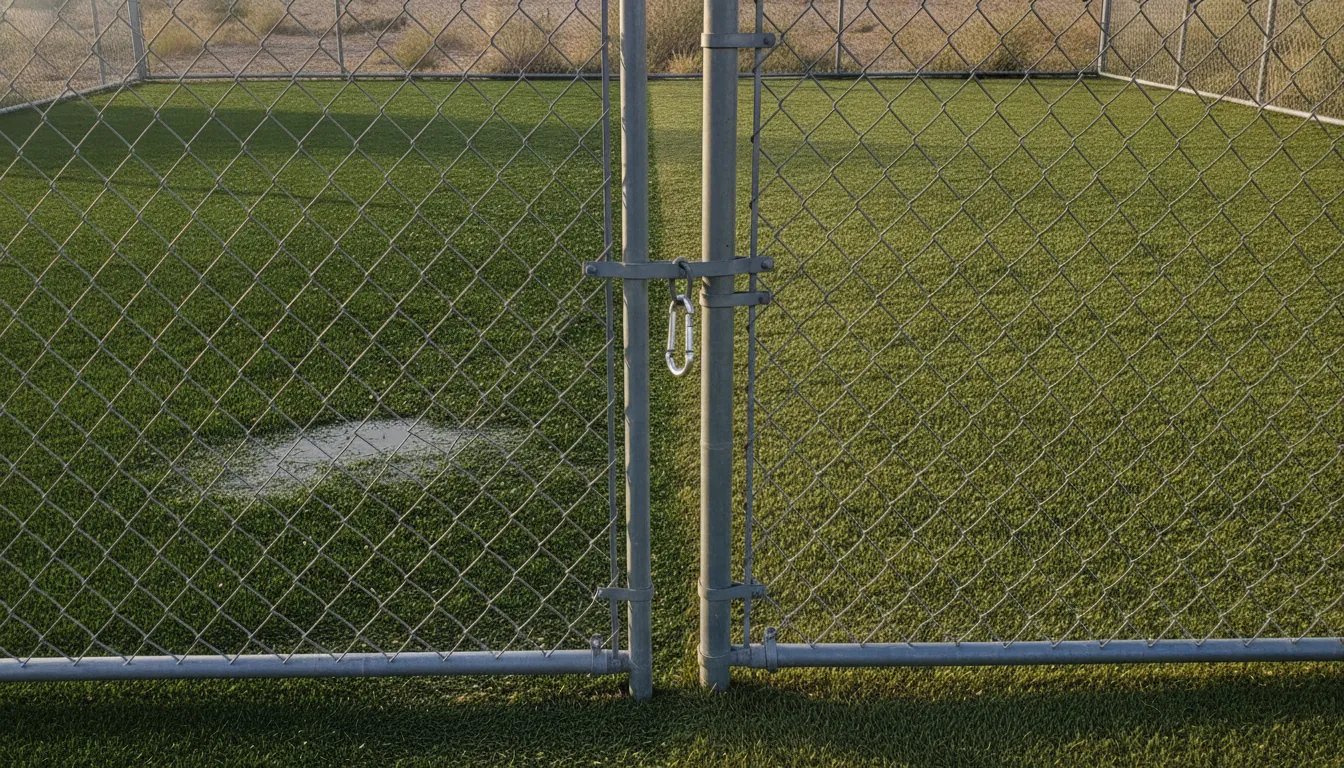 Keep one yard empty while the other group plays. That is what makes a rinse or a pro visit possible.
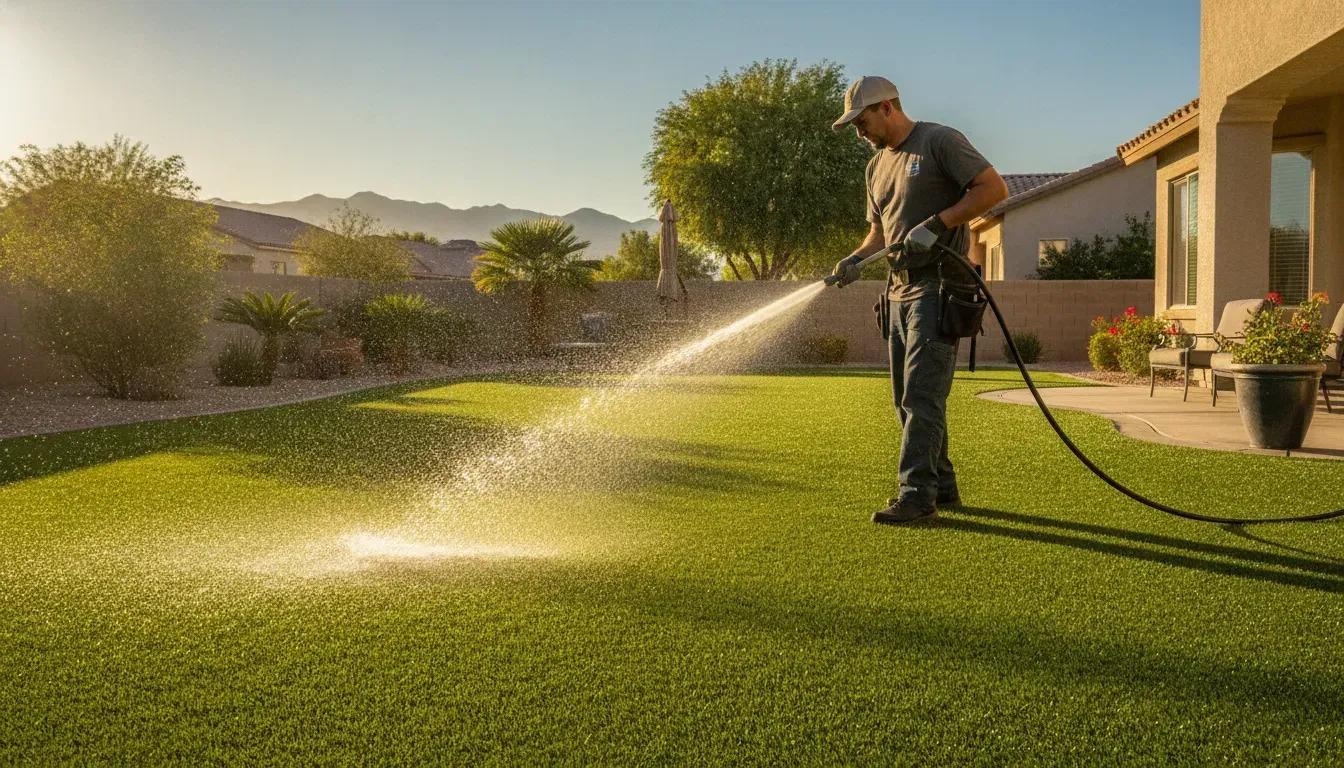
Staff surface work should stay simple, and it should happen on every rotation. Bag solids before they get walked into the fibers. Rinse the corners and the gate line where dogs pause. Note any damp patch that still smells after it dries. That note is more useful than a guess about which cleaner to buy.
Professional infill cleaning is the heavier pass, and it belongs on the calendar. The live artificial grass cleaning page lists the process as complete pet waste removal from the turf surface, debris clearing, an enzyme-based deodorizing treatment, and a deep rinse and agitation. That same page lists an optional infill refresh recommendation when the fill looks thin. It is a recommendation, not a standard step.
Enzyme treatment is meant to break down odor at the source rather than cover it. It is not a promise that one visit resets a year of neglect.
Ask the provider two timing questions before you book. How long must dogs stay off the turf, and what does the crew need at the gate? A useful answer names a dry time and a water source. A vague answer that says the crew will work around you is not a plan.
Build artificial turf cleaning Las Vegas rotations around an empty yard
Map the yard the way the dogs actually use it. Most daycares have a gate line, a shade pocket, and one corner that stays damp after every rinse. Those three spots collect more urine than the open middle of the field, so a rinse that only hits the middle wastes water and leaves the smell where parents stand.
Use an empty rotation as the real work window. If you have two yards, keep play in one while staff rinse the other. If you have only one yard, the honest windows are before the first drop-off and after the last pickup. Do not plan a mid-morning deep clean unless you can move every dog inside.
- Bag solids at the end of each rotation, before the next group enters.
- Rinse the hot zones at the gate line, shade edge, and known urine corners.
- Wait for dry fibers before dogs return, and hold the next group if the turf is still wet.
- Log same-day smell that returns after a rinse, because that list drives the pro visit.
- Book the closed window for infill cleaning, not a gap you hope will appear.
Heat and shade both change how long the yard needs to dry. A shaded Henderson yard in January can take longer to dry than an open Las Vegas yard in July. Do not copy a minute count from another city. Watch the turf itself rather than the clock. Dogs should go back when the surface is dry, not when a timer says the window is over.
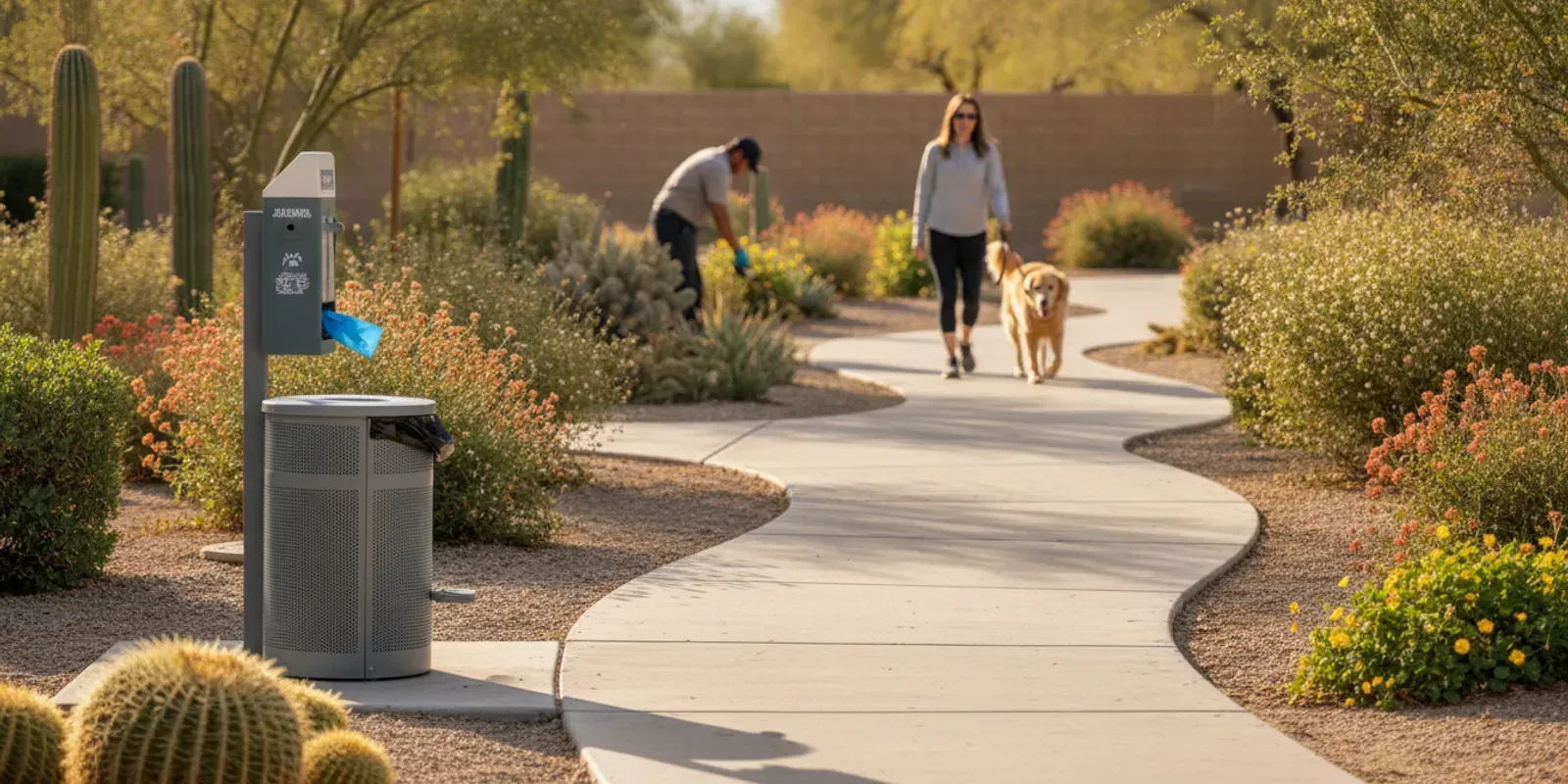
The Austin page also says to bag pet waste and put it in the trash, not in a storm drain. A daycare that bags solids and keeps rinse water on the turf follows that same idea. Operators who also need a standing waste route can review A1's commercial property service separately from this turf plan.
Match visit frequency to dog volume and smell return
There is no public daycare rate card for this work, and a home monthly price would be the wrong number. A1 prices artificial grass cleaning by quote because yard size, dog volume, access, and visit frequency all change the job. The ranges in the table are an illustrative planning rule of thumb, not a published A1 daycare schedule. Confirm the interval on a walkthrough before anyone puts it on a route.Daily dogs on the turf
Staff surface routine and when to book a pro infill visit:
Under 15
Staff surface routine: Solids after each rotation. One end-of-day rinse on the hot corners.
When to book a pro infill visit: Planning estimate: about every 6 to 8 weeks, sooner if smell returns inside two days.
15 to 30
Staff surface routine: Solids every rotation. Rinse hot zones at midday and again at close.
When to book a pro infill visit: Planning estimate: about every 4 to 6 weeks. Shorten that in a long heat stretch.
30 to 50
Staff surface routine: Solids every rotation. Rinse between groups if a second yard is free.
When to book a pro infill visit: Planning estimate: about every 2 to 3 weeks, on a set closed window.
More than 50
Staff surface routine: Solids every rotation. More than one rinse block per day.
When to book a pro infill visit: Planning estimate: weekly or every other week. One yard must stay empty for the crew.
.
Returning smell overrides any calendar you wrote in January. If urine odor is back within two days of a careful rinse and a recent pro visit, the interval is too long or the visit never reached the infill. Add a visit before you add another product to the hose.
Do not read those ranges as a published quote. A small yard with poor drainage can need more help than a large yard with two drains and shade. Mention drainage on the call before anyone prices a route. The crew should look at slope, infill depth, and where water sits before anyone talks about a standing route.
Boarding that runs overnight follows a different clock. The play yard may never be fully empty during a shift. In that case, split the turf into zones and clean one zone while dogs use the other. If you cannot split the yard, the honest answer is a pre-open visit, not a promise that the crew can clean between naps.
What to send before you ask for a quote
A useful quote starts with facility facts rather than a brand of cleaner. Send the same short list every time so two providers can be compared on the same yard. A1 builds commercial turf work from a custom proposal. Residential dog-count prices on the home page are for yard scooping, not for a daycare play surface. The homepage lists two visits a week as a residential scooping option, and that cadence is not a turf-cleaning schedule.
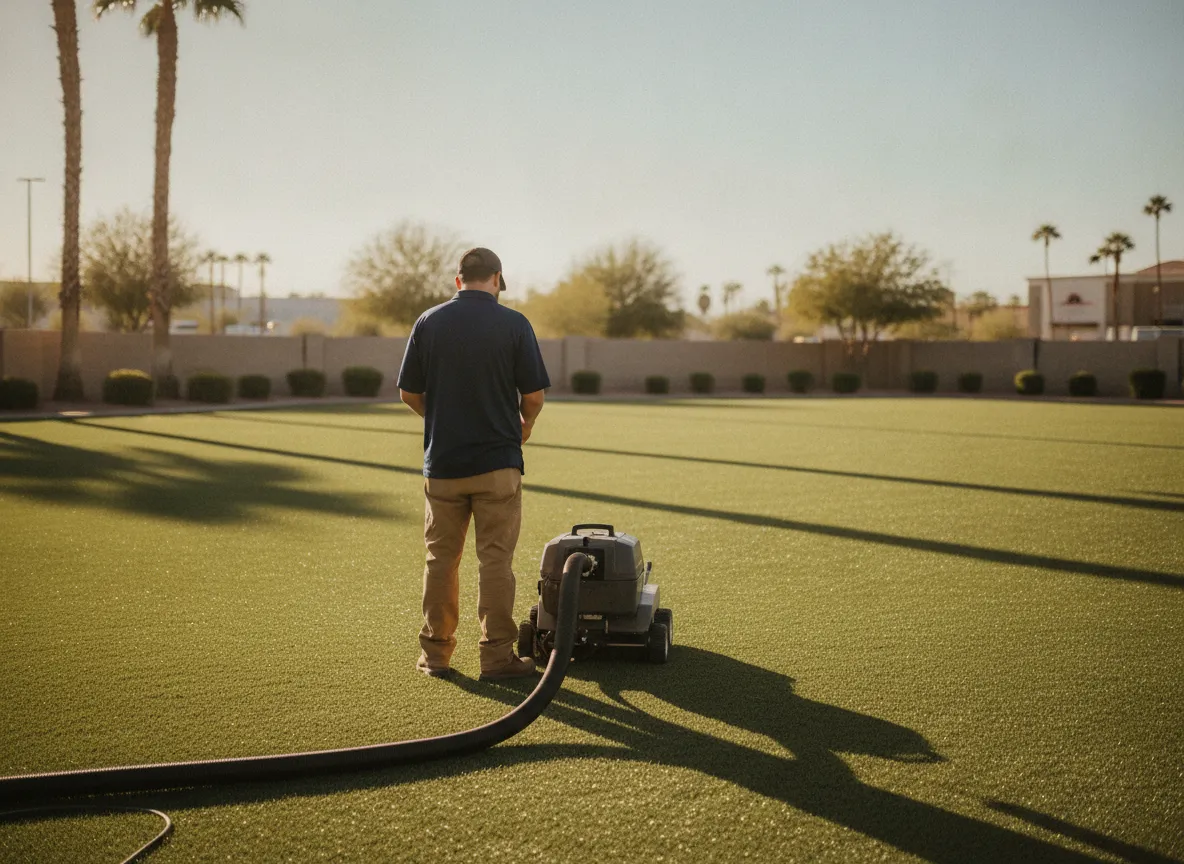 A crew needs water, a gate plan, and an empty yard. Product names matter less than re-entry time.
- Yard size. Square footage of each turf yard, and which yard dogs use most.
- Dog volume. Typical daily count, plus busy days such as school holidays.
- Empty hours. A real pre-open or after-close slot, not a hoped-for gap.
- Water and slope. Hose reach, drain location, and any spot that holds puddles.
- Photos. The gate, the shade line, and any worn or matted patch.
- Waste route. Whether you also need solid-waste pickup on the same days.
Ask what dogs and staff should do during the visit and how soon the yard can reopen. Also ask what the visit does not include. Infill replacement, turf repair, and installation are not part of a cleaning visit. A1 cleans and maintains pet turf. It does not install artificial grass. If the surface is torn or the base has failed, that is an installer conversation, not a cleaning add-on.
Keep homeowner turf explainers in their own lane. The Las Vegas turf cleaning visit guide covers what a home visit includes and what to ask before a residential quote. Use that guide if you want the homeowner scope. Do not treat it as the operating plan for a daycare rotation. For odor science on a home yard, use the Las Vegas turf deodorizing guide instead of copying it here.
How a facility visit should fit the property
Walk the yard with the crew lead before the first paid visit. Show the gate code, the dog-free path, and the spot where the hose actually reaches. A crew that has to cross a room full of dogs will lose the window you saved. A crew that can enter from the alley can finish while the lobby stays normal.
Agree on a reopen rule before the first visit and put it in writing. A practical reopen rule is easy for the front desk to follow. Dogs stay off until the turf is dry and the crew says the treatment window is over. Do not invent a minute count for every product. Dry time changes with sun, shade, and how wet the infill was when the visit started.
Pair sanitation with waste handling when solids are still the first problem. Many daycares need both a scoop route and a turf visit, and they are not the same appointment. Scooping removes what you can see on the blades, while turf cleaning treats what has already soaked into the infill. Booking only one of them leaves the other smell in place.
Commercial properties across Southern Nevada already use recurring waste service. A daycare can use that same habit without copying an HOA scope. The Las Vegas HOA turf cleaning page answers common-area contracts, not a daycare rotation. Your proposal should name the yards, the empty window, and the interval.
After the first month, judge the plan with three numbered checks:
- Gate smell at pickup. If the gate still smells in the afternoon, shorten the interval.
- Groups waiting on wet turf. If a group waited, change the window before you change vendors.
- Crew inside the window. If the crew ran long, fix access and the empty hour first.
Call (702) 521-2624 to set a walkthrough for your play yards.
Frequently asked questions
How often does a dog daycare need turf cleaning?
Staff should remove solids after every rotation and rinse the heavy corners at least once a day. A planning estimate is every 4 to 6 weeks for a yard with about 15 to 30 dogs a day, and more often when the count is higher. That interval is not a published A1 schedule. Shorten the gap if urine smell returns within two days, and confirm it on a walkthrough.
Can staff rinsing replace a professional visit?
A rinse cannot replace that visit. It cools the surface and moves fresh urine, but it does not pull odor that has already bonded into the infill. Use staff rinsing between groups, and book a pro visit on a closed window when the smell keeps returning.
How long do dogs need to stay off the turf?
They should stay off until the surface is dry and the crew has finished the treatment window. Ask for that reopen window before you book the first visit. A daycare should not accept a product that needs the yard closed for half a day unless you planned that closure.
Does A1 publish a daycare turf cleaning price?
A1 does not publish a daycare turf price. Artificial grass cleaning is quoted from yard size, daily dog volume, gate access, and visit frequency. The home scooping prices on the website are for residential waste routes only. Send photos and the empty-yard window so the proposal matches the facility.
Is this the same as dog park cleaning?
A daycare yard is not a public dog park. A park is an open site with different traffic and no paid drop-off clock. A daycare has to clean around paid play groups, gates, and re-entry. Use a park guide for park questions, and use this plan when the yard belongs to a daycare.
Set the first closed-window visit
Pick the yard that smells first, measure it, and name one hour when it can be empty. Those three facts are enough to start a real quote. A1 can walk the turf, confirm water and gate access, and propose an interval that fits Las Vegas or Henderson heat without borrowing a homeowner price. Service for those cities is listed on the Las Vegas and Henderson service area page.
Call (702) 521-2624 or use the contact page and ask for artificial turf cleaning for a daycare yard. If solids are still piled on the blades, say that too. Waste removal and turf sanitation can be booked together. They should not be written as the same visit.