City Pet Waste Removal Services: Public Parks Guide
This is a subtitle for your new post

City Pet Waste Removal Services for Public Parks
City pet waste removal services help public agencies keep parks, trails, dog runs, and shared outdoor spaces cleaner. They also reduce a recurring field task for busy parks and maintenance teams.
Call A1 Pet Maintenance at (702) 521-2624 Today
The strongest municipal programs combine mapped service zones, scheduled waste removal, station care, disposal, quality checks, and concise reporting. The provider should make the scope easy to understand, the route dependable, and the results simple for city staff to review. This guide explains what to include before requesting proposals and which questions can prevent service gaps later.
Municipal buyers do not need to treat every public lawn as a special project. They do need a practical plan for high-use areas, dog parks, pet relief zones, trails, sports complexes, and locations where overflowing stations create complaints. The right scope connects visitor experience, sanitation, maintenance efficiency, and accountability.
Why Do City Pet Waste Removal Services Matter for Public Spaces?
City pet waste removal services matter because public spaces receive constant use from people and animals. City crews have limited time to inspect every path, lawn, and station. A recurring program reduces accumulated waste and creates a clear ownership model for tasks that otherwise fall between departments.
How can routine removal support public health?
Dog waste can contain bacteria, viruses, and parasites that may affect people and other animals. The Centers for Disease Control and Prevention guidance on healthy pets explains why pet waste deserves careful handling. For additional background, cities can review this guide to dog poop health risks. A city program does not replace responsible behavior by residents, but it can reduce the amount of waste left in shared areas.
Rain and irrigation can move waste from soil or pavement toward storm drains. The EPA National Pollutant Discharge Elimination System resource provides background on stormwater protection. Regular pickup is one practical maintenance measure that supports a broader effort to keep pollutants out of drainage systems.
Why do stations and education work together?
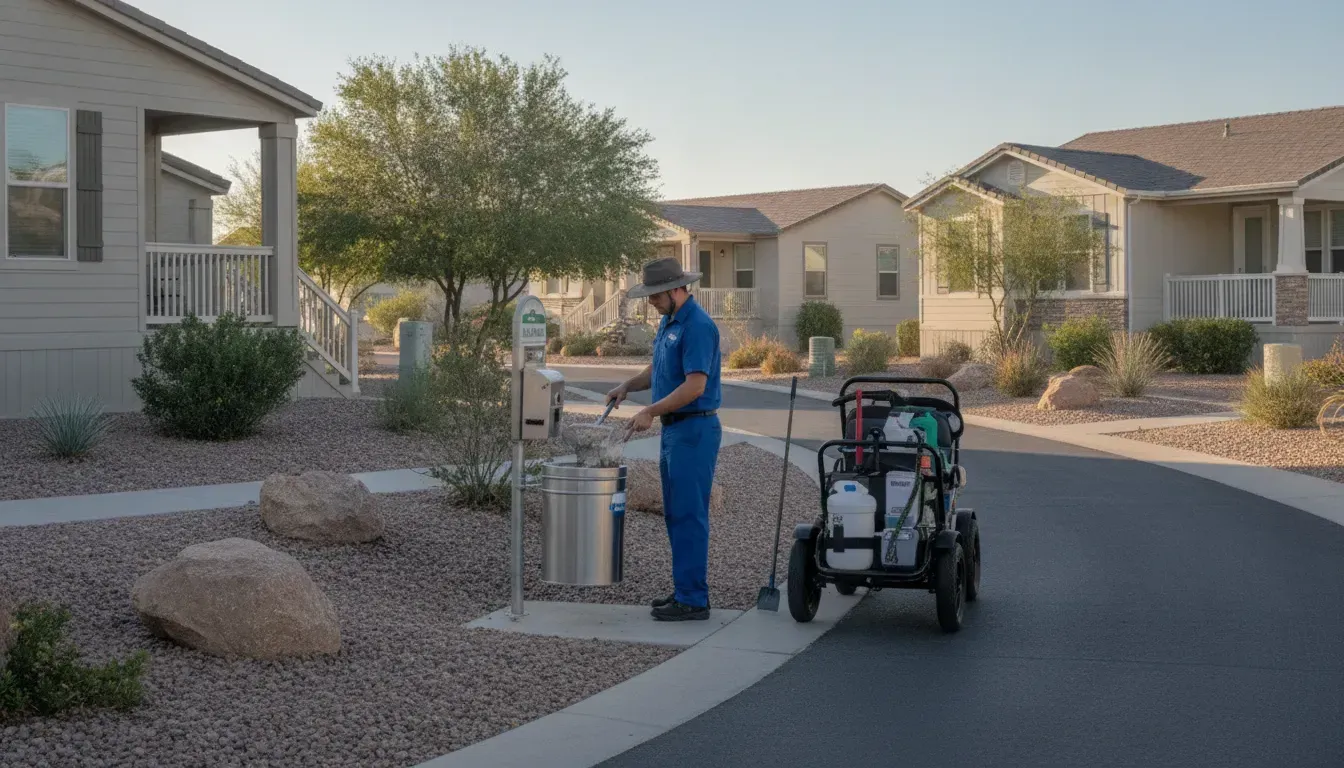
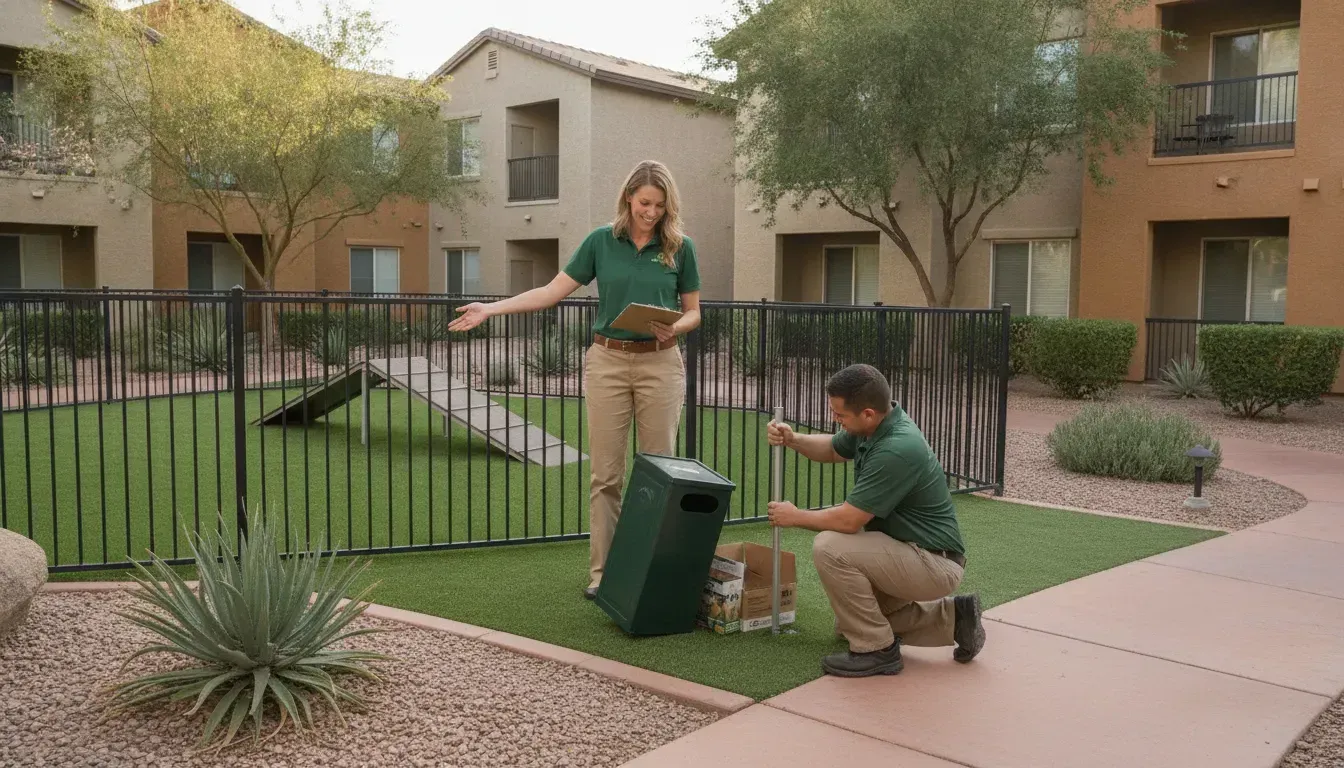
A station is more useful when it is easy to find, stocked with bags, and positioned near the places where dog owners enter or leave a park. The University of Maryland Extension guide to pet waste station installation offers practical placement considerations. A provider can inspect dispensers and bins while city staff or community groups reinforce pickup expectations through signs and outreach.
Education and infrastructure also improve the visitor experience. Residents are more likely to follow a rule when the park provides a convenient disposal option and the city maintains it consistently. The result is not just a cleaner path. It is a public space that feels cared for and easier to use.
How Should a City Define the Scope of a Pet Waste Program?
A strong scope lists the places, tasks, frequency, access rules, and proof of service that a provider must deliver. Avoid a vague request for general cleanup. A vague scope makes proposals difficult to compare and leaves room for different assumptions about what a visit includes.
Map every covered location
Begin with a location inventory. Include traditional parks, dog parks, pet relief areas, trails, greenways, sports complexes, sidewalks, playground buffers, parking edges, and event spaces. Mark the specific zones included at each location. A provider may need to inspect an entire dog run but only the pet relief strip around a larger sports complex.
Ask park supervisors and maintenance staff to review the map. Their experience can identify busy entrances, hidden corners, recurring complaint areas, locked gates, irrigation conflicts, and seasonal access changes. This local review is often more valuable than relying on a map alone.
Separate routine tasks from optional work
List each required task in plain language. A routine visit may include walking assigned zones, collecting ground waste, double-bagging material, checking stations, replenishing bags, emptying designated receptacles, and reporting damaged equipment. Optional work might include a one-time accumulation cleanup, event support, artificial turf cleaning, or additional deodorizing.
State how the provider should handle access. Include gate codes, keys, restricted hours, construction areas, weather closures, and contacts for urgent issues. If staff must avoid playgrounds or sports activity during certain windows, put that information in the scope instead of expecting a technician to infer it.
 Define the expected condition after service
Words such as clean and regular can mean different things to different bidders. Describe the expected result after a visit. For example, the assigned zone should be inspected, visible pet waste should be removed, accessible stations should be checked, and supply shortages or damaged equipment should be noted.
No field program can promise that a public space will remain waste-free between visits. A realistic scope recognizes the time between service and the next visitor. It also explains how city staff can report a missed area, overflow, or access problem for review.
How Can City Pet Waste Removal Services Plan Routes and Frequencies?
Route planning turns a list of parks into a workable operating schedule. The frequency should reflect traffic, dog ownership patterns, station capacity, event calendars, weather, and the consequences of a missed visit. One frequency for every location may be simple to administer, but it is not always the most efficient use of public funds.
Use service tiers based on actual use
High-traffic dog parks and pet relief areas may need more frequent attention than a low-use trail segment. A city can group locations into tiers such as high, standard, and seasonal coverage. The bid request should explain the factors behind each tier, not simply ask providers to guess the needed schedule.
- High-use areas: Dog parks, busy pet relief zones, and locations with frequent complaints or fast station turnover.
- Standard areas: General park lawns, trails, and shared spaces with routine but moderate pet traffic.
- Seasonal or event areas: Locations that need a pre-event cleanup, temporary station support, or adjusted service during peak periods.
Build routes around geography and access
Grouping nearby locations can reduce drive time and make service days more predictable. The route still needs room for realistic inspection time. A schedule that looks efficient on paper may fail if parking is limited, gates are locked, or a dog park requires a detailed walk-through.
Ask bidders how they handle holidays, severe weather, closures, and missed access. The answer should include a communication path and a rescheduling standard. City staff should know whether an inaccessible site is revisited, documented, or credited under the agreement.
Match station capacity to visit frequency
Station overflow can become a visible problem even when ground waste removal is consistent. During the initial assessment, record the number and condition of dispensers and bins at each site. A provider can then report low supplies, damaged hardware, and recurring overflow patterns. That information helps the city decide whether the solution is a route change, added capacity, a different station location, or resident education.
What Service Levels Should a Municipal Contract Include?
Service levels translate a general maintenance promise into measurable expectations. They should be specific enough for city staff to evaluate and flexible enough to reflect real public-space conditions. The goal is a fair standard, not a promise that no new waste will appear after a technician leaves.
Contract areaWhat to defineUseful proofCoverageSites, zones, access limits, and exclusions.Location list and route map.FrequencyVisit days, service tiers, and seasonal adjustments.Route schedule and completion log.Waste handlingCollection, bagging, haul-away, and disposal responsibility.Technician checklist or service note.Station careInspection, bag replenishment, bin emptying, and damage reporting.Station status report.Issue responseMissed access, overflow, complaints, and urgent requests.Ticket, email, or escalation record.ReviewReporting cadence and contract-performance meetings.Monthly summary or dashboard.
Include a clear standard for missed service. The contract can require notification when access is unavailable, a defined reschedule window, and documentation of the reason. It can also state how the city should report a concern and how quickly the provider should respond.
If the city needs work beyond routine removal, separate it in the pricing schedule. A one-time cleanup after an event is different from recurring route work. Artificial turf sanitation, bin replacement, and special event coverage may also need separate assumptions. For a broader cost framework, review this guide to pet waste service cost and value, then request a site-specific scope.
How Can City Pet Waste Removal Services Improve Reporting and Accountability?
City pet waste removal services become easier to manage when the provider delivers concise, repeatable reporting. A report does not need to overwhelm staff with data. It needs to show where service occurred, what was found, and which issues require a decision.
Use a simple completion record
A useful service record can include the date, technician or crew identifier, locations visited, access problems, station supply concerns, damaged equipment, unusual accumulation, and follow-up needed. If the provider cannot visit a site, the record should say why. A blank report is not proof of a completed route.
Set a reporting cadence that matches the program. City staff may want route-level notes after each visit and a monthly summary for contract review. The monthly summary can highlight missed access, recurring overflow, complaint patterns, completed corrective work, and recommendations for route or station changes.
Connect reports to resident concerns
Complaint data can help identify service gaps, but it should not be the only measure of performance. A location may receive few complaints because residents have stopped reporting the problem. Combine resident feedback with route records, station observations, and periodic city inspections.
Define who receives an urgent report. Parks operations, a contract manager, and a provider supervisor may need different information. A simple escalation tree prevents a damaged station or blocked gate from sitting in an inbox without an owner.
 What Should Cities Ask Before Selecting a Provider?
Procurement teams should use the same questions for every bidder. The answers reveal whether a provider understands municipal routes or is simply offering a general residential cleanup service.
- Which public-space locations and service zones can you cover?
- How do you set visit frequency for high-use and low-use areas?
- What exactly is included in a routine visit?
- How are bags, bins, station hardware, and overflow handled?
- How do you document completed work and inaccessible locations?
- What is the process for missed service, resident complaints, and urgent requests?
- Who supervises the route, and who is the city's day-to-day contact?
- How are one-time cleanups, events, turf cleaning, or extra visits priced?
- What access information must the city provide before service begins?
- Can you provide references for commercial, HOA, government, or other multi-site work?
Ask for a sample report or redacted service summary when possible. This helps the city evaluate whether the proposed documentation will support invoice review and contract oversight. It also surfaces differences between providers before a contract is signed.
What Makes A1 a Practical Option for Municipal and Commercial Programs?
A1 Pet Maintenance has served the Las Vegas area since 1998 and handles recurring pet waste maintenance for more than 400 properties weekly, according to company information. Its documented commercial experience includes work connected with the City of Las Vegas, City of Henderson, and Clark County. Those details are relevant to buyers looking for an established operator familiar with recurring, multi-site service expectations.
A1's broader service model includes recurring pet waste removal, one-time cleanups, commercial property maintenance, and artificial grass cleaning. The exact scope for a city or park system should be confirmed during the proposal process. Municipal buyers can review A1's municipal pet waste removal service information and commercial pet waste contract guidance to understand related service categories.
For a larger public-space or multi-site program, the important question is fit. The provider should be able to discuss locations, route frequency, access, station support, reporting, and exceptions in the same conversation. A clear proposal gives the city a more useful basis for comparison than a generic per-visit promise. Before requesting proposals, municipal teams can also review A1's dog park waste removal planning guide for a related public-space planning perspective.
Municipal teams that also oversee synthetic turf can review A1's artificial turf cleaning guide for dogs as a separate service consideration. It should not be assumed to be part of routine waste removal unless the final scope says so. HOA or community partners can also review the Las Vegas HOA pet waste removal guide when a public-private maintenance plan overlaps with community spaces.
Call A1 Pet Maintenance at (702) 521-2624 Today
Frequently Asked Questions
What do city pet waste removal services usually include?
They may include scheduled inspection and collection in defined public-space zones, bagging and haul-away, waste station checks, bag replenishment, bin service, and issue reporting. The city should list the exact tasks in its scope because providers package services differently.
How often should a city schedule pet waste removal?
Frequency depends on traffic, station capacity, site size, event use, and complaint patterns. High-use dog parks often need more attention than low-use trail areas. A tiered route plan lets the city align visits with actual conditions instead of using one schedule everywhere.
Should station maintenance be part of the contract?
Yes, when the city wants one accountable party for a cleaner pet-waste program. The contract should say whether station care includes bag replenishment, bin emptying, equipment inspection, and damage reporting. Replacement hardware or installation may need separate pricing.
What should a city request in a provider report?
Request the date, locations visited, service status, access problems, station supply concerns, damaged equipment, unusual accumulation, and follow-up items. A monthly summary can show recurring issues and support contract-performance discussions.
Can a pet waste provider handle municipal events or one-time cleanups?
Some providers offer one-time cleanups or special-event support, but the city should confirm availability, staffing, response time, disposal, and pricing before relying on it. Keep event work separate from recurring route work. This keeps both services easy to evaluate.