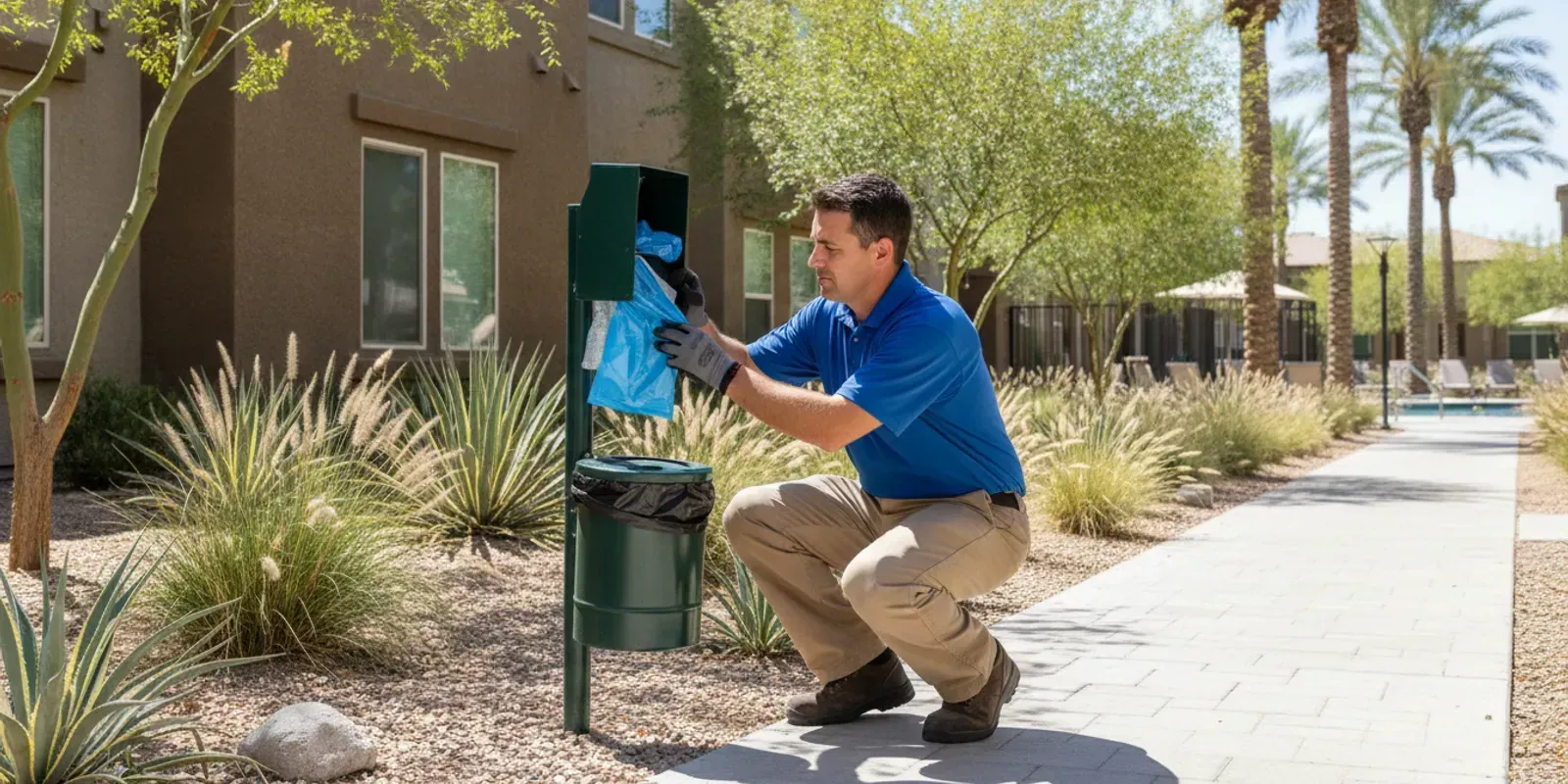
Pet Waste Laws HOAs Nevada: A Board Guide
A practical guide to pet waste laws HOAs Nevada boards should review. Learn policy, notices, enforcement, and vendor cleanup steps.

Pet waste complaints are rarely solved by a sign alone. Nevada HOA boards need a clear process that connects legal requirements, community governing documents, resident communication, and dependable common-area maintenance.
For boards researching pet waste laws HOAs Nevada, there is no one-size-fits-all statewide rule to copy into a policy. Review current Nevada statutes, applicable city or county sanitation rules, and the association's declaration, bylaws, and adopted rules together. Then have the association's manager or Nevada counsel confirm how those sources apply before changing enforcement or penalties.
A practical program should make expectations easy to understand, apply them neutrally, document concerns, and keep shared spaces sanitary. Pet waste can harbor parasites and bacteria, and proper disposal helps prevent disease transmission, according to the CDC. The sections ahead start with the sources boards should verify, then build toward a policy and cleanup process residents can follow. Boards can also review A1's pet waste maintenance services when they need operational support.
What Are the Pet Waste Laws HOAs in Nevada Need to Check?
For Nevada HOA boards, the practical answer is not found in one blanket statewide pet-waste law. A community's responsibilities may involve several different sources of authority, and each source should be reviewed before a board updates its policy or begins enforcement.
What does Nevada law say about pets?
Start with the current provisions of Nevada Revised Statutes Chapter 116, which addresses common-interest communities. In particular, NRS 116.318 is relevant to the framework surrounding a unit owner's right to keep a pet. That provision should not be presented as a specific statewide requirement for picking up pet waste. It is one part of the broader legal context, not a substitute for reviewing an association's governing documents or local sanitation requirements.
Boards should confirm the current statutory language and consult qualified Nevada counsel when a proposed rule could affect pet ownership, reasonable accommodations, owner rights, or enforcement authority.
Which city or county sanitation rules apply?
Local requirements can add another layer. A city, county, or other local authority may address animal sanitation, nuisance conditions, waste disposal, or the maintenance of public areas. The applicable rules can depend on the property's location and whether the concern involves private common areas, sidewalks, parks, drainage, or another public space. For example, Henderson publishes animal-sanitation information for residents, but a Henderson resource should not automatically be treated as the rule for every Nevada community.
Identify the city and county authorities that serve the property, then verify current requirements directly with those agencies. Avoid turning a local ordinance into a claim about Nevada law as a whole.
What do the HOA's governing documents require?
The declaration, bylaws, recorded covenants, rules, and adopted enforcement procedures may define how the association regulates common areas and addresses violations. Review these documents together, paying attention to rulemaking authority, notice, hearing, appeal, cure periods, and any limits on penalties. Nevada Real Estate Division guidance on violations of association governing documents can help a board understand why the stated process matters.
A sound review creates a simple source file for the board: current state provisions, applicable local rules, the controlling governing-document language, and the association's approved enforcement process. The resulting pet-waste policy can then explain pickup expectations, disposal locations, and reporting procedures without overstating what the law requires.
General information only, not legal advice: Laws, ordinances, governing documents, and enforcement procedures change. Have the association's manager or Nevada community-association attorney review the sources and proposed policy before adoption or enforcement.
Can a Nevada HOA Enforce a Pet Waste Rule Consistently?
Yes, an HOA can work toward consistent enforcement, but consistency depends on the association's governing documents and adopted procedures. A board should not treat a pet-waste complaint as an automatic authorization to issue a fine. Before acting, confirm which document creates the rule, whether it is currently in effect, and what enforcement steps the association has adopted.
Confirm the rule and the enforcement path
Start with the declaration, bylaws, rules, and any published enforcement policy. Check whether the rule addresses pickup, disposal, common areas, or conduct that creates a nuisance. Then compare those provisions with current Nevada law and applicable city or county requirements. Nevada common-interest-community issues are addressed in NRS Chapter 116, including provisions concerning a unit owner's right to keep a pet. The current chapter is available from the Nevada Legislature. The Nevada Real Estate Division also explains that associations should follow the notice, hearing, and other procedural requirements that apply under law and the association's governing documents.
Use notice, hearing, and sanctions as written
For a suspected violation, provide the notice required by the association's process. Identify the rule, describe the alleged conduct, state the date and location when known, and explain how the resident may respond. If a hearing or opportunity to cure is required, allow it before imposing any sanction. The board should not assume that a particular fine is valid simply because similar communities use one. Amounts, deadlines, hearing rights, and repeat-violation consequences require review against the association's documents and current law.
Apply the same standard and document the facts
Consistency means applying the same rule to comparable situations, regardless of the resident, building, pet breed, or board member who receives the complaint. It does not mean ignoring relevant differences, such as a first report, an unclear identification, or an approved accommodation. Keep a factual record with the complaint, date, time, location, communication, evidence, response, and resolution. Avoid conclusory labels or unnecessary personal information. A simple log helps the board identify recurring problem areas and demonstrate that decisions were based on the rule rather than personal preference.
Because enforcement can affect resident rights and involve overlapping legal requirements. Have the association's manager or Nevada counsel review the rule and process before adopting changes or escalating a disputed matter. This is general information, not legal advice.
What Should a Nevada HOA Pet Waste Policy Include?
A useful policy turns a general expectation into clear, repeatable instructions. The following is policy design guidance for Nevada HOA boards, not Nevada law. Before adoption or enforcement, the board should have its community manager or Nevada counsel review current state requirements. Local sanitation rules, and the association's declaration, bylaws, and other governing documents.
- Policy area.What to define.Why it helps.Pickup and disposal.Timing, bags, and approved receptacles.Gives residents one clear routine.Common areas.Relief locations, paths, turf, and stations.Clarifies shared-space expectations.Reports and violations.Report channel, notice, response, and appeal.Supports neutral, repeatable handling.Maintenance support.Route scope, frequency, access, and records.Connects rules with daily upkeep.Pickup timing: State when residents must remove pet waste. An immediate-pickup expectation is usually clearer than an open-ended requirement, but the association should choose wording that fits its documents and community conditions.
- Permitted relief areas: Identify dog-relief areas, paths, landscaped zones, and any locations where pets are not allowed to relieve themselves. Use a simple map or clearly placed signs when the property layout could cause confusion.
- Bags and disposal: Require residents and handlers to carry suitable waste bags, seal waste securely, and place it in designated receptacles. Clarify whether household trash cans, dog stations, or another disposal point should be used.
- Station expectations: Assign responsibility for checking bag dispensers and receptacles. The policy can explain how residents report an empty station, overflowing bin, damaged dispenser, or other sanitation concern.
- Common-area cleanup: Explain that pet waste must be removed from sidewalks, lawns, parks, dog runs, artificial turf, and other shared amenities. If the association uses a service provider, distinguish resident duties from scheduled common-area maintenance.
- Reporting: Provide one consistent channel for reporting missed waste or recurring problem areas. Ask for the date, location, and a factual description. Discourage confrontations, public accusations, or sharing unnecessary personal information.
- Repeat violations: Describe the documented process for recurring issues, including how the association identifies a repeat pattern and what corrective steps may follow under the governing documents. Do not insert a fine amount or deadline unless it has been properly authorized and reviewed.
- Notice and appeal: State how notices are delivered, what information they contain, and how a resident may respond or request a hearing or appeal. The process should follow applicable law and the association's adopted procedures.
- Reasonable accommodations: Include a process for residents who request an accommodation related to a disability or another legally protected circumstance. Route these requests to the manager or counsel for individualized review rather than making assumptions.
- Annual review: Add a review date. Boards can evaluate complaints, station performance, recurring locations, resident feedback, and legal or governing-document changes before renewing or revising the policy.

Clear language helps residents understand what to do and helps the board apply the same process across the community. Keep the final policy accessible, preserve the approval record, and train managers or vendors on the version currently in effect.
How Can Boards Communicate and Document Pet Waste Rules?
A well-written rule is only useful when residents can find it, understand it, and see that the community applies it consistently. Boards can reduce confusion by treating communication as an ongoing part of community management rather than a one-time announcement.
Put the rule where residents will see it
Include the pet waste policy in welcome packets, move-in materials, resident portals, and regular community communications. A short notice can explain the expected action: handlers should pick up waste immediately. Use designated disposal containers when available, and keep pets within areas allowed by the community's rules. Avoid naming a resident or describing a recent incident in a general notice. Address individual matters through the association's established process.
Signs should reinforce the same message at dog-relief areas, walking routes, entrances, and waste stations. Keep them readable and specific. If a sign says that bags belong in a particular station, the station should be easy to identify and routinely serviced. Consistent wording across packets, notices, signs, and online materials helps prevent residents from receiving conflicting instructions.
Keep neutral, useful records
When a concern is reported, use a standard incident form or digital record. Record the date, approximate time, location, type of issue, and the action taken. A description such as "uncollected waste beside the east walking path" is more useful than a conclusion about a particular resident. If photographs are appropriate under the association's procedures, capture only what is needed to document the condition. Do not circulate images, unit information, names, or other personal details in community-wide communications.
Meeting minutes can document that the board reviewed recurring sanitation concerns, approved a communication, or scheduled a policy review. Minutes should summarize the board's action without turning routine records into public accusations. Store incident reports and correspondence securely, limit access to people who need it, and follow the association's record-retention practices.
Make correction and review predictable
Give residents a clear way to ask questions, report a maintenance problem, or correct an issue. For alleged violations, follow the notice, response, hearing, and appeal steps required by the governing documents and applicable rules. The board should avoid informal exceptions that are not available to other residents. This is practical governance guidance, not legal advice, so have the association's manager or Nevada counsel review the process when needed.
Set a recurring review date, such as before the busiest season or during the annual policy calendar. At that review, compare the written rule with signs, welcome materials, incident records, and vendor reports. Update outdated contact details, disposal instructions, or site locations, then notify residents of substantive changes.
How Does Vendor-Supported Cleanup Help HOA Common Areas?
Resident rules establish expectations, but a written policy does not remove waste from sidewalks, lawns, pet stations, or shared amenities. Vendor-supported cleanup gives an HOA an operational layer that works alongside education and consistent enforcement. It helps the board keep common areas usable while residents remain responsible for following the association's rules and picking up after their pets.
What can a recurring route include?
A site-specific proposal can define the areas and tasks that need attention. Depending on the community, a route may cover sidewalks, greenbelts, entry landscaping, dog-relief areas, parks, and other pet-friendly spaces. Service can also include checking and servicing waste stations, collecting bagged waste, and hauling material away so full containers do not become a recurring nuisance.
The scope should be practical rather than generic. A community with concentrated traffic near a dog run may need more attention in that area than along a lightly used perimeter. The vendor and board can identify problem locations, clarify which areas are accessible, and set a schedule that fits resident use, landscaping activity, irrigation, and seasonal conditions. Access instructions should address gates, locked amenities, parking, pets on site, and a reliable contact for exceptions or urgent site questions.
How do reporting and sanitation support board operations?
Regular reporting gives managers a record of completed visits, observed problem areas, station conditions, and issues that may need board attention. That information can help distinguish an isolated missed pickup from a recurring location or communication problem. It also gives the board a more useful basis for adjusting route frequency, signage, station placement, or resident reminders.

Sanitation is a practical reason to address pet waste promptly. The Centers for Disease Control and Prevention explains that pet waste can harbor parasites and bacteria, and that proper disposal helps prevent disease transmission. Read the CDC's pet-waste guidance for general health information. This is not a promise that vendor service eliminates every health risk, and it is not medical advice. It supports a straightforward maintenance principle: remove waste consistently and dispose of it properly.
How should an HOA evaluate a vendor proposal?
Ask for the proposed route, visit frequency, included stations and areas, access requirements, haul-away process, reporting format, and procedures for weather or access interruptions. The board should also confirm what remains the resident's responsibility under the governing documents. A1 Pet Maintenance has more than 26 years of experience supporting HOAs and commercial properties in Southern Nevada. Boards can review commercial pet waste maintenance options and request a proposal based on the community's actual layout and needs.
How Should a Board Review Its Nevada Pet Waste Program?
An annual review gives the board a practical way to identify sanitation gaps. Confirm that its process remains current, and keep residents and service partners working from the same expectations. Treat the review as general information, not legal advice. Nevada associations should confirm legal questions with qualified counsel, their manager, or the appropriate local authority.
- Confirm current statutes and local rules. Start with current Nevada common-interest-community requirements, applicable city or county sanitation rules, and any updates from the relevant authority. State law and local requirements can change, and a rule that applies in one municipality may not apply in another. This is also the point to check whether the association's understanding of pet-related rights and enforcement procedures remains accurate. Do not assume that a general online summary replaces the current text of the law.
- Audit common areas and recurring problem locations. Walk dog-relief areas, sidewalks, entrances, turf, playground perimeters, waste stations, and other shared spaces at different times. Note where waste accumulates, whether bags and receptacles are available, and whether signage is visible and understandable. Pet waste can harbor parasites and bacteria, and proper disposal helps reduce disease transmission, according to the CDC. Record dates, locations, and observed conditions without targeting individual residents.
- Check the governing documents and adopted policy. Compare the declaration, bylaws, rules, pet provisions, sanitation language, and enforcement procedures with actual practice. The policy should clearly address pickup expectations, permitted relief areas, bag disposal, reporting, repeat issues, notice, appeals, accommodations, and a review date. If the documents and day-to-day policy do not align, pause before changing enforcement and ask counsel or the association manager how to proceed.
- Communicate the expectations clearly. Refresh resident notices, move-in materials, website language, and signs at stations and dog areas. Explain what residents should do, where they can report a concern, and how the association handles notices and correction opportunities. Use neutral, consistent language. Clear communication can prevent avoidable complaints and gives residents a fair opportunity to understand the rule before an issue is treated as a violation.
- Review vendor performance and records. Compare the contracted scope with observed needs. Check route frequency, station servicing, dog-relief-area cleanup, access issues, missed visits, resident reports, and service documentation. If outside support is used, ask whether reporting is detailed enough for the board to identify patterns and follow up. A site-specific review may show that schedules, access instructions, or sanitation tasks need adjustment. Avoid adding services or coverage assumptions that are not in the agreement.
- Schedule board and counsel review. Bring the audit notes, policy version, communications, violation records, and vendor reports to a scheduled review. Counsel can help the board evaluate proposed changes, notice and hearing procedures, document hierarchy, and any accommodation or enforcement questions. Record the decisions, responsible owners, and next review date so the program remains consistent after board members or vendors change.
Once the board knows where the recurring cleanup and documentation gaps are. It can decide whether professional support would make the program easier to manage and easier for residents to follow.
Frequently Asked Questions
Is it legal for a Nevada HOA to fine residents for pet waste?
Potentially, but a fine is not automatically valid. The association should confirm that its governing documents authorize the enforcement action, follow the required notice and hearing process, and apply the rule consistently. Have the association manager or Nevada counsel review the current documents before issuing penalties.
Can an HOA in Nevada ban pets?
Do not assume that a board can ban pets through a routine rule change. Nevada common-interest-community requirements and the association's declaration, bylaws, and other governing documents must be reviewed together. NRS Chapter 116, including NRS 116.318, is a starting point, but the current law and the community's documents should be confirmed with qualified counsel.
What can an HOA do about repeated pet waste violations?
Use a written, neutral process: document the date and location, provide notice of the applicable rule, explain the correction required, and apply the association's approved escalation process. Clear signs, convenient waste stations, resident reminders, and a defined reporting channel can prevent repeat problems before enforcement becomes necessary.
How should a resident report pet waste violations to the HOA board?
Residents should use the association's designated manager, portal, email address, or maintenance request system. Include the common-area location, approximate date and time, and a factual description. Avoid identifying or confronting a resident based on assumptions. The board or manager can then record the report and handle it under the same process used for other violations.
Can an HOA hire a vendor for pet waste cleanup?
Yes. An association can evaluate vendor-supported services for common-area routes, dog-relief areas, waste stations, scheduled collection, haul-away, and reporting. Scope, access, frequency, and sanitation methods should be defined in the proposal. A1 Pet Maintenance serves HOAs and communities in Southern Nevada, subject to a site-specific service plan.
Build a Cleaner, More Consistent HOA Pet Waste Plan
A consistent cleanup plan can help your board keep shared spaces more welcoming while giving residents and vendors clear expectations. A1 Pet Maintenance can discuss common-area pet waste cleanup, service options, and availability for your community.